REVIEW · CAIRO
Full-Day Giza Pyramids Sphinx Sakkara Private Tour with Pickup
Book on Viator →Operated by Egypt Guidelines Day Tours · Bookable on Viator
Two ancient cities, one stress-free day. This private tour connects the big-name classics at Giza with Saqqara, with pickup and a guide to keep the day moving. You’ll see the Great Pyramid of Cheops, plus the pyramids of Chephren and Mykerinos, then continue to the Step Pyramid of King Djoser.
I also like the way the plan layers in optional experiences, like a camel ride at Giza and the chance to stop for the solar boat story at the Sphinx/Valley Temple area. One consideration: entrance admissions to the pyramids and Saqqara aren’t clearly included in the listed inclusions, so you should confirm what you’re paying for before you go.
In This Review
- Why this Giza + Saqqara plan works so well
- Private pickup and air-conditioned comfort from Cairo
- Giza Pyramids: Cheops, Chephren, and Mykerinos in one day
- Camel ride and panoramic photo stops that make the crowds worth it
- The Sphinx, Valley Temple, and the optional solar boat stop
- Saqqara and Memphis necropolis: the Step Pyramid of Djoser
- Teti Pyramid and noble tombs: where to look up close
- How long you’ll be out and what your body needs
- Price and value: $72 per person, plus entrance planning
- Guide quality that can genuinely shape your day
- Who should book this Giza and Saqqara private tour
- Should you book it? My straight answer
- FAQ
- What sites are included in this private tour?
- Is pickup included?
- How long does the tour take?
- Are entrance tickets included for the pyramids and Saqqara?
- Can I add a camel ride or the solar boat visit?
- What is the cancellation policy?
Why this Giza + Saqqara plan works so well
If you only have one day near Cairo, Giza and Saqqara are the two stops that feel most “worth it” per hour. This tour is built to hit both in a single sweep: pyramids, the Sphinx and Valley Temple at Giza, then Saqqara’s Step Pyramid and nearby tombs.
The private format matters here. You’re not trying to herd yourself with a crowd, and you can ask questions as you move from the Great Pyramid viewpoints to the Sphinx area and then onward to Memphis’s necropolis.
The route also makes sense visually. You start with the skyline drama of Giza’s pyramids, then shift to Saqqara, where you can see the early “prototype” style of pyramid-building—starting with Djoser’s Step Pyramid.
Private pickup and air-conditioned comfort from Cairo
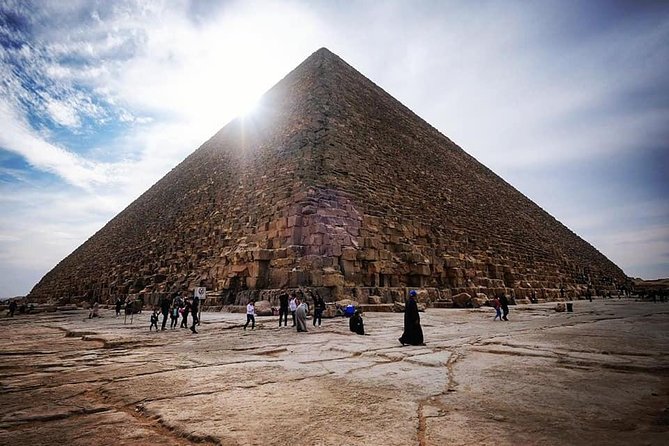
This is a private tour with your own guide and an air-conditioned vehicle. Pickup is offered, which is a big deal in Cairo, where it can be time-consuming (and tiring) to sort out transport on your own.
You’ll also get a mobile ticket. That’s useful because it reduces the chance of simple day-of problems like losing paper, or waiting around to figure out where you’re supposed to be at each site.
Because it’s private, the guide can also help you “read” the grounds in real time—where to stand for the best pyramid angles, when to walk a bit faster, and how to keep the Sphinx visit from turning into a rushed photo sprint.
You can also read our reviews of more private tours in Cairo
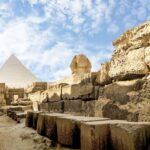


Giza Pyramids: Cheops, Chephren, and Mykerinos in one day
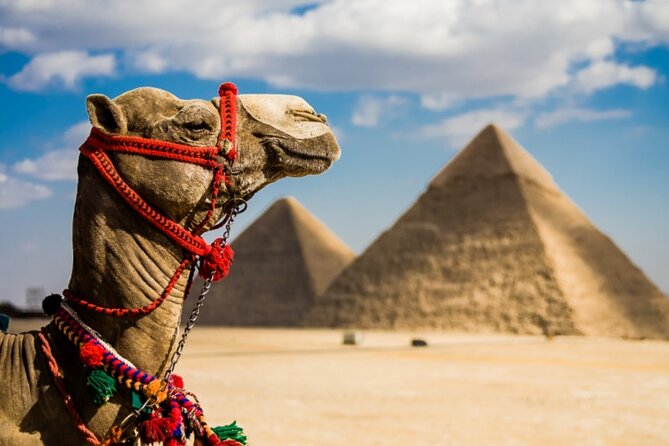
Giza is the main event, and the tour is clearly structured around the three major pyramids people come for. You’ll start at the Great Pyramid of Cheops, then move to the pyramids of Chephren (the middle-sized “lioness” of the trio) and the smaller Pyramid of Mykerinos.
What you’ll appreciate most is not just seeing them, but having the time to compare them. The sizes and placements help you understand why these monuments are treated like a set, not just individual buildings.
The guide also frames them in the way that makes the site easier to process. Instead of collecting random facts, you’ll walk away with a mental map of the complex: where you are, what each pyramid is known for, and how the Sphinx area connects to the larger Giza story.
Camel ride and panoramic photo stops that make the crowds worth it
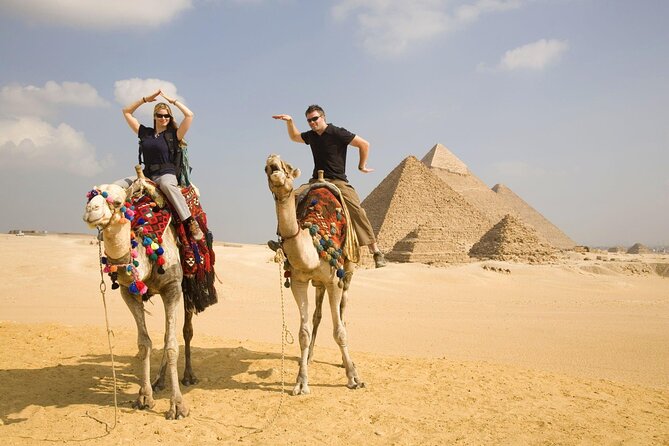
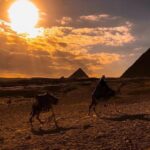
There’s an optional camel ride at Giza. If you’ve been on the fence, this is one of those choices where the timing is everything: do it when you’re set up to enjoy the ride, not when you’re already exhausted.
The tour also includes a panoramic area for that classic pyramid photo. This matters because Giza photos aren’t only about having a good camera. You need the right angle, and you need to stand in the right place long enough to make the picture look like the postcards you’ve seen—without rushing.
If you care about photos, a private guide helps. You don’t waste time searching. You get directed to a viewpoint, and you can stay for a second attempt if the first shot doesn’t come out right.
The Sphinx, Valley Temple, and the optional solar boat stop
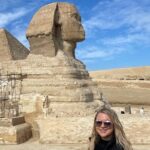
After the pyramids, the tour shifts to the Sphinx, which feels different the moment you arrive. The Sphinx isn’t just another monument—it’s the focal point that ties your Giza walk together.
The itinerary includes a visit to the Valley Temple facing the Great Sphinx. This is where the setting starts to click. You’re not just looking at stones—you’re seeing how the temple area relates to the Sphinx and how the site was designed around a ceremonial landscape.
There’s also an optional visit to the solar boat. The solar boat is described as the vessel used to carry the pharaoh’s mummy across the Nile from the royal palace to the Valley Temple, then buried at the foot of the pyramid for the afterlife journey. Even if you’re not a “boat person,” this stop adds a human-size story to the monument scale.
Saqqara and Memphis necropolis: the Step Pyramid of Djoser
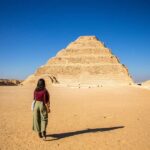
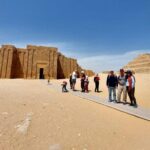
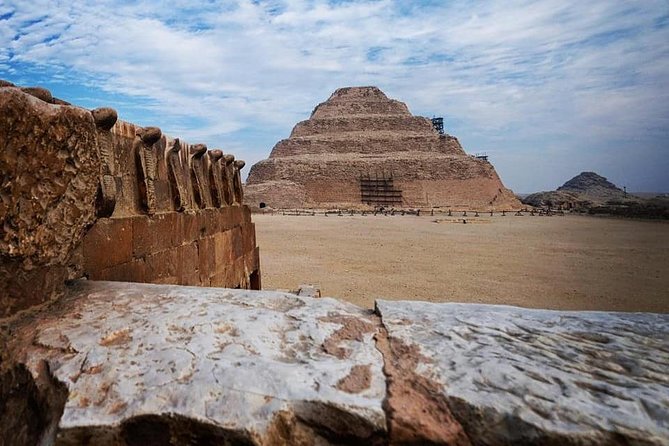
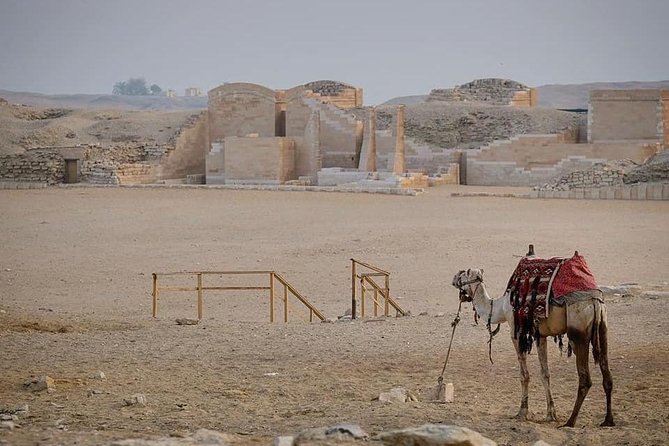
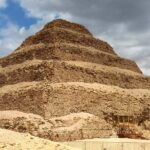
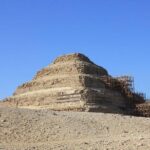
Next comes Saqqara, part of Memphis’s necropolis, where many of Egypt’s early pharaohs were buried. The headliner is the Step Pyramid of King Djoser, described in the tour plan as designed by Imhotep, the Egyptian architect.
This is one of the smartest parts of the itinerary because Saqqara changes your perspective. At Giza you’re hit with the finished, iconic “big pyramid” look. At Saqqara you see earlier development, so the story of Egyptian pyramid-building feels more logical and less random.
If you enjoy architecture or want your day to feel educational beyond photos, this is where the tour earns its keep. You’ll be able to focus on form and function, seeing how early builders experimented before reaching the later shapes you know from Giza.
A few more Cairo tours and experiences worth a look

Teti Pyramid and noble tombs: where to look up close
After Djoser’s Step Pyramid, you’ll visit the Teti Pyramid and noble tombs in Saqqara. This part can feel quieter than the pyramids themselves, but it’s often where your guide’s explanations land best.
The noble tomb stops give context for the broader necropolis idea: the pyramids weren’t isolated landmarks. They were part of a wider burial landscape where elite figures had their own resting places close enough to connect to the royal scale.
A practical tip: wear comfortable shoes and expect uneven ground. Saqqara is not about pacing in a museum. It’s about walking among ancient stonework, often with surfaces that weren’t designed for smooth strolls.
How long you’ll be out and what your body needs
The duration is listed as about 5 to 9 hours, depending on pacing and how long you spend at each stop. That’s a wide range, so plan your day like you might be out for the longer end, especially if you add camel ride time or take extra time at viewpoints.
The tour says you should have a moderate physical fitness level. Translation: you’ll likely do a fair amount of walking, plus some climbing or stepping around uneven surfaces at both Giza and Saqqara.
If you’re traveling with kids, the route is still doable, but it helps to keep a steady pace. The guide can also support you by answering questions in a way that keeps attention from melting away before you reach the Sphinx or Step Pyramid.
Price and value: $72 per person, plus entrance planning
The price is listed at $72.00 per person, and it includes a private tour guide, an air-conditioned vehicle, and all fees and taxes (as stated). The tour notes a mobile ticket and a private setup, which also helps justify the cost compared with cheaper group options.
But here’s the big practical point: entrance admission to the pyramids and Saqqara is listed as not included in the package inclusions, even though the day schedule labels admission tickets as included at the stops. Because of that mismatch, treat this as a “confirm before you book” moment.
If you budget for likely entrance costs and you confirm what your ticket coverage looks like, the rest of the day is good value. You’re basically paying to avoid the hassle of arranging transport, coordinating multiple sites, and spending the day negotiating directions and timing alone.
Guide quality that can genuinely shape your day
This is the part people often underestimate. A good guide can make Giza feel like more than a once-in-a-lifetime photo stop.
Guides named in past experiences include Mohamed Hedar and Mohamed, both praised for strong English and for being friendly and helpful with families. One of the most useful skills a guide can bring is how to explain what you’re seeing without drowning you in facts.
You should also expect that a guide will help with positioning—where to stand for views of the pyramids, how to make Valley Temple and the Sphinx visit feel connected, and how to manage time so you don’t feel frantic.
Who should book this Giza and Saqqara private tour
This tour is a great fit if:
- You want the major hits at Giza and Saqqara without splitting your time across multiple arrangements
- You prefer a private guide who can answer questions and keep your pace
- You’re interested in how early pyramid-building at Saqqara connects to the iconic monuments at Giza
It’s less ideal if you hate walking or you want a super slow, sit-down-only day. This plan is designed for seeing a lot, and you’ll be moving between sites.
If you’re traveling with kids, this private format can work nicely because the guide can tailor explanations and keep everyone engaged without waiting for a big group to regroup.
Should you book it? My straight answer
Book it if you want a smooth, single-day route that connects Giza and Saqqara, with pickup and a private guide who can help you make sense of what you’re seeing. The private setup and the specific focus on Cheops, Chephren, Mykerinos, the Sphinx and Valley Temple, plus Djoser and the Teti Pyramid make it feel purposeful, not random.
Hold off or confirm details first if entrance fees are a concern for your budget. Because the information is a bit inconsistent about what’s included, it’s worth messaging before you go and getting a clear total.
FAQ
What sites are included in this private tour?
You’ll visit the Pyramids of Giza (including the Great Pyramid of Cheops, Chephren, and Mykerinos), the Sphinx area with the Valley Temple, and Saqqara (Saqqara is part of Memphis’s necropolis). At Saqqara, you’ll see the Step Pyramid of King Djoser and the Teti Pyramid and noble tombs.
Is pickup included?
Yes. Pickup is offered, and you’ll travel in an air-conditioned vehicle.
How long does the tour take?
The duration is listed as about 5 to 9 hours.
Are entrance tickets included for the pyramids and Saqqara?
Entrance admission is listed as not included. The day plan also mentions admission tickets at the stops, so you should confirm what your booking includes and what you’ll pay on site.
Can I add a camel ride or the solar boat visit?
Yes. A camel ride at Giza and the optional solar boat visit are part of the experience options.
What is the cancellation policy?
You can cancel for a full refund up to 24 hours before the experience starts. If you cancel less than 24 hours before, the amount paid is not refunded. The tour can also be rescheduled or refunded if it’s canceled due to poor weather, and it may depend on a minimum number of travelers.