REVIEW · GIZA
Day Tour to Giza Pyramids, Sakkara, Dahshur Pyramids, and Memphis
Book on Viator →Operated by Egypt Daily Tours · Bookable on Viator
Egypt’s monuments in one day sounds busy. This private route keeps it manageable with hotel pickup, a dedicated guide, and a timetable that hits the key sites without ferrying you around with random groups. You’ll get a qualified Egyptologist guide to explain what you’re seeing—Step Pyramid of Djoser at Saqqara, Dahshur’s Bent and Red Pyramids, Memphis and the Ramses II statue, then the Giza plateau including the Sphinx area.
Two things I really like: first, the ordering works—starting at Saqqara and Dahshur while the morning is fresh gives you a calmer start. Second, the guide-led pace lets you actually look at details instead of sprinting from photo spot to photo spot; names like Emad, Hesham, and Omar come up in the guide feedback, along with drivers like Ahmad handling the day smoothly.
One possible drawback: entrance fees aren’t included, so your final cost will depend on what tickets you buy and how you manage breaks for food.
In This Review
- Key highlights that make this day tour work
- Door-to-door logistics: what you gain from private pacing
- Saqqara’s Step Pyramid: starting with the earliest big idea
- Dahshur: the Bent and Red Pyramids (where experiments happened)
- Memphis and the Ramses II colossus: capital city energy
- Giza plateau: Cheops, Chephren, Mykerinus, and the big-view payoff
- The Great Sphinx and the Valley Temple area: iconic, but don’t rush it
- Guide impact: Emad, Hesham, Omar, and why pace matters
- Entrance fees and the real cost of going
- What to expect during the day (and how to plan your energy)
- Who this tour suits best (and who might want a different style)
- Should you book this day tour to Giza, Saqqara, Dahshur, and Memphis?
- FAQ
- What time does the hotel pickup happen?
- Is hotel pickup and return included?
- What’s the total duration of the tour?
- Are entrance fees included in the price?
- Which sites are included in the itinerary?
- Is this a private tour?
- What’s included during the tour besides the guide?
Key highlights that make this day tour work
- Private, door-to-door transfers save time and stress—no waiting on other travelers
- Saqqara + Dahshur in the morning means you start with the “earliest pyramid thinking,” not just the final icons
- Egyptologist guidance helps you connect names like Djoser, Senefru, and Ramses II to what’s in front of you
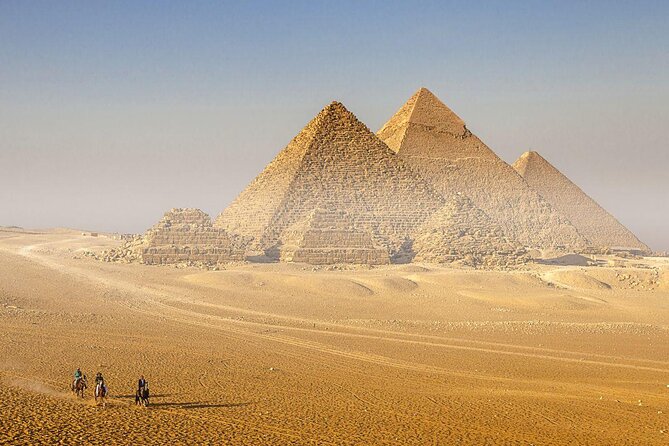
- Giza plateau focus includes the three main pyramids plus a panoramic view from the best vantage point on-site
- Memphis as a reality check: it’s the capital and culture center, not just a backdrop for pyramid photos
Door-to-door logistics: what you gain from private pacing
This is built for people who want the highlights, but hate chaos. You’re picked up from your hotel and brought back at the end, using a private air-conditioned vehicle with mineral water on board. That matters in Cairo’s traffic. It’s not just comfort. It’s time you can spend outside, looking up at stone monuments instead of sitting in a van.
The day runs about 7 to 8 hours, and the schedule is structured into focused site blocks: Saqqara first, then Dahshur, then Memphis, then Giza, with the Sphinx area near the end. Since it’s private, your group moves together and you’re not forced into someone else’s pace.
The “no stops for other travelers” part sounds small until you’re living it. It keeps the route from turning into a pickup-and-dropoff guessing game. Also, the tour offers a mobile ticket, which helps when you’re matching your schedule to the site entry lines.
You can also read our reviews of more tours and experiences in Giza.

Saqqara’s Step Pyramid: starting with the earliest big idea
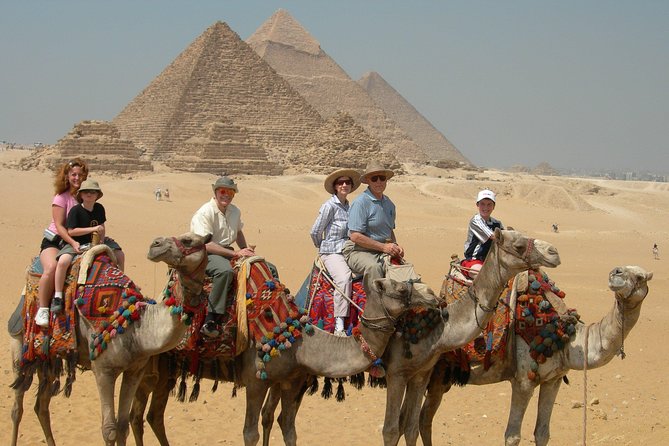
You start with Saqqara (Sakkara) and the Step Pyramid of Djoser—Egypt’s earliest known major pyramid. The timing is set so you’re moving early in the day (pickup is around 7:30 am). That’s smart. Saqqara can feel crowded later, and the light on stone is nicer before the day heats up.
What makes this stop worth it is that it sets the “pyramid story” in motion. The Step Pyramid was built in the 3rd Dynasty for King Djoser (around 2630 BC). Even if you only know pyramids as a finished product, seeing this first helps you understand the shift from older forms of monumental building to the pyramid shapes people picture instantly.
You get about 2 hours here. That’s usually enough time to read the basics from your guide and still walk around rather than just orbit the complex. One practical note: you’ll want comfortable shoes. Sites like this reward walking, and the ground can vary.
Dahshur: the Bent and Red Pyramids (where experiments happened)
Next comes Dahshur, famous for showing pyramid design during a real phase of trial and error. This is the kind of stop you’ll appreciate more with a guide, because it’s not just “big stones.” It’s design decisions you can actually see.
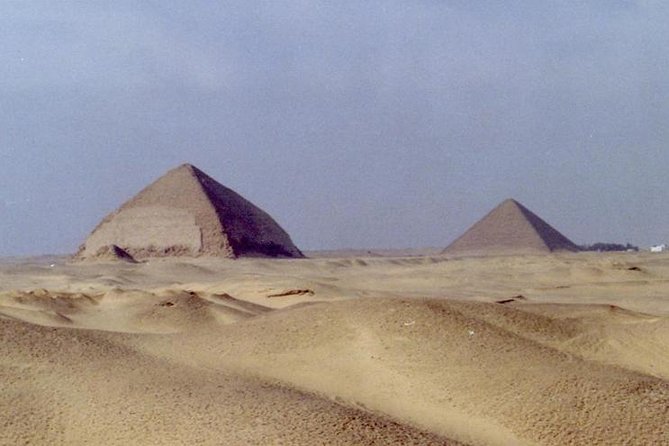
You’ll visit the Bent Pyramid and the Red Pyramid, both tied to King Senefru—often credited as the founder of Egypt’s Fourth Dynasty. Dahshur is where the first true pyramid is associated with Senefru’s building efforts, and the Bent Pyramid is one of the best-known examples of how Egyptian architects adjusted plans as they worked.
You also get about 2 hours at Dahshur. That’s valuable because you’ll likely want time to look from multiple angles. The Bent Pyramid especially benefits from time: you’re noticing shape changes that wouldn’t feel obvious if you only get a quick look.
Possible consideration: if you’re expecting the exact same vibe as Giza—wide open views and the “everyone in one iconic frame” feeling—Dahshur can feel more “site-like” than postcard-like. That’s not bad. It just changes how you experience it. Here, you’re studying architecture with your eyes first, photos second.
Memphis and the Ramses II colossus: capital city energy
Then you head to Memphis, which was the capital during the Old Kingdom and held influence for over 3000 years. This stop is short—about 30 minutes—so I treat it as the day’s cultural and political rewind button.
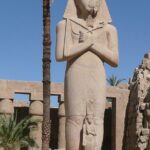
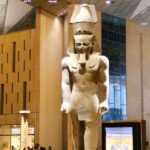
You’ll see the Statue of Ramses II at Memphis. This helps balance your mental map. If your day is only pyramids, it’s easy to forget pyramids were part of a bigger system: kingship, administration, and ritual landscapes. Memphis is where those ideas become less abstract.
Because the time is limited, don’t try to cram in a long wandering tour. Focus on what your guide points out and then move on. If you’re the type who always wants “just one more photo,” you might feel a little rushed here. But with a knowledgeable guide, the short window can still be satisfying—like getting the essential argument in 30 minutes.
Giza plateau: Cheops, Chephren, Mykerinus, and the big-view payoff
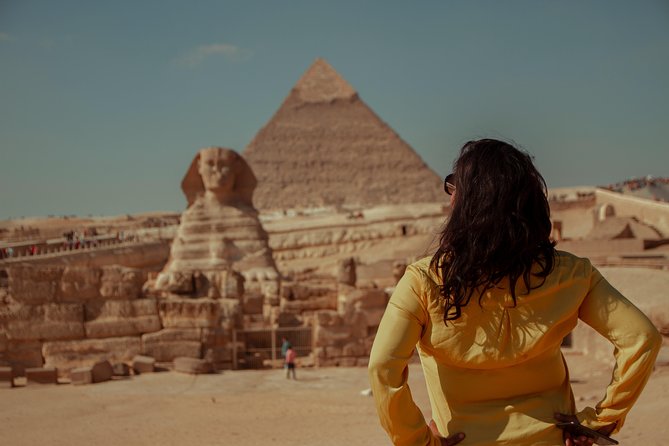
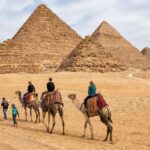
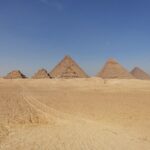
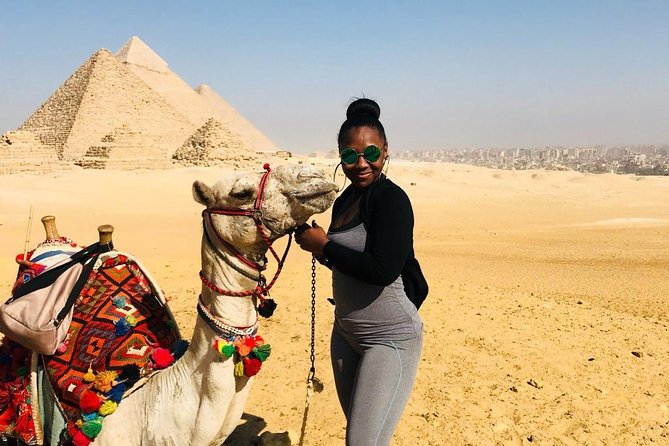
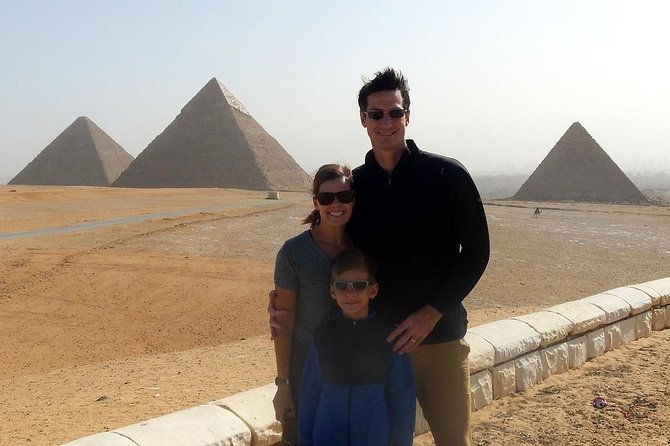
Now for the main event: Giza Pyramids. You start with the front area of the pyramid of King Cheops (also spelled Khufu), one of the ancient Seven Wonders still standing. Then you’ll see the pyramids of Chephren and Mykerinus, and you’ll finish with a panoramic view from the best spot on the Giza plateau where you can take in all three together.
You get about 3 hours here. That’s long enough to stop for explanations and still have time to look around with your own eyes. The key is using that time well. Don’t spend it only at one spot. The pyramids reward shifting perspectives—especially when your guide points out orientation, relative placement, and how the monuments relate to the plateau.
If you’re coming from other pyramid experiences, you’ll notice Giza has a different energy. It’s the most famous set, so it can feel like the world has shown up. Private guiding helps you cut through the noise. You get to interpret what you’re seeing: not just “wow,” but how these structures were designed and why their placement matters.
Practical tip: plan for strong sun and bright glare. You’ll likely be outside for long stretches here. The tour provides mineral water on board, which helps, but you’ll still want to protect yourself from heat and sun.


The Great Sphinx and the Valley Temple area: iconic, but don’t rush it
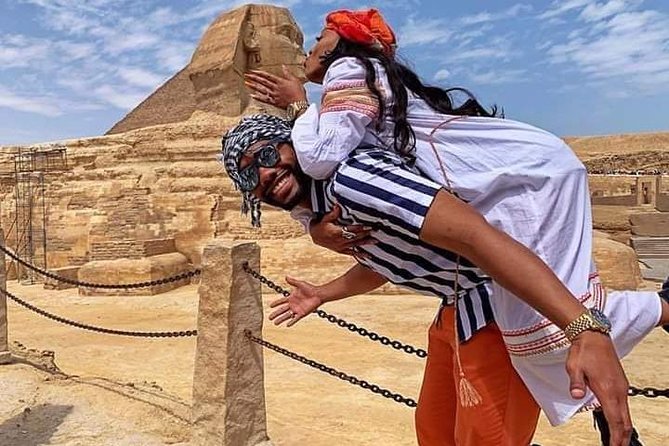
After Giza comes the Great Sphinx, positioned at the foot of the pyramid complex. The guide framing here usually matters a lot, because the Sphinx is easy to treat as a single dramatic face. But it’s part of a bigger setting.
The Sphinx’s head is associated with the time of Chephren, and it was discovered in 1912 (as part of modern archaeology discussions). You’ll have about 30 minutes, and that’s enough to understand the symbolism and the basic history without turning it into a marathon.
The tour description also mentions the Valley Temple. Even if you don’t spend a ton of time there, it’s worth paying attention to how it connects to the main Giza complex. This is where the site starts feeling like a designed system rather than separate monuments lined up for sightseeing.
Consideration: a short stop can feel like “just a quick look” if you’re a slow photographer. If you’re serious about details, make sure you’re listening closely during those 30 minutes, because that’s when interpretation is most useful.
Guide impact: Emad, Hesham, Omar, and why pace matters
The strongest praise centers on guidance that’s both professional and patient. Names like Emad and Hesham show up in the feedback, plus a guide called Omar. The consistent thread: guides don’t just rattle off facts. They explain clearly, at a pace that fits your group, and they don’t rush you through the story you came to see.
That matters on pyramid days. Without a guide, it’s easy to stare at stone and think you’re done after one wide-angle look. With an Egyptologist, your “I’ve seen it” turns into “I understand what I’m looking at.”
One extra detail that helps: the day’s structure keeps the transitions clean. When you move efficiently—Saqqara to Dahshur to Memphis and then to Giza—the guide can keep your brain in “Egypt timeline mode” instead of resetting every time you arrive somewhere new.
Also, the driving support is part of the experience quality. Drivers like Ahmad are specifically mentioned for getting people picked up on time and keeping things well organized.
Entrance fees and the real cost of going
The price is $50 per person, and that’s a solid base for a private, hotel-to-hotel day with a dedicated guide and transportation. But entrance fees for the sites are at your own expense, and food and drinks aren’t included.
So here’s how I’d think about value:
- You’re paying for planning, guiding, and smooth logistics. That’s the part that’s hardest to DIY on your own.
- You’re not paying for the site tickets and meals. You’ll need to budget for those separately.
If you’re traveling solo or as a small group, private tours can feel like a bigger spend—yet the day’s efficiency and the guide’s context often make it worth it. If you’d rather keep costs ultra-low and you’re comfortable navigating sites yourself, you might skip the private component. But if you want less friction and better understanding per hour, this price structure can be fair.
What to expect during the day (and how to plan your energy)
This tour packs in major sites, so you should treat it as a full-day commitment. Even with private transfers, you’re outside in Egypt for long periods. That means your comfort matters.
From the information provided, you’ll have mineral water available on board, which helps. But the tour doesn’t include food, so you’ll want to plan for hunger. If you get hangry, your enjoyment drops fast on pyramid days.
Also, this is described as “most travelers can participate,” and children must be accompanied by an adult. If you’re with kids, you’ll likely need to manage expectations: there’s a lot of walking and plenty of time spent looking at stone and structure rather than rides and games.
Finally, note that it’s a private activity, so only your group participates. That can be great for families and couples who want control, but it also means you’ll rely on the guide’s ability to keep everyone engaged through multiple sites.
Who this tour suits best (and who might want a different style)
This tour is a great fit if you want a day that covers four core areas—Saqqara, Dahshur, Memphis, and Giza—with expert context. It’s especially good if you care about understanding how Egyptian pyramids evolved from earlier forms into the iconic Giza set.
It’s also a good fit if you hate logistical stress. Door-to-door pickup and a private vehicle reduce the “where do we go next?” moments that can drain a day.
You might reconsider if:
- You want long, slow time at one site over rushing through several.
- You’re traveling on a tight schedule with limited tolerance for full-day outdoors time.
- You’re strictly trying to minimize added costs from entrance fees and meals.
Should you book this day tour to Giza, Saqqara, Dahshur, and Memphis?
If your goal is a smart first introduction to Egypt’s pyramids, I’d say this is a strong booking. The biggest win is the combination: you’re not only seeing the famous Giza pyramids. You’re also getting Saqqara’s Step Pyramid and Dahshur’s Bent and Red Pyramids, then balancing it with Memphis and Ramses II.
The second reason to book is the human factor. Guide names like Emad, Hesham, and Omar stand out for being informative and not rushing. Pair that with a private vehicle and hotel pickup, and you get a day that feels organized rather than chaotic.
Just go in knowing entrance fees and food are extra. If you can plan for that, you’ll come away with both photos and real understanding.
FAQ
What time does the hotel pickup happen?
Pickup is listed for around 7:30 am, and you’ll be taken to Saqqara first.
Is hotel pickup and return included?
Yes. The tour includes pickup services from your hotel and return transport afterward.
What’s the total duration of the tour?
The tour lasts about 7 to 8 hours (approx.).
Are entrance fees included in the price?
No. Entrance fees for the mentioned sites are at your own expense.
Which sites are included in the itinerary?
The tour covers Saqqara (Step Pyramid of Djoser), Dahshur (Bent and Red Pyramids), Memphis (including the Statue of Ramses II), Giza (three main pyramids), and the Great Sphinx area.
Is this a private tour?
Yes. It’s a private tour/activity where only your group participates.
What’s included during the tour besides the guide?
Included items are a private air-conditioned vehicle, mineral water on board, all service charges and taxes, and a qualified Egyptologist guide.