REVIEW · CAIRO
8 Hours Full day tour to Giza Pyramids, Memphis, Sakkara & Dahshur
Book on Viator →Operated by Egypt Tours Online · Bookable on Viator
Ancient monuments, tightly packed into one day. This private tour is designed to get you from Giza to Saqqara and Dahshur without the usual Cairo stress of sorting transport and touts. I especially like that you get door-to-door round-trip transfers in a private A/C vehicle with a guide doing the talking.
The big upside is the variety: Red and Bent Pyramids at Dahshur, Egypt’s first Step Pyramid at Saqqara, then the Giza complex with the Sphinx and Valley Temple. One thing to consider: it’s a full schedule, and there are fixed stops for shopping and artisan demonstrations, so you’ll feel the day move fast.
In This Review
- Key Points You’ll Appreciate Before You Go
- Price and Logistics: What $65 Means in Real Life
- Morning Start at 8:00: The Best Way to Beat the Cairo Chaos
- Giza Pyramids and Valley Temple: Cheops, Chephren, Mykerinos
- Great Pyramid Stop: Khufu and the clues you can’t ignore
- Khafre and Menkaure Pyramids: complexes with more moving parts
- The Sphinx and the Giza Plateau: Free Stops Worth Taking Slow
- Dahshur Bent and Red Pyramids: Older, Big, and Often Less Pressured
- Saqqara and the Step Pyramid: Egypt’s First Pyramid Idea
- One practical consideration: Saqqara can feel like more walking
- Memphis: Ramses II and the Alabaster Sphinx
- Lunch and the Energy Plan: Optional Koshari
- The Built-In Stops for Perfume, Papyrus, and Carpets
- Add-Ons: Camel Rides and Going Inside Pyramids
- Private Tour Vibe: Why It Can Feel Better Than Big Groups
- Who This Tour Fits Best (and Who Should Rethink It)
- Should You Book This Tour?
- FAQ
- How long is the 8 Hours full day tour?
- What is the price per person?
- Do you get hotel pickup and drop-off?
- Is the tour private?
- Are entry fees included?
- Is lunch included?
- Can I ride a camel or visit inside the pyramids?
- What time does the tour start and where does it end?
- What is the cancellation policy?
- Is there any water included?
Key Points You’ll Appreciate Before You Go
- Private guide + private A/C transport: You’re not riding around with strangers while trying to manage a day of ancient sites.
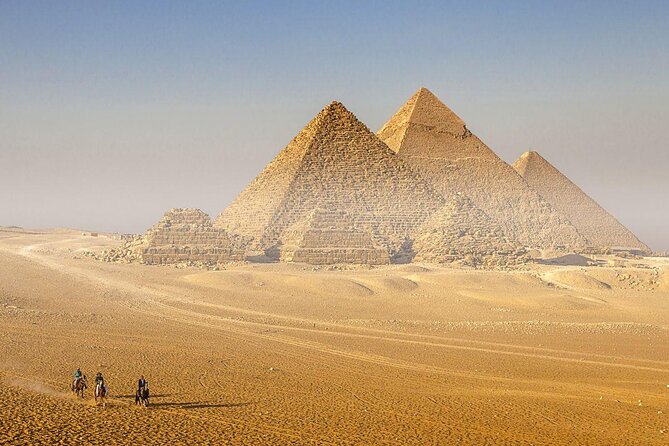
- Four major pyramid areas in one outing: Giza, Dahshur, Saqqara, plus Memphis ties it together historically.
- Entry is included for basic areas: You won’t have to solve ticket math just to see the main grounds.
- Optional add-ons cost extra: Camel rides and interior pyramid visits are available via the guide for an additional charge.
- Expect scheduled artisan and souvenir stops: These take time, even if you skip the shopping part.
- A real full-day commitment: About 9 hours total, starting at 8:00 am, with multiple 20–60 minute site windows.
Price and Logistics: What $65 Means in Real Life
At $65 per person, this is priced like a value-focused private day. The reason it can feel like good money is simple: you’re getting a full set of components that usually add up in Cairo—hotel pickup and drop-off, private A/C vehicle, a guide, and entry coverage for basic areas.
Do note the balance: the plan also includes extra time for government-favored souvenir stops and artisan demonstrations (perfumes, papyrus, and carpet weaving are built into the day). If you like to move fast and skip salesy stuff, you’ll still be on the clock. If you’re okay treating those stops like a short cultural break, the overall day stays satisfying.
The tour runs about 9 hours, starting 8:00 am, and ends back at your starting point. That “loop back” matters. With Cairo traffic, returning you to your hotel without figuring out buses or rideshares is not a small perk.
A few more Cairo tours and experiences worth a look
Morning Start at 8:00: The Best Way to Beat the Cairo Chaos
Your day begins early, with pickup from your hotel in Cairo or Giza. The tour is private, so your guide and driver handle the rhythm—getting you to the next site, then waiting while you see what you came for.
Early starts also help you avoid the worst of the day’s heat and the peak crush at the most famous monuments. Even with an organized schedule, Giza and Saqqara are still busy. This isn’t a “wander forever” kind of tour. It’s a “see the big stones, understand the stories” kind of tour.
Also, you get a bottle of water included. It’s a small thing, but on a long day it helps you stay steady instead of hunting for supplies between stops.
Giza Pyramids and Valley Temple: Cheops, Chephren, Mykerinos
Giza is why most people come to Egypt. On this tour, you start there and you don’t waste time. The visit includes the Great Pyramids attributed to Cheops, Chephren, and Mykerinos, plus the Valley Temple and the Sphinx.
Here’s what I like about this approach: you get the complex in a logical order. You begin with the pyramids themselves, then you shift to the Valley Temple where you can actually picture how the area functioned during the burial process.
The Valley Temple portion is described as connected to priests performing mummification rituals for King Chephren. Whether you’re an Egyptology fan or just want the essentials, having a guide explain what you’re looking at turns the photos into something more meaningful. The Valley Temple stop also supports the Sphinx viewing, since both sit within the larger funeral complex idea.
One note on timing: your time at the main Giza area is about two hours, and then you get shorter 30-minute windows for specific pyramid stops. That means you won’t have endless time to pick the perfect angle, but you’ll still get real time to walk, look up, and absorb.
Great Pyramid Stop: Khufu and the clues you can’t ignore
You’ll also spend time at the Great Pyramid of Cheops (Khufu). Even if you don’t read every inscription, your guide’s framing matters. The tour includes facts like the surviving “portrait” referenced as a small ivory figurine found in a later-period temple ruin, plus the idea that much of what we know about Khufu comes from inscriptions and later documents.
If you’re trying to understand why people obsess over details, this is the section where it clicks: these aren’t just giant shapes. They’re anchored by evidence and later records.
Khafre and Menkaure Pyramids: complexes with more moving parts
Khafre’s pyramid complex is described as including a valley temple, Sphinx temple, causeway, mortuary temple, and the king’s pyramid. Menkaure’s complex includes a similar set: valley temple, causeway, mortuary temple, and his pyramid.
This is helpful because it prevents the common mistake: treating each pyramid like a single standalone object. Your guide’s breakdown makes the complex feel like a designed system.
The downside? Each pyramid gets around 30 minutes, so you’ll be moving. If you want to spend hours comparing textures and steps, you’ll likely want a separate, slower visit for just Giza. For a first trip, this does a lot.


The Sphinx and the Giza Plateau: Free Stops Worth Taking Slow
After you’ve done the main pyramid area, you’ll see the Sphinx again as a dedicated stop, and then you’ll have a visit to the Giza Plateau.
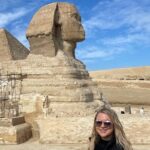
The Sphinx stop is listed as free, which is nice because it helps you focus on the experience instead of counting what’s included versus not. The tour describes the Sphinx as a guardian with a lion body and a head of King Chephren. Even if you already know the basics, it’s still worth standing there long enough to look at what’s around it and how it fits the larger complex.
The Giza Plateau visit is also listed as free, and it’s connected to the UNESCO Pyramid Fields. The plateau is described as a limestone plateau, about 60 meters above sea level, and part of the larger Western Desert edge of the Nile Valley UNESCO setting.
This is one of those “background” parts of the tour where your guide can help you understand the bigger map: cemeteries, workers’ village references, and the sense that Giza was an engineered landscape, not just three pyramids dropped onto sand.
Dahshur Bent and Red Pyramids: Older, Big, and Often Less Pressured
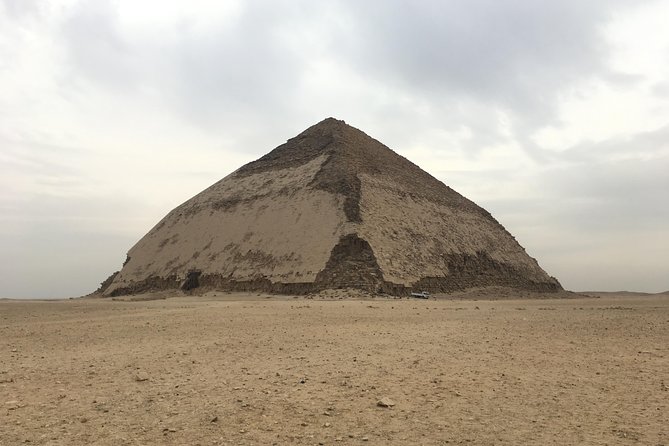
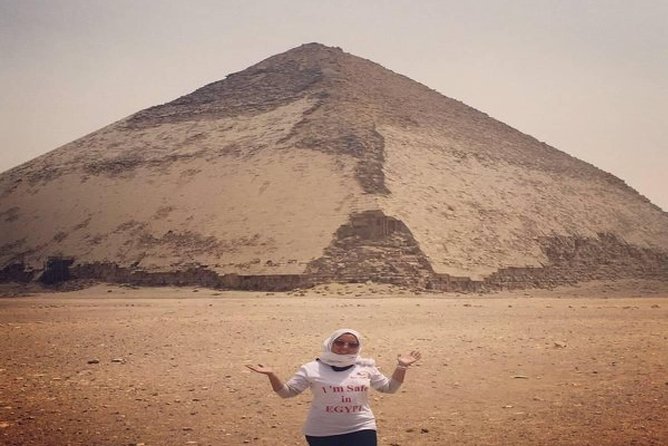
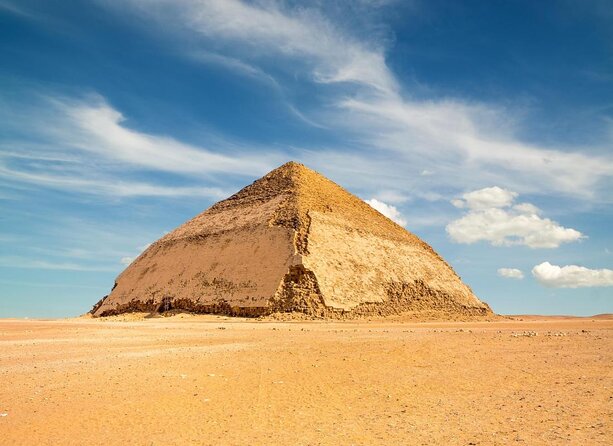
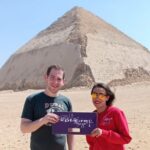
Then you head to Dahshur, about 40 km south of Cairo, for the Bent and Red Pyramids. Dahshur is described as a royal necropolis with two of the oldest, largest, and best-preserved pyramids in Egypt, built between 2613–2589 BCE.
What I like about including Dahshur is that it gives your brain a second “shape to learn.” After Giza’s familiar massing, Dahshur’s pyramids feel like part of the earlier evolution of royal monument building.
You’ll have around one hour in the Dahshur area. That’s not a long time, but it’s enough to get the key differences and take a few solid walks. If Giza is where you look up because you can’t help it, Dahshur is where you look up and start thinking: how did they do this, and how did it change over time?
Saqqara and the Step Pyramid: Egypt’s First Pyramid Idea
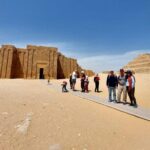
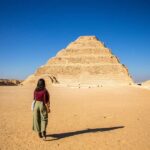
Next is Saqqara, around 27 km from Cairo, where the centerpiece is the Step Pyramid of King Zoser. The tour frames it as part of the process of pyramid evolution—from simple mastaba forms to the well-known pyramid shape.
If you only ever see “smooth-sided pyramids,” the Step Pyramid is a reality check. It shows the work-in-progress stage of building royal monuments. Even if you don’t go deep into theory, you can feel the “this was the model” logic in the structure.
You’ll also visit areas connected with Saqqara’s tombs and pyramid texts themes, including:
- Mastaba of Ti, with two serdabs and wall scenes described as everyday life.
- Pyramid of Unas, listed with a 30-minute stop tied to a replica-style presentation in the tour description.
- Pyramid of Teti, described as the second known pyramid containing pyramid texts.
That’s a lot of learning points for one hour, and it helps that each stop has its own short window. You’re not stuck in a single spot too long.
One practical consideration: Saqqara can feel like more walking
Even though each stop is short, Saqqara involves movement across the site. If you’re not used to walking on uneven ground, plan for that. A good guide can keep you oriented, but your legs still do the work.
Memphis: Ramses II and the Alabaster Sphinx
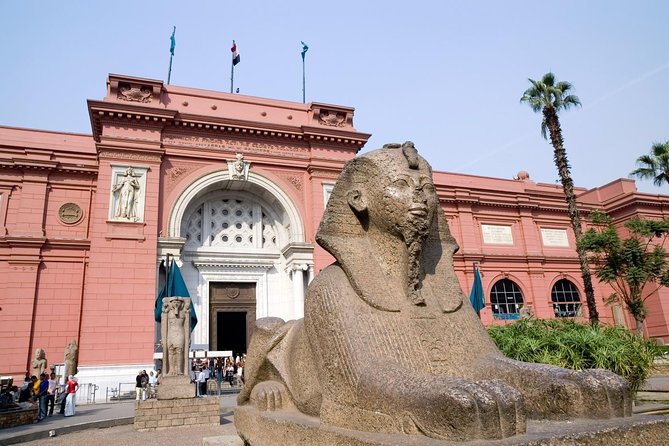
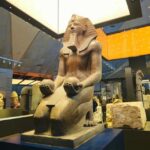
After the pyramid stops, the day adds a city layer: Memphis, the ancient capital of Egypt. This is where the tour shifts from “royal monuments” to “royal power in public spaces.”
You’ll spend about one hour here, including two notable items:
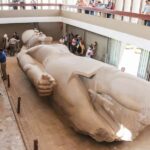
- A colossal statue of Ramses II
- The alabaster Sphinx
The tour describes Memphis as dating back to 3100 B.C. That’s the kind of timeline detail that helps the day feel connected instead of a string of separate sightseeing stops.
If you’re trying to understand why these sites mattered beyond their immediate burial function, Memphis is the right contrast. It reminds you that Egypt’s monumental culture lived in daily political life too.
Lunch and the Energy Plan: Optional Koshari
Lunch is not automatically included, but there’s an optional meal described as koshari at a local restaurant.
From a practical point of view, I like knowing the lunch is “there” but not forced. Koshari is filling, and on a day like this, that matters. But you may prefer to grab something lighter or snack earlier if you’re sensitive to long waits.
Either way, the tour gives you bottle water included, which helps you manage the gap between meal moments. Still, keep an eye on energy. This is a long day with several short site windows.
The Built-In Stops for Perfume, Papyrus, and Carpets
One detail you should factor in is the schedule’s scheduled stops that feel more “experience stops” than “pure monuments.” The day includes about 20-minute stops at:
- Paradise Perfumes and Flower Cotton (natural oils and soft Egyptian cotton)
- Key of Life Papyrus (papyrus making and traditional artwork)
- Handmade Carpets (artisan hand-weaving)
On top of that, there are government souvenir stops for high-quality souvenirs.
I don’t see these as automatically bad. They can be interesting if you treat them like quick introductions to crafts and local production. But they do eat time that could otherwise be used for another viewpoint at Giza or a deeper Saqqara stroll.
If you’re the kind of person who hates shopping pressure, decide in advance how you’ll handle it. You can watch, ask a couple questions, and then move on.
Add-Ons: Camel Rides and Going Inside Pyramids
Your guide can arrange optional extras for an additional charge, including:
- Camel rides
- Trips inside the pyramids
These are the kind of “only if you want it” choices that can make a big difference. Camel rides can be a fun way to get perspective, but they also come with extra time and cost. Going inside a pyramid is a different level of experience, but it also means extra ticketing and potential lines.
If you’re deciding what’s worth paying for, I’d prioritize based on your curiosity:
- If you want a more physical, unique moment, go inside.
- If you want a classic photo-and-perspective memory, consider a camel ride.
Either way, you’re not forced into paying. The base tour is designed so you still get the key monuments.
Private Tour Vibe: Why It Can Feel Better Than Big Groups
This is a private tour, so it’s only your group. That matters more than you’d think on monument days. You can ask questions at the exact moment something catches your eye. You also don’t have that constant “wait for the slowest person” rhythm.
The tour description also includes group discounts, though your actual group size and discount depends on the booking details you choose.
One detail worth celebrating: one guide name mentioned in feedback is Hesham Michael, and that kind of name recognition is a good sign that guides here can truly connect with visitors rather than just recite lines.
Still, private tours require clean coordination. The one clear downside pattern from negative feedback is that pickup problems can happen when hotel pickup isn’t properly executed. My practical advice is simple: confirm your pickup details clearly and keep a reachable contact on your phone.
Who This Tour Fits Best (and Who Should Rethink It)
This tour fits you if:
- You want a first-time “greatest hits” day with Giza + Sphinx + Saqqara + Memphis + Dahshur
- You like the comfort of hotel pickup and private A/C transport
- You enjoy guided context more than wandering without direction
You might rethink it if:
- You want lots of free time at each site to go slow and linger
- You strongly dislike souvenir or craft stops built into the schedule
- You plan to spend major time inside pyramids and want full flexibility (since optional add-ons come later and may add cost and logistics)
It’s also a great option if you’re short on days in Cairo but still want more than one pyramid zone.
Should You Book This Tour?
Yes, I’d book it if you want a smooth, organized, value-priced day that hits the major pyramid areas without Cairo transport headaches. At $65, the private guide and door-to-door transfers are doing a lot of the heavy lifting.
Book with a smart mindset: treat it as a full-day routing plan, not a slow museum visit. If you’re okay with the built-in craft and souvenir stops, you’ll likely come away feeling you got a lot for your time. If you want maximum monument time only, you may prefer a more focused tour that spends longer at fewer sites.
FAQ
How long is the 8 Hours full day tour?
The tour is listed as lasting about 9 hours (approx.) and it starts at 8:00 am.
What is the price per person?
The price is listed as $65.00 per person.
Do you get hotel pickup and drop-off?
Yes. Hotel pickup and drop-off are included, with transfers by private A/C vehicle.
Is the tour private?
Yes. It’s described as a private tour/activity, so only your group participates.
Are entry fees included?
Entry fees are included, with the note that entry fees include basic area access. Inside-pyramid entry is not included in the standard plan.
Is lunch included?
Lunch at local restaurants (koshari) is optional, so it’s not included by default.
Can I ride a camel or visit inside the pyramids?
Your guide can arrange camel rides or trips inside the pyramids for an additional charge.
What time does the tour start and where does it end?
It starts at 8:00 am with pickup from your hotel area and ends back at the meeting point.
What is the cancellation policy?
You can cancel for a full refund up to 24 hours before the experience’s start time.
Is there any water included?
Yes. Bottle water is included.