REVIEW · CAIRO
Thrilling Half-Day: Discover Pyramids, Sphinx, Camel Ride& Lunch!
Book on Viator →Operated by Travel Door Tours · Bookable on Viator
Cairo’s time machine is Giza. A half-day here packs the Pyramids of Giza and the Sphinx into one efficient route, with an Egyptologist guide to explain what you’re seeing and time to take photos without feeling rushed.
What I really like is how the tour pairs top monuments with human-scale moments: a short camel ride in the sand, plus a light lunch to keep you going through the heat. I also appreciate the setup for comfort and timing, including air-conditioned transfers and bottled water.
One thing to think about: entering the pyramids’ interiors is not automatically included for every site. You’ll likely need a special inside ticket, and the guide can help with that choice.
In This Review
- Key Things That Make This Tour Worth Your Time
- A Half-Day in Giza: How to See the Icons Without Burning Out
- Pickup, Comfort, and Getting There on the Right Side of the Chaos
- Stop 1: Great Pyramids of Giza, Valley Temple of Khafre, and the Sphinx You Can Actually See
- The camel ride: fun, short, and best used as a photo moment
- The Valley Temple of Khafre: where the story gets concrete
- The Sphinx: up close time that isn’t just a drive-by
- Stop 2: The Great Pyramid of Khufu and the Inside-Ticket Decision
- Entering the pyramid inside: a special ticket, and it’s optional
- Stop 3 and 4: Khafre and Menkaure Pyramids for Different Styles of Wonder
- Khafre’s Pyramid: second highest, and still in good condition
- Menkaure’s Pyramid: smaller, but with a standout material detail
- Panoramic View Time: Photos, Breathing Room, and Perspective
- Sphinx Time Again: More Close-Up Photos When You’re Ready
- Lunch That Actually Helps: A Light Egyptian Meal Between Monuments
- Guides and Pacing: What Makes It Feel Friendly, Not Mechanical
- Price and Value: What $20 Really Buys You Here
- Who Should Book This Tour, and Who Might Not
- Should You Book This Half-Day Pyramids Tour?
- FAQ
- How long is the half-day tour?
- Is hotel pickup included?
- What entrance fees are included?
- Do I need a special ticket to enter the pyramids?
- Is the camel ride included?
- Can I cancel for a full refund?
Key Things That Make This Tour Worth Your Time
- Egyptologist-guided history that turns stone monuments into understandable stories
- Air-conditioned pickup and drop-off with bottled water onboard for a smoother ride
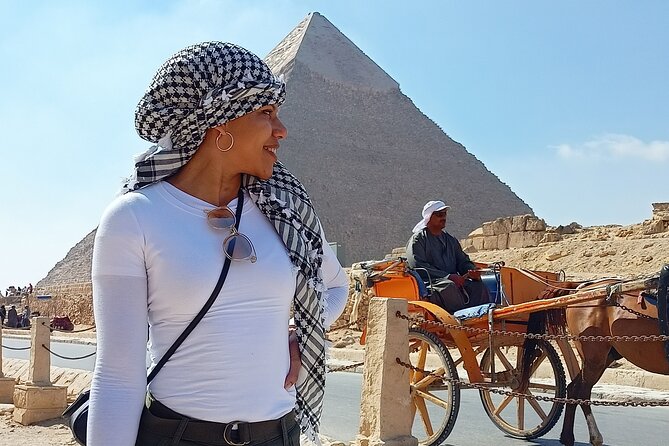
- Camel ride (about 20 minutes) for that classic desert experience, without eating the whole day
- Flexible time at the main stops so your group can adjust to photo and walking pace
- Entrance and pyramid-inside rules depend on your option—you’ll want to choose what you want included
- Private group experience so you’re not stuck waiting on a huge crowd
A Half-Day in Giza: How to See the Icons Without Burning Out
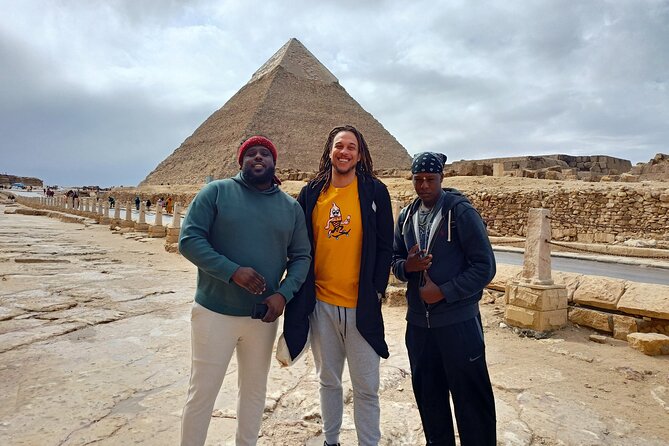
A 4 to 5 hour tour is a smart move for first-timers. Giza is busy, the sun can be punishing, and walking between points takes more energy than the map suggests. This tour keeps you on a focused route—Great Pyramid area, Sphinx area, then other key pyramids—so you get the “wow” factor without spending your entire day in transit.
This is also a practical value deal if you want guided context. At about $20 per person, you’re not just paying for views; you’re paying for an Egyptologist to help you make sense of what you’re looking at. The fact that it’s booked about 28 days in advance tells you it’s a popular way to do Giza efficiently.
Because it’s a private tour for your group, you can ask questions in the moment and keep the pace realistic. That matters at Giza, where waiting for others can turn a short tour into a long, hot shuffle.
A few more Cairo tours and experiences worth a look

Pickup, Comfort, and Getting There on the Right Side of the Chaos
Your day starts with pickup from your hotel or requested location. The vehicle is air-conditioned, and bottled water is included onboard—small details, but they genuinely help. In this area, comfort can be the difference between enjoying the monuments and counting minutes until you’re done.
The tour also includes a guaranteed skip-the-lines benefit. That’s huge at the pyramids, where queues can eat the limited time you have. Since this tour uses a short window to hit multiple sites, anything that reduces waiting helps you see more of what you came for.
You’ll get a mobile ticket, which is convenient when you’re bouncing between entrances and checkpoints. And because group discounts are offered, this can be a good option when you have friends traveling together and want to share the logistics.
Stop 1: Great Pyramids of Giza, Valley Temple of Khafre, and the Sphinx You Can Actually See
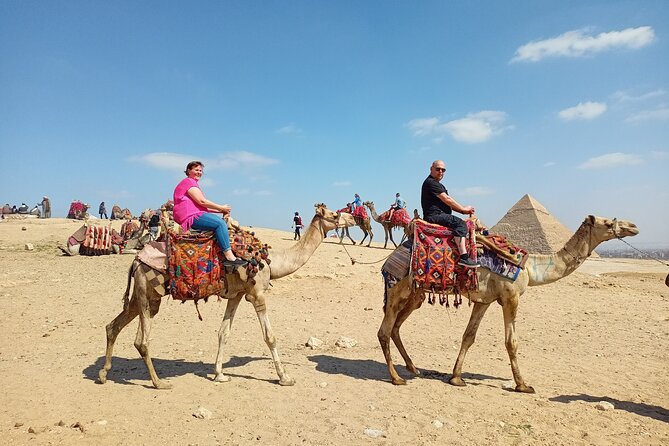
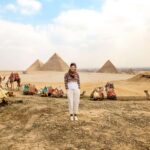
Stop 1 is where the tour delivers the iconic “I can’t believe this is real” moment. You’ll visit the Great Pyramids of Giza, then head to a panoramic area where you can enjoy a short camel ride.
The camel ride: fun, short, and best used as a photo moment
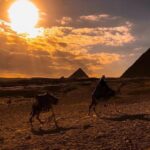
The camel ride is about 20 minutes (based on your selected option). I like that this is not treated like the main event. It’s long enough to feel the desert vibe, but short enough that you still have plenty of time for the monuments right after.
For safety and comfort, keep expectations realistic. You’ll be sitting on a moving animal in sand, not doing a smooth city stroll. Wear shoes you can walk in comfortably, and use sunscreen even if you think the shade looks decent.
The Valley Temple of Khafre: where the story gets concrete
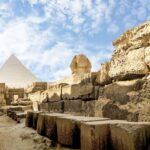
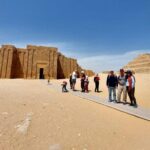
After the camel ride area, the tour moves to the Sphinx and the Valley Temple of Khafre. This isn’t just a scenic detour. The Valley Temple is described as the reception of the royal body of Khafre, tied to the process of mummification. When you understand that connection, the stone doesn’t feel like a random ruin—you see how it fit into a specific ritual world.
A few more Cairo tours and experiences worth a look

The Sphinx: up close time that isn’t just a drive-by
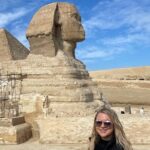
You also get close-up time for the Great Sphinx—lion body, head of Khafre. The pacing here is flexible depending on your group, which helps a lot. If your priority is photos, you’ll get room to take them. If your priority is learning, the guide has space to explain.
Stop 1 is listed as about 2 hours, with admission tickets included for this part of the day (based on your selected option). That length is useful because it gives you the chance to shift from “look at it” to “understand it.”
Stop 2: The Great Pyramid of Khufu and the Inside-Ticket Decision
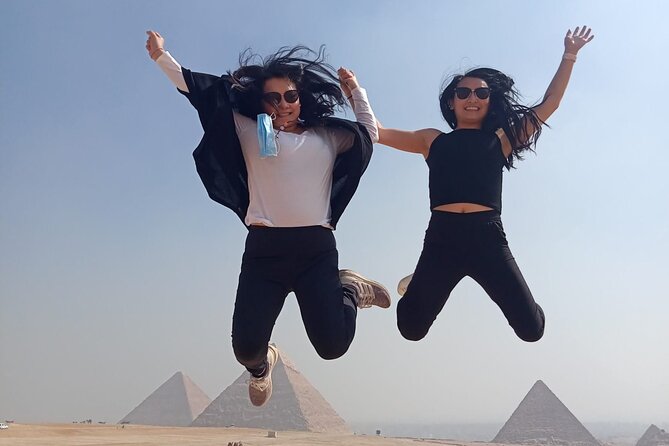
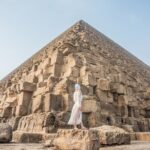
Next comes the Great Pyramid of Cheops (Khufu). This is the one that sits at the top of the pyramid conversation. It’s described as the only wonder of the ancient seven wonders that still remains standing, and it was the highest building on Earth for more than 3800 years.
You get about an hour here. That’s long enough for a guided walk around the area and to take in the scale without the experience turning into a frantic checklist. The tour notes that you can explore the entire area with an Egyptologist guide—use that time. Ask questions like how the pyramid complex was laid out or what you should notice first when you’re standing on the ground.
Entering the pyramid inside: a special ticket, and it’s optional
Important: entering the pyramid from inside requires a special ticket. The inside entry is not automatically included, but your guide can assist you with the decision.
Here’s how I’d think about it: if you want a taste of what it feels like inside a sealed ancient space, plan for the extra inside ticket step. If you’d rather prioritize outside views and photos, you can still have a strong experience without it. Either way, your guide can help you choose what makes sense for your time and comfort level.
Stop 3 and 4: Khafre and Menkaure Pyramids for Different Styles of Wonder
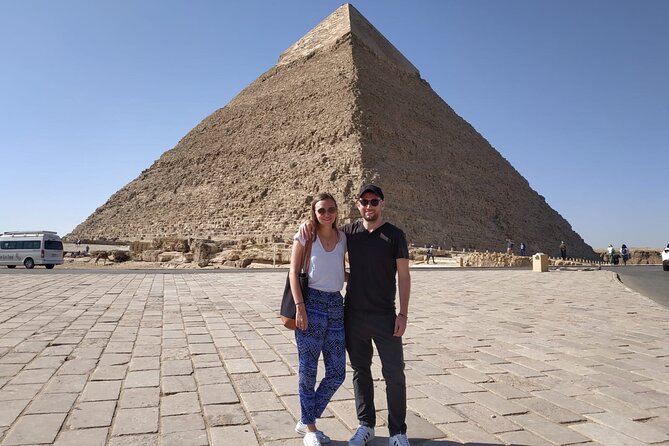
The tour doesn’t stop after Khufu. It also includes the other key pyramids on the plateau.
Khafre’s Pyramid: second highest, and still in good condition
Khafre’s Pyramid (Chefren) is the second highest in the complex. You’ll spend about 30 minutes here. Like Khufu’s stop, inside entry requires a special ticket, but the tour focuses on the parts you can see without that extra step—especially the valley temple and causeway.
Why this matters: the causeway and valley temple give you a better sense of how the pyramid complex functioned as a system, not just a single big shape in the sand. If you’ve ever wondered why ancient monuments look so “arranged,” this portion helps answer it.
Menkaure’s Pyramid: smaller, but with a standout material detail
Menkaure’s Pyramid is listed as the smallest pyramid on the Giza plateau, about 61 meters high. It also gets about 30 minutes. One detail that’s especially interesting is the granite outer layer still remaining on the lower part of the pyramid.
The tour notes that the granite was quarried from Aswan over 9000 kilometers away from Giza. Even if you don’t memorize the number, standing near a feature like that makes you think about logistics—this wasn’t a local pickup truck operation.
This part of the route is a nice contrast. Khufu tends to dominate your mental image, but Menkaure gives you a chance to slow down and notice materials and textures.
Panoramic View Time: Photos, Breathing Room, and Perspective
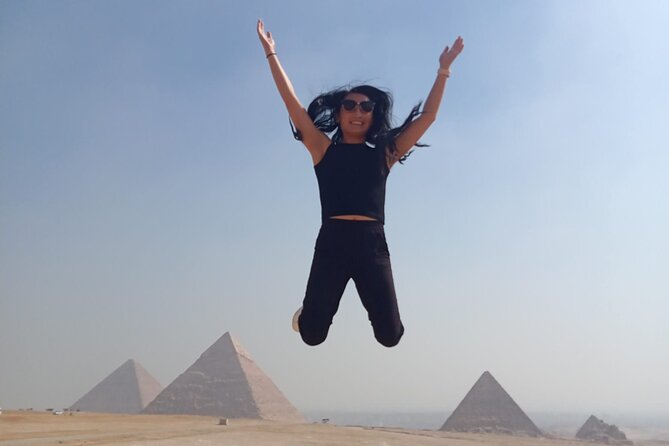
After the pyramid-focused stops, you’ll get panoramic view time that includes the city of Giza area and views of multiple pyramids. This stop is about 30 minutes, with time carved out for photos.
I like this section because it resets your brain. After time spent close up at stone monuments, it’s helpful to step back and see how the whole plateau fits together visually. It also gives you the chance to frame shots without the stress of walking right up to another entrance.
There’s often a temptation to spend every second aiming the camera. Use a few minutes without shooting. Just look. From certain angles, the plateau suddenly starts to make visual sense.
Sphinx Time Again: More Close-Up Photos When You’re Ready
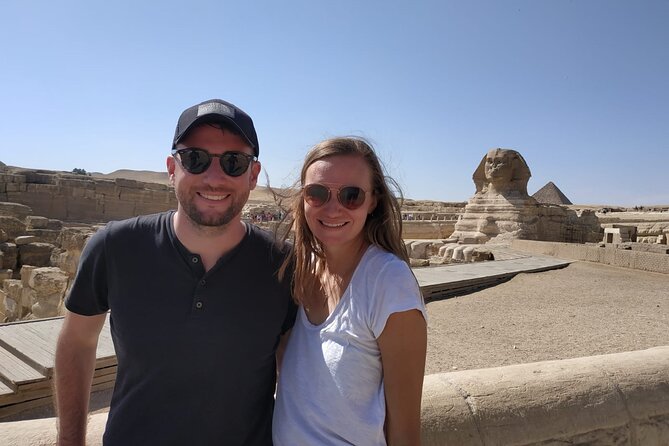
You’ll also get another Great Sphinx close-up segment as part of the day. This stop is listed as about 30 minutes, with entry based on the pyramids area ticket you already have.
Yes, it’s the Sphinx twice in one half-day plan. But that’s not necessarily redundant. The first Sphinx time often blends into the flow of the surrounding sites. The later stop is a chance to take the photos you couldn’t get earlier—especially if the best angles weren’t available at your first time slot.
If you care about pictures, treat the second stop as your final shot window. If you care about learning, ask your guide to point out what you should focus on in the stone and positioning.
Lunch That Actually Helps: A Light Egyptian Meal Between Monuments
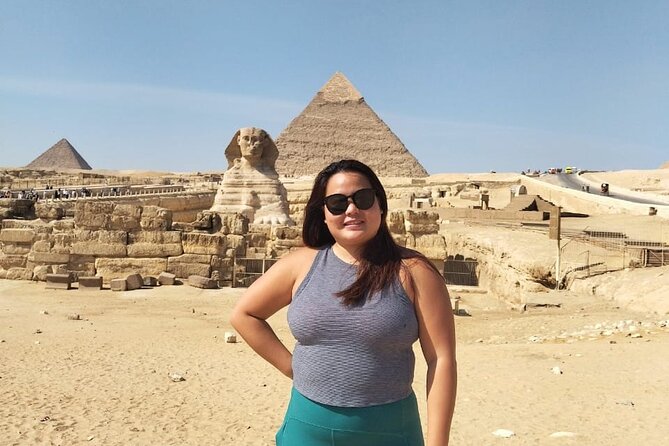
Lunch is included based on your selected price option, and it’s described as a light Egyptian lunch.
On tours like this, lunch can be either a quick afterthought or the thing that keeps you from feeling wrecked by the heat. Here, the “light” angle is a good fit because you’re not trying to have a heavy meal before more walking and standing in sun.
If you have dietary needs, double-check the specific option you book. The tour description ties lunch to the selected price option, so your exact meal inclusion can vary.
Guides and Pacing: What Makes It Feel Friendly, Not Mechanical
This tour is built around a qualified Egyptologist guide, and that guidance is the glue for the whole experience. The biggest difference between “seeing pyramids” and “getting it” is having someone explain what you’re looking at and why it matters.
The most praised aspect from prior participants is the way the guides show up: punctual, friendly, and willing to answer questions while you’re moving through the sites. Names that have come up include Nada Alaa and Haitham, plus Mo, who helped make a childhood dream come true for one traveler. When a guide keeps you comfortable and answers your questions without brushing you off, the tour feels like a conversation, not a script.
Pacing is also described as flexible—time spent in each place adjusts based on customers. That’s ideal for a half-day tour because it helps avoid the classic problem of arriving somewhere “for five minutes” and spending all of it waiting for others.
Price and Value: What $20 Really Buys You Here
At $20 per person, the value depends on what option you choose, because key pieces are tied to your selected price option. Here’s the smart way to look at it:
You’re getting:
- a qualified Egyptologist guide
- private air-conditioned transfer pickup and drop-off
- bottled water onboard
- camel ride (about 20 minutes) based on selected option
- lunch based on selected option
- entrance fees based on selected option
- guaranteed skip-the-lines
- entry ticket of the Great Pyramid based on selected option
If you choose the option that includes Great Pyramid entry, plus camel ride and lunch, then $20 starts to feel like a deal because you’re bundling several “separate costs” that people usually end up paying one by one.
If your selected option is lighter and doesn’t include everything, you’ll still see the major monuments with guidance, but you’ll want to budget for any extra tickets—especially if you decide you want to go inside the pyramids.
Either way, this tour is a strong choice when you want convenience and context and you don’t want to spend time figuring out the route alone.
Who Should Book This Tour, and Who Might Not
This half-day format works best if:
- it’s your first time at the Giza plateau
- you want a guided explanation, not just photos
- you’re short on time and still want the main sights
- you want the camel ride without turning it into a half-day inside the sand
You might want a different plan if:
- you’re hoping for lots of time at one site only (this schedule spreads you across several pyramids)
- you specifically want inside pyramid entry for multiple pyramids and don’t want to deal with special tickets along the way
- you prefer to wander independently without a set route
Should You Book This Half-Day Pyramids Tour?
I’d book it if your goal is to hit Great Pyramid, Sphinx, and the broader Giza plateau in a single morning or afternoon, with an Egyptologist guide keeping the experience readable and worth it. It’s especially appealing when you like having comfort built in—pickup, air-conditioning, bottled water, and skip-the-line help.
Before you confirm, do two quick checks so the day matches your expectations:
- Confirm what your selected option includes: camel ride, lunch, entrance fees, and whether Great Pyramid entry is covered.
- Decide how you feel about inside access. Inside entry needs a special ticket, and your guide can assist you with that choice.
If you get those pieces clear ahead of time, this tour is a practical, satisfying way to see Giza without wasting your limited daylight.
FAQ
How long is the half-day tour?
The tour is listed as about 4 to 5 hours.
Is hotel pickup included?
Yes. The tour offers pickup from your requested location or hotel, and drop-off after the tour.
What entrance fees are included?
Entrance fees are included based on the selected price option. The Great Pyramid entry ticket is also based on the selected option.
Do I need a special ticket to enter the pyramids?
Entering the pyramids from inside requires a special ticket, and your guide can assist you with that.
Is the camel ride included?
A camel ride for about 20 minutes is included based on the selected price option.
Can I cancel for a full refund?
Yes. You can cancel up to 24 hours in advance for a full refund.