REVIEW · CAIRO
Private trip to Giza pyramids Sakkara Memphis & shopping
Book on Viator →Operated by Egypt Sightseeing Tours Day Trips · Bookable on Viator
Four ancient stops in one Cairo day. This private tour strings together the big names of Egypt—Pyramids of Giza, the Great Sphinx, Sakkara, and Memphis—without making you juggle tickets or directions. You meet your guide at your hotel lobby (with a sign showing your name), then ride in an air-conditioned car with bottled water while your guide handles the pacing and points you to strong photo spots.
I especially like the private setup: it feels calmer because it’s just your group, and your guide can tailor stops around what you care about. I also love the photo-first approach—your guide helps you get the pyramid-and-you shots you actually want, not just random skyline frames. The main trade-off is practical: entry fees, tipping, and lunch are not included, so you’ll need a bit of extra cash for the day.
In the end, you get a very clear storyline of ancient Egypt—Old Kingdom monuments at Giza, the step-era shift at Sakkara, and then the reminder that Memphis was a real political center, not just a name on a map. It’s a long day (about 7 to 8 hours), but it’s one of the most efficient ways to see four headline sites in a single outing.
In This Review
- Key things to know before you go
- Private day circuit: why this beats DIY in Cairo
- Giza pyramids and the Great Sphinx in about 3 hours
- Sakkara: the Step pyramid, Imhotep, and the tomb of Idut
- Memphis: getting the capital context between monuments
- Comfort and photo help: the real difference with a private guide
- Price and what $7.50 per person really means
- How to plan your day for heat, tickets, and walking
- Who this tour suits best in Cairo
- Should you book this private Giza, Sakkara, and Memphis trip?
- FAQ
- What sites does this private tour visit?
- How long is the tour?
- Is hotel pickup included?
- Is this tour private or shared?
- What’s included in the tour price?
- Are entry fees included?
- How much time is spent at the Pyramids of Giza?
- Is lunch included?
- Do I need to tip the guide or driver?
- Can I cancel for a full refund?
Key things to know before you go
- Hotel-lobby pickup with a name sign keeps your first minutes smooth and avoids Cairo guesswork
- Giza for about 3 hours gives you time for the Great pyramid and the Great Sphinx
- Sakkara’s Step pyramid (2670 BC) lets you see one of the earliest major stone building complexes
- Tomb of Idut details daily life on decorated walls, including scenes of fishing, farming, hunting, and taxes
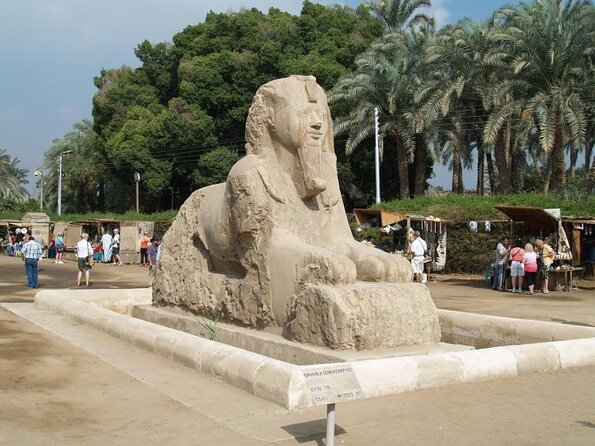
- Memphis adds the capital context so the burial ground doesn’t feel random
- AC vehicle and bottled water make the heat more manageable during a packed route
Private day circuit: why this beats DIY in Cairo
Cairo can be brilliant, but it’s also chaotic. For a day built around four major sites, the smartest move is often a private guide who already knows how to run the order of things and where to stand for photos.
This experience is designed to feel stress-free. You don’t have to line up transport between distant stops, because you’re using private transportation in an air-conditioned vehicle. You also aren’t stuck trying to decode hieroglyph-heavy places on your own; your guide’s job is to translate what you’re seeing into something you can actually picture—like connecting the pyramids of Giza to the evolution of royal building at Sakkara.
The other reason this format works: the tour is private, so your group stays together. That matters when you’re walking through crowds at Giza and then shifting to the quieter scale of Sakkara. You’ll get a more natural pace instead of speed-walking between checkboxes.
You can also read our reviews of more private tours in Cairo


Giza pyramids and the Great Sphinx in about 3 hours
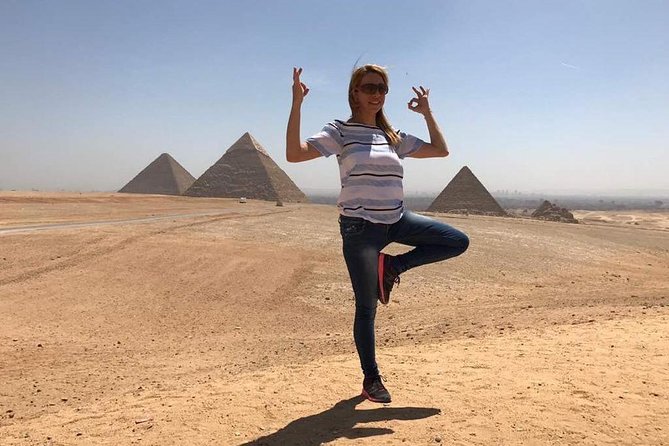
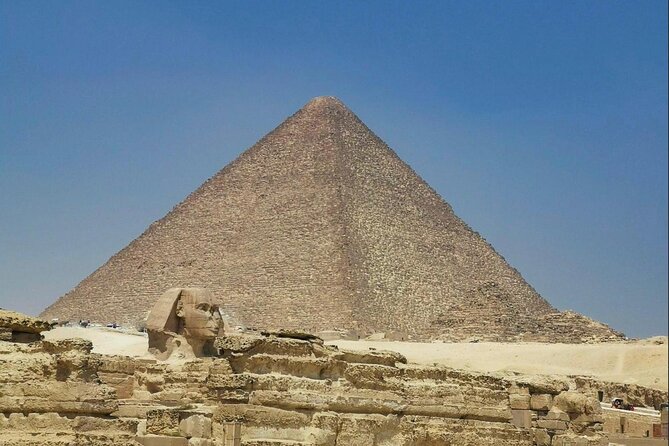
Giza is why most people come to Cairo. The Great pyramid is the star, and you’ll see it as part of a focused block of time (about 3 hours at the Giza area).
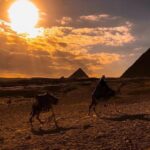
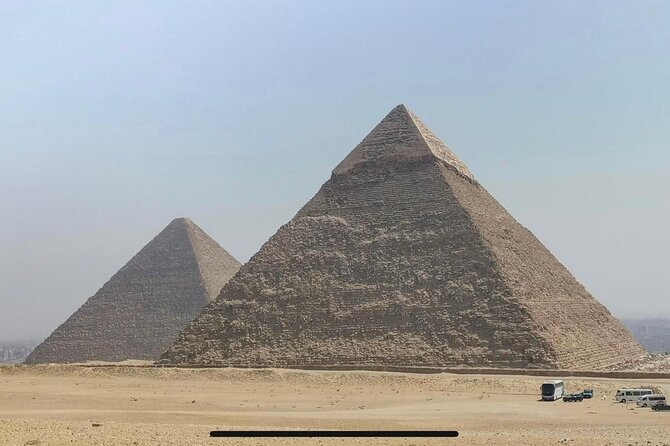
Here’s what makes this stop so memorable. The Great pyramid is tied to the Old Kingdom and the 4th dynasty, built during the reign of Khufu (Cheops). The dates are given as 2580–2560 BC, and the pyramid’s size is staggering—about 147 meters high. You’re not just looking at a tourist “icon.” You’re looking at the oldest and largest survivor on the Giza plateau and the last remaining major wonder of the ancient world.
You’ll also see the neighboring pyramid of Khafre (Chephren), described as the son of Khufu. That pairing matters because it helps you understand Giza as a set, not one pyramid in isolation. Even if you only spend a little time at each viewpoint, seeing more than one royal monument gives your brain something to compare.
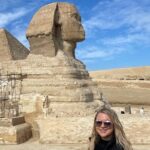
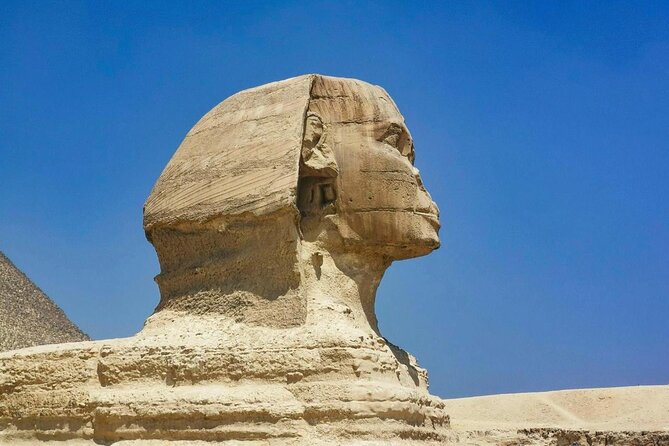
And yes, you’ll visit the Great Sphinx as part of this day. This is the moment where the scenery turns emotional for many people: giant carved stone, a human face motif, and a landscape that feels engineered for time travel. If you’re hoping for photos where the Sphinx and pyramids actually frame well, this is where a guide earns their keep—your guide will point you to strong photo spots and help you get pictures that include you, not just stones.
Heads-up: Giza is visual overload. Three hours is a solid chunk, but you still need comfortable shoes and patience for uneven walking and bright sunlight. Think of this as a highlight run, not a slow museum day.
Sakkara: the Step pyramid, Imhotep, and the tomb of Idut
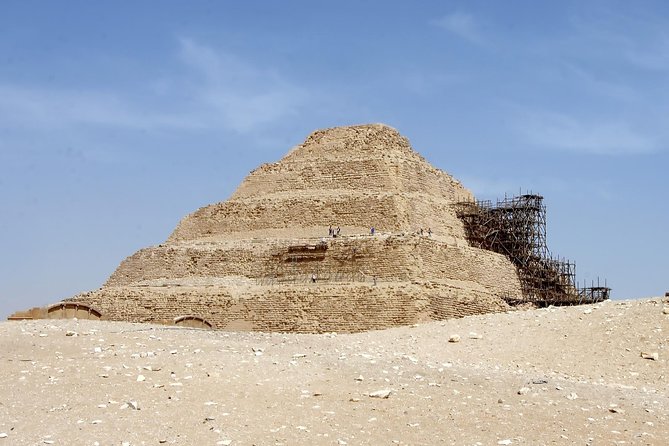
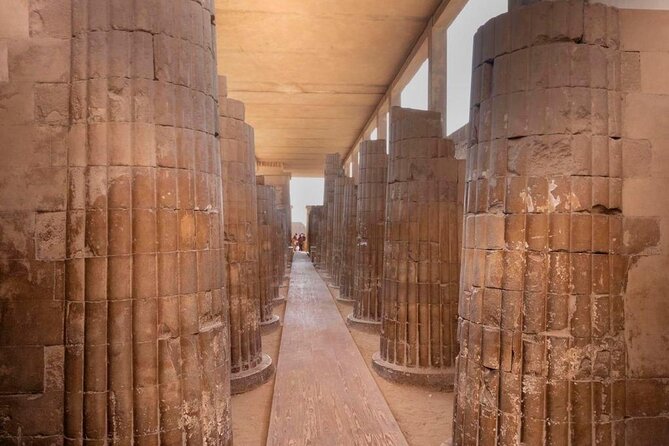
After Giza, you shift from the most famous image of Egypt to a deeper story of how royal architecture evolved. Sakkara is a vast burial ground and served as the necropolis for the ancient Egyptian capital in Memphis.
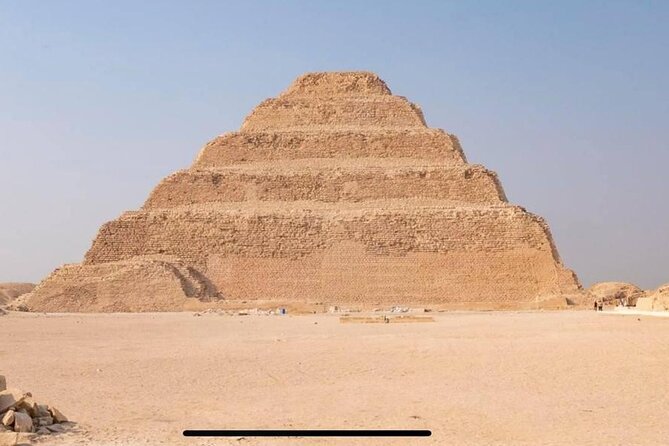
The core moment here is the Step pyramid, described as the first step pyramid, constructed around 2670 BC in the Old Kingdom 3rd dynasty. The builder/architect is given as Imhotep, and the tour notes that he was also described as a doctor of King Zoser. That detail helps you connect the monument to a person and a system, instead of treating it like an anonymous pile of rock.
The Step pyramid is also framed as the oldest complete stone building complex known in history. Even if you already knew it existed, seeing it in context changes your mental model: this is where Egyptian monumental building becomes more permanent and more deliberate.
Then comes the part I think many people love most, because it’s not just kings and towers—it’s daily life. You’ll also see tombs, including the Tomb of Idut, described as the daughter of King Teti (first king of the 6th dynasty). The walls have inscriptions with scenes of everyday activities like fishing, farming, hunting, and taxes payment.
That matters because it gives Sakkara personality. You start noticing that burial art isn’t only about myth and gods. It’s also about work, food, and the economy of daily survival. It’s history you can picture.
One practical consideration: Sakkara can feel like a maze of stone fragments and tomb spaces depending on where you’re standing. A guide helps you focus on what you’re seeing so it doesn’t turn into a blur.
Memphis: getting the capital context between monuments
After Sakkara, the day ends with Memphis, described as the capital of the pharaohs. Even with limited detail on the exact sights within Memphis in your tour info, the value of including it is clear: it anchors the burial ground and the pyramids in a real political center.
This is one of those stops that can be “short but smart.” When you understand that Sakkara served the Memphis capital, the whole geography starts clicking. You’re no longer treating pyramids and tombs as separate postcards. You’re looking at a connected system: rulers needed monumental spaces for power and eternity, and Memphis was the human hub where that power was organized.
If you’re the type who likes to leave with a clear mental map, Memphis is useful. If you wanted a full museum-style deep dive, you might wish the day had more time—but for a 7 to 8 hour circuit built around multiple headline sites, Memphis is a strong context add.
Comfort and photo help: the real difference with a private guide
The big “in the trenches” value here isn’t only the sites. It’s the support around them.
You get an air-conditioned vehicle and bottled water, which sounds basic until you do a long day in Cairo sun. Heat is often what ruins the experience, not lack of sightseeing. Having water ready means you can stay focused on what you came for.
The other standout feature is the guide’s photography help. The tour specifically calls out that your guide knows the best photo spots and is happy to photograph you. That’s huge if you travel with a phone and want photos that look like you planned them, not like you begged a stranger for help.
And because it’s private, your guide can pace you. You don’t have to stretch to keep up with strangers or wait for someone to finish a selfie at the one exact angle. That’s not glamorous, but it’s exactly what makes a long day feel manageable.
If you care about being respectful and practical while still getting great shots, this is the kind of tour that tends to deliver. The tone from past bookings has been consistently about friendly, respectful guidance and solid photo results—exactly what you want when you’re trying to capture places this dramatic.
You can also read our reviews of more shopping tours in Cairo




Price and what $7.50 per person really means
At $7.50 per person, this private circuit looks like an unbelievable deal on paper. The reason it can be that low is that the price doesn’t cover everything. Entry fees are not included, and you’ll also want to plan for tipping the guide and driver plus lunch.
So the real value equation is this: you’re paying for a private guide, air-conditioned transport, bottled water, and a schedule that strings together four major sites in one day. That included package is where you’re getting most of your money’s worth—especially the guide and transportation. In Cairo, time and stress can be as costly as cash.
Also, the tour length matters. With about 7 to 8 hours on the clock, you’re not just “seeing” monuments—you’re seeing the set. If you tried to DIY, you’d spend your own time managing transport, figuring out where to stand for photos, and coordinating entry times. This tour turns that into one controlled itinerary.
To be fair, the low price won’t change the need for the added day costs. If you hate surprises, budget ahead for:
- Site entry tickets (not included)
- Lunch (not included)
- Tips for guides/drivers (not included)
Once you do that, the overall feel is: you’re buying convenience plus expert help for a day that would be harder without it.
How to plan your day for heat, tickets, and walking
This tour is a full sightseeing block, so preparation makes your experience smoother.
First: entry tickets are not included, so you’ll want to be ready to pay entry fees on site. If you’re the kind who likes a clean plan, you can ask your operator ahead what you’ll need to purchase and how much time you should expect for lines.
Second: lunch is not included. That means you’ll want a lunch plan (or at least a flexible attitude) because your body will demand it on a 7 to 8 hour day.
Third: bring essentials for comfort. The tour includes bottled water and AC rides, but you’ll still be outside during the monuments. Wear comfortable footwear and bring sun protection.
Lastly: because your guide is also helping with photography, tell them what you want. If you want photos with specific angles of the pyramids or a shot that includes the Sphinx, your guide can guide you to strong spots. That turns you from passive spectator into someone who leaves with images you actually like.
Who this tour suits best in Cairo
This tour fits best if you want:
- A private day with your group only
- A guide who actively helps with photo spots and photographs you
- A single outing that covers Giza, the Sphinx, Sakkara, and Memphis
- Comfortable transport in an air-conditioned vehicle with water included
It’s also a good match if you value clarity. Seeing four huge ancient sites in one day can either become chaos or become a storyline. With a knowledgeable guide directing you, it tends to become a storyline.
It may be less ideal if you want a slow, deep, museum-style pace at just one site. This is built to cover multiple anchor stops, so each place is a highlight session, not a multi-day obsession.
Should you book this private Giza, Sakkara, and Memphis trip?
If you’re weighing DIY versus guided, I think this is the easy pick. You’re getting private transportation, AC comfort, bottled water, and a guide who knows where to stand for the best photos. For a day built around ancient icons that are hard to navigate without local support, the value is strong—especially at the stated $7.50 per person price.
Book it if you’re okay with the added realities: entry tickets, tips, and lunch are on you. Also be ready for a full-day pace with some walking in bright conditions.
Skip it only if you want to spend lots of time lingering at one site or if you strongly dislike paying extra for things that aren’t included. For most people trying to fit Cairo’s biggest ancient hits into one day, this private circuit is a smart, efficient choice.
FAQ
What sites does this private tour visit?
You’ll visit the Pyramids of Giza, the Great Sphinx, Sakkara, and Memphis.
How long is the tour?
It runs about 7 to 8 hours in total.
Is hotel pickup included?
Yes. Pickup is offered, and the guide meets you in your hotel lobby with a sign of your name.
Is this tour private or shared?
It’s private. Only your group participates.
What’s included in the tour price?
Included features are a private expert tour guide (with photography help), an air-conditioned vehicle, bottled water, and private transportation.
Are entry fees included?
No. Admission ticket entry fees are not included.
How much time is spent at the Pyramids of Giza?
The Giza portion is about 3 hours.
Is lunch included?
No. Lunch is not included.
Do I need to tip the guide or driver?
Tipping to guides or drivers is not included.
Can I cancel for a full refund?
Yes. You can cancel up to 24 hours in advance for a full refund.