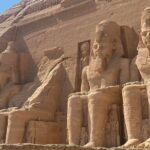
REVIEW · ASWAN
Private Tour to Abu Simbel Temple From Aswan
Book on Viator →Operated by Luxor and Aswan Travel · Bookable on Viator
Abu Simbel is one of Egypt’s big “how did they do this?” moments. This private day trip from Aswan trades the usual crowd chaos for a private air-conditioned vehicle and a guided walk through the temples that Ramses II carved into the rock.
I especially like the Egyptologist guide format, because the story isn’t just plaques and photos. You get the meaning behind the statues and the layout, including the way the two temples connect through religion and symbolism.
The main thing to consider is time: a 7 to 9 hour outing can feel like a long day, and you’ll want a moderate level of physical comfort for walking and moving around once you’re on site.
In This Review
- Key Highlights Worth Planning Around
- Why Abu Simbel Still Feels Mythical in Real Life
- Private Transport from Aswan: Fewer Headaches, More Focus
- Egyptologist Guide: The Difference Between Seeing and Understanding
- Temple of Ramses II: The Sun Temple and Its Divine Cast
- Temple of Queen Nefertari (Temple of Hathor): A Different Kind of Power
- Timing That Works: How the Day Fits Together
- Comfort and Control: Bottled Water, Clean Vehicle, and Clear Communication
- Price and Value: Is $232 Per Person Fair?
- Where You’ll Meet: Hotel Pickup and the Aswan Airport Option
- What to Do Before You Go (So You Don’t Lose Time)
- Should You Book This Private Abu Simbel Tour?
- FAQ
- How long is the Abu Simbel private tour from Aswan?
- Do I get hotel pickup and drop-off?
- Is this tour private?
- Do I need a guide, and is the guide English-speaking?
- Is bottled water provided?
- What passport information is needed?
- Is free cancellation available?
Key Highlights Worth Planning Around
- Private party setup: only your group rides together, so the pace stays yours
- Air-conditioned transfers + bottled water: helps when Abu Simbel is bright and hot
- English-speaking Egyptologist: better context for what you’re seeing at Ramses II’s and Nefertari’s temples
- Both temples in one trip: plan on roughly 3 hours at Abu Simbel before heading back to Aswan
- A real UNESCO rescue story: the temples were saved from flooding through coordinated work
- Sun Festival timing can be special: the solar alignment at Ramses II’s temple happens twice a year, if your dates match
Why Abu Simbel Still Feels Mythical in Real Life
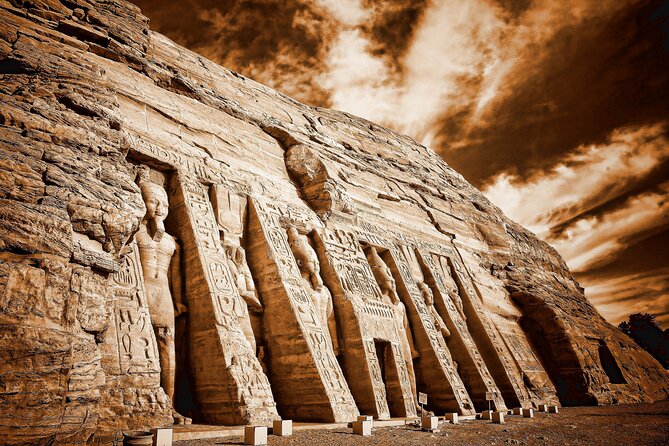
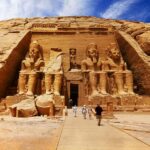
Abu Simbel doesn’t feel like an optional stop. It feels like a grand, intentional statement carved into stone. The two main temples are widely treated as masterpieces of Egypt’s New Kingdom glory, and once you’re there, the scale makes the distance from Aswan feel worth it.
One reason this place hits hard is the survival story. Egyptian authorities and UNESCO coordinated to protect the temples from flood risk, relocating them so they would not be lost to rising waters. That history matters because you’re not just looking at ancient art. You’re looking at an ancient site that has been preserved through modern engineering and planning.
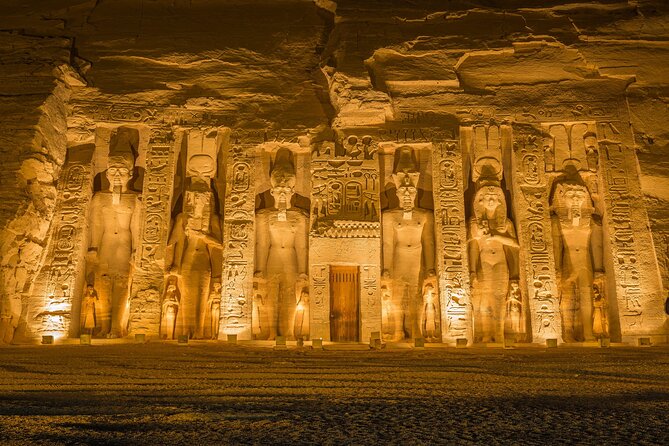
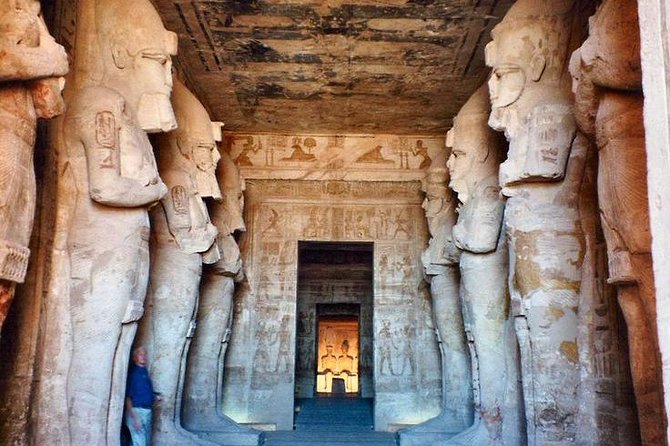
And then there’s the “religion meets architecture” angle. The complex is built to communicate power: Ramses II’s temple is a temple of the sun, while Queen Nefertari’s temple (linked with Hathor) balances the message with her own divine symbolism. If you like learning what different figures and gods were meant to represent, Abu Simbel is tailor-made.
You can also read our reviews of more private tours in Aswan

Private Transport from Aswan: Fewer Headaches, More Focus
This tour keeps it simple: you go from Aswan to Abu Simbel and back in a modern air-conditioned vehicle with bottled water onboard. That’s not a luxury add-on. It’s practical value, especially if you’re trying to avoid the stress of fitting into a fixed bus schedule with strangers.
Pickup and drop-off are handled for you. The program includes pickup from your Aswan hotel, and it also lists Aswan International Airport as a start point. If you’re coming from travel days or early flights, that flexibility can save you from planning a separate taxi run.
The private setup also changes how the day feels. Instead of racing to match group timing, your guide can pace you through what matters most to your group. You still have a schedule, but it’s not one size fits all.
If you’re the type who hates waiting around, this is the kind of experience that helps you get your bearings fast and keep moving.
Egyptologist Guide: The Difference Between Seeing and Understanding
Seeing Abu Simbel is easy. Understanding it takes a guide.
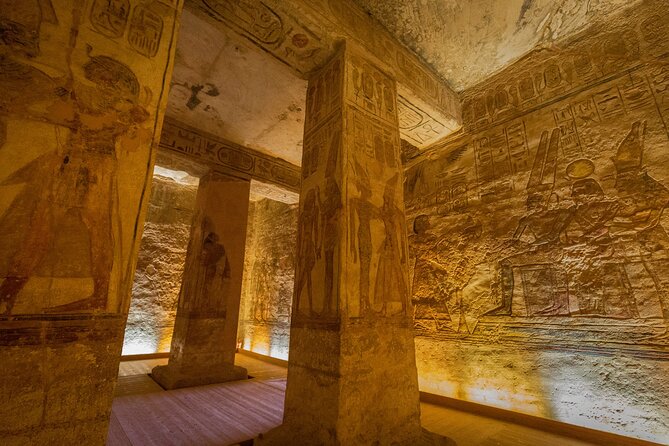
You’ll have a professional, English-speaking Egyptologist, which matters because the temple walls and iconography are doing real work. They link Ramses II, the gods, and the cosmic idea of the sun into one message.
A standout theme you’ll likely hear explained is how the temple system is structured around worship. The program emphasizes that Ramses II’s Temple is dedicated to a set of universal gods, including Ptah, Re-Her-Akhtey, Amun-Re, and also Ramses II himself. When you understand that, the carvings stop being random decoration and start looking like a designed argument.
In practice, this kind of guide also helps you manage your time on site. With about 3 hours allocated to explore Abu Simbel, you don’t need to stand in every doorway for ten minutes pretending you’ll decipher everything. You can focus on the “why” points first, then use the extra time to look closer where the guide points you.
Temple of Ramses II: The Sun Temple and Its Divine Cast
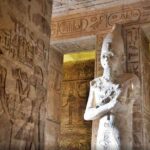
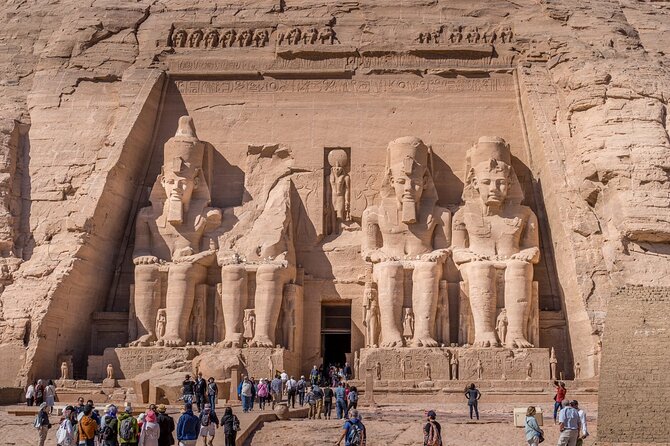
Ramses II’s temple is often called the Sun Temple of Ramses II, and that name isn’t just poetic. The complex is tied to celestial symbolism and royal authority. The dedication list is part of the story: this temple connects Ramses II to the gods and places the king in the role of a divine figure within the cosmic order.
The itinerary frames this as a major highlight, and it’s where you’ll usually feel the most dramatic atmosphere. Expect a mix of large-scale impressions and close-detail moments, with your guide explaining what different elements are meant to convey.
One extra layer can appear if your travel dates match a seasonal phenomenon. The solar alignment at the Holy of Holies in the Temple of Ramses II happens twice a year, creating a rare effect where sunlight reaches inside in a very intentional way. If you’re traveling around those windows, it turns the visit into more than a beautiful archaeological stop. It becomes something closer to a living historical ritual.
Even when you’re not there during the alignment, the “sun temple” concept gives you a lens for what you’re seeing. You’ll be more likely to notice the design choices that support the idea of light, kingship, and worship.
Temple of Queen Nefertari (Temple of Hathor): A Different Kind of Power
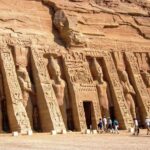
Abu Simbel isn’t only Ramses II’s statement. The other temple shifts the focus to Queen Nefertari, also called the Temple of Hathor in the program details.
Hathor is closely linked with symbolic motherhood and also connected in temple interpretation with the sun and the worship of divine feminine presence alongside the king’s role. The tour explanation highlights that Nefertari is the wife of the Sun God in a symbolic way, and that the two temples together create one combined religious message.
What I like about how this is presented is that it prevents the common “one temple, one story” problem. You don’t just leave thinking, Great, I saw Ramses. You leave realizing the design is communicating relationships: Ramses II, Nefertari, Hathor, and the sun all tied into one system.
When you explore the second temple after Ramses II’s, use the contrast. Take a step back mentally. Ask yourself what changes in tone, meaning, and symbolism. A good guide helps you make those connections quickly, which is exactly why this format feels better than rushing through a set of rooms on your own.



Timing That Works: How the Day Fits Together
This is a long-day type of outing, listed at about 7 to 9 hours. That range is normal because driving time and on-site timing can shift. What matters most is that you’ll spend a meaningful block at the temples and still have time for the return to Aswan.
The day plan is built around one main site. You’ll go to Abu Simbel, spend about 3 hours exploring the temple complex, then return to Aswan. That structure is helpful if you want depth without stacking too many stops.
Here’s the practical consideration: plan your energy for the road and for the walking. The tour notes a moderate physical fitness level requirement, which likely means you should be comfortable with movement around the temple areas and standing at viewpoints as you take in carvings and statues.
Also, this kind of day is best when you dress for heat and sun. The program includes bottled water, but you’ll still want to think about hydration, shade breaks, and pacing yourself.
Comfort and Control: Bottled Water, Clean Vehicle, and Clear Communication
The comfort details are small, but they add up. You get bottled water, and you ride in a modern air-conditioned vehicle, which is the difference between arriving still sharp-eyed and arriving slightly fried.
There’s also a practical angle to how this tour seems to run day-to-day. People describe efficient and clear communication, including fast messaging coordination on WhatsApp. That’s useful for pick-up timing and for handling the real-life question: where do I meet the driver and at what exact minute?
It’s also worth noting the positive reputation around car condition and driver professionalism. If you care about starting the day calm and not improvising, this matters.
And since this is a private tour, you’re less likely to get stuck in that awkward loop of waiting for one group while another group gets ahead.
Price and Value: Is $232 Per Person Fair?
At $232 per person, the price is not the cheapest way to reach Abu Simbel. But it does include the stuff that usually costs money or causes hassle if you do it independently.
Here’s what your money covers based on the tour inclusions:
- All transfers by modern air-conditioned vehicle
- Pickup and return from your Aswan hotel (and airport start point is listed)
- Bottled water on board
- A professional English-speaking Egyptologist guide
- All service charges and taxes
When you add that up, you’re paying for transportation time, a trained guide, and the coordination that keeps the day from turning into a DIY puzzle. That’s good value if you want a smoother, smarter visit, especially since Abu Simbel is far enough that “just figure it out” can eat your energy.
What’s not included is also clear: tipping and any extras not mentioned. If you like to handle everything up front and keep the day stress-free, this tour format fits that style.
Where You’ll Meet: Hotel Pickup and the Aswan Airport Option
The program lists Aswan International Airport as a start point, and it also includes hotel pickup in Aswan. In real life, this kind of arrangement gives you flexibility, especially if you’re combining this trip with other parts of Egypt.
If you’re arriving by flight, the airport start point can be easier than dragging luggage into a city pickup. If you’re staying in Aswan city, the hotel pickup keeps it simple.
Either way, you should expect a mobile ticket approach, and the tour notes that you’ll need to provide passport details for all participants when booking. That’s typical for Egypt site access, but it’s still worth preparing your documents early so you don’t end up typing passport numbers last-minute.
What to Do Before You Go (So You Don’t Lose Time)
You’ll want to do three prep steps:
- Have each participant’s passport name, number, expiry, and country ready at booking.
- Pack for a long day: comfortable walking shoes and a plan for sun exposure.
- Keep expectations aligned with the format: it’s private, guided, and focused on Abu Simbel rather than a multi-stop day.
Since you’ll be out for 7 to 9 hours, think like a local for once. Bring what helps you stay comfortable, and don’t treat the trip as a quick photo run.
Also, if your travel dates are near the known solar alignment window (the phenomenon happens twice a year), it can be worth asking ahead of time whether your timing fits the event. If not, the temples still stand on their own because the art and the symbolism are the point.
Should You Book This Private Abu Simbel Tour?
Book it if you want:
- A private, guide-led day instead of squeezed bus logistics
- Meaning and context while you see both temples, not just snapshots
- Comfort for a long drive, with AC and bottled water included
- The chance to match up with special sun-related timing if your dates work
Skip it (or choose another option) if you know you hate long days on the road, or if a moderate physical fitness level requirement makes you uneasy.
For most people who consider Abu Simbel a “once in a lifetime” priority, this is the kind of trip that turns a far journey into a focused, rewarding day.
FAQ
How long is the Abu Simbel private tour from Aswan?
The tour lasts about 7 to 9 hours, with roughly 3 hours planned for exploring the Abu Simbel temple complex.
Do I get hotel pickup and drop-off?
Yes. Pickup from your Aswan hotel and return are included. The meeting point is also listed as Aswan International Airport.
Is this tour private?
Yes. It’s a private tour/activity, and only your group participates.
Do I need a guide, and is the guide English-speaking?
A professional English-speaking Egyptologist guide is included.
Is bottled water provided?
Yes. Bottled water is provided on board the vehicle.
What passport information is needed?
For all participants, you’ll need to provide passport name, number, expiry date, and country at the time of booking.
Is free cancellation available?
Yes. You can cancel up to 24 hours in advance for a full refund.
You Might Also Enjoy


More Private Tours in Aswan
More Tours in Aswan
More Tour Reviews in Aswan
- 4-Days Nile Cruise From Aswan To Luxor including Abu Simbel and Hot Air Balloon
★ 5.0 · 3,142 reviews