REVIEW · ASWAN
Private Tour: St Simeon’s Monastery
Book on Viator →Operated by South Sinai Travel · Bookable on Viator
Camel and monks in the same morning.
This private outing on Aswan’s Elephantine Island mixes an old-school camel ride with a calm, focused walk through the Monastery of St. Simeon, where you can spot faint fresco traces and weathered marks left by earlier pilgrims. It’s a different side of Egypt: less about big monuments, more about faith, survival, and the way people traveled through time.
I especially like the hands-on rhythm of the day: the camel ride (around one hour) followed by time on the island and then the monastery walk. I also like how the guide weaves together the names and legends tied to the site, including Anba Hatre and the role of Patriarch Theophilus.
One thing to consider: it’s a short, concentrated tour (about 3.5 hours). If you want a long, wander-all-day archaeology session, this won’t feel that way.
In This Review
- Key highlights to look forward to
- Elephantine Island at 8:30: why the timing feels right
- Camel ride plus motor boat: the day’s best “shift in gears”
- Elephantine Island stop: a quick orientation with a free ticket
- St Simeon’s Monastery: where Anba Hatre’s story adds meaning to the stones
- What you’ll see: fresco traces, fortified walls, and pilgrim graffiti
- Guide quality is the real multiplier on this tour
- Price and value: what $92.22 gets you, plus common add-ons
- Comfort, heat, and pace: what to plan for on a 3.5-hour day
- Who should book this private St Simeon tour
- Should you book the Private Tour: St Simeon’s Monastery?
- FAQ
- What time does the St Simeon’s Monastery private tour start?
- How long is the tour?
- Is pickup from your hotel included?
- Is this tour private or shared?
- Do you ride a camel and take a boat during the tour?
- How long do you spend at Elephantine Island?
- How long do you spend at the monastery?
- What’s included in admission fees?
- Are there extra fees or language supplements?
- Can I cancel for a refund?
Key highlights to look forward to
- A camel ride built into the schedule (about one hour), not just a quick photo stop
- Motor boat time around the island, adding variety beyond walking
- A private Egyptologist-led visit, with hotel pickup in air-conditioned vans
- St Simeon’s story through Anba Hatre, linking Arabic/Coptic traditions to the site
- Graffiti from Islamic pilgrims to Mecca, a human layer you can actually see
- Fortified walls and wide, stark views that help you picture what kept people safe
Elephantine Island at 8:30: why the timing feels right
Starting at 8:30am is one of those choices that makes a difference in Aswan. Morning light is kinder on stone, and you’ll feel less drained before you reach the monastery ruins. Elephantine Island also has a calm feel early, before the day turns into a heat-and-speed sprint.
This is a private tour, so you’re not squeezed into a noisy group pace. That matters here, because the best moments are small: the line of a wall, the faint remnants of paint, and the way your guide connects the names you’re seeing to the people who lived there.
If you’re traveling with family, friends, or even just one other person, this setup helps you keep the experience personal. You can ask questions without waiting your turn, and you can slow down when something catches your eye.
You can also read our reviews of more private tours in Aswan


Camel ride plus motor boat: the day’s best “shift in gears”
You get two classic Egypt experiences in the same morning: a one-hour camel ride plus a motor boat ride around the island. The camel part is a real commitment (not a 10-minute stunt), so come prepared to sit comfortably and pay attention to where your footing lands.
For me, the value isn’t just the novelty. The ride changes your perspective fast. You stop thinking of the monastery as a single point on a map and start seeing the island as a place people moved across—over sand, along paths, and toward safety by water.
Then the boat segment gives you a clean reset. Even a short ride can make the island’s shape click in your mind, which pays off later when you’re standing inside the monastery area trying to orient yourself.
Practical tip: wear shoes you trust on uneven ground. Camel paths and monastery approaches can be a little rough underfoot, especially if the surface is sandy or worn.
Elephantine Island stop: a quick orientation with a free ticket
The tour begins with time on Elephantine Island for about 30 minutes. Admission for this stop is listed as free, so you’re not juggling extra ticket steps at the start.
This short island window is designed to get you ready for what comes next. You’ll get your bearings, soak up the river-and-island setting, and transition into the monastery visit without turning the day into a long grind.
Even in just half an hour, you can feel why this location mattered historically. Elephantine sits where water routes and travel routes converge, meaning it naturally became a base for movement—spiritual missions included.
If you’re the type who likes context before you step into ruins, this timing helps. You’re not just arriving and hoping it makes sense.
St Simeon’s Monastery: where Anba Hatre’s story adds meaning to the stones
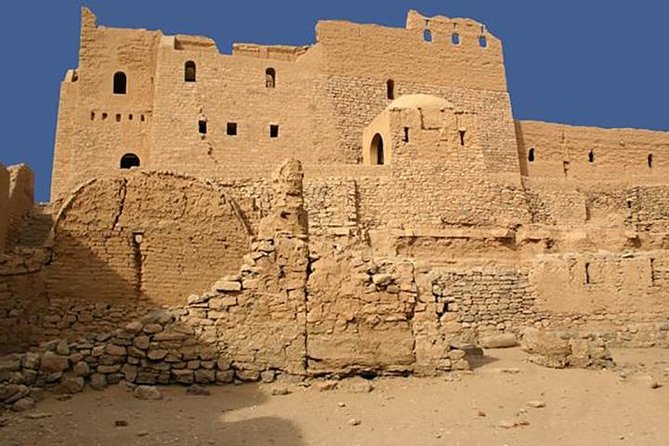
The main event is the monastery visit, lasting about 1 hour 30 minutes, and the admission here is included. The site is known today as St. Simeon, but earlier Arabic and Coptic sources used names like Anba Hatre (also spelled Hidra/Hadra in some references). That naming shift is more than trivia—it changes how you read the remains.
Your guide explains the human thread behind the site, starting with Anba Hatre, an anchorite who was later consecrated a bishop of Syene by Patriarch Theophilus (385–412 AD). The tradition described for him is vivid: he married at eighteen, then—after encountering a funeral procession—became determined to preserve his chastity. He eventually trained under his teacher, becoming a disciple of Saint Baiman, and then retreated into the desert for ascetic practices.
This is where the monastery visit becomes more than walking around old walls. When someone tells you he studied the life of Saint Antony and later died during the time of Theodosius I, the place starts to feel like part of a chain of beliefs and choices, not just a set of ruins.
For you, the payoff is simple: you’ll leave with a story you can actually recall. In a site like this, that’s what makes it stick.
Possible drawback to keep in mind: this visit is structured and time-limited. If you want to spend a long time reading every surface and tracing every corner at your own pace, you may feel the clock.
What you’ll see: fresco traces, fortified walls, and pilgrim graffiti
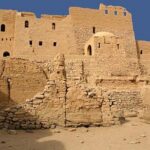
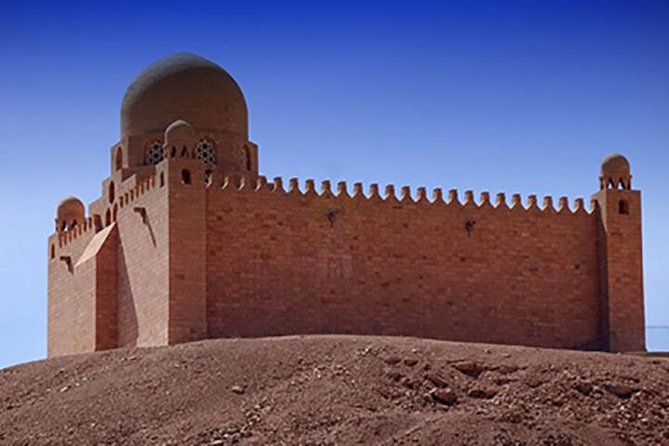
From the monastery area, you’ll take in stark views from the fortified walls. That alone is worth showing up. Standing where defenders once expected danger, you get a sense of why the walls and layout mattered. The views also help you picture the river travel that brought people to this spot.
You’ll also look for faint traces of fresco paintings. In many Egyptian ruins, decoration is gone or fragmentary, so you need to keep your expectations realistic. Here, your guide’s job is to point you to what remains—enough to recognize the idea of painted scenes, even if the details are worn away.
Then comes one of the most fascinating layers: graffiti left by Islamic pilgrims during long journeys to Mecca. These marks are a reminder that the site didn’t stop mattering after one era. People kept passing through, stopping to pray, rest, or mark their presence. You’re essentially reading a travel timeline written by individuals.
This is the kind of detail that makes a private tour feel worth it. Without context, graffiti can look random. With the story, it becomes a window into real human movement.
If you’re a photographer, the fortified wall viewpoint is usually a great moment for crisp, less-saturated shots. Early in the day also helps reduce glare off stone and sand.


Guide quality is the real multiplier on this tour
The experience lists an expert qualified Egyptologist guide, and that’s exactly the difference-maker here. A monastery like this can be quiet and compact. The guide turns it into a narrative with names, dates, and meaning—especially around the Anba Hatre/St. Simeon naming and the pilgrim graffiti layer.
One private tour booking highlighted Ramez Saber for very good English and a friendly, clear presentation. That kind of guidance matters because the site is full of subtle signals: a surviving wall line, a fragment of color, and the way your eyes should move across the space.
If you’re unsure about whether you’ll enjoy this kind of site, focus on the guide. A strong guide makes short visits feel satisfying.
When I weigh tours like this, I treat the guide as part of the “duration.” The sightseeing time is fixed, but how well you understand what you’re seeing depends on communication.
Price and value: what $92.22 gets you, plus common add-ons
At $92.22 per person, you’re paying for more than admission. You’re also getting:
- Hotel pickup and drop-off by air-conditioned minivans
- Private tour for your group
- A qualified Egyptologist guide
- The camel ride (about one hour)
- Motor boat time around the island
- Visits to the sixth-century monastery ruins (as described)
That bundle is what makes the price feel reasonable. In Aswan, adding private transport and a guide usually adds up quickly. Here, the tour’s structure includes the “moving parts” that make the day feel complete.
What’s not included is also important:
- Landing and facility fees
- A supplement of 1000 L.E. applies to all languages except the English language guide
So if you choose a language option other than English, budget that extra cost. Even then, you’re still often getting a value package because camel/boat/transport don’t come free anywhere else.
Quick value-check for you: if you’d otherwise pay separately for transport + a guide + a camel ride, this price becomes easier to justify. If you mainly want a casual walk with photos, you might feel you paid for activities you didn’t fully use. Pick the tour that matches your style.
Comfort, heat, and pace: what to plan for on a 3.5-hour day
This tour runs about 3 hours 30 minutes. That’s a sweet spot for people who want meaningful sightseeing without committing to a full day. It also means the camel ride and monastery walk happen while energy levels are still decent.
There’s a practical advantage here: the monastery visit is close enough to the island routine that the day doesn’t drag. One person described it as good when it’s very hot hot hot. That rings true in Aswan—short, efficient touring wins.
That said, camel riding and sun exposure are real factors. Bring water, protect your head, and wear breathable clothing. You don’t need to turn it into a survival expedition, but you should respect the heat.
Also, because this is private, your group’s pace sets the tone. If your group likes speed, you’ll finish fast. If you like lingering for photos and details, your guide can usually accommodate a little—within the overall time.
Who should book this private St Simeon tour
I’d point you toward this tour if you like:
- Christian history in Egypt, especially the story behind smaller, less-famous sites
- Human layers of history, like pilgrim graffiti and changing names over time
- The mix of animals, river, and ruins in one morning
- A guide-led experience where meaning matters more than quantity
It’s especially good for couples and small groups who want a break from the usual big-hitter itinerary. You get a focused story, a change of scenery (camel + boat), and a visit that feels more personal than a crowded stop.
It may not be the best match if you want hours of free roaming or a more expansive archaeological deep session. This is structured, compact, and story-driven. If that sounds like your style, you’ll likely enjoy it.
Should you book the Private Tour: St Simeon’s Monastery?
Book it if you want a short, well-guided experience that blends Elephantine Island, a real camel ride, and a monastery visit where context brings the stones to life. The price stacks practical benefits together—transport, guide expertise, camel and boat—so you don’t spend your time figuring things out.
Skip or rethink it if you dislike camel rides or you prefer long, unstructured wandering over a guided narrative. Also, if you’re expecting something that looks like a grand, fully preserved showpiece, set your expectations for fragments: traces, walls, and marks that reward attention.
For most people, though, it’s a smart way to spend a morning in Aswan: active enough to feel different, compact enough to stay comfortable, and textured enough to remember after you leave.
FAQ
What time does the St Simeon’s Monastery private tour start?
The start time is 8:30am.
How long is the tour?
The duration is about 3 hours 30 minutes.
Is pickup from your hotel included?
Yes. The tour includes private transportation with pickup from your hotel and drop-off afterward.
Is this tour private or shared?
It’s a private tour/activity, so only your group participates.
Do you ride a camel and take a boat during the tour?
Yes. You’ll have a one-hour camel ride and you’ll also enjoy a motor boat ride around the island.
How long do you spend at Elephantine Island?
You spend about 30 minutes at Elephantine Island.
How long do you spend at the monastery?
You spend about 1 hour 30 minutes at the monastery.
What’s included in admission fees?
Elephantine Island is listed as free for the ticket portion. Admission for the monastery stop is listed as included.
Are there extra fees or language supplements?
Yes. Landing and facility fees are not included, and a 1000 L.E. supplement applies to all languages except the English language guide.
Can I cancel for a refund?
Yes. Free cancellation is available up to 24 hours in advance of the experience start time for a full refund.
You Might Also Enjoy

More Private Tours in Aswan
More Tours in Aswan
More Tour Reviews in Aswan
- 4-Days Nile Cruise From Aswan To Luxor including Abu Simbel and Hot Air Balloon
★ 5.0 · 3,142 reviews