REVIEW · CAIRO
Private Tour: Coptic Cairo, The Hanging Church, Abu Serga, Ben Ezra
Book on Viator →Operated by South Sinai Travel · Bookable on Viator
Coptic Cairo has a quieter side of Cairo. This private 3-hour route focuses on early Christian landmarks in Old Cairo, where churches and symbols are built right into the city’s long story. You’ll move by air-conditioned minivan from your hotel and get guide-led context that makes the churches’ art and architecture actually make sense.
I especially love the way the tour hits both the famous churches and the “why it matters” details. Two big wins for me are the Hanging Church stop for its iconic setting and the Abu Serga visit for the Holy Family connection and the feel of the old courtyard spaces. You also finish with the Coptic Museum, which turns what you’ve just seen into a bigger picture.
One possible drawback to plan for: access and site conditions can vary. For example, the Ben Ezra synagogue has limited-time construction, and timing can be tight for a 3-hour private schedule—so if you want extra time photographing or lingering, you’ll need to ask your guide early.
In This Review
- Key highlights you’ll care about
- First stop: The Hanging Church (and why it feels so unusual)
- St George’s Church: the round church detail that earns attention
- Abu Serga: 24 marble columns and the Holy Family story
- Ben Ezra Synagogue: an old garden and a layered site
- Coptic Museum in the Babylon Fort area: where everything clicks
- The papyrus institute stop: art you can hold in your hands
- How the timing and minivan pickup actually help
- Value check: $74.82 a person for a private Cairo focus
- Guide style: what tends to make the day better
- Who should book this Coptic Cairo tour
- Should you book this Coptic Cairo private tour?
Key highlights you’ll care about
- A tight 3-hour private route through Old Cairo’s Coptic landmarks, with pickup and drop-off
- Hanging Church: 7th-century church above a Roman fortress gateway, with screens and icon-filled interiors
- Abu Serga: 5th-century church site tied to the Holy Family, framed by 24 marble columns
- Ben Ezra Synagogue in a shady garden, historically layered after a Christian church site below it
- Coptic Museum in the Babylon Fort area, with nearly 16,000 Coptic items across thousands of square meters
- Papyrus institute stop where artisans paint on natural material and you can shop if you want
First stop: The Hanging Church (and why it feels so unusual)
The Hanging Church is the kind of place that makes you look up—literally. It’s dedicated to the Virgin Mary and is built above the water gate of a Roman fortress. That “built into the city wall” layout is part of the magic: you’re not just touring a church, you’re stepping into a layered space where Roman Cairo and Christian Cairo overlap.
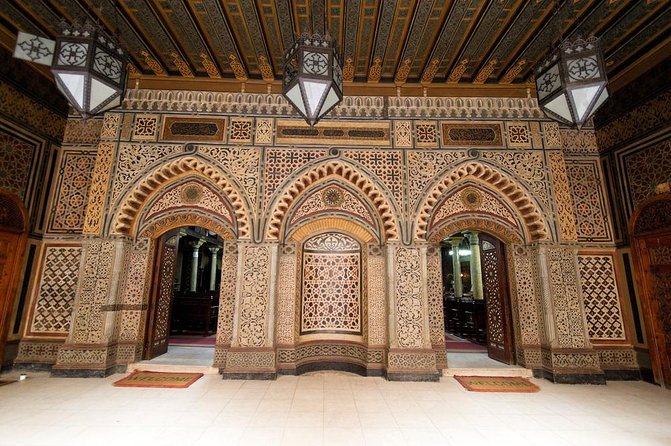
You’ll spend time in the courtyard and then go inside to see the interior setup: screens, a marble pulpit, and icons that define the church’s visual language. This matters because Coptic churches often feel dense with meaning. Without context, it can look like “just lots of art.” With a good Egyptologist-style guide, the icons and layout start telling you how worship, history, and identity lived together.
Practical note: this is one of the most photogenic stops in Coptic Cairo, but it’s also an active religious site. Go slow with your phone camera and listen to your guide’s timing cues so you don’t end up rushing the moments that matter most.
You can also read our reviews of more private tours in Cairo


St George’s Church: the round church detail that earns attention
After the Hanging Church, you’ll continue toward the Monastery and Church of St George. What you want to know before you arrive is that the building you see is relatively modern—early 20th century (dating from 1909). Still, the location carries older devotion: there has been a church dedicated to the Martyr since the 10th century.
The reason this stop gets specific attention is its shape. It’s one of the few remaining circular churches in the Middle East, and it’s often described as the only round church in Egypt. That circular architecture gives the space a different feel than the more common basilica-style layouts you might see elsewhere in Cairo.
If you’re the kind of person who enjoys small architectural quirks, you’ll like this stop. It also helps you build an internal map of Old Cairo: churches aren’t isolated monuments here—they’re part of a neighborhood of worship and memory.
Abu Serga: 24 marble columns and the Holy Family story
Next comes Abu Serga, a 5th-century Coptic church linked to a key biblical tradition: the Holy Family is said to have rested here during their flight into Egypt from King Herod’s rule. Even if you’re not coming for theology, this site works as a history-and-place lesson.
Inside, the courtyard is lined with 24 marble columns. Look at them for a full second, not just as background. Column counts and repeated visual patterns show up across historic Coptic art and space planning, and this stop gives you a physical reference point you can carry to the museum later.
You’ll also see 12th-century icons along the walls, including depictions connected to the 12 apostles. This is where your guide’s pacing really matters. If they move too fast, you miss how the icons sit in relation to the courtyard movement and worship space. If they slow down (and many guides do, especially for questions), you’ll start noticing how Coptic icon style communicates story.
Time-wise, Abu Serga is listed at about 40 minutes, with admission shown as free. That’s enough time to understand the setting without feeling dragged across Cairo.
Ben Ezra Synagogue: an old garden and a layered site
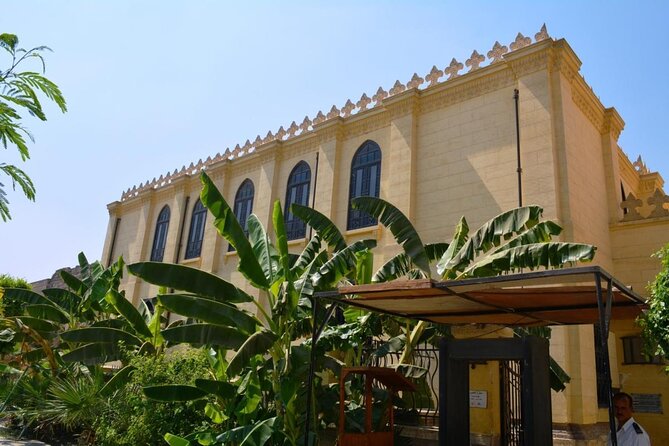
Ben Ezra Synagogue is next, and it brings a different thread into your day. The synagogue sits in a shady garden, built on a site that was once a 4th-century Christian church. That overlap—religion changing forms over time while the location stays important—is one of the most useful things this tour teaches.
The synagogue also has a modern-history chapter. It was severely damaged after the 1967 war period and later renovated, and the site has been reworked to be visitable again. One thing to know going in: there is construction for a limited time, so some areas may feel a bit “site-work in progress.”
You’ll get about 30 minutes here, with admission listed as included. If your goal is photography, ask your guide early how long you’ll have inside and whether any sections are off limits while work is underway.
Coptic Museum in the Babylon Fort area: where everything clicks
The Coptic Museum is the stop that ties your route together. It’s located in one of the oldest areas of Coptic Cairo, within the precinct of Babylon Fort. If you’ve just seen church screens, icons, and courtyard architecture, the museum adds context and makes the symbols less mysterious.
This museum is big by Coptic standards: it covers over 8,000 square meters and holds almost 16,000 objects. You won’t see everything in a short visit, but you’ll get a sense of the range—icons, books, and artifacts that show how Coptic community life persisted and evolved.
The tone in the museum is different from a church visit. In churches, you’re in the living tradition. In the museum, you’re in preservation and documentation. That shift helps you understand why iconography looks the way it does and how religious identity is expressed through objects, not just buildings.
Time on-site is about 30 minutes, and admission is included. If you want to read labels in detail, tell your guide at the start. A private tour can be tailored, but you still have only a few hours.

The papyrus institute stop: art you can hold in your hands
Before the tour ends, you’ll have the chance to visit a papyrus institute. Here, artisans paint on natural papyrus material—more of a hands-on craft demonstration than a quick “look and leave” stop. If you’ve ever wondered how Egypt’s ancient materials translate into today’s souvenirs, this is one of the most direct ways to see it.
You may also be able to purchase artwork. I like stops like this because they don’t just sell you a token. You get to watch the process first, which helps you judge quality and makes shopping feel less random.
This portion is optional in the sense of buying, but it’s part of the experience. If you’re not interested in shopping, you can still learn how the craft works and use it as a sensory break from church interiors.
How the timing and minivan pickup actually help
The tour starts at 9:00 am and runs about 3 hours. That short window is the whole point: you get key sites without turning your day into a Cairo stamina test.
You’ll be picked up from your Cairo or Giza hotel by air-conditioned minivan and dropped back at the end. In a city where traffic and walking routes can scramble plans, this “door to door” setup makes the tour feel manageable, especially if you’re mixing it with other sightseeing later.
Lunch is included at an oriental restaurant. That’s not just a convenience—it’s also a value issue. If you’re doing Old Cairo first thing, you’ll likely build up an appetite fast, and paying for a separate meal can quietly eat the budget.
One scheduling thought: the tour is designed to move. So if you have a specific question about an icon, a church layout, or the museum’s objects, ask your guide when you arrive. With a private guide, it’s easier to get the time you want—without derailing the whole route.
Value check: $74.82 a person for a private Cairo focus
At $74.82 per person, this tour sits in a range that can feel fair or steep depending on what you’d otherwise do.
Here’s what makes it good value: you’re paying for private transportation, a private expert guide, and included entries for major stops like Ben Ezra and the Coptic Museum. You also get lunch, plus an additional craft stop at the papyrus institute.
If you tried to DIY Coptic Cairo, you’d spend more time figuring out routes and navigating access rules—and you’d likely miss the “why” behind each stop. In this neighborhood, context is everything. A guided visit doesn’t just add facts; it helps you read what you’re seeing.
Possible downside: because it’s private but still scheduled, you might hit the edge of the time limit if you love lingering. The tour works best if you’re happy to see the highlights and ask smart questions, rather than trying to exhaust every corner.
Guide style: what tends to make the day better
The experience really depends on who’s talking for you. Many guides highlighted in the experience notes share a common strength: they keep things clear and answer questions without making you feel rushed.
Names you might encounter include Muhammad, Timur, Tarek, Hussein, Rhonda, Amgad, and Fouad Salah. People often describe these guides as personable, focused, and patient with pacing—exactly what you want when you’re learning church symbolism and history at a faster tempo than a full-day program.
Even so, there are a couple of practical quirks to keep in mind from the experience details you were given: sometimes pickup timing can run late, and some sites may have small extra charges for certain activities like photography. If you care about photos, bring a little flexibility and ask your guide what to expect.
Who should book this Coptic Cairo tour
This is a strong fit if you:
- Want a focused Old Cairo tour that’s not overloaded with dozens of stops
- Care about Coptic Christianity and want clear context for icons and church spaces
- Prefer a private guide and set pacing over public-group chaos
- Have limited time in Cairo but still want meaningful history that isn’t only about the pharaohs
If you’re the type who needs lots of free time to roam on your own, you might find the schedule a bit “guided and planned.” But if you’re willing to treat it as a structured introduction, you’ll likely finish feeling you actually understand what you saw.
Should you book this Coptic Cairo private tour?
Yes, I’d book it if your goal is a well-paced, high-impact morning in Coptic Cairo. You get the standout churches—the Hanging Church, Abu Serga, and the Ben Ezra site—then you cap it with the Coptic Museum so the symbols and artifacts click into place. Add in hotel pickup, lunch, and a papyrus craft stop, and the overall package makes sense for the time you spend.
I’d think twice only if you’re easily stressed by tight timing or you’re hoping for lots of unscripted wandering. Also, given that construction can affect parts of Ben Ezra and that timing occasionally slips, you’ll be happiest if you keep your plans flexible that morning and confirm your start time the day before.