REVIEW · CAIRO
Half day to the Pyramids ( Miracle of the World )
Book on Viator →Operated by feby tour guide · Bookable on Viator
A morning trip to Giza can feel like a cheat code. You hit the Pyramids of Giza and the Sphinx in a tight 4–5 hours, then add an adventurous camel ride for desert views and photos. I especially like that it’s run as a true private tour experience (only your group), with an English guide who keeps the day moving and explains what you’re seeing. One thing to watch: the pyramid entry tickets are not included, so you’ll want a bit of extra cash or card ready.
You’ll also do some walking on an active outdoor site, and the tour is listed as moderate physical fitness. If you want the longest ride options, shopping time, and lunch, it can also feel a bit like you’re balancing a schedule (not a slow wander).
In This Review
- Key highlights from this half-day Giza experience
- Giza in the morning: why 4–5 hours feels just right
- Private pickup in Cairo or Giza with an English guide
- Great Pyramid of Cheops: timing and the real cost of entry
- Menkaure Pyramid and Valley Temple of Khafre: the less-famous stops
- Sphinx time, photo angles, and the camel ride in the desert
- Papyrus, souvenirs, and the Koshary show in Egypt
- Price and logistics: what your $65 does and doesn’t cover
- Who this Feby-style half-day tour suits best
- Should you book this half-day Pyramids tour?
- FAQ
- What time does the tour start, and how long is it?
- Is hotel pickup included?
- Are the entry tickets to the pyramids included in the $65 price?
- Is a camel ride included?
- Is lunch included?
- Is the tour private or shared?
- Can I cancel and get a full refund?
Key highlights from this half-day Giza experience
- Private, English-only guiding with Feby-style energy and a focus on making the facts make sense
- Hotel pickup in Cairo or Giza at 8:00am, so you don’t waste prime morning hours
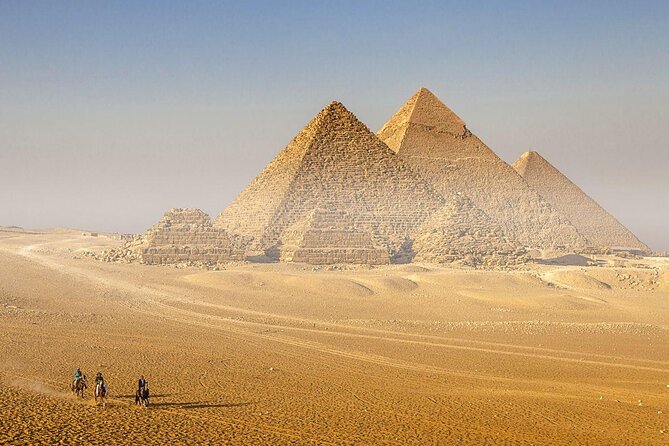
- Great Pyramid of Cheops as the anchor stop, with time set aside to understand what you’re looking at
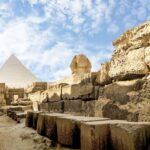
- Sphinx + Valley Temple of Khafre on the same run, so you get more than just postcard views
- Desert ride time (a short camel ride is included in the plan, and there’s also horse/camel riding time scheduled)
- An Egypt Koshary show that teaches condiments mixing and ends with an included taste
Giza in the morning: why 4–5 hours feels just right
This is a half-day tour, listed around 4 to 5 hours, and that matters at Giza. The site is huge, and spending a long day doesn’t automatically mean you’ll see the right mix of monuments. This plan aims to give you the key hits without turning your day into a full logistics marathon.
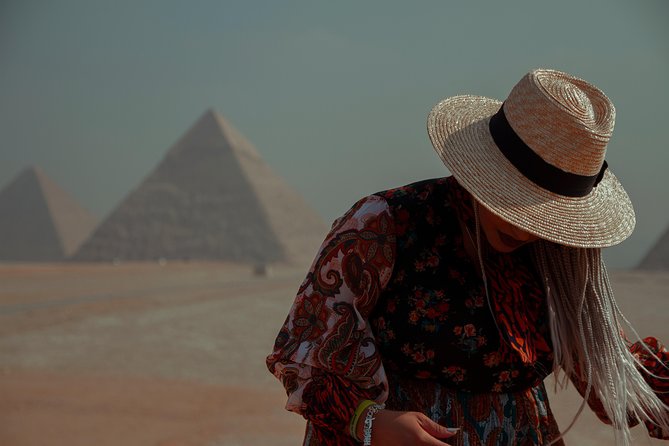
The pacing is also built around momentum: you start early, get on the Plateau, and stack the most recognizable sights—Great Pyramid of Cheops, Menkaure Pyramid, the Valley Temple of Khafre, and the Sphinx—before you move into the other extras. If you’re short on time, this is the style of tour that helps you feel like you understood what you saw, not just snapped pictures and ran.
My favorite part of this format is the guide’s ability to turn each stop into a quick “why it matters” lesson. The reviews around Feby describe that she brings Egypt’s story to life without sounding like a script. That’s exactly what you want on a morning when you have limited hours and big landmarks in front of you.
You can also read our reviews of more tours and experiences in Cairo.
Private pickup in Cairo or Giza with an English guide
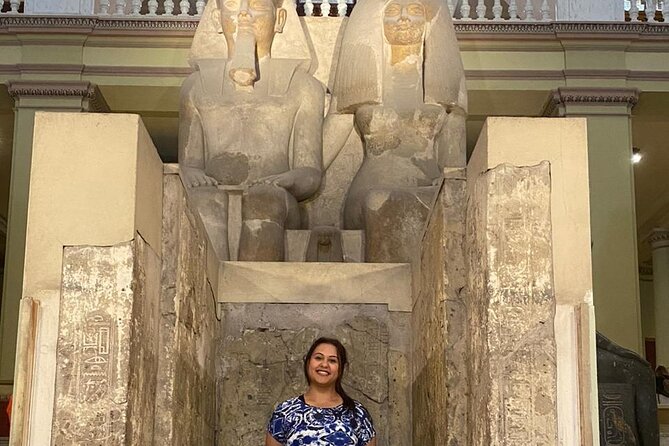
At 8:00am, your guide meets you in the lobby of your hotel in Cairo or Giza. Pickup is offered, and the tour is structured as a private experience, meaning only your group participates. That’s a big advantage in Egypt for a simple reason: your time is less likely to get eaten up by waiting on strangers or reshuffling plans.
The guiding is English only, and the included services cover the guide’s live fees plus program identification. There’s also an explicit “advice for any purchases” component included, which is useful if you’re stopping at places that sell souvenirs or papyrus items. In plain terms: you’ll have someone in your corner to help you avoid feeling rushed.
One more small but practical detail: this tour uses a mobile ticket. That helps keep things straightforward when you’re juggling entry points at a major site.
If you’re traveling with kids or anyone who needs a slower rhythm, the reviews highlight Feby’s flexibility—she’s described as patient with photos and able to adapt for different needs. That’s not guaranteed for every day, of course, but it lines up with how this kind of private schedule can work well.
Great Pyramid of Cheops: timing and the real cost of entry
The tour’s core monument is the Great Pyramid of Cheops (Khufu), with about 1 hour 15 minutes assigned to it. This is the stop that most people come for, and it’s also the stop where you should do your planning math.
The entry ticket for this part is listed as not included, and it notes around $20 per person for the ticket. Separately, the overall “Pyramids of Giza, Al Haram” entry is also listed as around $20 per person, not included. Translation: don’t assume your $65 covers admission. It probably doesn’t, and you’ll want to budget for those tickets.
What you’re getting at this stop isn’t just a photo from the outside. The plan is built to help you recognize what you’re seeing and connect it to the big story: the pyramid was built by King Khafre around 2530 BC, and it’s described as having recognizable layers of original casing stones near the summit. (That kind of detail is exactly why a guided visit is worth it here.)
There’s one consideration: since admission isn’t included, you may feel a little more pressure to coordinate payment quickly at the start of the main monument section. If you prefer an “all-in” price, this isn’t that style. If you prefer clarity and control over what you pay for, it works fine.
Menkaure Pyramid and Valley Temple of Khafre: the less-famous stops
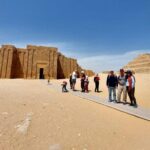
After Khufu, you move into a second layer of the Giza complex: the Menkaure Pyramid and the Valley Temple of Khafre.
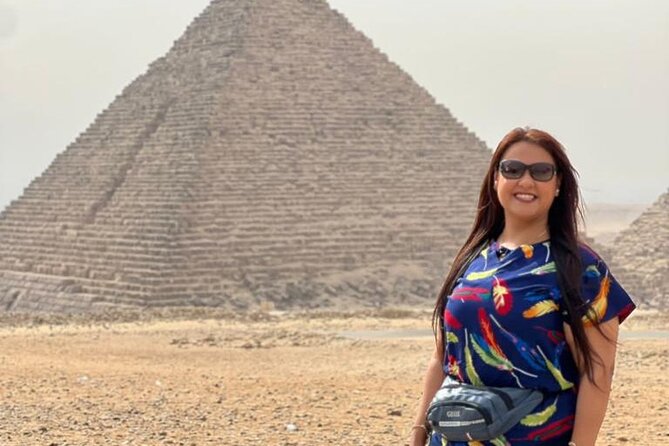
Menkaure is scheduled for around 30 minutes, and it’s the smallest of the three main pyramids in the complex. It’s described as thought to be built as the tomb of Pharaoh Menkaure, which is helpful context because many first-time visitors focus only on the biggest name and miss the “why is this here too?” part.
Then you head to the Valley Temple of Khafre, listed for about 1 hour. This stop is described as being east of Chefren’s pyramid, closer to the Nile, and linked to the famous Sphinx temple area. The temple is presented as part of a legendary burial land, with references to names such as Hathor and Bubastis, and also Khafre. Statues of Khafre were discovered there in the 1860s.
Why these stops are valuable is simple: they help you understand Giza as a whole living system, not just isolated monuments. You start to notice how each structure relates to the larger funerary landscape and the mythic aura people attach to the plateau.
The drawback is logistical rather than spiritual: these are outdoor monuments and temples, so you’ll be moving around and staying on schedule. The tour is marked as moderate physical fitness, so you’ll want to pace yourself if you get slower in the heat or after time outdoors.
Sphinx time, photo angles, and the camel ride in the desert
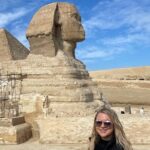
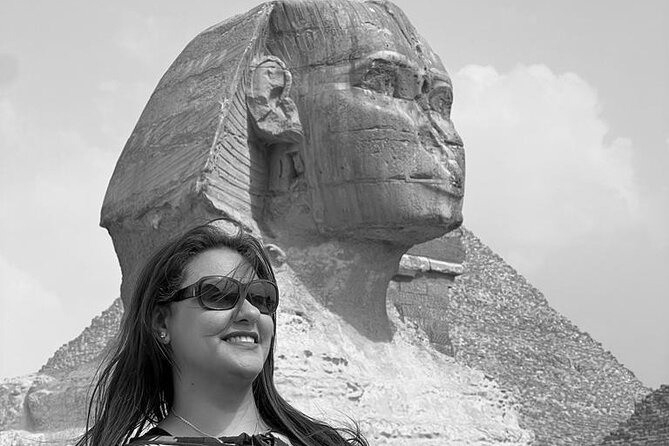
The schedule puts the Sphinx into your morning run after the pyramids section. The Sphinx is described as the lion body and the head of King Chephren, acting as a legendary guardian near the funeral complex. Even if you’ve seen images before, the guide-led framing helps you see it as part of a bigger story rather than just a statue.
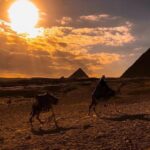
Then comes the “make it memorable” part: the plan includes adventurous camel ride time in the desert around the pyramids. The overview calls out a 15-minute camel ride. In the route details, there’s also horse or camel riding time in the Giza desert within sight of the pyramids and the Sphinx, listed at 40 minutes.
So what should you expect? You’ll be pulled out from the main monument views into a more “on the ground” perspective where the pyramids feel less like museum objects and more like they’re sitting inside a real environment. That’s also where photos can look different—higher viewpoints, wider angles, and a sense of distance you don’t get from standing directly at the edges.
One consideration: riding options are explicitly listed as not included for some parts (ticket not included shows up around the riding slot). The plan doesn’t spell out the riding cost separately in the info you provided, so I’d treat it as something you confirm with your guide on the day. The upside is that ride time is a clear value-add in a half day schedule.

Papyrus, souvenirs, and the Koshary show in Egypt
This tour isn’t only monuments. You’ll also have structured time for shopping and a food-focused show.
There’s a Giza collection stop described as including papyrus, gold ware, silver ware, stone ware, and souvenirs featuring scenes from ancient sites from around 4000 BC. That’s paired with the fact that you’re getting advice for purchases as an included service. In practice, this kind of stop can go two ways: it can feel like a hassle, or it can be a quick way to understand what people sell and how to avoid buying something you don’t actually want.
If you like souvenirs but hate getting stuck, use this as a “browse with intent” stop. Decide what you’re willing to pay for ahead of time in your head. Then ask your guide questions and move on.
The biggest non-monument highlight is the Egypt show, listed for about 1 hour. It’s described as an experience showing how to mix condiments for Koshary and eat it. The plan says there’s only one option on the menu, and it’s meant to be local and not to be missed. Lunch is optional elsewhere, but this show gives you a built-in “food moment” without requiring you to hunt for a restaurant.
If you’re deciding between this and ordering more food on your own later, the tour structure is clear: you either get an optional lunch break (listed around $15 per person without drinks) or you make the Koshary show your main culinary experience that day. Either way, you’ll likely feel like you got a taste of Egyptian daily life, not just site viewing.
Price and logistics: what your $65 does and doesn’t cover
Let’s talk value in straight numbers. The tour price is $65 per person. Included items list live English guide fees, program identification, advice for purchases, and pickup offered. You also get a mobile ticket and group discounts.
Not included: the big one is the entry ticket for Pyramids of Giza (and Al Haram), listed around $20 per person. There’s also an admission ticket not included for the Great Pyramid of Khufu (again noted around $20). So your true “all-in cost” depends on exactly which tickets you need that day, but you should assume you’ll pay extra on top of $65.
Then there’s lunch: optional around $15 per person without drinks, and coffee and/or tea aren’t included. Tips aren’t included either.
Transport is another factor. An air-conditioned vehicle price is listed as $40 for 1 row and $50 for 2 rows, not included. If you want the comfort factor, you’ll plan for that add-on.
Here’s why this price setup can still be good value: the tour is private, time-boxed, and guided. You’re paying for someone to organize the morning, take you between the right monuments, and explain what you’re seeing while you’re there. If you’re someone who prefers paying a bit for guidance instead of trying to piece together everything yourself on a tight schedule, this works.
If you’re aiming for the absolute lowest cost and you don’t mind coordinating entry and logistics yourself, you may find cheaper options. But you may also give up the structured pacing and the “tell me what I’m looking at” part.
Who this Feby-style half-day tour suits best
This is a strong choice for you if:
- You want the big-name Giza sights in a shorter window
- You like having an English-speaking guide to translate the monuments into context
- You prefer private time instead of shared group chaos
- You’ll enjoy a mix of monument viewing plus a local food moment
It’s also a good pick if you care about photo time and pacing. The reviews you provided include several references to Feby being patient while guests take pictures. That matters, because at Giza you can lose time fast if you’re chasing your own angles and trying to decode information without help.
This might be less ideal if:
- You want a fully all-inclusive price with no extra ticket payments
- You dislike any shopping stop at all
- You’re expecting a relaxed, unstructured wandering day (this is time planned and scheduled)
For physical pacing, remember the tour calls for moderate physical fitness. That means you should be comfortable walking outdoors and keeping up with a half-day schedule.
Should you book this half-day Pyramids tour?
Book it if you want a tight, guided morning at Giza that hits the essentials—Great Pyramid of Cheops, Sphinx, and the supporting sights like Valley Temple of Khafre—plus desert ride time and a real local food experience through the Koshary show. The private format and Feby’s reputation for warmth and flexibility are a practical match for families, solo travelers who want someone to explain things, and couples who want both meaning and photos.
Skip or reconsider if you don’t want to pay extra for pyramid entry tickets, if you’re very budget-focused, or if you feel strongly against any shopping stops. This tour is best when you’re okay with the reality of Giza: iconic monuments, outdoor movement, a little structure, and some add-ons that aren’t free.
FAQ
What time does the tour start, and how long is it?
The tour starts at 8:00am and runs about 4 to 5 hours.
Is hotel pickup included?
Pickup is offered, and your guide meets you in your hotel lobby in Cairo or Giza in the morning.
Are the entry tickets to the pyramids included in the $65 price?
No. Entry tickets for the Pyramids of Giza (Al Haram) are listed as not included, around $20 per person, and the Great Pyramid admission is also listed as not included (around $20 per person).
Is a camel ride included?
Yes. The tour includes an adventurous camel ride in the desert around the pyramids, noted as about 15 minutes in the overview, and there is also horse or camel riding time scheduled in the route details.
Is lunch included?
Lunch is optional and is listed around $15 per person without drinks. Coffee and/or tea are not included.
Is the tour private or shared?
It’s private. Only your group will participate.
Can I cancel and get a full refund?
Yes. You can cancel up to 24 hours in advance for a full refund. If you cancel less than 24 hours before the start time, the amount paid is not refunded.
If you want, tell me your group size and whether you’re staying in Cairo or Giza—I’ll help you estimate the true all-in budget including the entry tickets and the vehicle option.