REVIEW · CAIRO
Private Half-Day Tour to Giza Pyramid ,Sphinx and Camel Ride
Book on Viator →Operated by EMO TOURS EGYPT · Bookable on Viator
Pyramids in four hours, without the stress. This private half-day trip pairs hotel pickup with an Egyptologist-led route across Giza so you spend less time figuring out logistics and more time staring at the Sphinx and pyramids. One thing to plan for: this experience does not include going inside any pyramids.
What I really like is the story-telling. Guides such as Osama, Mohammed, and Nesma are repeatedly noted for clear explanations and practical photo help, so the monuments feel more meaningful than just giant shapes in the sand.
In This Review
- Quick hits: what makes this Giza half-day work
- A smooth plan for your first Giza visit
- Giza Plateau stop: start where the scale hits you fastest
- The Great Sphinx: your best chance for a calm moment
- Great Pyramid of Khufu (Cheops): a short stop that still lands
- Valley Temple and Chephren’s mummification site: the quieter “why”
- Camel ride (30 minutes): fun, but plan your comfort
- Panoramic viewpoint: where the pyramids fit in one frame
- Egyptologist guide quality: what matters beyond facts
- Price and value: how $28 fits a private half-day
- What you should bring (and what to skip)
- Who this private tour is best for
- Should you book this half-day Giza tour?
- FAQ
- How long is the private Giza Pyramids, Sphinx, and camel ride tour?
- What does the tour cost per person?
- Is hotel pickup and drop-off included?
- How long is the camel ride?
- Are entry fees included?
- Does the tour include meals or inside-pyramid visits?
- Is this a private tour?
Quick hits: what makes this Giza half-day work
- Door-to-door pickup and drop-off: you’re moved between stops without long, exposed walks.
- Egyptologist guide included: you get the why behind what you’re seeing, not just a checklist.
- Sphinx + pyramid photo angles: the route includes a panoramic area designed for photos.
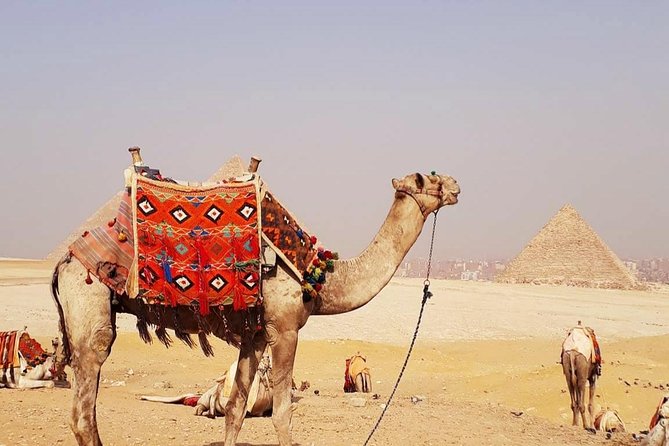
- 30-minute camel ride: enough time to feel like an experience without turning the day into a circus.
- Entry fees covered for basic areas: you can explore key viewpoints without buying everything separately.
A smooth plan for your first Giza visit
Giza can be a lot. There’s sun, noise, crowds, and enough vendors to make your head spin. This tour’s main advantage is simple: it’s private and time-focused, with pickup included and a structured route you can follow without guessing.
You’re looking at roughly four hours on the ground, built around the major “must-see” monuments. The route keeps you moving between standout locations while your guide handles the pacing and the explanations. If you want a first pass at Giza that still feels human-scale, this is a strong option.
If your priority is long exploration, multiple pyramid interiors, or a slower, deeper dig into archaeology, you’ll likely feel limited by the short stop times. But for many people, getting the essentials right (and not exhausting yourself) is exactly the point.
You can also read our reviews of more private tours in Cairo


Giza Plateau stop: start where the scale hits you fastest
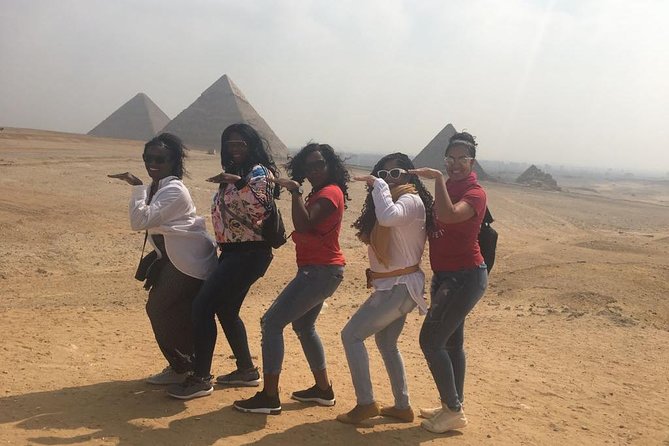
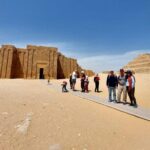
Your visit begins at the Giza Pyramids area, where the Giza Plateau sets the tone immediately. You’ll be in the setting for three of the biggest names in world history: the Great Pyramid of Khufu (Cheops), the Pyramid of Khafre, and the Pyramid of Menkaure—plus nearby temples and tomb structures.
Even without pyramid interiors, the plateau gives you what you came for: scale, alignment, and that instantly recognizable “how did they do this?” feeling. The tour includes time for you to take in the site rather than just rushing past it.
One practical benefit: entry is handled as part of the experience. The included coverage is described as basic area only, so it’s best to think of this stop as viewpoint and exterior exploration, not a ticket to everything underground.
The Great Sphinx: your best chance for a calm moment
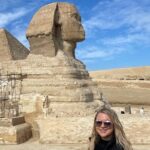
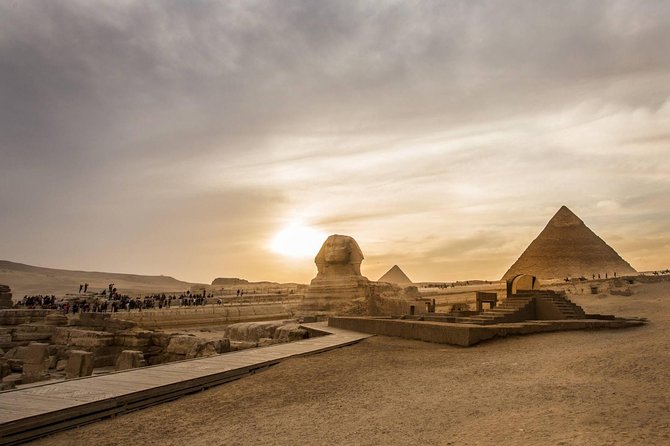
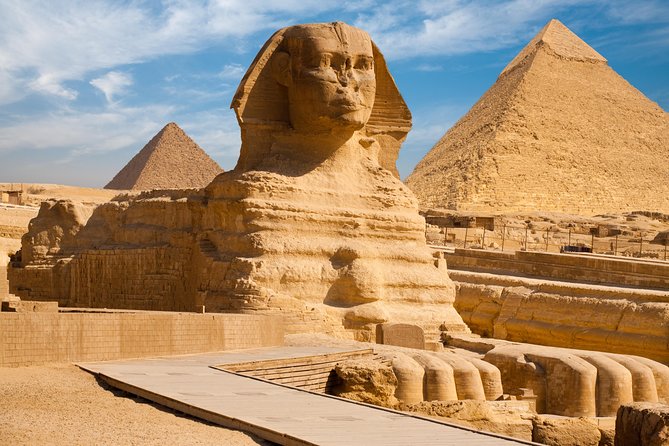
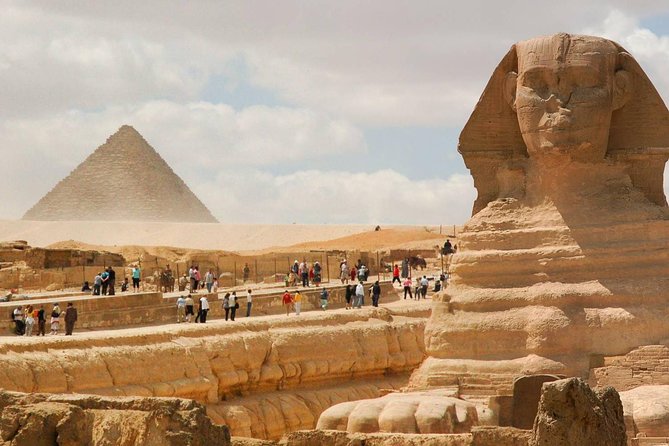
The Great Sphinx is the kind of landmark that looks different every time you see it. Up close, you notice the lion body, the Pharaoh’s head, and the size in a way that photos can’t fully explain. This tour gives you a focused stop—enough time to see the statue from a comfortable distance and reset your eyes for photos.
The Sphinx is also one of those places where the story matters. With an Egyptologist guide, you’re not just looking at a famous face—you’re connecting it to what it represents and why people keep coming back to it. This matters for Giza, because the site isn’t just old; it’s layered with meaning.
A consideration: the Sphinx stop is timed and fairly short. If you want long lingering for sketches, angles, or detailed inspections, you’ll want additional time later. But for most first-time visitors, this stop hits the sweet spot.
Great Pyramid of Khufu (Cheops): a short stop that still lands
Next comes the Great Pyramid of Khufu (Cheops). It’s the largest of the three major pyramids at Giza and the only surviving wonder of the ancient world. Seeing it in person tends to do two things at once: it shocks you with size and then quietly nags you about the engineering.
Your visit here is brief, but it’s timed so you’re not standing around waiting. The guide’s job is to give you context fast—what makes it distinctive, where to look, and how to frame the pyramid for photos. That’s especially helpful if you’re traveling with limited time and want your camera to capture the monument the way your eyes experience it.
If your dream is climbing around extensively, or spending extra time at multiple pyramid angles, treat this as a highlight visit rather than a full pyramid-focused day.
Valley Temple and Chephren’s mummification site: the quieter “why”
Giza isn’t only pyramids and selfies. This half-day route also includes the Valley Temple and the mummification site for King Chephren as part of the broader visit to the Giza complex. These are the moments where Giza shifts from spectacle to context.
This is valuable because it explains how the pyramids fit into real religious and funerary practices. Even if you only get a limited window here, your guide can connect the dots so the site feels coherent rather than scattered.
In practical terms, these stops are also a breather. They’re typically less about the immediate photo rush and more about understanding. If you’re the kind of traveler who wants at least a little meaning between monuments, this is a strong inclusion for a half-day.
A few more Cairo tours and experiences worth a look


Camel ride (30 minutes): fun, but plan your comfort
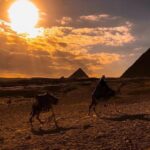
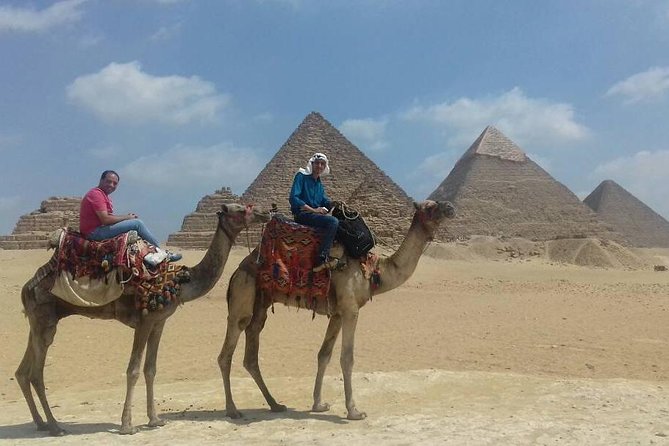
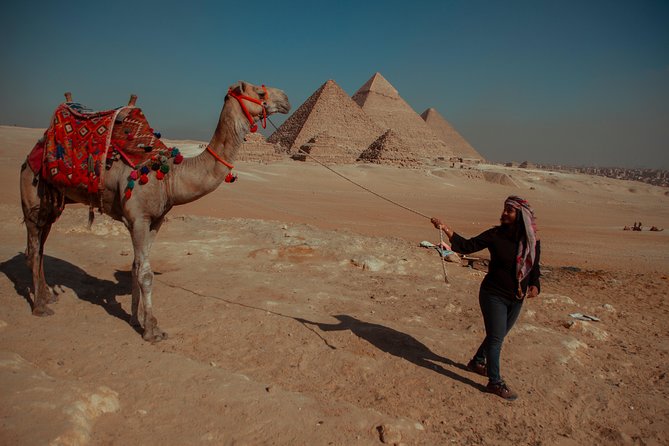
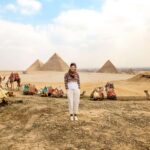
One of the most “you’ll remember this” parts is the 30-minute camel ride. It’s included, and that matters because it keeps the experience from turning into an add-on negotiation mid-trip.
A camel ride at Giza is also one of those experiences where comfort and expectations matter. You’ll be on a mount for a set block of time, and the ride is positioned as part of the adventure day—not an endless trek. Many people love it because it feels like a storybook moment, but it’s still time-limited.
I’d suggest going in ready for real conditions: sand underfoot, sun overhead, and the simple fact that animals aren’t rides at an amusement park. If you have concerns about balance or comfort, it’s worth considering that “most travelers can participate” is the only accessibility promise provided.
Panoramic viewpoint: where the pyramids fit in one frame
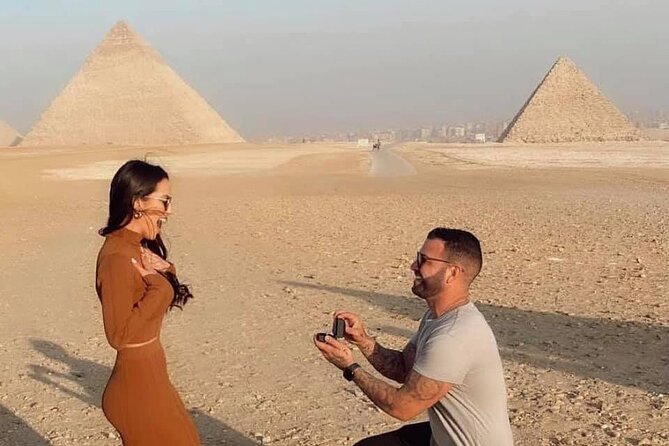
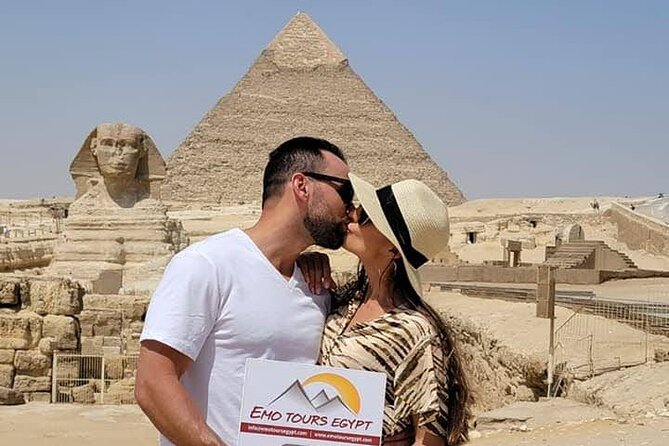
The last major portion includes a panoramic view of the pyramids, with about an hour at the viewpoint area. This is a smart design choice. Instead of constantly shifting position near the densest spots, the viewpoint is laid out so you can take in the pyramid shapes together.
This is where you’ll likely get your best wide-angle images. It’s also where you can slow down a bit, catch your breath, and appreciate how the plateau layout connects the major monuments. For photographers, it’s one of the most useful parts of the day.
Don’t underestimate the value of this “open” time. In a short four-hour plan, having a calmer, photo-friendly area can make the difference between good pictures and great ones.
Egyptologist guide quality: what matters beyond facts
The guide experience is central to the value here. Multiple guides have been credited for good English and for making history understandable without turning it into a lecture. People also highlight photo help—things like suggesting angles and keeping the group moving efficiently.
This matters because Giza can turn frustrating if you only have dates and distances in your head. An Egyptologist guide helps you interpret what you’re looking at: the relationships between monuments, the meaning behind major elements, and the stories people attach to the site over time.
Even if you don’t care about every detail, good guidance helps you avoid the common mistake of seeing a landmark as just a photo stop. With the right framing, the Sphinx and pyramids become a real place with context.
Price and value: how $28 fits a private half-day
At $28 per person, this tour sits in a budget-friendly range for a private, guided Giza plan—especially with hotel pickup, entry fees for basic areas, bottled water, and a camel ride included. The price isn’t the full story, though; the real value is that so many “small costs” are already bundled.
What’s included:
- bottled water
- Egyptologist guide and a private guided tour
- hotel pickup and drop-off
- a 30-minute camel ride
- entry fees (basic area only)
What’s not included:
- meals
- entering inside any pyramids
So you’re paying for a curated half-day that covers the core Giza hits without forcing you to piece together tickets, transfers, and timing. If you’d otherwise hire separate transport or only buy a basic walking tour, the bundle can make your day easier.
The tradeoff is time. You don’t get the kind of deep, slow exploration that costs more money and takes more hours. This is a “great first visit” format.
What you should bring (and what to skip)
This tour includes bottled water, which helps, but you’ll still want the basics for an Egypt sun day. Think sunscreen, a hat, and comfortable shoes. Even with transport between sites, you’ll still be standing and walking in open areas.
For expectations: plan for a monument-focused route with short stops and photo windows. If pyramid interiors are your top priority, you’ll need separate arrangements because the included coverage is described as basic area only.
Also, pack a flexible mindset for the camel ride portion. It’s part of the fun, but it’s not a polished show—this is real desert terrain and real animals.
Who this private tour is best for
This experience fits best if you:
- want a first-time Giza overview in about four hours
- like having a guide who can explain what you’re seeing
- care about photo angles, not just checklist stops
- want hotel pickup and fewer navigation headaches
- are interested in a camel ride without committing to a full-day desert excursion
It might not be the right match if you:
- plan to spend hours at one monument
- want to go inside pyramids during the tour
- need a very detailed, archaeology-heavy pacing (this is time-focused)
If you’re pairing Giza with other Cairo plans, this half-day structure is often the easiest way to fit it in.
Should you book this half-day Giza tour?
I’d book it if you want the essentials done well: Sphinx, Great Pyramid of Khufu, a panoramic photo stop, an Egyptologist guide, and a included 30-minute camel ride—all with door-to-door pickup. At $28, it’s also priced like a practical value, not a splurge.
Skip it only if pyramid interiors and long, unhurried exploration are non-negotiable for your trip. For most people, this is the sweet spot: short enough to stay energized, guided enough to feel meaningful, and structured enough to avoid turning Giza into a stressful puzzle.
FAQ
How long is the private Giza Pyramids, Sphinx, and camel ride tour?
The tour lasts about 4 hours (approximately).
What does the tour cost per person?
The price is $28.00 per person.
Is hotel pickup and drop-off included?
Yes. Hotel pickup and drop-off are included, with door-to-door transfer.
How long is the camel ride?
The camel ride included is 30 minutes.
Are entry fees included?
Yes. Entry fees are included, covering basic area access. Entry fees do not include going inside the pyramids.
Does the tour include meals or inside-pyramid visits?
Meals are not included, and you do not enter any of the pyramids as part of this experience.
Is this a private tour?
Yes. It’s a private tour/activity, so only your group participates.