REVIEW · CAIRO
Private Half-Day Tour: Giza Pyramids and Sphinx by Camel
Book on Viator →Operated by EMO TOURS EGYPT · Bookable on Viator
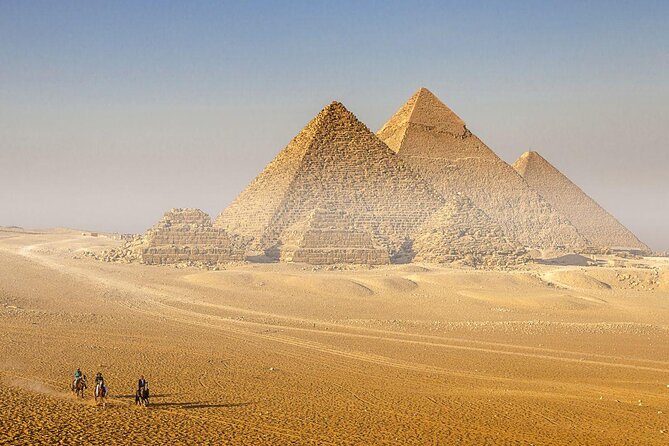
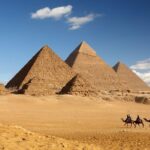
The first time you see the Pyramids of Giza up close, it’s hard to blink. This private half-day tour is built around the core hits: Giza’s main pyramids, the Great Sphinx, and desert views over toward Abusir and the Sakkara necropolis. I especially like that you get free hotel pickup and drop-off and that the pacing is tight enough to feel efficient, not rushed. One thing to consider: the tour also includes a stop at a perfume palace and may include additional shop stops, so you’ll want to be ready with a clear spending boundary (and remember tipping is not included).
What makes this experience feel practical is the structure. You’re out in the Giza Plateau area for about 4–5 hours, with admission tickets included for the basic areas at each stop, plus a camel ride that’s included as part of the plan. Guides such as Ms. Heeba and Hazad are noted for clear explanations and for keeping things moving in a photo-friendly way, which matters when you only have half a day.
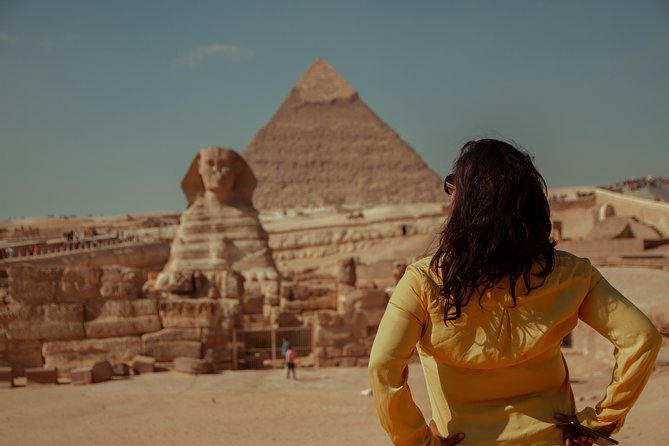
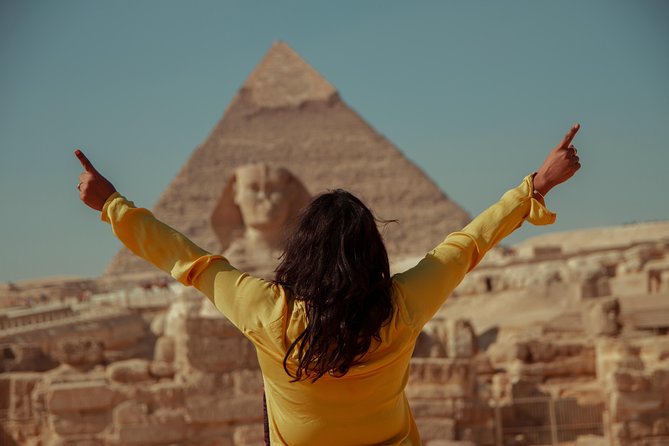
And even with all that structure, you still get that quiet desert sense of scale. You’re standing next to ancient stone monuments that were built in the Fourth Dynasty, and the Sphinx doesn’t feel like a postcard when it’s right there in front of you.
In This Review
- Quick takeaways before you go
- The real reason this half-day Giza tour works
- What’s included for the price (and why it’s a good deal)
- Stop-by-stop: what you’ll see and what to pay attention to
- Stop 1: Pyramids of Giza (Giza Necropolis)
- Stop 2: The Great Pyramid of Cheops (Khufu)
- Stop 3: Khafre’s Pyramid
- Stop 4: Menkaure Pyramid
- Stop 5: The Great Sphinx
- Stop 6: Gizeh Plateau (big picture spacing)
- Stop 7: Panoramic view of the pyramids
- Stop 8: Paradise Perfume Palace & Spa
- Camel ride time: how to get the best experience
- The shop stops question: what to expect and how to stay in control
- Guide quality is the difference between good and memorable
- Time, timing, and how to avoid feeling rushed
- Who should book this private half-day tour
- Should you book it? My honest take
- FAQ
- How long is the private half-day tour?
- Do I get hotel pickup and drop-off?
- Is the camel ride included, and how long is it?
- Are entrance fees included?
- What’s included in the tour besides the monuments?
- Is lunch included?
- Do I need to pay for the guide or tipping?
- Can I cancel for a full refund?
Quick takeaways before you go
- Private half-day pacing: you’re in and out efficiently, around 4–5 hours.
- Camel ride included: a 30-minute camel ride is part of the experience.
- Admission tickets included for basic areas: you won’t be scrambling for entry at every stop.
- Local-guide style: guides like Ms. Heeba and Hazad are singled out for detailed on-site guidance and care.
- Expect shop stops: Paradise Perfumes Palace & Spa is included, and additional souvenir stops may appear.
- Great photo moments built in: you’ll get close views plus a panoramic viewpoint.
The real reason this half-day Giza tour works
If you only have one day in Cairo, Giza can easily become chaos. Traffic, crowds, long waits, and getting your bearings can drain the magic fast. This tour is designed to prevent that.
You start with hotel pickup (from Cairo or Giza) and end with drop-off at your hotel. That takes one big headache out of the day: you don’t have to arrange transport to and from the plateau yourself, and you won’t lose time figuring out where to go next.
Then there’s the half-day logic. Instead of trying to squeeze in every temple and tomb nearby, you focus on what most people actually come to see:
- the Great Pyramid area
- the Sphinx
- the surrounding monumental complex feel
That makes the experience more satisfying, because you’re not sprinting through everything with 30-second stops. The timing is broken into clear blocks, so you get enough time to look, take photos, and actually absorb the scale.
You can also read our reviews of more private tours in Cairo

What’s included for the price (and why it’s a good deal)
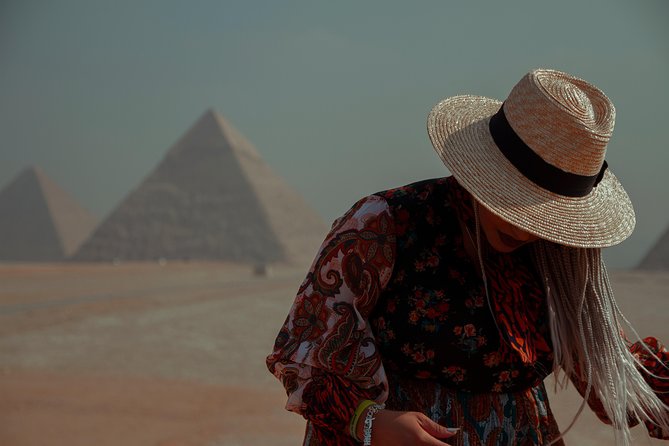
At $8 per person, the standout value isn’t just the low cost. It’s what comes packaged with it.
Here’s what you get included:
- Hotel pick-up and drop-off
- Private tour
- Camel ride at Giza Pyramids (30 minutes)
- Bottle water
- Mobile ticket
- Admission tickets included for basic areas (exact entry depth depends on the options chosen)
For most travelers, this is where value shows up. If you try to piece together transport, tickets, and a guide separately, the cost can climb quickly. Here, the essentials are bundled, which is why the overall experience can feel like a steal—especially if you’re staying in Cairo and don’t want to spend your morning negotiating rides.
One practical note: entry fees are described as “basic area only,” and additional options may change what you pay. So if you’re the type who wants to go beyond the standard viewing areas, budget a little for extra entrances.
Stop-by-stop: what you’ll see and what to pay attention to
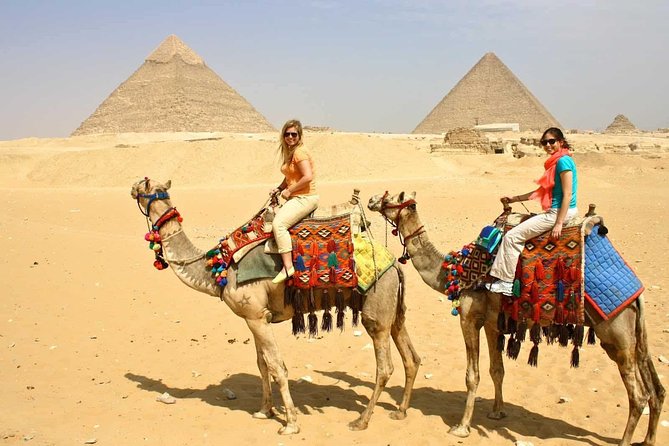
This tour is laid out in a logical circuit across the Giza Plateau area. Each stop is short enough to keep energy up, but long enough to be worthwhile.
Stop 1: Pyramids of Giza (Giza Necropolis)
This is your big opening act. You’ll be guided around the Giza Necropolis, which includes the Great Pyramid of Giza, the Pyramid of Khafre, and the Pyramid of Menkaure, plus their associated pyramid complexes and the Great Sphinx of Giza.
You’ll get about 1 hour 30 minutes here, which is the longest block. Use that time like this:
- Start by looking from a distance first, to get the “whole” shape in your head.
- Then move closer to understand the details: the stone mass, the edges, and how the monuments relate to each other.
This is also where the tour’s timing helps you. You’ll likely spend your first minutes taking in the overall plan, and then you can slow down for photos.
Stop 2: The Great Pyramid of Cheops (Khufu)
You’ll focus on Khufu’s pyramid complex, which historically links to a valley temple (and other structural elements tied to the site). You’ll have around 30 minutes at this stop.
Even if you’ve seen pictures before, the Great Pyramid is different when you’re standing near it. It changes how your brain measures distance—suddenly “big” becomes “impossible-big.”
If you care about photos: try to capture at least one image with a person included for scale, then one from a cleaner angle without distractions.
A few more Cairo tours and experiences worth a look
Stop 3: Khafre’s Pyramid
Next is Khafre’s pyramid and its complex elements, including a valley temple and a causeway-linked layout. You’ll get about 30 minutes.
A key detail to keep in mind: current Egyptology consensus says the Sphinx’s head is that of Khafre. That’s the kind of “wait, really?” detail a good guide will point out in context.
Stop 4: Menkaure Pyramid
You’ll then visit Menkaure’s pyramid complex. This one also comes with its valley temple and causeway features, plus the mortuary temple area in the broader complex. Expect about 30 minutes.
Menkaure can feel smaller compared to Khufu and Khafre, but that’s part of the point. It helps you see how the plateau evolved as a whole—one unified project, not three random monuments.
Stop 5: The Great Sphinx
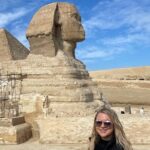
Then you hit the moment most people remember: the Great Sphinx. This stop is also around 30 minutes.
Right here, the tour’s guide value matters. The Sphinx isn’t just a face in the sand; it’s positioned within the larger complex, and your guide can connect it to the pyramids and the site layout so it makes sense.
Stop 6: Gizeh Plateau (big picture spacing)
This stop is more of a “master view” moment. You’ll spend about 30 minutes on the Giza Plateau, the limestone plateau that’s part of the UNESCO World Heritage Site for the Pyramid Fields.
Why it matters: you get a chance to step back mentally. You’ll be seeing the whole “how it sits in the desert” picture, not just the closest monuments.
Stop 7: Panoramic view of the pyramids
Next comes the photo-friendly angle. You’ll get a 30-minute panoramic viewpoint for wide shots.
This is the moment I’d treat as your “memory anchor.” Take a couple slow photos. Then take one where you stop trying to shoot and just look.
Stop 8: Paradise Perfume Palace & Spa
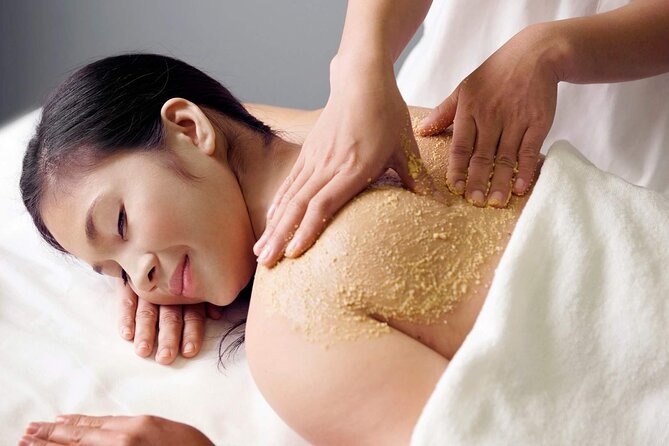
Finally, you’ll visit Paradise Perfumes Palace & Spa for about 20 minutes, with admission listed as free.
This is where the tour can shift from ancient stone to modern retail. Your best move is simple: browse if you like scents and gifts, but don’t feel pressured to buy. If you want this tour for monuments only, you’ll want to be mentally ready that the schedule includes this stop.
Camel ride time: how to get the best experience
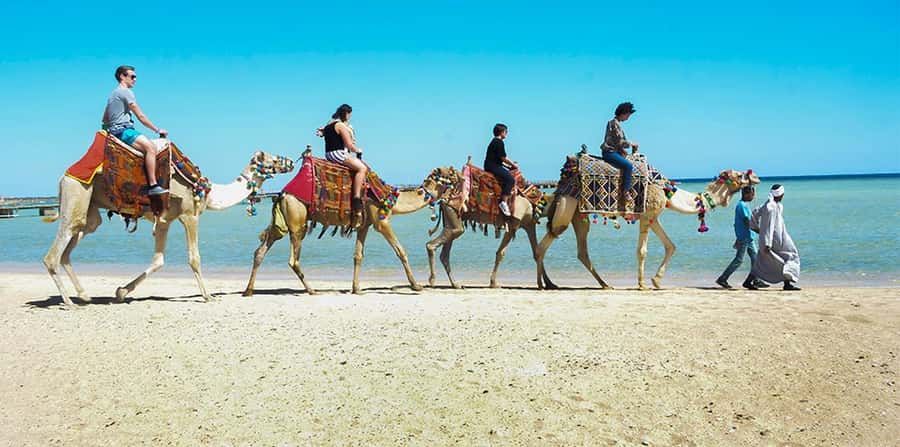
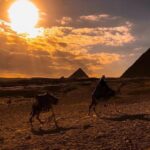
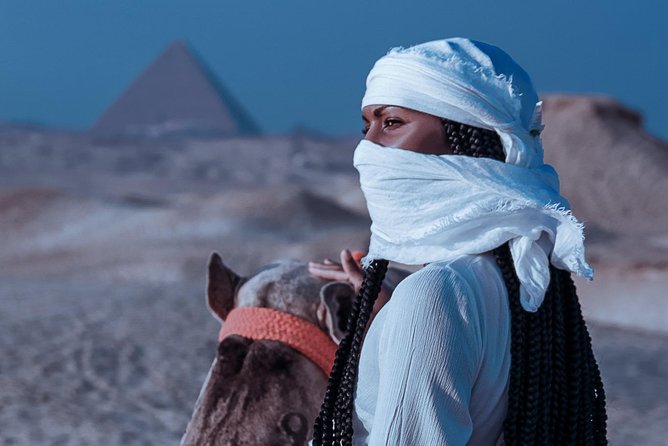
The camel ride is included and set for 30 minutes. This is one of those experiences where expectations matter.
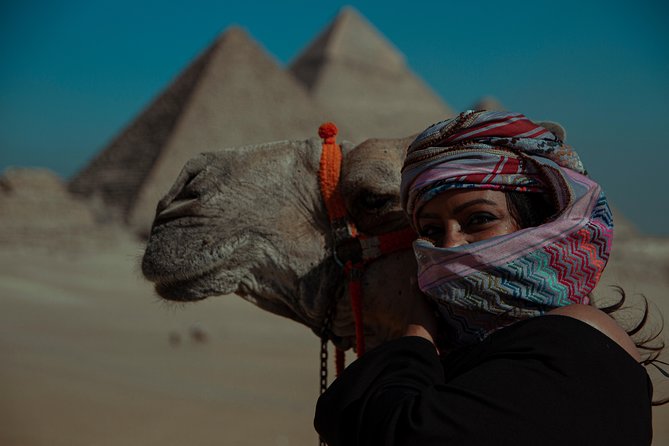
You’ll likely be riding in the Giza area, with the pyramids visible enough to make the ride feel like part of the main story. For photos, this is where you can get some of the classic angles—especially if the guide helps keep you oriented so you’re not only photographing sand.
Two practical tips:
- Bring your phone/camera securely. Camel rides involve motion and uneven ground.
- Wear something comfortable. You’ll be in the desert heat, and you’ll want your gear to stay stable.
Also, remember that camel rides often take time in small adjustments before and after. Even though the ride is “30 minutes,” treat it as a block of time inside the broader tour rhythm.
The shop stops question: what to expect and how to stay in control
This is the one part of the tour style you should go into aware, not surprised.
The plan includes Paradise Perfumes Palace & Spa, and additional info ties in things like Key of life papyrus and a flower cotton store. On the ground, that typically means a quick redirect to souvenir-style shopping.
Here’s how to handle it:
- Decide your budget for “nice souvenirs” before you arrive.
- If you’re not buying, be polite but firm. You do not owe extra time or extra spending.
- If the staff keep pushing for purchases after you say no, keep your focus on the guide and your next monument timing.
One of the only drawbacks people flag is the feeling that the shopping part can turn into an extra money grab. You can prevent that feeling by staying clear: this tour is for pyramids and Sphinx first; shopping is optional if it fits your plan.
Guide quality is the difference between good and memorable
You can have a perfectly planned itinerary and still feel underwhelmed if the guide can’t connect the dots. Here, guide performance makes a big difference.
Two names stand out in the experience: Ms. Heeba and Hazad. People describe them as:
- attentive and caring
- focused on key highlights
- good at explanations that help you understand what you’re seeing
- flexible enough to keep the visit comfortable and photo-friendly
That matters because Giza is easy to misunderstand. Without context, it can look like three big pyramids and a face in the sand. With context, you start seeing why the whole site feels deliberate—placement, alignment, complexes, and the relationship between the Sphinx and the pyramids.
Time, timing, and how to avoid feeling rushed
The tour runs 4 to 5 hours total. That’s a short window, so it helps to understand how it’s allocated:
- 1.5 hours for the main Giza Necropolis zone
- 30 minutes each at Khufu, Khafre, Menkaure, Sphinx, plateau, panoramic view
- 20 minutes at the perfume palace
That structure is usually a win. It keeps you from getting stuck too long at any one photo point. But it also means you shouldn’t plan to linger for long sketching sessions or deep questions at every stop.
If you want to ask extra questions, pick one or two stops where you feel most curious—Sphinx and Great Pyramid are usually the best places to ask “why does this matter?” questions.
Who should book this private half-day tour
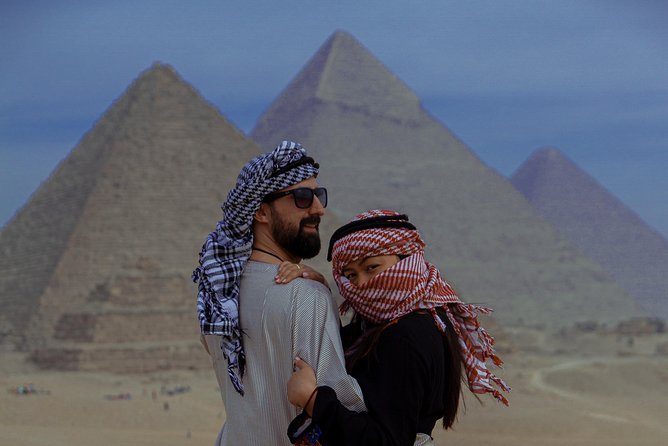
This tour is a strong fit if:
- you want a private experience without spending a whole day
- you like seeing monuments in a clean sequence rather than wandering alone
- you care about getting close-up views and not just distant scenery
- you want a camel ride included
It may not be the best choice if:
- you hate any shop stops and want a pure monument-only itinerary
- you’re extremely sensitive to tipping expectations
- you want lots of extra add-ons beyond basic entry areas
Should you book it? My honest take
Yes, I’d book this if your priority is Giza’s greatest hits in a tight half-day. The combination of free pickup/drop-off, included camel ride, and admission for basic areas makes it good value, especially at the listed price. And when guides like Ms. Heeba or Hazad handle the day, the monuments feel easier to understand, not just easier to photograph.
Just go in with a smart mindset about the non-monument stops. Treat Paradise Perfumes (and any papyrus or cotton store stop) as optional browsing, not the main event. If you’re ready for that, you’ll end the tour with what you came for: the Great Pyramid feeling massive, the Sphinx looking eerily real, and desert views that make Giza feel like a place, not a set piece.
FAQ
How long is the private half-day tour?
The tour lasts about 4 to 5 hours.
Do I get hotel pickup and drop-off?
Yes. Hotel pick-up and drop-off are included.
Is the camel ride included, and how long is it?
Yes. A camel ride at Giza Pyramids is included for 30 minutes.
Are entrance fees included?
Admission tickets are included for the basic area at the listed stops. Entry fees can vary depending on the tour options chosen.
What’s included in the tour besides the monuments?
The tour includes bottle water, camel ride, and a visit to Paradise Perfumes Palace & Spa (with free admission listed).
Is lunch included?
No. Lunch at a local restaurant is optional.
Do I need to pay for the guide or tipping?
Tipping is not included, and the tour lists “tour guide (optional)” as not included.
Can I cancel for a full refund?
Yes. You can cancel up to 24 hours in advance for a full refund.