REVIEW · CAIRO
Private Day Tour Historical Alexandria from Cairo
Book on Viator →Operated by GEM Explore Egypt · Bookable on Viator
Alexandria in one long day sounds tough. Then it lands, and you get it. This private trip turns a 220 km hop from Cairo into a full-on walk through Greek and Roman Alexandria, plus the sea-front modern story at the Bibliotheca Alexandrina. I like that pickup and drop-off are handled, so you’re not juggling taxis at 7 a.m. I also like the mix of ancient tombs, Roman stone, and a living waterfront library scene. The one drawback: it’s a long day (about 9–10 hours), and that includes a real drive.
The best part is how the day is explained. You’ll be with an Egyptologist guide, and the experience is built around clear context—why each place matters, not just what it looks like. The catacombs, Pompey’s Pillar, Fort Qaitbay, and the library are each different eras, so the day doesn’t feel like copy-paste sightseeing. Still, plan for optional entrance decisions and budget time for walking and stairs, especially at Kom el Shoqafa.
In This Review
- Key Things You’ll Notice on This Day Trip
- From Cairo to Alexandria: A 7 a.m. Morning That Actually Makes Sense
- What You Learn From an Egyptologist, Not Just What You See
- Stop 1: Alexandria City Highlights (The Greek Era Starts the Story)
- Stop 2: Kom el Shoqafa Catacombs (Bedrock Tombs With a Staircase Descent)
- Stop 3: Pompey’s Pillar (Roman Triumph, Corinthian Style)
- Stop 4: Fort Qaitbay (A Citadel Built to Protect Alexandria)
- Stop 5: Bibliotheca Alexandrina (Modern Library, Ancient City Energy)
- The Real Value of the $80 Price (What’s Included vs. What to Plan For)
- Timing and Pacing: How to Keep This Long Day From Feeling Like a Marathon
- Who This Tour Fits Best (And Who Might Want a Different Option)
- Quick Notes on Tour Style and Comfort
- Should You Book This Private Alexandria Day Trip?
- FAQ
- What time does the tour start?
- How long is the Alexandria day tour from Cairo?
- What’s the price per person?
- Is hotel pickup included?
- Is lunch included?
- Are bottled water and snacks provided?
- Do I need to pay entrance fees?
- Is this tour private?
- What stops are included?
- Can I cancel for a full refund?
Key Things You’ll Notice on This Day Trip
- Private, only-your-group touring: you control the pace and questions go right into your guide’s answers.
- A 7 a.m. start with hotel pickup: the early departure helps you fit Alexandria sights into one day.
- Kom el Shoqafa catacombs: a circular staircase down into bedrock tombs tied to the Antonine emperors.
- Pompey’s Pillar as Roman power-stone: a huge Corinthian column connected to Emperor Diocletian (298–302 AD).
- Fort Qaitbay on a strategic site: a citadel linked to Sultan Ashraf Qaitbay and Ottoman-era threats.
- Bibliotheca Alexandrina by the Mediterranean: modern cultural center with ancient-city symbolism.
From Cairo to Alexandria: A 7 a.m. Morning That Actually Makes Sense
This tour is designed like a road trip: you leave Cairo early, you spend your day in Alexandria, and you come back the same day. You start at 7:00 a.m., which is the right move because Alexandria is about 220 km away. That distance matters. It’s not a quick hop; it’s why this is best for travelers who don’t mind a long day and want the payoff of seeing multiple highlights.
You’ll also avoid the most annoying part of long-distance day trips: figuring out transportation on your own. Pickup and drop-off are included at your Cairo accommodation, and you’ll travel with an assigned driver. In the experience’s praise, people repeatedly mention punctual pickup and a clean, air-conditioned vehicle—small details, but they change how the whole day feels.
If you’re sensitive to early starts, treat this as a “sleep well the night before” situation. Bring patience and water, and you’ll be fine.
You can also read our reviews of more private tours in Cairo



What You Learn From an Egyptologist, Not Just What You See
This is a guided private tour, so the value isn’t only the sites—it’s how your guide connects them. Alexandria isn’t one era. It’s Greek, Roman, medieval layers, and modern symbolism along the Mediterranean. Your guide is there to explain the shifts—why the city grew, how empires left their mark, and how the present-day city shows up beside ancient remains.
In the guide names that come up often—Ali, Wael, Menna, and Maged—you’ll see a pattern: clear explanations in English, lots of patience with questions, and real help during the more physical parts of the day. One of the repeat themes is support and safety, including helping with stairs at Kom el Shoqafa and stepping in when unwanted attention shows up around monuments.
If you like your travel with context (and you probably do if you’re reading a historical Alexandria review), this approach is exactly what you want.
Stop 1: Alexandria City Highlights (The Greek Era Starts the Story)
Your first big stop is Alexandria itself. The city was founded by King Alexander the Great in 331 BC, and it quickly grew to replace Memphis as a new power center—this is where the Greek era in Egyptian history really takes shape.
What to expect here is orientation, not just random photo stops. You’ll explore main attractions with your advanced tour guide, and you’ll get the reason Alexandria matters before you start hitting specific monuments. This is important because later stops are tied to Roman and later defensive history, and you’ll understand the thread faster if you start with the city’s origin story.
One practical consideration: Alexandria can be lively, and you’ll be walking between spots. Wear shoes you can trust, and don’t plan a “perfect outfit” day. Think comfortable and sweat-manageable.
Stop 2: Kom el Shoqafa Catacombs (Bedrock Tombs With a Staircase Descent)
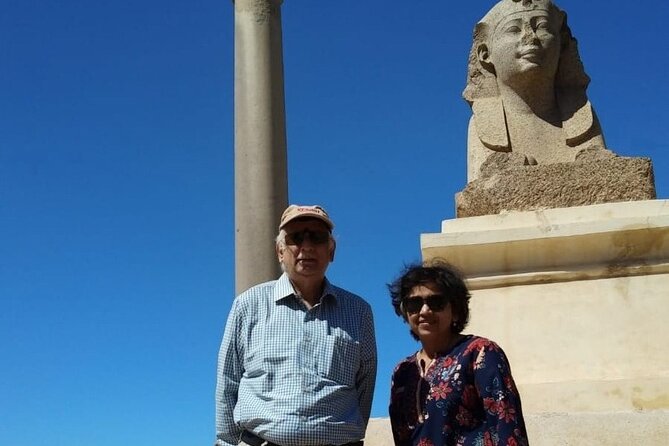
Then comes the most dramatic stop on the route: the Catacombs of Kom el Shoqafa. This is described as the largest and most important burial site in Egypt, and it’s also associated with being one of the Seven Wonders of the World in the Middle Ages.
The main feature is the architecture. You’ll go down an ancient circular staircase into tombs cut into bedrock. The tombs were tunneled during the age of the Antonine emperors. In plain terms: you’re not looking at an empty ruin—you’re going into a constructed underworld space.
What I’d watch for if you’re booking:
- You’ll likely need time and calm steps. The circular layout means uneven footing in places.
- If stairs feel like a problem, this tour’s guide support is a real strength. In prior experiences, guides have been willing to help people up and down as needed.
For most people, this stop is the one that makes Alexandria feel like a time machine.
Stop 3: Pompey’s Pillar (Roman Triumph, Corinthian Style)
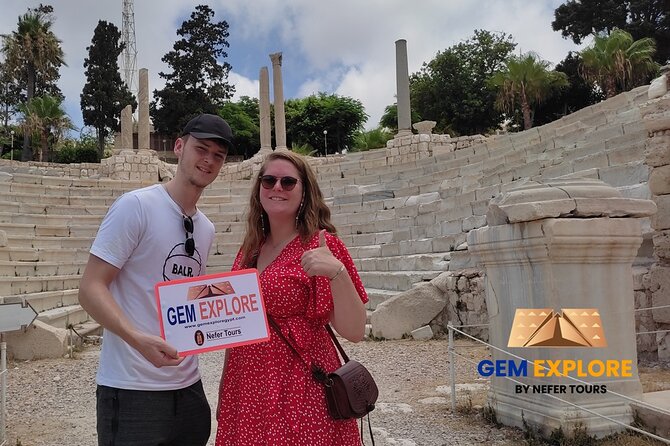
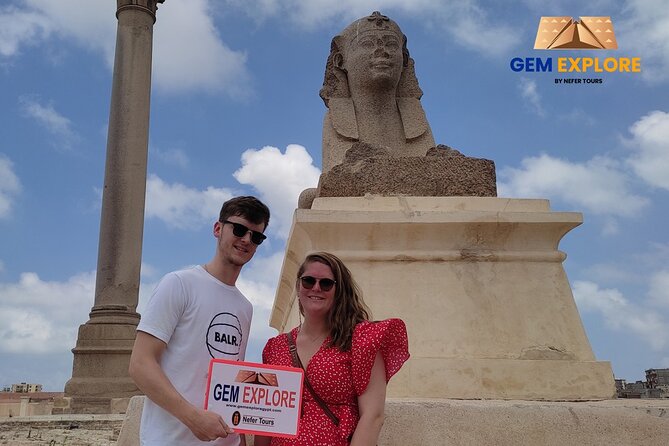
Next you’ll see Pompey’s Pillar, a Roman triumphal column in Alexandria. Even though the name sounds like a single famous Roman moment, the stone itself connects to later imperial politics. The column was set up in honor of Roman emperor Diocletian between 298 and 302 AD.
This is a Corinthian column, and the original setup mattered: it supported a colossal porphyry statue of the emperor in armor. Porphyry was a big-deal material in Roman symbolism—because it looked important and it was hard to get. So yes, it’s a monument, but it’s also a statement about power.
This stop is usually less physically demanding than the catacombs, which is nice pacing in a long day. Still, give yourself a few minutes to look closely. The column’s scale reads differently once you’re standing near it.
You can also read our reviews of more historical tours in Cairo






Stop 4: Fort Qaitbay (A Citadel Built to Protect Alexandria)
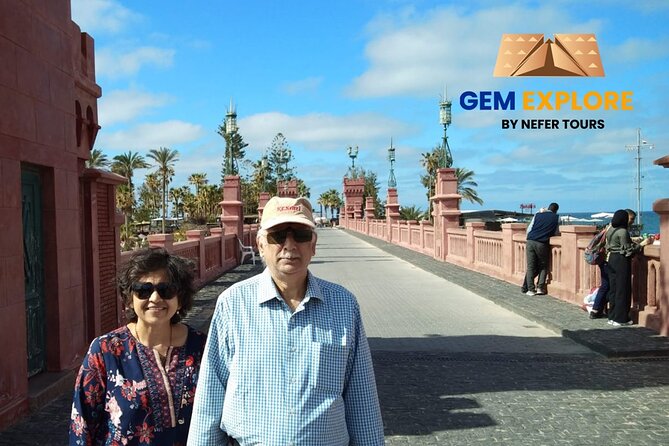
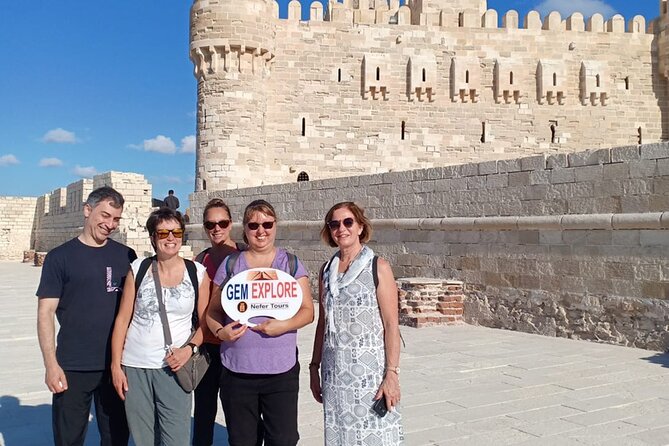
After the Roman stone, you move into defense and strategy with Fort Qaitbay. This citadel is named after Sultan Ashraf Qaitbay, who wanted to protect Alexandria from direct threats linked to the Ottoman Empire.
The value here is not only the view (though the position is important). It’s also understanding why this spot was defended. Alexandria wasn’t just cultural glamour; it was a Mediterranean prize. Fort Qaitbay fits that whole “who controlled this city” story.
In a day like this, Fort Qaitbay is a good breather—less underground, more open-air, and easier to photograph (assuming the light cooperates).
Stop 5: Bibliotheca Alexandrina (Modern Library, Ancient City Energy)

Then you finish with the modern icon: the Bibliotheca Alexandrina. It’s a major library and cultural center on the Mediterranean Sea. The symbolism is the point. Alexandria lost its ancient library legacy long ago, but the city still wears that idea on its sleeve, and this library is how the modern era answers the question of what Alexandria represents.
This stop works well near the end because you shift from ancient remains and defensive structures into a present-day cultural space. It’s also a great mental reset after the heavier history stops.
If you’re the type who likes a mix of architecture and meaning, you’ll probably enjoy this part most. You can step back from the whole “ruins only” mindset and see how the city rebrands itself around learning.
The Real Value of the $80 Price (What’s Included vs. What to Plan For)
At $80 per person, this tour is priced for a full-day private experience with transportation and a guide. The included pieces are the big ones:
- Pickup and drop-off from your Cairo accommodation
- Expert Egyptologist
- Lunch
- Bottled water
- A private-only group setup
Drinks aren’t included, so if you’re the kind of person who drinks throughout the day (most of us are), budget for extra water or soft drinks beyond the bottled water provided.
Entrance fees are described as optional to select. Some stops are listed as admission-ticket free, but you should still be ready for the reality of how tours handle site access. My advice: treat entrance as a “confirm the plan” item when you book, so you don’t get surprised mid-day.
Lunch is included, and in one set of experiences it was arranged at a seaside fish market, with mullet mentioned. Even if your exact lunch setup differs, the key is that you won’t have to solve food on your own while you’re tired from a long drive.
Timing and Pacing: How to Keep This Long Day From Feeling Like a Marathon
The tour runs about 9 to 10 hours. That range matters because it can include traffic, time spent at each stop, and how quickly your group moves through catacombs stairs and monument areas.
Here’s the pacing logic:
- Early start locks in your daylight.
- Alexandria city orientation first prevents you from feeling lost later.
- Catacombs early-ish gives the most demanding stop time before fatigue hits.
- Pompey’s Pillar and Fort Qaitbay break up the day with simpler walking.
- Bibliotheca closes with open-air and modern comfort.
Practical tip: plan for bathroom breaks and keep a lightweight layer. Egypt mornings can be cool, and the Mediterranean day can swing. Also, bring a small pack. You’ll want water accessible, plus a phone battery if you’re taking lots of photos.
Who This Tour Fits Best (And Who Might Want a Different Option)
This is a strong choice if:
- You want a guided historical day without doing the logistics yourself.
- You like variety: Greek origins, Roman monuments, catacombs, medieval/fort history, and a modern cultural ending.
- You’re comfortable with a long day and some stairs.
It’s also a smart pick for solo travelers who want safety and convenience. The tour format is private-only and pickup happens at your hotel reception, so you’re not managing meeting points across the city.
If you hate early starts, or if you want a slower, multi-day Alexandria trip where you can linger for hours, this may feel rushed. For those travelers, consider splitting Alexandria into smaller chunks over more days.
Quick Notes on Tour Style and Comfort
You travel with pickup and drop-off, and you’ll have a driver in addition to the guide. One standout trend in the tour’s guide performance is support—help with getting on/off at stops, stepping in so your group isn’t bothered, and taking care of small needs like assisting during stairs.
The tour is also described as flexible for most travelers, meaning the basic structure fits people who can handle walking and the catacombs descent. If you have mobility constraints, it’s worth messaging in advance so your guide can plan the best way through the stair-heavy area.
Should You Book This Private Alexandria Day Trip?
Yes, if you want Alexandria’s big-name highlights in one day and you value a guide who explains the story in clear English. This tour’s best strength is the combination of private convenience + guided context + a route that hits different eras. The price is fair for what you get: transport out of Cairo, a full-day plan, lunch, and a guide focused on making history make sense.
I’d hold off only if:
- you’re not ready for a 9–10 hour day trip with a long drive, or
- catacombs stairs are a hard no, or
- you want maximum unhurried time at fewer sites.
If you fit the first group, book it and enjoy the ride. Alexandria works best when you come with curiosity—and this tour feeds that curiosity fast.
FAQ
What time does the tour start?
The day trip starts at 7:00 a.m.
How long is the Alexandria day tour from Cairo?
Plan for about 9 to 10 hours.
What’s the price per person?
The price is listed as $80.00 per person.
Is hotel pickup included?
Yes. Pickup and drop-off are included at your accommodation in Cairo.
Is lunch included?
Yes. Lunch is included, but drinks are not included.
Are bottled water and snacks provided?
Bottled water is included.
Do I need to pay entrance fees?
Entrance fees are marked as optional to be selected, and some stops are listed as admission ticket free. You should still confirm what’s included for your booking.
Is this tour private?
Yes. It’s private, and only your group will participate.
What stops are included?
You’ll visit Alexandria city highlights, the Catacombs of Kom el Shoqafa, Pompey’s Pillar, Fort Qaitbay, and the Bibliotheca Alexandrina.
Can I cancel for a full refund?
You can cancel up to 24 hours in advance for a full refund.