REVIEW · SAFAGA
Luxor Day Tour from Safaga Port
Book on Viator →Operated by Al Ragaa Tours · Bookable on Viator
Luxor from Safaga is ancient nonstop. This 10 to 12 hour day trip strings together major Luxor sites you’d normally spread over several visits, from the Valley of the Kings to Karnak. You’ll ride inland from Egypt’s Red Sea port, then come back to Safaga with entrance fees and a guided narrative handled for you.
I particularly like the English-speaking guide setup, which makes it much easier to follow what you’re seeing and why it mattered. I also like that you’re not left to solve logistics at each stop: bottled water is provided and lunch is included at a local restaurant.
One consideration: the road time can be long, especially if you’re starting from Safaga Port. Plan for a full day where comfort helps, but your schedule still moves at cruise-port pace.
In This Review
- Key highlights worth your attention
- Safaga to Luxor: A/C transfers and the reality of a long day
- Valley of the Kings: tomb interiors, Ramses II, and what fits in 2 hours
- Temple of Hatshepsut at Deir el Bahari: ramps, symmetry, and a calmer pace
- Karnak Temple: the largest complex, and how 1.5 hours can still feel big
- Colossi of Memnon and lunch: finishing with two giant statues
- Guides like Omar, Marwa, Mahmoud, and Radu: why the narration matters
- Price and what’s included: is $148 good value from Safaga?
- Timing, port hiccups, and how to have a smoother day
- Who should book this Luxor day trip?
- Should you book Luxor from Safaga Port? My recommendation
- FAQ
- How long is the Luxor day tour from Safaga Port?
- Where do I meet the guide in Safaga?
- Is the guide English-speaking?
- What major sites are included?
- Is lunch included, and are drinks included?
- Are entrance fees included?
- What’s the cancellation policy?
Key highlights worth your attention
- English narration that keeps pace with the sites so you’re not guessing your way around tomb walls
- Entrance fees included at every main stop, which cuts down on small surprises
- Valley of the Kings tomb access time (2 hours) lets you focus on interiors, not just viewpoints
- Deir el Bahari and Hatshepsut’s three-level temple with its central ramps is a standout architectural stop
- Colossi of Memnon facts that feel specific, including the quartzite sandstone moved about 700 km
Safaga to Luxor: A/C transfers and the reality of a long day
This is a long-day excursion by design. You’re looking at roughly 10 to 12 hours total, which includes the transfer from Safaga Port up to Luxor and back, plus several guided stops. That means your day is more about flow and coverage than leisurely wandering.
The good news: your transfers are in an air-conditioned vehicle, and you get bottled water during the tour. If you’re the kind of person who gets cranky after hours in a vehicle, bring patience—and maybe a light snack for later, since lunch is built in but restaurant drinks aren’t.
Also, start by showing up at the correct meeting point early: Safaga Mining Port (ABU TARTOUR), near the Al-Urusa square. A couple of people have mentioned mix-ups at port gates, and the easiest fix is simply being early and checking you’re at the right side.
You can also read our reviews of more tours and experiences in Safaga.
Valley of the Kings: tomb interiors, Ramses II, and what fits in 2 hours
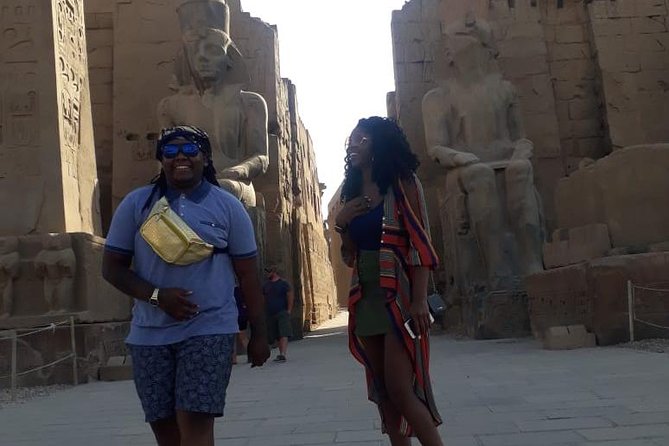
The Valley of the Kings stop is timed well for first-timers. You get about 2 hours here, with the admission ticket included. That’s usually enough time to go beyond the famous exterior vibe and actually look closely at tomb interiors.
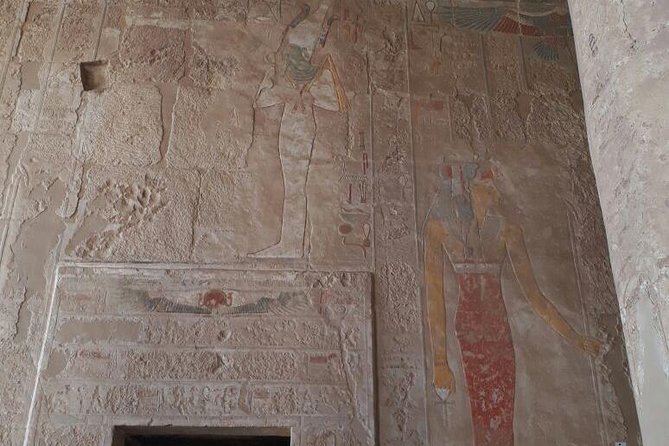
The Valley is the final resting place of rulers from the 18th to 20th dynasty, and it includes tombs associated with Ramses II and boy pharaoh Tutankhamen. The tour description also points out that many tomb decorations are still well preserved, which is exactly what you hope for when you’re paying for admission rather than just passing by.
A practical heads-up: tomb access can be limited by what’s available on the day, so you might not see every headline tomb interior you expect. One disappointment that comes up in real-world experiences is not getting King Tut’s tomb. You can reduce the odds of feeling let down by treating this stop as seeing multiple tombs well, not collecting a checklist.
Temple of Hatshepsut at Deir el Bahari: ramps, symmetry, and a calmer pace
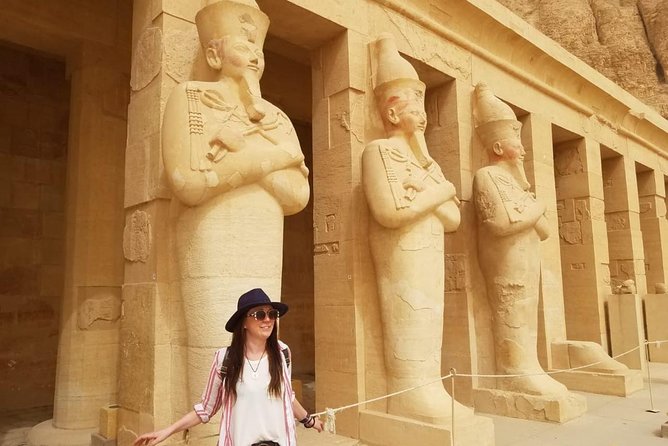
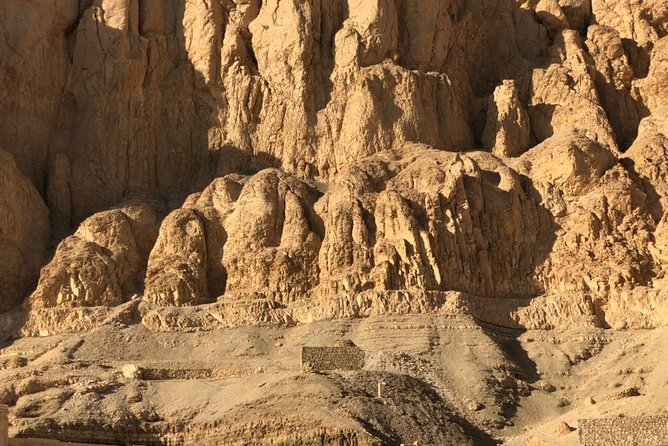
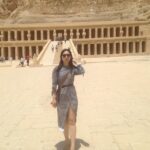
After the Valley, you head to Temple of Hatshepsut at Deir el Bahari. This stop runs about 1 hour, again with the admission ticket included. It’s a smart break from tombs because the setting is more open and architectural.
Hatshepsut’s temple is built on three levels. What makes it stand out is the way it connects those levels with two wide ramps positioned in the center. When you’re there, the design helps your eyes track upward, so even without perfect translation, you can read the structure like a story.
The big value here is contrast. Tombs give you the afterlife world in tight spaces; Hatshepsut’s temple shows power expressed through building. If you’ve got legs that get tired fast in rock-hewn sites, this is often the more comfortable stop.
Karnak Temple: the largest complex, and how 1.5 hours can still feel big
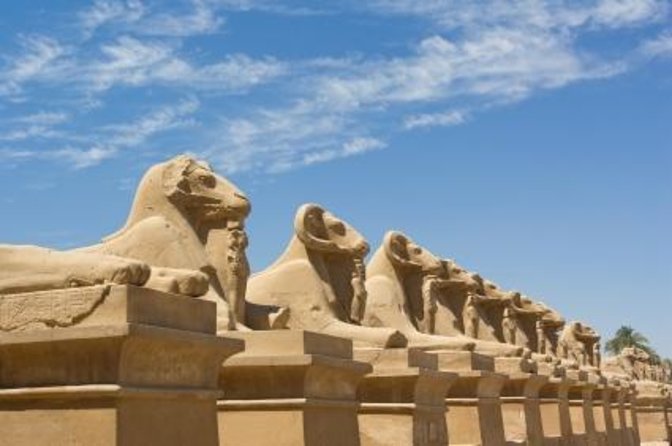
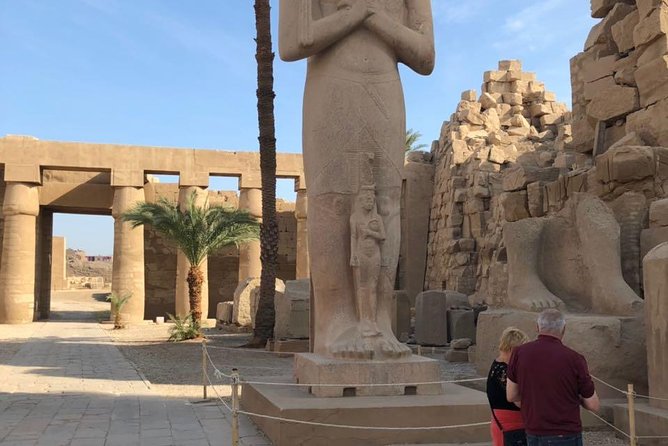
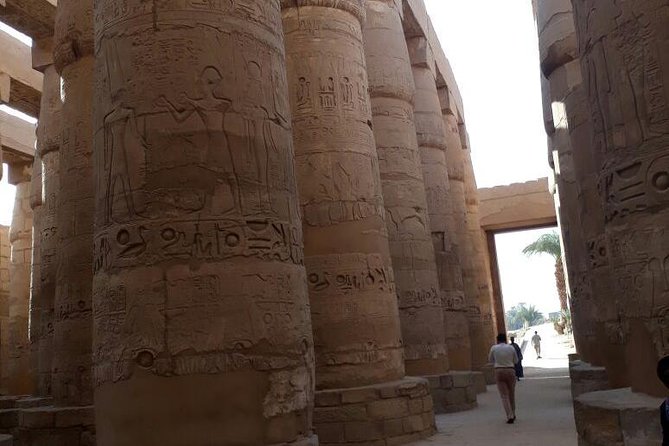
Next up is Karnak Temple, with about 1 hour 30 minutes and admission included. Karnak is described as the largest temple complex ever built by man, and it reflects the work of many generations of builders and pharaohs. That’s not just marketing language—when you’re on site, the scale really does push your brain to recalibrate.
With a time slot of 1.5 hours, your best strategy is to let your guide steer you to the most meaningful parts. Don’t try to win a contest against the whole complex. For most people, it’s the main halls, key axes, and a few signature temple features that make the visit land.
Some real-world comments also flag the feeling of intimidation with big checkpoints or crowd flow. Karnak can involve waiting and moving through controlled areas. If you’re prone to stress, wear comfortable shoes and plan to keep moving rather than standing still for long stretches.
Colossi of Memnon and lunch: finishing with two giant statues
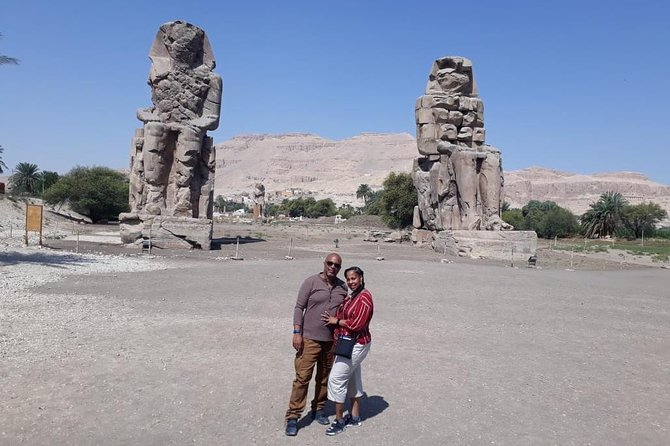
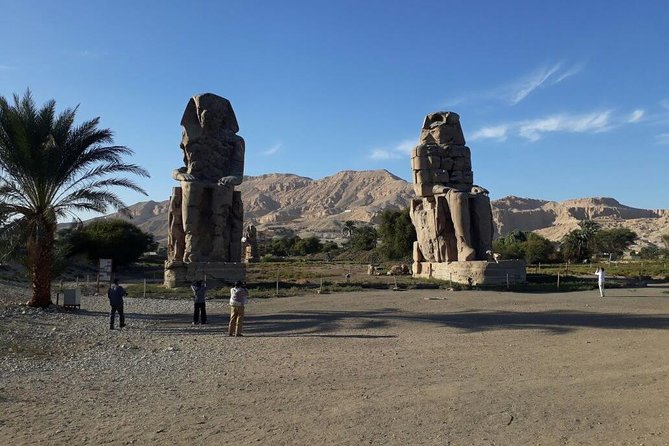
After lunch, you visit the Colossi of Memnon. This stop is about 1 hour with admission included, then you transfer back to Safaga Port.
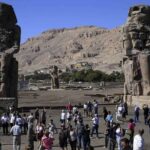
These aren’t just statues plopped in a field. The description explains they are the only remains of a complete mortuary temple. The two massive stone figures are of Amenhotep III, carved from blocks of quartzite sandstone. One of the coolest details is that these stone blocks existed in Cairo and were moved about 700 km to Luxor.
Lunch is included, but drinks at the restaurant are not. So if you like soda or juice with your meal, budget a little extra. Since the day is long, I’d treat lunch as your energy reset before you tackle the final sight.
Guides like Omar, Marwa, Mahmoud, and Radu: why the narration matters
The difference between seeing ruins and understanding them is usually the guide. This tour includes a private English-speaking guide, and the names that show up in real experiences—like Omar, Marwa, Mahmoud, Mohamed/Mohammed, and Radu—all point to a consistent theme: people felt safe, welcomed, and knew what to look for.
What I love about a good guide on a Luxor day trip is that they help you connect details without turning it into a lecture. Instead of you standing there thinking, Okay, what am I supposed to notice, you get explanations that match what’s in front of you right now.
Practical tip: if your guide is one of the people mentioned above, ask them to point out one or two specific things at each stop—like what makes Hatshepsut’s ramps important or which areas at Karnak to prioritize. It’s the fastest way to make the time count.
Price and what’s included: is $148 good value from Safaga?
At $148 per person, the value depends on what you’d otherwise pay and how much you hate logistics.
Here’s what you get that reduces your out-of-pocket stress:
- Pickup from Safaga Port and return transfers
- Air-conditioned vehicle for the day
- Private English-speaking guide
- Bottled water during the tour
- Lunch at a local restaurant
- Entrance fees for the listed sites
What’s not included: drinks at the restaurant and any extras outside the itinerary.
In plain terms, if you’re comparing this to piecing together a taxi plus separate tickets plus a guide, $148 can look like a bargain. If you’re comparing it to the cheapest possible self-guided day, then no—this is not the budget option. But if you want less hassle and a structured plan that hits the big names, this price is in the “pay once, go see things” category.
Timing, port hiccups, and how to have a smoother day
This tour is built around cruise-day movement. That means you should think like a project manager: be early, be ready, and don’t create extra steps.
Here are the most useful habits for this specific setup:
- Arrive at the meeting point early at Safaga Mining Port (ABU TARTOUR).
- Keep your phone charged, since you’ll have a mobile ticket.
- Bring light layers. Egypt’s heat can swing, and vehicle A/C plus sun time can make you feel like you’re in a temperature ping-pong match.
- Wear shoes you’re happy to walk in at temples and checkpoint areas.
Also, road time can be tiring. One comment praised safety and comfort, but another pointed out that the drive can feel long. If you’re sensitive to motion or sitting for hours, bring something simple: earplugs, a neck pillow, or a short entertainment plan.
Finally, weather can matter for port access. There was at least one experience where bad weather prevented access, and the response highlighted that some costs could still be covered depending on what was already arranged. For peace of mind, I’d check your cruise itinerary closely and keep expectations flexible on the departure day.
Who should book this Luxor day trip?
This is a great fit if you want the big Luxor hitters in one go and you value guided explanation over self-navigation.
It’s especially suitable for:
- People on a Red Sea cruise who want a structured full-day without juggling tickets
- First-time visitors who want Valley of the Kings + Hatshepsut + Karnak in one day
- Anyone who prefers to ask questions (an English guide helps a lot)
- Groups of up to 15 where a small-group pace is still practical
If you’re the type who needs hours at just one site to slow down, you might find the day feels packed. But if you want a satisfying, high-impact introduction to Luxor, this day trip is built for you.
Should you book Luxor from Safaga Port? My recommendation
I’d book this tour if you want an efficient Luxor day with English guidance, entrance fees handled, and A/C transfers from Safaga. For the price, you’re buying structure: stops that make sense, enough time per site to feel your visit, and fewer “wait, where do we go next?” moments.
I would hesitate only if you strongly dislike long driving days or if you need guaranteed access to a specific tomb interior. The Valley time is solid, but tomb access can vary day-to-day.
If you book, do one thing that pays off immediately: arrive early at the correct port gate, then let your guide drive the priorities. That’s when the day clicks—Valley to Hatshepsut to Karnak to Memnon, all in one satisfying arc.
FAQ
How long is the Luxor day tour from Safaga Port?
The tour runs about 10 to 12 hours total.
Where do I meet the guide in Safaga?
Meet at Safaga Mining Port (ABU TARTOUR), near Al-Urusa square (MWXP+CM3), Safaga, Red Sea Governorate.
Is the guide English-speaking?
Yes. The tour includes a private English-speaking guide.
What major sites are included?
You’ll visit the Valley of the Kings, the Temple of Hatshepsut at Deir el Bahari, Temple of Karnak, and the Colossi of Memnon.
Is lunch included, and are drinks included?
Lunch at a local restaurant is included. Drinks at the restaurant are not included.
Are entrance fees included?
Yes. Entrance fees are included for the stops listed in the itinerary.
What’s the cancellation policy?
Free cancellation is available. You can cancel up to 24 hours in advance for a full refund; within 24 hours, the amount paid is not refunded.