REVIEW · HURGHADA
hurghada to Lxour private tour – valley of the king & more
Book on Viator →Operated by Ramashka Tours · Bookable on Viator
A 5 a.m. start, then Luxor in one day. I love the door-to-door pickup from Hurghada and the chance to learn from a private guide as you jump between the East and West Banks. The main catch is simple: it’s a long day, about 12 to 14 hours, so you’ll want to be ready for early mornings and a lot of sites.
On the road, Ahmed-style prompt pickup makes a real difference when you’re trying to see Karnak and the big West Bank sights efficiently. After Karnak, you cross the Nile by boat and the day changes from temple complex to tomb country fast, not hours of sitting in the same place.
My favorite part is the pacing around the heavy hitters: the Karnak Temple Complex, the Valley of the Kings (with entrance ticket to visit 3 tombs), then Deir el Bahari and Hatshepsut, plus the Ramesseum and the Colossi of Memnon. The practical consideration is also real: the tour asks for moderate physical fitness, and drinks aren’t included at restaurants.
In This Review
- Key things to know before you go
- Hurghada to Luxor: the whole point is the long, efficient day
- The East Bank start: Karnak Temple Complex with an Egyptologist
- Crossing the Nile: that short boat ride you’ll actually feel
- Valley of the Kings: visit 3 tombs with the right focus
- Deir el Bahari and Hatshepsut: the temple at the cliff line
- The Ramesseum and the Colossi of Memnon: Pharaoh-scale viewing, timed well
- Alabaster factory stop: plan for it as part of the package
- Lunch, drinks, and the one thing to budget: extras
- Price and value: what $190 really buys on a schedule like this
- Who should choose this private Luxor day trip
- Quick practical tips to make this day feel better
- Should you book this tour?
- FAQ
- What time does pickup happen in Hurghada?
- How long is the tour?
- Is lunch included, and are drinks included?
- Are entrance tickets included for the major sites?
- What does the tour include besides guiding?
- Is the tour really private?
- Do I need to send a passport copy before the tour?
- Is vegetarian lunch available?
- Is there a minimum number of people to book?
Key things to know before you go
- Early pickup from Hurghada starts around 04:15–05:00, so plan for a real wake-up call.
- Private Egyptologist guide means you’re not stuck with vague explanations or rushing on your own.
- Valley of the Kings ticket for 3 tombs keeps the tomb time focused without making the day drag.
- Nile boat crossing and Nile-side lunch break up the route and help the schedule feel less brutal.
- Comfortable minibus with DVD player helps on the long drive between Hurghada and Luxor.
- Alabaster factory stop is included at the end, which can add time if you’re strictly tomb-focused.
Hurghada to Luxor: the whole point is the long, efficient day
This is a door-to-door private tour that does what most multi-stop Luxor days try to do: it links the East Bank and West Bank in one shot. You leave Hurghada very early, then you get structured time at the main monuments instead of wasting hours figuring out transport and timing.
You’re not just “going to Luxor.” You’re doing it like a local day trip: hotel pickup, drive, scheduled breaks, guided site time, then return to your hotel. That matters because the biggest friction with Luxor is not the sites. It’s the clock.
Also, you’re traveling with a private group, and that helps your guide manage timing. There’s a comfort element too: the minibus includes a DVD player, which is a small thing until you’re deep into a 12 to 14 hour day.
You can also read our reviews of more private tours in Hurghada



The East Bank start: Karnak Temple Complex with an Egyptologist
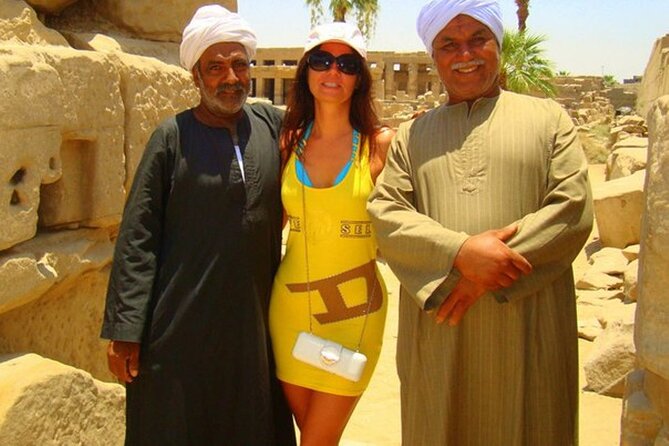
Your morning begins with pickup from your Hurghada hotel around 04:15. The tour then drives toward Luxor and includes a rest stop around 07:00 in the Hurghada to Qena route. It’s there so you can use the bathroom (extra charge) and eat breakfast if you want (you order what you chose from your hotel).
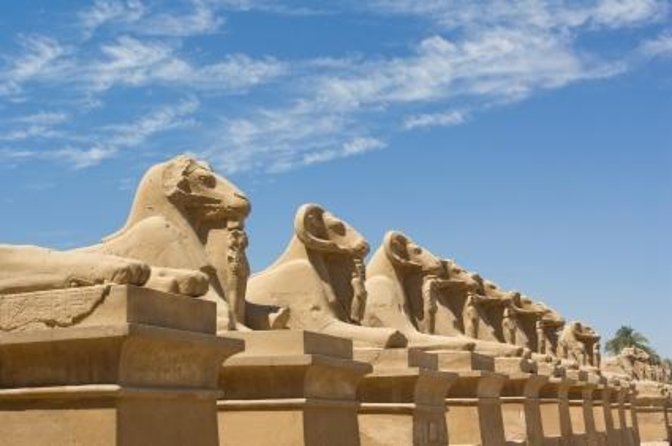
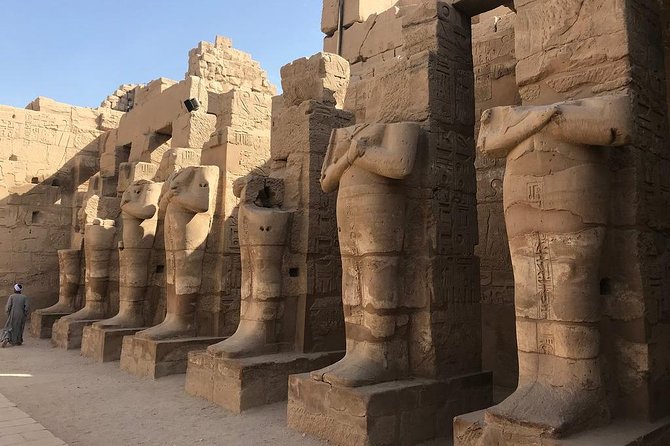
Then comes Karnak. The Temple of Karnak visit is about 2 hours, with a qualified Egyptologist guide. Karnak is listed as a large mix of decayed temples, chapels, pylons—so the goal isn’t just to look at buildings. It’s to understand how the complex works as a whole.
This is where a private guide pays off. With the guide, you can connect what you’re seeing right now with the story you’re hearing in the moment. If you’ve ever felt lost at big ruins, this format helps you get your bearings fast.
Practical note: the Karnak entrance ticket is included, so you don’t spend the first part of the day hunting for admissions lines.
Crossing the Nile: that short boat ride you’ll actually feel
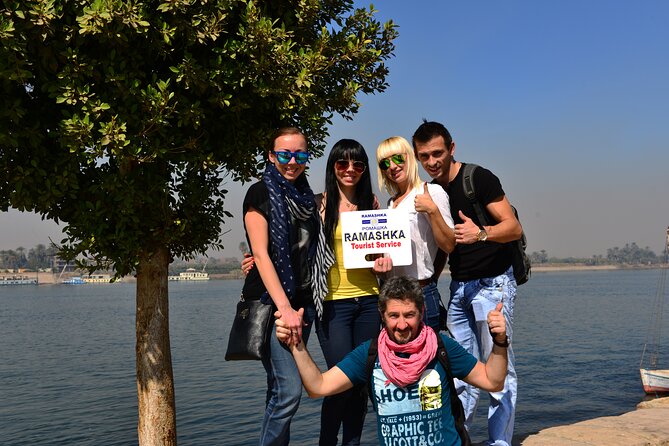
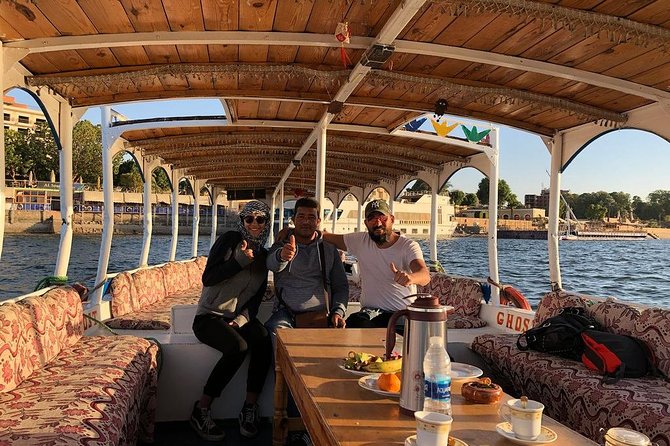
After Karnak, the schedule shifts to the Nile crossing. The boat ride is short—about 5 minutes—just enough to mark the change from East to West.
Immediately after crossing, lunch is built into the day at a Nile-side restaurant. The tour includes lunch, but drinks are not included (you pay for them at the restaurant). The stop includes time to eat without rushing every minute, which is a big deal on a day that starts so early.
Even though the boat ride is brief, I like this part because it prevents the route from feeling like one long checklist. You’re physically changing sides, and that makes the West Bank sights feel like a separate experience rather than a continuation.
Valley of the Kings: visit 3 tombs with the right focus
This is the main tomb moment, and the tour handles it in a smart way. At the Valley of the Kings, your entrance ticket lets you visit 3 tombs. With so many tomb options in Luxor, the key is staying focused. Three tombs is enough to feel like you learned something without turning the day into a sprint.
The tour description frames the Valley of the Kings as a site where, for nearly 500 years from the 16th to 11th century BC, rock-cut tombs were excavated for pharaohs and powerful nobles of the New Kingdom. That time window matters because it tells you this wasn’t one quick construction phase. It’s an extended royal era of tomb making.
Two hours is the time window here, so you’ll have room for your guide to explain what you’re seeing as you move from tomb to tomb. If you’re traveling with someone who wants the highlights rather than the slowest possible pace, this is a good match.
A practical heads-up: you’ll want to dress and move with tombs in mind, and the tour does call for moderate physical fitness. Think comfortable shoes and a steady pace.
Deir el Bahari and Hatshepsut: the temple at the cliff line
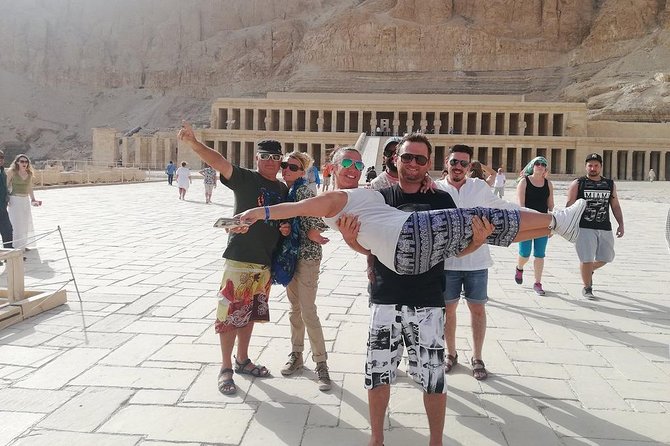
After the Valley of the Kings, the itinerary continues to the Mortuary Temple of Hatshepsut at Deir el Bahari. It’s listed as a mortuary temple built for the Eighteenth Dynasty pharaoh Hatshepsut, located beneath the cliffs at Deir el Bahari on the West Bank.
You get about 30 minutes at this stop. That time is short enough that your guide will likely focus on the core story and key areas, which works well for a one-day schedule. It’s also a nice change of pace after tombs, because a temple complex can feel more open and more visually structured.
If you’re the kind of traveler who likes one iconic stop to balance the day, this is it. You go from rock-cut tombs to a major temple space that’s tied to a single ruler and a specific location.





The Ramesseum and the Colossi of Memnon: Pharaoh-scale viewing, timed well
Two more West Bank highlights round out the mid-afternoon portion of the day: the Ramesseum and the Colossi of Memnon.
The Ramesseum is described as the memorial temple of Pharaoh Ramesses II in the Theban necropolis. Your schedule includes a stop there, then you move on.
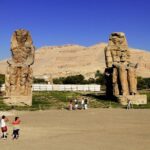
Then you visit the Colossi of Memnon. These are two massive stone statues of the Pharaoh Amenhotep III, located west of the Nile from modern Luxor, and the description notes they’ve stood since 1350 BCE.
The Colossi stop is only about 10 minutes. That short visit might sound quick, but it fits the overall logic of the day: you’re getting the big “wow” moment without eating time you’ll need for tombs and the Hatshepsut temple.
I also like that the order keeps energy up. You see the key monuments, then the day gradually transitions back toward the return drive.
Alabaster factory stop: plan for it as part of the package
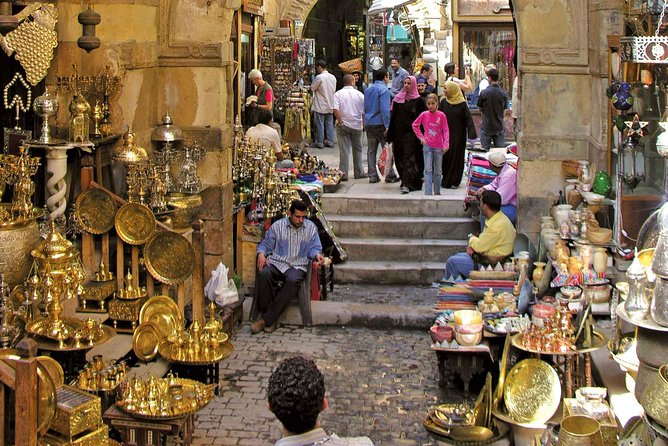
The tour includes a final stop at an alabaster factory. This is one of those “included by the operator” add-ons that can be great for learning or can be purely time-cost, depending on your interests.
Since the tour data only says tour an alabaster factory (and doesn’t specify what you’ll see or how long), I’d treat it as a scheduled bonus at the end of a long day. If you’re the type who wants every minute on monuments, just accept that your day ends with a non-temple stop.
Tip: if you care about souvenirs, decide ahead of time what you’d like to spend. If you don’t care, treat it like a quick cultural stop and keep your focus on the main sites you came for.
Lunch, drinks, and the one thing to budget: extras
Lunch is included, and it’s described as a Nile-side meal at a local restaurant, with mention of both Mediterranean and Egyptian cuisines at one point. That sounds like the operator is aiming for something local but not too risky.
Drinks are extra payment at the restaurant, and coffee and/or tea are also listed as not included. There are also extra-charge moments at rest stops for bathroom use, and dinner can be extra at the return rest stop.
So yes, lunch is covered. No, your bill likely won’t be $190 all-in if you order drinks or snacks.
If you want a smooth day, bring small cash for quick extras and plan to keep ordering simple.
Price and value: what $190 really buys on a schedule like this
At $190 per person, this tour is not cheap. The value comes from combining several things that are hard to line up on your own:
- Hotel pickup and drop-off from Hurghada
- Private tour (your group only)
- Qualified Egyptologist guide with guided time at multiple major sites
- Entrance ticket coverage for key stops (Karnak and multiple West Bank highlights are listed as included)
- Lunch included
- A full-day logistics plan with route breaks
In other words, you’re paying for time-saving and guidance. The early start isn’t just a fun quirk—it’s how you fit Karnak, tombs, Deir el Bahari, and the Colossi/Ramesseum into one day without turning into a transport nightmare.
That said, the tour runs 12 to 14 hours. If you hate long days, this might feel more like a marathon than a vacation.
Who should choose this private Luxor day trip
This tour makes the most sense if you want:
- A structured Luxor day with an Egyptologist guide
- The classic East Bank plus West Bank highlights
- A private setup where timing and explanations are handled for you
- Lunch included and a planned Nile crossing
It may be less ideal if you prefer slow travel, lots of free time at each site, or you don’t handle early wake-ups well. The tour also specifies moderate physical fitness, so you should be comfortable spending extended periods on the move.
It also requires a minimum of 2 people per booking. If you’re traveling solo, you’ll want to confirm that the operator can still run the tour in your case.
Quick practical tips to make this day feel better
A day that starts around 04:15–05:00 is where people usually lose patience. I’d treat this as a schedule sprint: set alarms, keep your morning routine tight, and don’t plan for a lie-in.
At the sites, rely on your guide’s pace. This itinerary is timed for you to hit the main monuments and tombs. If you try to add your own stops, you’ll end up fighting the clock instead of enjoying the story.
For food and drinks, plan for extras. Drinks and coffee/tea are not included, and rest stop bathroom use can have an extra charge.
Should you book this tour?
If your goal is to see Luxor’s biggest names in one day—with a guide and less stress than DIY—this private Hurghada-to-Luxor tour is a strong choice. The Valley of the Kings tomb plan (3 tombs), the Karnak guided time, and the Hatshepsut stop give you the core “Luxor moments” without stretching into multiple days.
I’d only think twice if you want a relaxed pace or you’re sensitive to long, early starts. Otherwise, this is a practical, efficient day built around real highlights—and with a private guide like Sa‘id, it’s the kind of day where the monuments start making sense as you walk through them.
FAQ
What time does pickup happen in Hurghada?
Pickup is around 04:15am from your hotel, and the experience start time is listed as 5:00am.
How long is the tour?
The duration is listed as approximately 12 to 14 hours.
Is lunch included, and are drinks included?
Lunch is included. Drinks are not included, and coffee and/or tea are also listed as not included at the restaurant.
Are entrance tickets included for the major sites?
Entrance tickets are marked as included for Karnak Temple Complex, the Valley of the Kings, Temple of Hatshepsut at Deir el Bahari, and the Colossi of Memnon. The Valley of the Kings ticket allows you to visit 3 tombs.
What does the tour include besides guiding?
It includes qualified Egyptologist guiding, hotel pickup and drop-off, a private tour, and round-trip private transfer. The tour also includes a Nile boat crossing.
Is the tour really private?
Yes. It’s a private tour/activity, and only your group participates.
Do I need to send a passport copy before the tour?
Yes. A copy of the passport is required to be sent by email or WhatsApp.
Is vegetarian lunch available?
A vegetarian option is available. You should advise the operator at booking if you need it.
Is there a minimum number of people to book?
Yes. The tour requires a minimum of 2 people per booking.