REVIEW · SPHINX
Cairo: Half Day Pyramids Tour by Camel or Horse Carriage
Book on GetYourGuide →Operated by OceanAir Egypt · Bookable on GetYourGuide
Five hours in Giza feels like a power walk through time.
This half-day tour gets you from your hotel to the Giza Plateau in an air-conditioned vehicle, then onto the big sights—the Great Pyramid area—handled by an Egyptologist guide. The best part is that you choose your pace with a camel or horse carriage ride, and you can tailor the experience with options like Great Pyramid entrance and lunch.
What I really like is the way your guide turns stone into a story you can actually remember. Guides I’ve seen named here—Tony, Noha, Ezzaldin, and Saber owayan—consistently focus on what you’re looking at and why it mattered in ancient Egypt, not just where to stand for photos. I also like the practical setup: hotel pickup and drop-off from Cairo or Giza, mineral water, and the help you get to keep things moving smoothly.
One consideration: pyramids and Sphinx entry tickets are not included (so you may need to add them separately or choose the entrance option if it’s offered at checkout). And if you’re considering the horse option, go into it with eyes open—one negative experience tied to horse handling showed up in the feedback, so I’d personally lean camel unless your plan specifically benefits from the carriage.
In This Review
- Key things to know before you go
- From your hotel to the Giza Plateau: faster than you think
- Egyptologist guide at Giza: what changes when you have one
- Great Pyramid time: stunning views, plus the entry decision
- Sphinx + neighboring pyramids: why the route feels complete
- Camel ride vs horse carriage: comfort, children rules, and a reality check
- Lunch, water, and the optional photographer: turning minutes into keepers
- Value for $72: what you get (and what you still need to budget)
- Who this tour suits best in Egypt
- My quick decision guide: should you book?
- FAQ
- What’s included in the tour price?
- Are tickets for the pyramids and Sphinx included?
- How long is the tour?
- What ride options do I choose from?
- Do you provide lunch or a photographer?
- What languages is the guide available in?
- Where does pickup happen?
- Is the tour suitable for everyone?
Key things to know before you go
- Hotel pickup and drop-off from Cairo or Giza keeps the day simple and low-stress
- Egyptologist guide means you’re not just sightseeing—you’re learning as you walk and pause
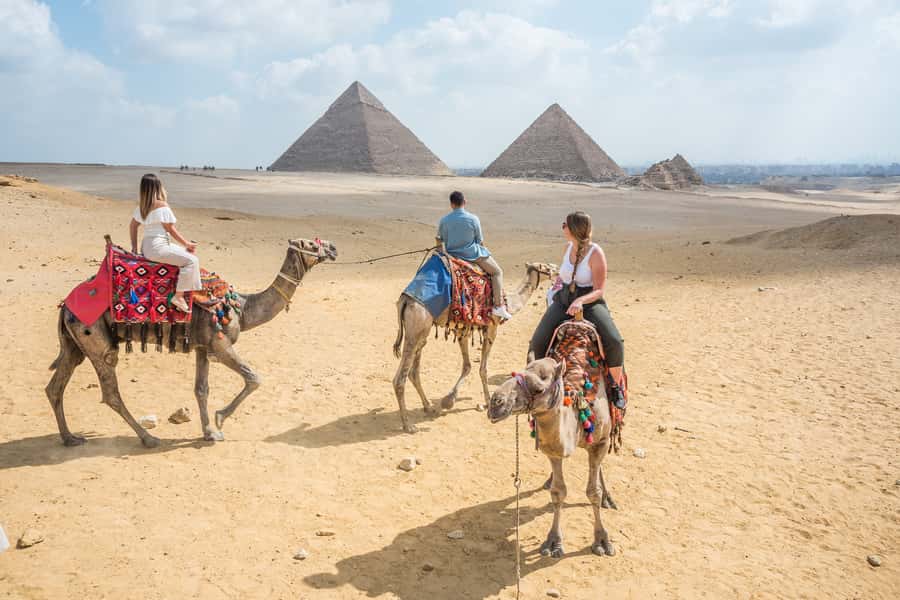
- Camel or horse carriage ride lets you match the activity to your comfort level
- Optional Great Pyramid entrance and lunch help you control time and budget
- Photographer add-on is available if you want fewer hands-on-things and more keepers
- Plan for heat and time outside—this is a short tour, so bring sun protection and comfortable shoes
From your hotel to the Giza Plateau: faster than you think
This tour is built around convenience. You get hotel pickup and drop-off from Cairo or Giza, then transfer to the Giza Plateau in an air-conditioned vehicle. That matters more than it sounds. In Cairo, you don’t just fight distance—you fight timing, traffic, and the sun. A scheduled pickup means you can start your sighting window without spending half the day figuring out transportation.
You’ll also be contacted the day before your tour (WhatsApp, email, or phone) to confirm the exact pickup time. That helps when you’re juggling multiple plans in Egypt. On the day itself, there’s no need to carry a backpack full of essentials either: the tour includes mineral water, and the ride segments are short enough that you can keep moving without lugging around extra stuff.
A few practical notes to keep your day smooth:
- Bring comfortable shoes, sunglasses, and a sun hat
- Keep bags minimal—pets are not allowed, and luggage or large bags aren’t permitted
- If you’re sensitive to heat, treat the first hour as your prime photos and orientation time
If you’re staying farther out, there’s a long-range pickup add-on available for areas like Nasr City, Heliopolis, New Cairo, and parts of 6th of October City. It’s a nice option when you don’t want to do a separate taxi scramble.
You can also read our reviews of more tours and experiences in Sphinx.
Egyptologist guide at Giza: what changes when you have one
The difference with an Egyptologist guide is how quickly your eyes start working better. Without a guide, the pyramids can feel like icons you recognize from books. With a guide, the sights connect—layout, symbolism, the way the plateau is organized, and what was happening around these monuments in the past.
From the guide names in the feedback—Tony, Amir, Ahmed, Sama, and others—I see a pattern: guides are ready to answer questions and adjust to your curiosity. Some were praised for being excellent at explaining, while others stood out for helping people negotiate fair prices for items like headscarves, or for stepping in so you’re not left to handle tense moments alone.
Also, many guides focus on photos in a helpful way. People mention guides taking pictures for them, making sure they get angles that actually work, and not rushing through the best stops. If you’re traveling solo, this matters even more. You get a built-in helper who understands where to stand and when the light hits.
Languages supported are also a practical plus: the tour runs with English plus Arabic, French, German, Italian, Spanish. So even if your Arabic is still in training mode, you won’t be stuck.
Great Pyramid time: stunning views, plus the entry decision
You’ll spend time at the Great Pyramid of Giza area as part of the route. Even without going inside, the scale lands fast. You’re looking at structures that are roughly 4,500 years old, and the view from the plateau gives you that immediate sense of why this became one of the world’s most famous archaeological landmarks.
Here’s the key planning point: entry tickets aren’t included. The tour does offer options that can include entrance to the Great Pyramid, but you should confirm what you’re paying for at checkout and what still needs to be bought separately. If you want to go inside, don’t wait until the last minute. In Egypt, tickets and lines can shift day to day.
If you’re deciding whether to include entrance, think about your “comfort level with crowds and tight spaces.” A half-day tour is short—so adding an interior segment can be worth it if you’re excited by the inside experience. But if you’d rather prioritize photos, the Sphinx, and the surrounding pyramids, you can still have a great visit without entering.
Either way, you’ll get the kind of stop where your guide can point out details you might otherwise miss—how the monument sits in the plateau, what you’re seeing in the broader complex, and what to connect it to historically.
Sphinx + neighboring pyramids: why the route feels complete
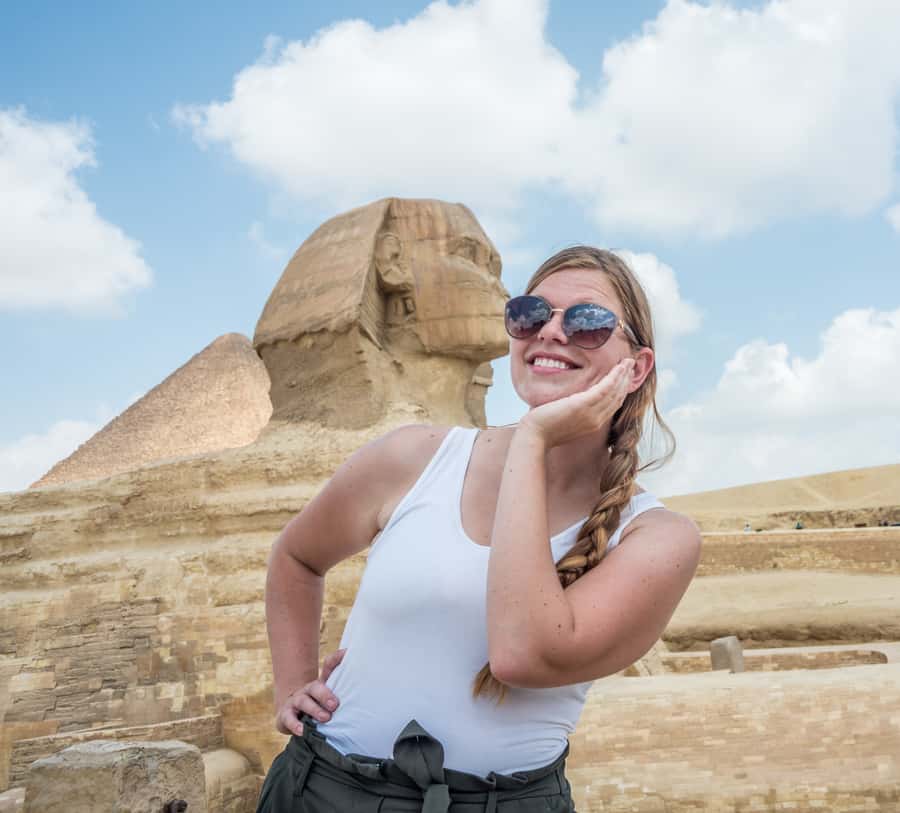
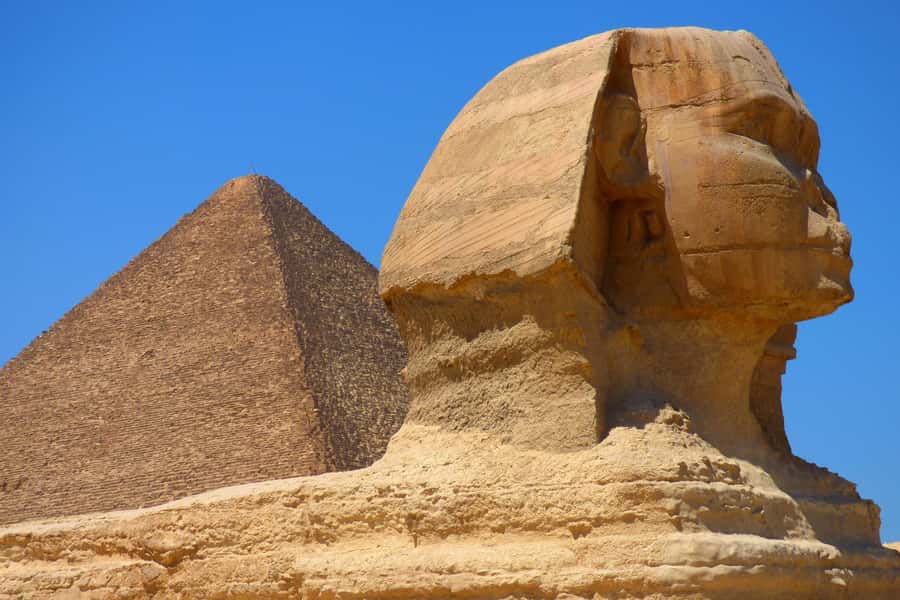
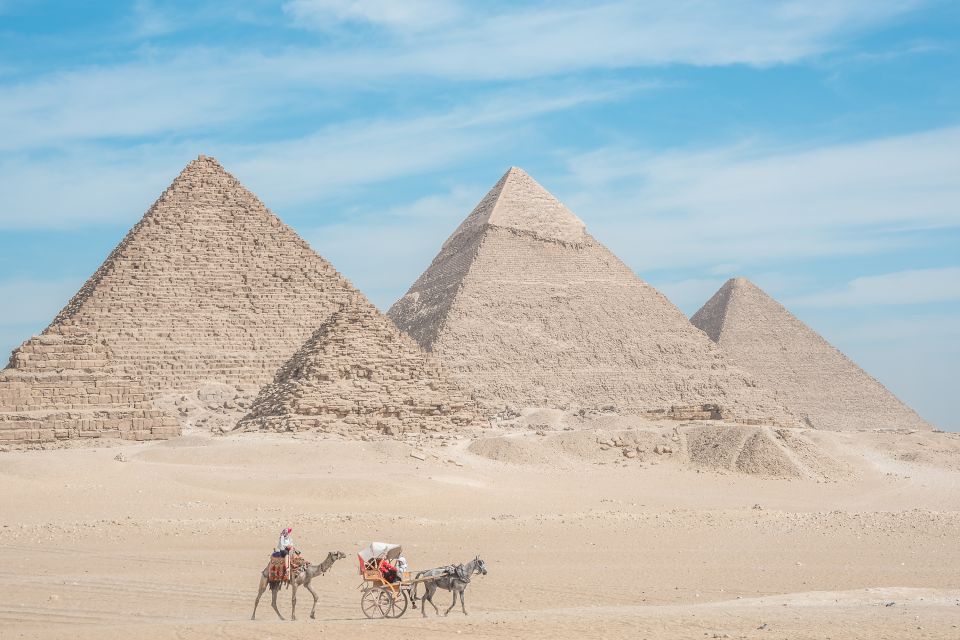
This tour doesn’t just do the one big photo moment. After the Great Pyramid area, you move along the Giza Plateau, including time passing the Great Sphinx of Giza and viewing Pyramid of Mykerinos and Pyramid of Chephren.
That route is smart for a half-day. The plateau can feel overwhelming at first—three pyramids here, temples there, all under the same glare. Having a guide helps you sort it into a sequence you can follow. You learn what each structure represents and how the complex fits together.
It’s also worth noting the emotional effect of this stop order. Seeing the Sphinx after the pyramids gives you a fuller mental map. The Sphinx becomes less of a solo icon and more of a piece in a larger story of kingship, power, and ancient building projects.
If your main goal is simply to say you saw everything iconic, this path delivers it without pretending you can fully “finish Giza” in five hours—which you can’t, and nobody reasonable would promise that.
Camel ride vs horse carriage: comfort, children rules, and a reality check
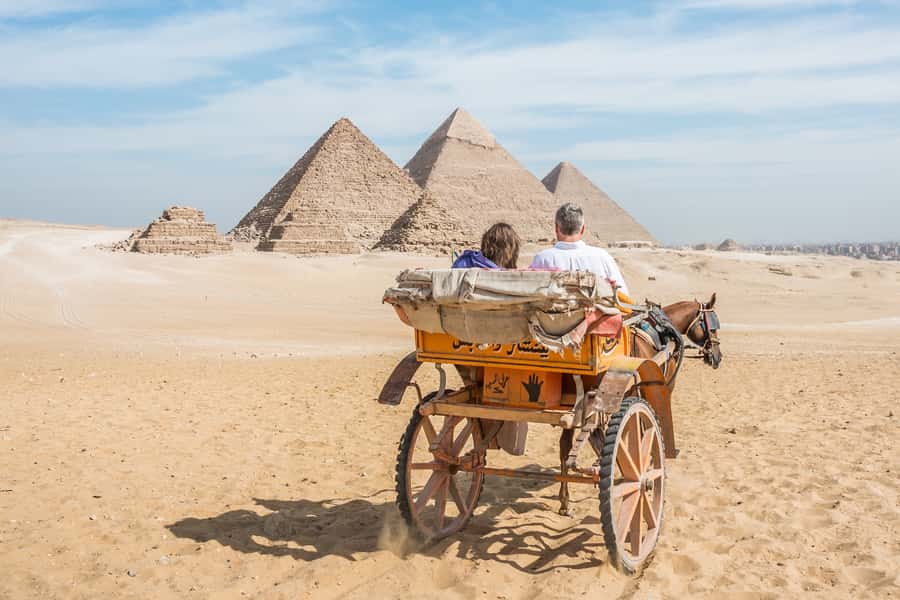
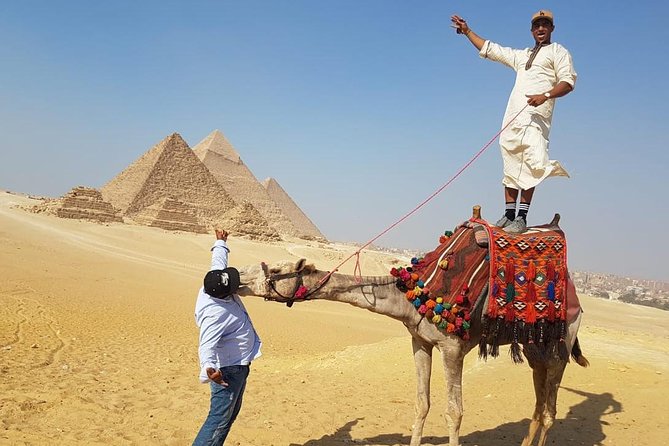
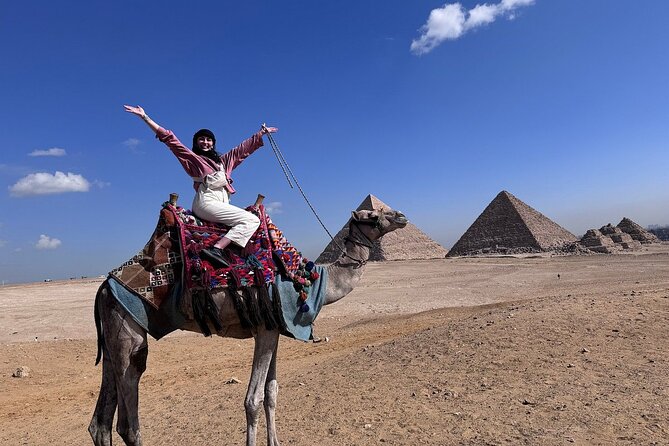
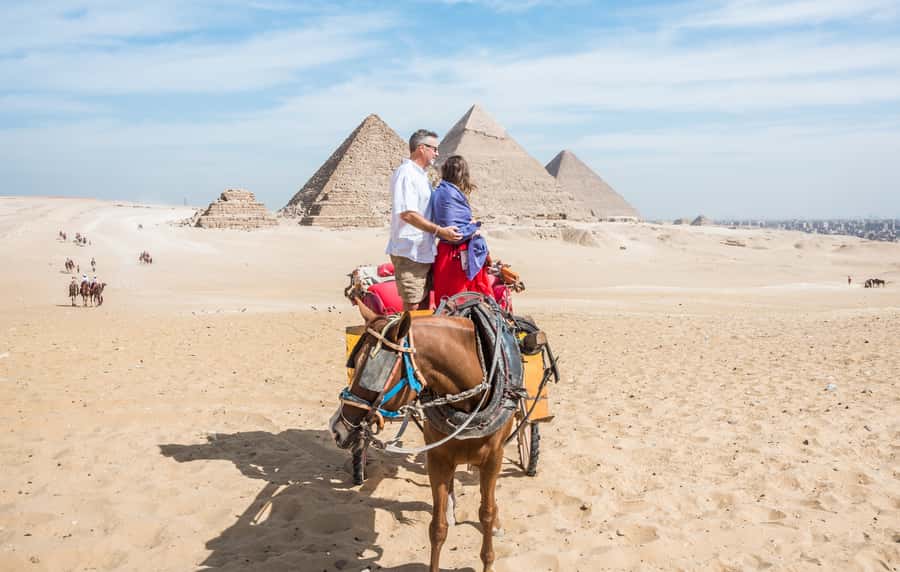
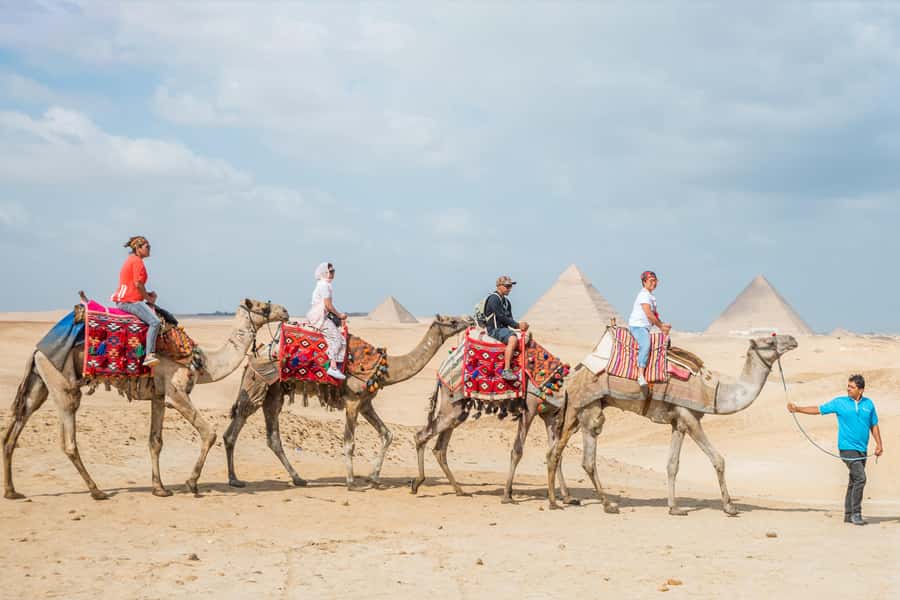
This is the part you’ll feel most. Your option is camel ride or horse carriage (depending on what you select). The camel ride tends to be the classic choice for a reason: it’s visually memorable and often easier to manage in a short timeframe.
If you’re traveling with kids, the tour has clear rules:
- Children must be accompanied by an adult during the camel ride
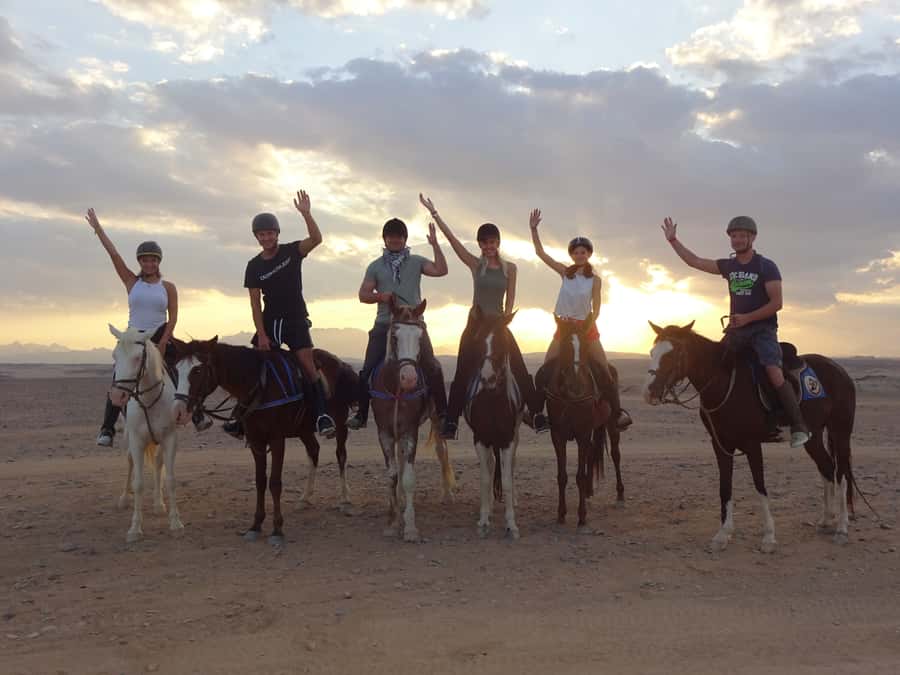
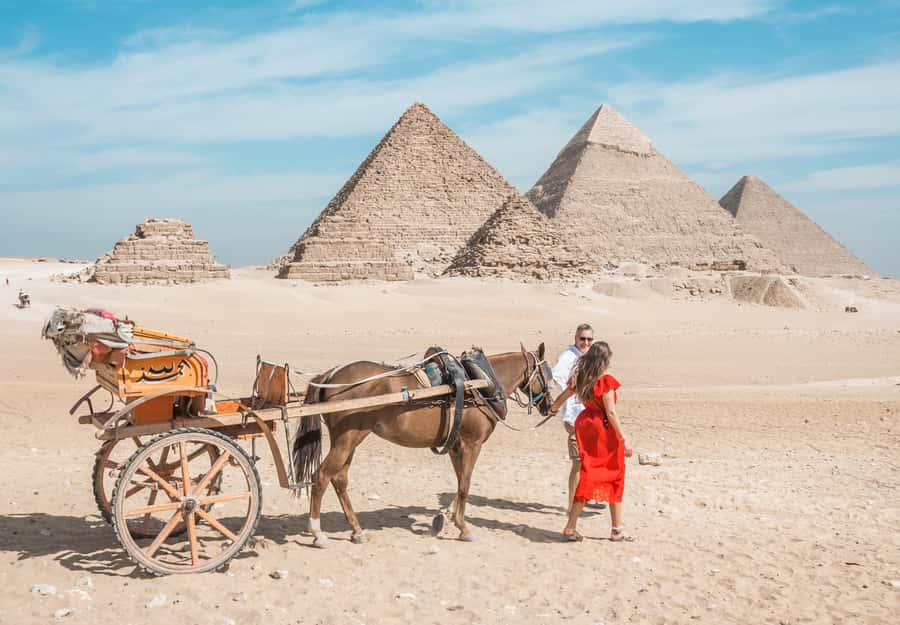
- For horse carriage: the group limit is 2 adults and 1 child or 1 adult and 2 children per horse carriage
Now, about the horse option: one negative experience showed up in the feedback where a horse handler was described as unkind to the animals and asking for money. That kind of interaction is not what anyone wants during a “once in a lifetime” moment.
My practical advice: if your priority is comfort and a calm experience, I’d lean camel. If you choose horse carriage anyway, stay alert and rely on your guide if something feels off. A good guide should be able to help you adjust the situation quickly.
Also, if you booked horse carriage because walking is difficult, don’t assume you must stay on the animal the whole time. You can ask whether the car can handle more of the movement. The goal is getting the sights without turning the ride into extra stress.
Lunch, water, and the optional photographer: turning minutes into keepers
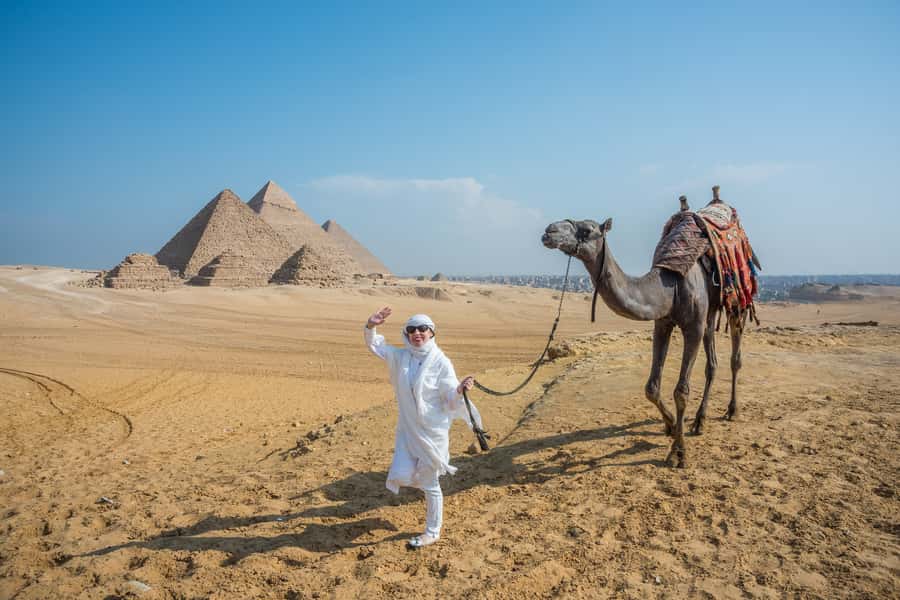
The tour includes mineral water, which is non-negotiable in Cairo. You’ll be outdoors and sun exposure adds up fast. Even if you think you’re fine, you’ll drink more than you expect once you start moving between photo stops.
Lunch is optional: you can add a traditional lunch at a local restaurant at checkout. This is the kind of add-on that can save you from finding food on your own right after a morning at the pyramids. In a short tour, that time-saver can be the difference between feeling energized and feeling cranky.
There’s also a photographer add-on. If you care about photos but don’t want to spend the day taking turns with your phone, this option can be worth it. In the feedback, people praised guides and photography support for helping them get the right shots. With a photographer, the whole process usually feels more relaxed.
One more small tip I follow here: bring a charged phone and check your storage before the day. Cairo photos are not shy—they fill up space.
Value for $72: what you get (and what you still need to budget)
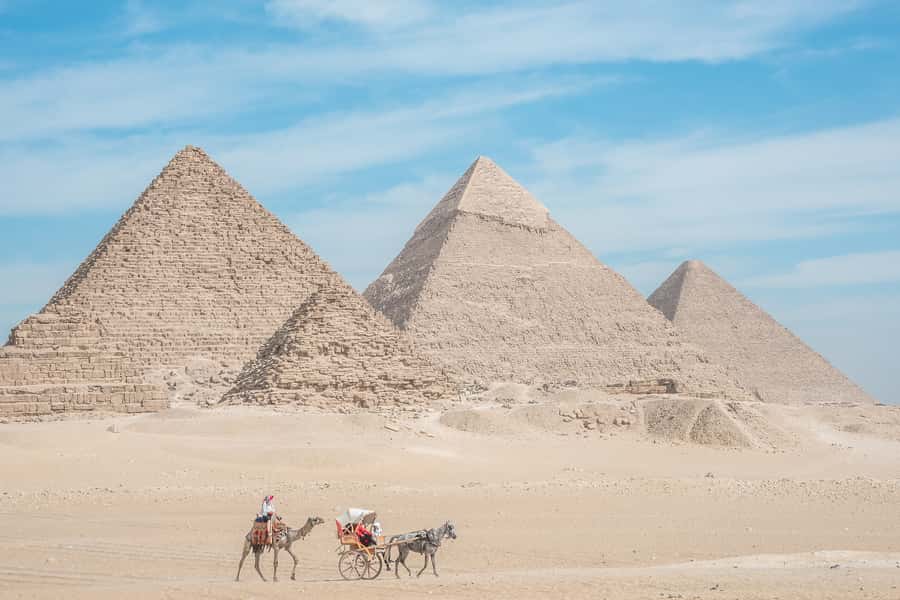
At $72 per person for a 5-hour half-day, the value mainly comes from avoiding stress. You’re paying for:
- Hotel pickup and drop-off from Cairo or Giza
- An Egyptologist guide who can explain what you’re seeing
- The camel or horse carriage ride
- Mineral water
- Optional upgrades like lunch and photographer
The one missing line item is big: entry tickets for the pyramids and Sphinx. That’s why you should budget a little extra. If you decide to include Great Pyramid entrance, check what’s covered and what you need to pay separately.
Compared to DIY, the cost usually makes sense because it compresses logistics into one plan. You don’t have to negotiate transport, sort out timing, or worry about where the best viewing points are. For first-time visitors, that’s a big deal.
If you’re a picky planner who loves building your own schedule, you might feel limited. But if you want a clean introduction to Giza—guided, efficient, and designed for limited time—the pricing feels fair.
Who this tour suits best in Egypt
This tour is ideal if you want the Giza highlights without turning your day into a puzzle. It fits well for:
- First-time visitors to Cairo who want the iconic sites in a short window
- Solo travelers who appreciate someone guiding the timing and helping with photos
- Families who want a structured visit (with the child rules noted for rides)
- Travelers who want a guide who will answer questions and keep things organized
It’s not for everyone. The tour is not suitable for pregnant women and wheelchair users. If either applies, you’ll want to choose a different format that matches your needs.
My quick decision guide: should you book?
Book this tour if you:
- Want Giza in one half-day with a real guide explaining what you’re seeing
- Like the idea of a camel ride option and a flexible schedule with add-ons
- Appreciate getting picked up and dropped off without handling logistics
Skip or reconsider if you:
- Don’t want to deal with separate entry tickets for the pyramids and Sphinx
- Are strongly concerned about the horse option and want to avoid any risk of a bad handling situation
- Need accommodations that the tour states it can’t support (pregnancy or wheelchair use)
If you book, I’d make the ride choice thoughtfully and decide early whether you want to include Great Pyramid entrance, so you’re not scrambling with time and money on the ground.
FAQ
What’s included in the tour price?
The tour includes hotel pickup and drop-off from Cairo or Giza, an Egyptologist tour guide, a camel or horse carriage ride (based on your selected option), mineral water, and lunch or a photographer only if you add those options at checkout.
Are tickets for the pyramids and Sphinx included?
No. Pyramids and Sphinx entry tickets are not included.
How long is the tour?
The tour runs for 5 hours. Starting times depend on availability.
What ride options do I choose from?
You can choose between a camel ride or a horse carriage ride, depending on the option selected.
Do you provide lunch or a photographer?
Lunch is available as an add-on, and a photographer is also available as an add-on at checkout.
What languages is the guide available in?
The live tour guide is available in English, Arabic, French, German, Italian, and Spanish.
Where does pickup happen?
Pickup is included from accommodations in Cairo or Giza. Long-range pickup add-ons are available for places like Nasr City, Cairo Airport, Heliopolis, New Cairo, and 6th of October (selected areas).
Is the tour suitable for everyone?
No. It is not suitable for pregnant women or wheelchair users. Also, children must be accompanied by an adult during the camel ride, and horse carriage seating has limits per carriage.