REVIEW · CAIRO
Half Day Tour to Memphis,Saqqara & Dahshour Pyramids
Book on Viator →Operated by Travel Door Tours · Bookable on Viator
Three ancient stops in one half-day can feel unreal. This private tour hits Saqqara, Dahshur, and Memphis in about 4 hours with door-to-door convenience and a real guide to give context on the way. Two things I especially like are the front-door hotel pickup (so you’re not wrestling with Cairo transport) and having your own tour guide who can explain what you’re looking at as you go. The main thing to consider: the schedule is tight and entrance fees are not included, so you’ll want to be ready for ticket costs before you arrive at the gates.
If you only have one morning to spend on the ancient west bank, this is a smart way to use it. You’ll start at 8:00 am, get driven between sites in an air-conditioned vehicle, and still leave time for your afternoon plans back in Cairo. Just remember that rushing a pyramid visit is how you end up taking photos you don’t fully understand—so lean on your guide’s pointers and take a minute at each stop to orient yourself.
This half-day format works best when you’re realistic about expectations: you’re seeing major highlights, not doing a slow, hour-by-hour archaeological study. For me, that trade-off is worth it because you get three big “checkpoints” handled fast, with the rest of the day staying open.
In This Review
- Key Points You’ll Care About
- A Half-Day Ancient Circuit That Actually Works
- Price and What You’re Really Paying For
- Hotel Pickup, Air-Conditioned Comfort, and the Guide’s Role
- Saqqara Step Pyramid: Why Early Egyptian Stone Matters
- Dahshur Bent and Red Pyramids: Two Styles, One Desert Road
- Memphis Ruins and the Colossal Ramses II Moment
- Tickets, Timing, and Your 4-Hour Reality Check
- Who Should Book This Tour (and Who Might Prefer Something Else)
- Should You Book This Half-Day Memphis, Saqqara & Dahshur Tour?
- FAQ
- What time does the tour start?
- How long is the tour?
- Is pickup included?
- Is this tour private?
- What’s included in the price?
- Are entrance fees included?
- Is a mobile ticket provided?
- How do I get confirmation after booking?
- What is the cancellation policy?
- Is the tour suitable for most travelers?
Key Points You’ll Care About
- Hotel pickup and drop-off in Cairo/Giza means less time organizing and more time staring at ancient stones.
- Private guide with live commentary helps you connect monuments to the bigger story.
- Early start at 8:00 am can make the pyramids feel more manageable than later-in-the-day crowds.
- You cover Saqqara, Dahshur, and Memphis without wasting a whole day on transit.
- Entrance fees are extra, so bring cash/card planning for tickets when you’re ready.
A Half-Day Ancient Circuit That Actually Works
Cairo is a city where logistics can eat your day. That’s why I like this format: it’s built around not making you fight the city. You get a pick-up from your accommodation in Cairo or Giza and you’re returned there afterward. In a four-hour window, that kind of door-to-door ease matters more than most people expect.
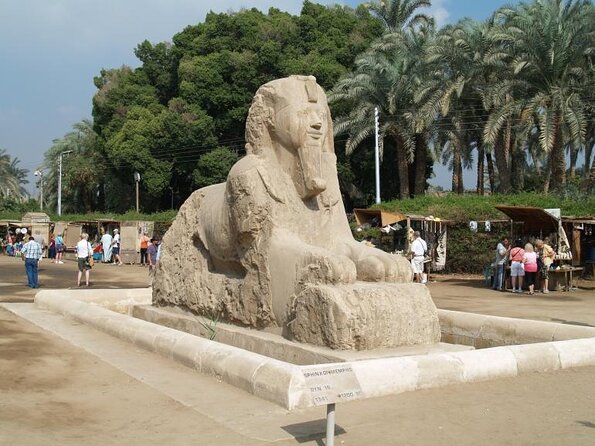
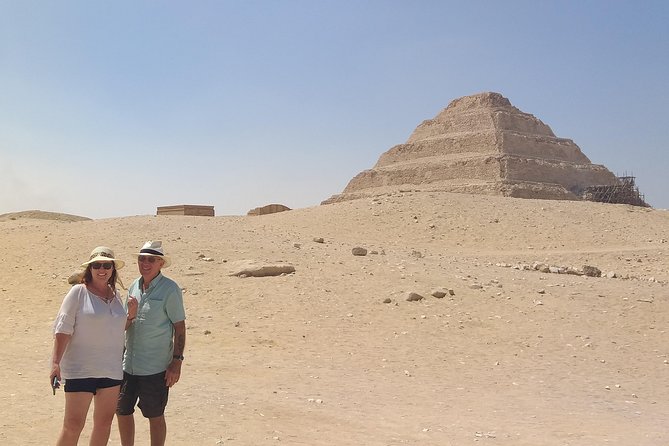
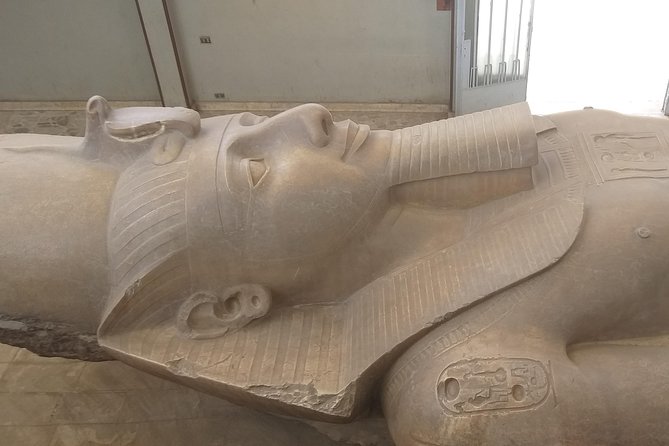
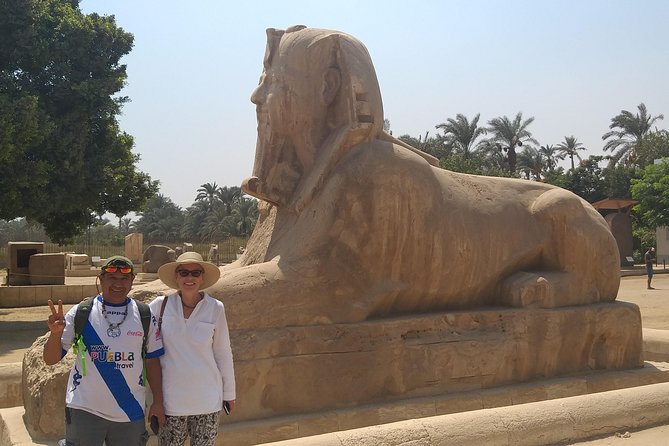
The tour is also structured to give you variety fast. You start at Saqqara, where the Step Pyramid brings you into the world of early Egyptian royal architecture. Then you swing south to Dahshur for the Bent and Red Pyramids—two different styles of royal pyramid design that make the whole “pyramid story” feel less repetitive. Finally, you finish in Memphis, where you get out among the ruins and big sculptural remnants, including a colossal statue associated with Ramses II and an alabaster sphinx at the site.
The biggest win is what your guide helps you do with that variety. Without context, each site can feel like: pyramid, pyramid, ruins. With context, you start noticing patterns—what changed, what stayed the same, and why these places mattered to the ancient kingdom. Past guests specifically praised guides for giving clear overviews and for being professional and personable, including guide names like Gabri and Summer in reviews.
One possible downside is pacing. Four hours for three sites means you’ll likely move through each area faster than you would on a self-guided visit. If you love lingering, take notes fast, and then move smartly—you’ll get more out of it.
You can also read our reviews of more tours and experiences in Cairo.


Price and What You’re Really Paying For
At $75 per person for a half-day, this isn’t a “budget bus ride,” and it’s not a luxury multi-day expedition either. It sits in that practical middle where the value is mostly in the time savings and the private guidance.
Here’s what you’re paying for that makes sense in real life:
- Air-conditioned vehicle transfer (big deal in the heat).
- Bottled water for the ride and stops.
- Fuel surcharge included.
- A private tour guide, so you’re not just paying for transport—you’re paying for interpretation.
- Mobile ticket (less messing around with paperwork on the day).
The part that can surprise people: entrance fees are not included. That means the advertised price covers the experience service elements (guide + transport), but you’ll still budget for site tickets when you get there or before you enter. Some travelers in reviews mentioned being able to go inside certain areas, which is possible when you have the proper ticket(s), but you should still plan on paying those fees separately.
So is it worth it? For many first-time visitors, yes—because the itinerary targets the most recognizable monuments around Cairo’s west bank. If you’re short on time and you want the main hits without logistics headaches, $75 can be a good deal. If you’re the type who enjoys long, slow roaming and you’re comfortable handling transport and ticket logistics yourself, you might find a cheaper DIY day. But DIY rarely gives you the same quick orientation a good guide provides.
Hotel Pickup, Air-Conditioned Comfort, and the Guide’s Role
This tour starts at 8:00 am. The early start is practical: you’re aiming to beat the worst of the day and use daylight efficiently across multiple sites. You’ll ride in an air-conditioned vehicle, and you’re handed bottled water so you don’t have to start negotiating for drinks the moment you step out.
What really changes the experience is the guide. The tour is private, so your guide can tailor explanations to how curious you are—and you can ask questions without having to wait for a group. Reviews praised guides for strong site overviews and for being professional and informative. One reviewer specifically noted contact via WhatsApp, which can be handy in Cairo when it’s important to confirm where to meet and when.
Also, pay attention to how the tour includes time for wandering and pictures. One review mentioned free time for wandering and taking photos. That matters, because pyramid areas are visually intense—without a few minutes to look, you’ll rush past the details that make the monuments feel real.
Practical tip: when your guide points something out (a shape change, a construction clue, a specific statue detail), spend 30 seconds looking again after the explanation. That tiny rewind helps the “what am I seeing” part stick, and you’ll walk away feeling like you understood what you visited rather than just checked boxes.
Saqqara Step Pyramid: Why Early Egyptian Stone Matters

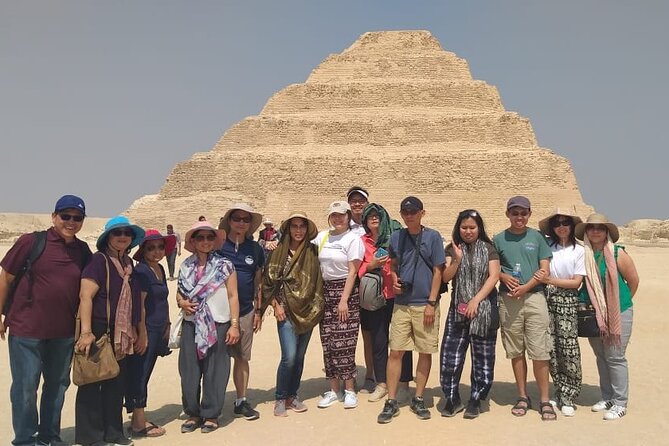
Saqqara is the first stop, and it’s a powerful one. You’ll visit the Saqqara Pyramid complex, including what’s described as the first stone building tradition in Egypt. Whether you treat that as a strict historical claim or a common way people explain Saqqara’s importance, the point is clear: this is where you begin to see Egypt’s shift into large-scale monumental stone building.
As you arrive, your guide’s job is to help you make sense of a place that can look like random stone from a distance. At Saqqara, the main Step Pyramid idea is about evolution—Egyptian royal architecture growing more ambitious in shape and scale. Instead of just thinking pyramid shape, you’ll start noticing how the site functions as part of a royal necropolis (a place for elite burials and monumental expression).
What’s also great about Saqqara on an early half-day is the chance to see more comfortably. A review in French mentioned that arriving early helped them access interiors and see decorated rooms. Your experience will depend on the specific access allowed on the day and whether entrance tickets cover interior areas, but the overall benefit of the 8:00 am timing is the same: you’re more likely to enjoy the visit rather than battle heat and crush.
Drawback to flag: because you only have limited time, you may need to choose where to focus. If you’re the type who loves detail, ask your guide what area gives the best “bang for your minute.” A strong guide will know how to prioritize without turning your visit into a checklist.
When you leave Saqqara, you should feel like you’ve moved along a timeline rather than simply “seen a pyramid.” That’s the value of adding a live guide to a fast itinerary.
Dahshur Bent and Red Pyramids: Two Styles, One Desert Road
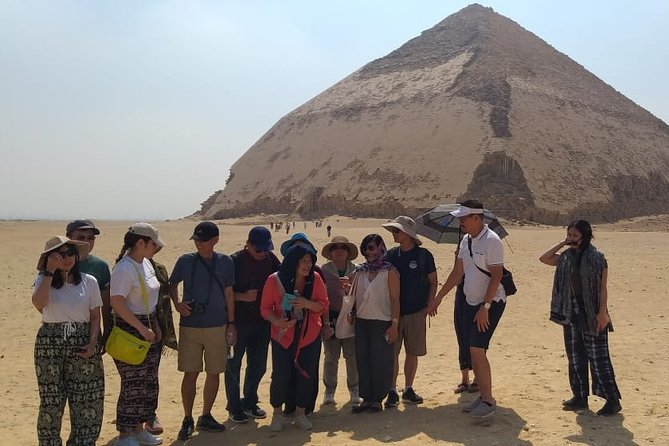
Next comes Dahshur, a royal necropolis on the west bank, about 40 kilometers south of Cairo. It’s known for several pyramids, with the Bent and Red Pyramids singled out as among the oldest, largest, and best preserved in Egypt. The dates given for these structures fall roughly around 2613–2589 BCE, and that timeframe helps you see Dahshur as a pivotal chapter—not just a scenic stop.
Here’s why I think Dahshur hits differently than other pyramid visits. You’re not dealing with one single canonical pyramid image. You see two distinct forms:
- The Bent Pyramid, whose shape suggests changes during construction.
- The Red Pyramid, which many people experience as a cleaner, more straightforward culmination of royal ambition.
Your guide can help you connect those shapes to the building choices of the time. Without that context, it’s easy to treat Dahshur as “two more pyramids.” With context, you start thinking like an ancient project manager: what went right, what changed, and why the site ended up looking the way it does.
Another benefit of the half-day route: you’re already traveling through the desert environment, so the pyramids feel like they belong to the land, not just to a photo backdrop. The drive between stops is part of the experience too—you’re moving from one monumental “zone” to another with the reassurance of air-conditioned transport.
Potential drawback: Dahshur involves time in the vehicle and relatively quick transitions between sites. If the heat or sun affects you, ask your guide what time inside the complex will be the most comfortable, and use your breaks intentionally. Bring your water and don’t wait until you feel thirsty.
If your priority is seeing the big pyramid names without sacrificing an entire day, Dahshur is where this tour earns its keep. You get variety and strong visual impact in a time-efficient package.

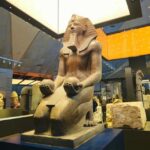

Memphis Ruins and the Colossal Ramses II Moment
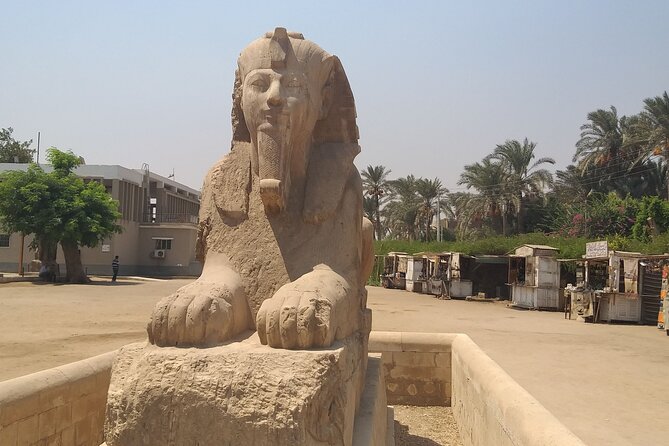
After Dahshur, you’ll drive to Memphis. Memphis dates back to around 3100 B.C., and it’s where the tour shifts from pyramids to a more city-and-monuments feel. Instead of pure geometry, you get sculptural and archaeological remnants that help explain how Egyptians framed power in public spaces.
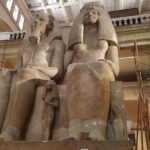
At Memphis, you’ll see a colossal statue of King Ramses II and an alabaster sphinx associated with the site. This is a nice contrast to the pyramid stops. Pyramids can be awe-inspiring, but statues and ruins bring you closer to daily political storytelling—how rulers wanted to be seen, honored, remembered.
The “value” of the Memphis stop is partly in momentum. After you’ve spent the morning looking at royal tomb architecture (Saqqara and Dahshur), Memphis gives you the broader context: a kingdom wasn’t just built in stone for afterlife; it was also staged in living spaces and monumental art.
A downside to consider: Memphis is less about one single iconic shape and more about walking around ruins and monuments. If you’re someone who needs a lot of interpretation time, lean on your guide. Let them point out what matters in the layout and what the monuments are likely telling you.
The good news is that the tour includes built-in time with a guide, and reviews highlight how visitors appreciated clear explanations during the visit. That’s especially important here, where it’s easy to miss the significance if you just wander without cues.
Tickets, Timing, and Your 4-Hour Reality Check
Let’s talk about the practical part that can make or break your enjoyment: entrance fees. This half-day experience does not include site admission tickets. You’ll still want to buy the right tickets so you can access the areas you care about, including any interior access that may be available at certain stops.
Even when you’re prepared, 4 hours is a tight window for three major sites. So treat your time like a plan, not like a hope:
- Ask your guide for the top priorities at each stop before you start walking.
- Spend your energy on the most visually meaningful areas rather than chasing everything at once.
- Take photos, but don’t let the camera steal your attention from what you’re learning.
On the plus side, reviews repeatedly mention that the pickup is on time and that guides offer strong orientation. One review also mentions that the tour gave free time for wandering and picture taking, which helps you balance seeing with actually enjoying.
Also, the early start can help you get into places while conditions are more comfortable. One review specifically notes being close early enough to go inside areas and see exceptional rooms with decorations. Your access will depend on ticket type and what’s open that day, but early timing tends to improve your chances of a smoother experience.
Bottom line: this is a high-value half-day tour if you plan for tickets separately and go in ready to move smartly.
Who Should Book This Tour (and Who Might Prefer Something Else)
I’d point you toward this tour if:
- You have only a short time in Cairo and want to see Saqqara + Dahshur + Memphis without planning a multi-transfer day.
- You prefer private guidance so you understand what you’re looking at, not just what’s famous.
- You like an efficient itinerary that still leaves you free later in the day.
You might want to choose a different option if:
- You hate time pressure and want a slow, linger-long experience at just one site.
- You’re hoping tickets are included in the price, because entrance fees are extra.
This tour is also a good fit for couples, solo travelers, and small groups who value convenience. Past reviews praised the guide’s professionalism and friendliness, including named guides like Gabri and Summer, which suggests the human experience is a strong part of what you’re buying.
Should You Book This Half-Day Memphis, Saqqara & Dahshur Tour?
If you want the big west bank hits in one clean morning—without the stress of arranging transport and orientation—this is a strong booking. The value comes from door-to-door pickup, air-conditioned comfort, and a private guide who gives context so the sites actually make sense.
Just be honest about two things. First, entrance fees are not included, so budget for tickets. Second, the day is compact, so expect to prioritize rather than roam forever. If that sounds like your style, you’ll likely come away feeling like you covered real ground, not just a quick photo stop.
FAQ
What time does the tour start?
The tour starts at 8:00 am.
How long is the tour?
It runs for about 4 hours.
Is pickup included?
Yes. Pickup and drop-off are offered from accommodations in Cairo or Giza.
Is this tour private?
Yes. It’s a private tour/activity, so only your group participates.
What’s included in the price?
The tour includes bottled water, fuel surcharge, and an air-conditioned vehicle, along with a private tour guide.
Are entrance fees included?
No. Entrance fees to the sites are not included.
Is a mobile ticket provided?
Yes. The tour includes a mobile ticket.
How do I get confirmation after booking?
Confirmation is received at the time of booking.
What is the cancellation policy?
You can cancel for free up to 24 hours in advance for a full refund, with the cutoff based on local time.
Is the tour suitable for most travelers?
The information provided says most travelers can participate.
If you want, tell me your exact travel dates and whether you’re staying in Cairo or Giza, and I’ll help you think through how much time you’ll need for tickets so the day stays smooth.