REVIEW · CAIRO
Egypt Must See Sites Cairo Luxor 7 Days Private Tour
Book on Viator →Operated by Your Egypt Tours · Bookable on Viator
Seven days can change how you see Egypt. This private week strings together Cairo’s biggest icons, Luxor’s temple world, and Alexandria’s surprises, with an Egyptologist guide and smooth private air-conditioned transfers that keep you from wasting time in chaos.
I especially like the way this plan builds in real time at the heavy hitters. You get extended visits at places like the Pyramids of Giza (including entry options) and a long guided museum window in Cairo, so you can go past the postcard version.
One thing to think about: hotel nights may not be included by default. The overview says lodging is part of the package, but the listing’s “Not Included” section flags accommodation as optional, so confirm what your price covers before you lock it in.
In This Review
- Key Things I’d Highlight Before You Book
- Cairo Airport to Hotel Check-In: Start Strong
- Giza and Sakkara: The Best Part Is the Time You Get
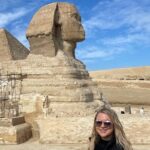
- Great Pyramids of Giza (Khufu) + Sphinx Area
- Sakkara (Saqqara): Step Pyramid and Painted Tombs
- Mit Rahina (Memphis) Museum Stop
- Cairo Museum, Citadel, and Coptic Cairo: Three Sides of One City
- Egyptian Museum: A Guided Focus on the Biggest Names
- Mosque of Muhammad Ali and the Citadel View
- Coptic Cairo: Hanging Church and More
- Luxor West Bank: Valley of the Kings and Hatshepsut
- Valley of the Kings: Choose Your Tombs
- Temple of Hatshepsut at Deir el Bahari
- Colossi of Memnon: Big Statues, Big Atmosphere
- Karnak and Luxor Temple: When Scale Gets Real
- Karnak Temple: Great Hypostyle Court and Giant Obelisks
- Luxor Temple: A Living Site With Many Layers
- Alexandria Day: Catacombs, the Library, and a Sea-View Fortress
- Kom el Shoqafa Catacombs: Roman Underground Burial
- Bibliotheca Alexandrina: Modern Library as a Revival
- Fort of Qaitbay: Best Views Over Sea and City
- Price and What You Really Get for $840
- Who Should Choose This Private Tour
- Should You Book This Cairo to Luxor to Alexandria Week?
- FAQ
- How long is the Egypt Must See Sites Cairo Luxor 7 Days Private Tour?
- What cities and major areas does the tour include?
- Is this tour private?
- Are entrance fees included?
- Do you get a guide?
- Is airport pickup and assistance included?
- Is accommodation included in the price?
- Are domestic flights included?
- Is the Egypt entry visa included?
- Is there free cancellation?
Key Things I’d Highlight Before You Book
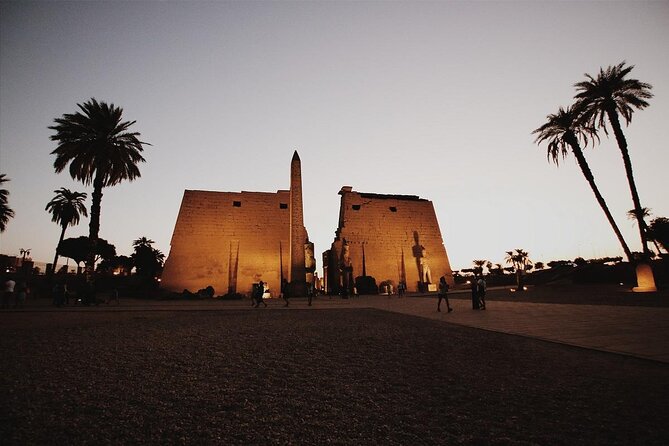
- Airport meet-and-assist in Cairo: help through passport control, luggage, and customs, then a private transfer to your hotel.
- Giza time that goes beyond standing around: over two hours on-site, with options to enter a pyramid chamber or visit the Sun Boat Museum.
- Egypt Museum with focused guidance: a multi-hour guided run that prioritizes major showpieces like the Tut Ankh Amun wing.
- Luxor’s West Bank makes the story make sense: Valley of the Kings, Hatshepsut at Deir el Bahari, and the Colossi of Memnon all in one arc.
- A rare Roman detour in Alexandria: Kom el Shoqafa catacombs add a different layer beyond temples and tombs.
- Private means your day can run cleaner: it’s only your group, with a guide staying with you across days.
Cairo Airport to Hotel Check-In: Start Strong
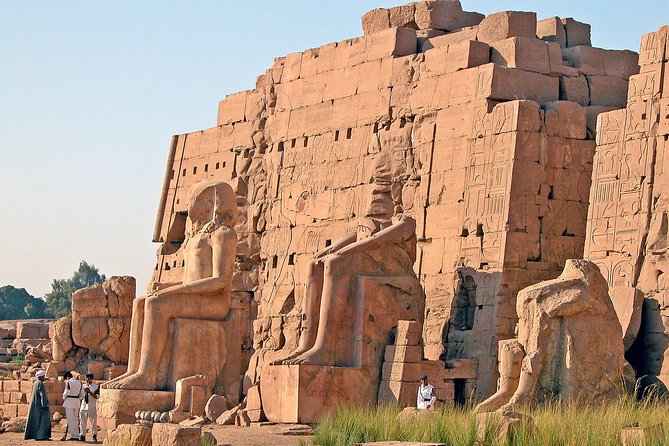
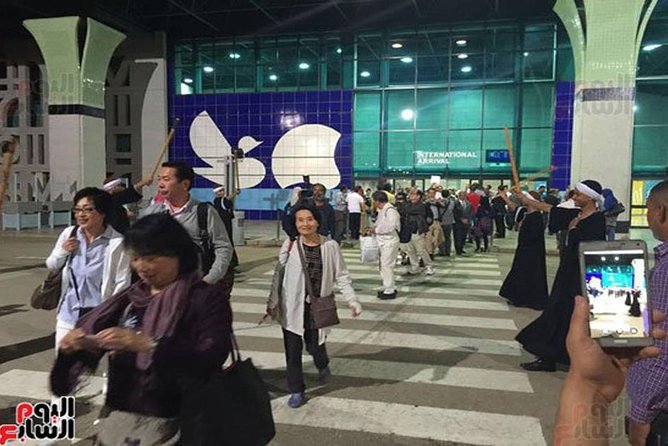
Your week begins the way you want it to in Egypt: someone meets you at Cairo International Airport and helps you through the first bottlenecks. That usually means less stress at passport control, fewer awkward pauses while you figure out directions, and a clearer handoff to the next step.
From there, you’ll ride in a private air-conditioned vehicle to your hotel for check-in. Why that matters: the first day in Cairo can feel big and loud even if you already speak the language. Having a driver and a representative waiting for you cuts the “where do I go now” factor to near zero.
Practical tip: keep your must-use items (passport, phone charger, a layer for AC) easy to grab. Airport transfers move fast once you’re inside the flow.
You can also read our reviews of more private tours in Cairo


Giza and Sakkara: The Best Part Is the Time You Get
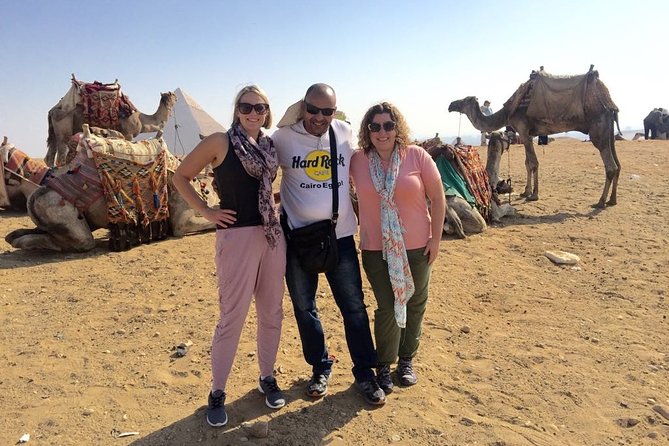
This is one of the strongest setups in the whole package because you don’t just drive past monuments. You slow down.
Great Pyramids of Giza (Khufu) + Sphinx Area
You’ll spend about 2 hours 30 minutes in the Giza area, with a guided visit centered on the Great Pyramid of Cheops (Khufu). The guide explains what you’re looking at—especially the size of the blocks, the pyramid’s scale, and why it still feels unreal more than 4,600 years later.
You also get options that matter for first-timers:
- enter one of the pyramid chambers
- or visit the Sun Boat Museum
You may also like to do a camel ride around the area if you’re interested in a classic (and touristy) add-on.
If you love details: ask the guide about the other pyramids too. The visit is designed so you’re not only staring upward; you’re also understanding the setting.
Practical tip: wear grippy shoes. Giza paths can be uneven, and the sun can be intense even when it’s not peak summer.
Sakkara (Saqqara): Step Pyramid and Painted Tombs
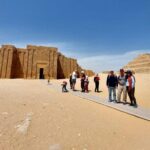
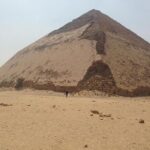
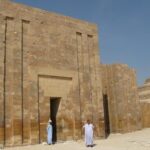
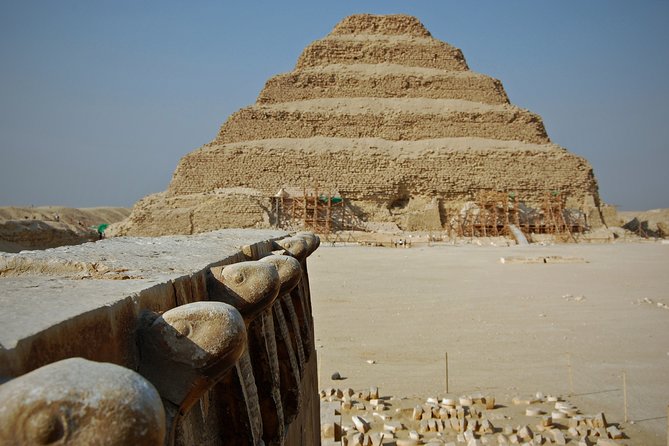
After Giza, you head to Sakkara, home of the oldest pyramid in Egypt—built around 2800 B.C. Here, the focus shifts from the “wow” of the Great Pyramid to the development of royal building and burial design.
You’ll learn about the Step Pyramid, then have free time to walk around and visit the painted tombs of nobles. That’s a nice change of pace. Giza is monumental. Sakkara helps you see how those big ideas evolved.
Mit Rahina (Memphis) Museum Stop
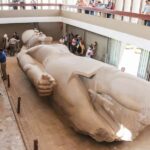
You’ll also visit Mit Rahina Museum, tied to Memphis, the old capital after Egypt’s unity. This open-air stop gives you a different kind of awe: the second-largest Sphinx in Egypt (the lying colossus of Ramses II) and other monuments shaped by what builders reused, relocated, and dug up over centuries.
Why I like this stop for your money: it rounds out the Giza-to-Luxor story. You’re not stuck in one era, and you start noticing how Egypt’s “past” was constantly reworked by later rulers.
A few more Cairo tours and experiences worth a look



Cairo Museum, Citadel, and Coptic Cairo: Three Sides of One City
Cairo can be overwhelming in a day. This tour keeps you moving, but it also keeps you guided, so you understand what you’re seeing instead of just following a schedule.
Egyptian Museum: A Guided Focus on the Biggest Names
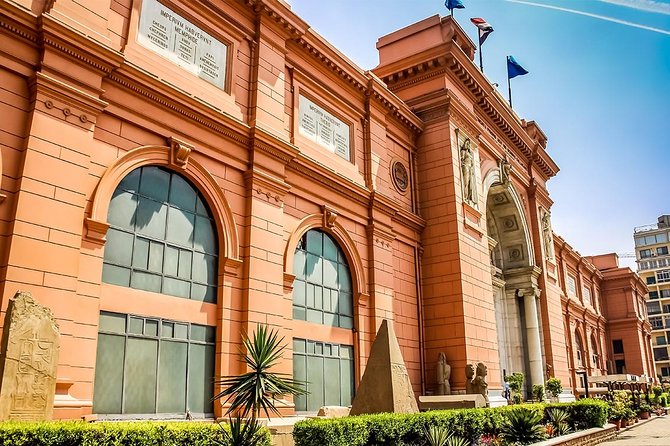
You’ll spend roughly 4 hours in the Egyptian Museum of Cairo, with an Egyptologist guiding you through major treasures. The plan is built around highlights rather than trying to see everything that exists inside.
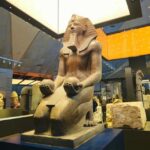
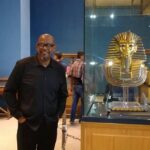
You’ll focus on the Tut Ankh Amun wing on the first floor. The emphasis is on historically important pieces—often the gold that people expect, plus key statues and objects that help connect the myth to the real artifacts.
One smart thing here: your guide is there to filter the museum. That’s how you avoid the trap of wandering from room to room with no context.
Practical tip: museum time is exhausting even with a guide. Bring water, and plan to use bathroom breaks when they’re offered.
Mosque of Muhammad Ali and the Citadel View
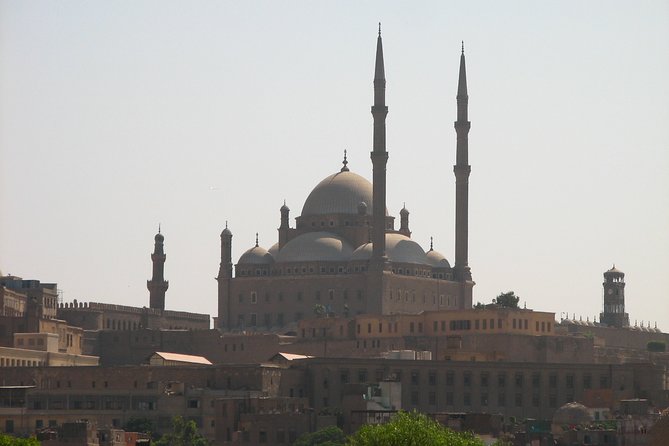
Next comes the Citadel of Saladin, a fortress with long layers of rule behind it. Inside, you’ll visit the Alabaster Mosque, built in 1830 and designed by a Turkish architect drawing on the style of Istanbul’s Blue Mosque.
You’ll also get a panoramic view from the top. This is one of those practical stops that helps you get your bearings fast in a city that can feel like it has no grid.
Coptic Cairo: Hanging Church and More
Then the day turns spiritual in a different way, heading to Coptic Cairo. You’ll see the Hanging Church, built in the 5th century and consecrated to Virgin Mary. The description you’ll get here is specific: it has 110 beautiful icons and sits above one of the towers of the Fort of Babylon.
You’ll also visit other churches, including the Cavern church and the Church of St Sergius and Bacchus. The plan highlights the cave where Jesus the baby and the Virgin Mary are said to have hidden for three months during the escape in Egypt—plus time to see what the tour describes as the oldest Jewish temple in Cairo.
This mix matters because it shows Egypt as a living crossroads, not just an archaeological park.
Practical tip: plan for modest dress at churches. A light scarf can save you if you forget.
Luxor West Bank: Valley of the Kings and Hatshepsut
On the West Bank, the pace is slower, but the meaning goes deeper. This is where the trip starts feeling less like sightseeing and more like following a storyline.
Valley of the Kings: Choose Your Tombs
You’ll cross the Nile to the West Bank and visit the Valley of the Kings. The tour is set up around royal tombs carved into mountain rock. You’ll have the chance to visit three tombs, selected so you can see the colors and murals without burning out.
You may have the option to visit additional royal tombs such as Tut Ankh Amun, depending on how your day runs.
Why this works: three tombs is usually enough to notice patterns in wall art and burial symbolism without getting “tomb fatigue.”
Temple of Hatshepsut at Deir el Bahari
Then you’ll head to Deir el Bahari to see the mortuary temple of Queen Hatshepsut, described as the first female pharaoh ruling for 20 years. The temple is built of limestone and arranged across terraces, with the tour connecting it to the story of the Queen’s divine birth.
If you like architecture you can actually see: the terraces help your brain map the space.
Colossi of Memnon: Big Statues, Big Atmosphere
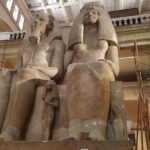
The final West Bank stop is the Colossi of Memnon—two monumental statues of Amenhotep III. They’re carved from single blocks of sandstone and face east toward the Nile, which makes the orientation part of the experience, not just a trivia detail.
This is a shorter stop (about 30 minutes), but it’s a strong visual reset after tomb interiors.
Practical tip: West Bank sites can involve stairs and uneven surfaces. Comfortable shoes are non-negotiable.
Karnak and Luxor Temple: When Scale Gets Real
If Giza teaches you about size, Karnak teaches you about obsession. The kind of obsession that turns religion into architecture.
Karnak Temple: Great Hypostyle Court and Giant Obelisks
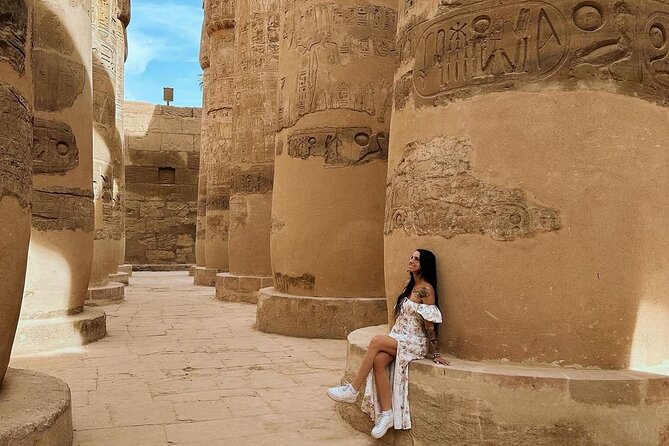
You’ll visit Karnak Temple, a complex dedicated to Amun Ra. The highlight is the Great Hypostyle court—huge columns with papyrus and lotus capitals, plus hieroglyphics covering the shafts.
You’ll also see tall obelisks described as about 70 feet high, cut from single pieces of granite. The tour points out reliefs and murals added through generations, so you can see how worship changed over time without changing the sacred layout.
Luxor Temple: A Living Site With Many Layers
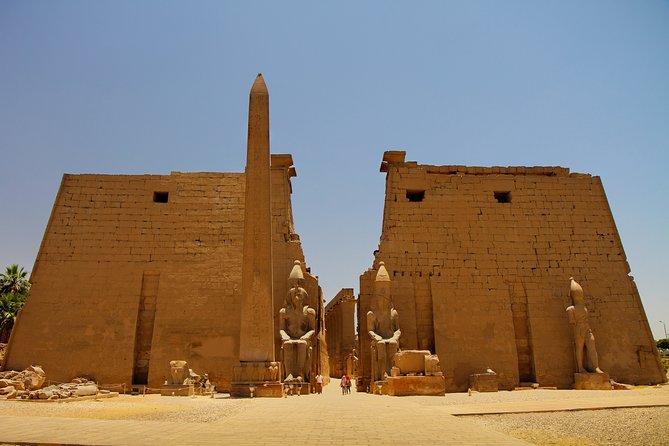
After Karnak, you’ll go to Luxor Temple for about 1 hour 30 minutes. The connection between Karnak and Luxor is explained through the story of Ra’s annual visit, including the Ram-headed sphinxes avenue concept.
You’ll notice influences beyond ancient Egyptian times—Greek, Roman, Islamic, and Coptic—so the temple reads like a timeline written in stone. The tour also mentions Ramses II obelisks, including one that was sent to Paris.
This temple stop is a good closer for Luxor. It’s big, but it’s also easier to absorb than some of the deep tomb sites.
Practical tip: after Karnak, pace yourself. Karnak is visually loud. Take a few minutes to step back and let the layout sink in before moving on.
Alexandria Day: Catacombs, the Library, and a Sea-View Fortress
Day 6 is where your week gets a twist. The sights shift away from Egypt’s most famous pyramid-and-temple sequence into a mix of Roman-era burial, modern memory, and coastal views.
Kom el Shoqafa Catacombs: Roman Underground Burial
You’ll visit the Catacombs of Kom el Shoqafa, described as a Roman subterranean tomb around 1900 years old. The interesting part is the blend: Egyptian art and burial traditions mixed with Roman ones.
The tour also highlights how bodies were preserved, including cremated and mummified remains. It’s a darker stop, but it’s also one of the most memorable contrasts in this whole route.
Bibliotheca Alexandrina: Modern Library as a Revival
Next is the Bibliotheca Alexandrina, a huge modern library built as a revival of the ancient one. This isn’t a museum about burial. It’s about what Alexandria tried to be: a center of knowledge.
Even if you’re not a book-person, it helps you feel the city’s ambition. It also balances out the catacombs emotionally.
Fort of Qaitbay: Best Views Over Sea and City
Then you’ll go to the Citadel of Qaitbay, a 15th-century fort built on top of the original Lighthouse location that was gone. The main reason to go is the view over the city and the sea from the fort.
This is a great ending in Alexandria because it lets your brain switch from “underground history” to open horizon.
Practical question to ask when you book: how will you get from Luxor to Alexandria on this day? The listing says domestic flights are optional and not included, but it doesn’t spell out the transfer method between those regions. Confirm what’s planned for your dates.
Price and What You Really Get for $840
At $840 per person for about a 7-day private tour, the value depends on one key detail: whether accommodation is included in your final quote.
Here’s what’s clearly covered in the package details you were given:
- qualified Egyptologist guide
- entrance fees to the mentioned sites
- all transfers by a private air-conditioned vehicle
- meet-and-assist on arrival and departure
- “all fees and taxes”
- mobile ticket included
- daily breakfast is mentioned in the tour description
What’s listed as not included:
- accommodation (optional)
- meals (optional)
- Egypt entry visa
- domestic flights (optional)
- international flights
So here’s how I’d judge value: you’re paying for a guided, private route that hits major sites and includes entrance fees and private transport. That’s usually where tours either feel like a bargain or like a rip-off—because private guiding and ticket costs add up quickly.
But if you still need to pay hotel nights separately, the “$840” comparison to other deals gets complicated. Ask the operator to confirm:
- exactly how many hotel nights are included
- whether breakfast is truly included every morning
- how city-to-city transfers are handled, especially for the Alexandria day
If those answers line up, this is a solid value for a first-time Egypt route.
Who Should Choose This Private Tour
This one fits best if you want structure and want your guide to do the heavy lifting.
It’s a good match for:
- first-timers who want the headline sites (Giza, Egyptian Museum, Luxor temples)
- people who prefer private days over hopping between group buses
- anyone who appreciates a mix: pyramids and tombs, then Coptic Cairo, then Alexandria’s catacombs and coastal views
- couples and small parties who want a guide to answer questions as you go
It may feel intense if you hate long days of walking, heat, and museum-and-temple pacing. That said, the private format helps: you’re not competing with a big crowd all day.
Should You Book This Cairo to Luxor to Alexandria Week?
Yes, if you want a tightly guided circuit that hits the big monuments plus a couple of smart detours. The strongest parts are the extended time at Giza, the focused Egyptian Museum experience, and the way Luxor’s West Bank and Karnak/Luxor Temple stops connect into a coherent story.
But book with your eyes open. Confirm whether accommodation is included in your specific price, and ask how you’ll travel for the Alexandria day since domestic flights aren’t included in the base list.
If those details check out, this is the kind of tour that saves you time, keeps you safe, and gets you to the places that make Egypt click.
FAQ
How long is the Egypt Must See Sites Cairo Luxor 7 Days Private Tour?
It’s listed as approximately 7 days.
What cities and major areas does the tour include?
The stops cover Cairo (Giza, the Egyptian Museum, Citadel and Coptic Cairo), Luxor’s West Bank and temples (Valley of the Kings, Hatshepsut, Karnak, Luxor Temple), and Alexandria (Kom el Shoqafa catacombs, Bibliotheca Alexandrina, and Fort of Qaitbay), with departure from Cairo.
Is this tour private?
Yes. It’s described as a private tour/activity where only your group participates.
Are entrance fees included?
Yes. Entrance fees to the mentioned sites are included.
Do you get a guide?
Yes. A qualified Egyptologist guide is included.
Is airport pickup and assistance included?
Yes. Meet & assist is included upon arrival and departure, and you’ll be helped with passport control, luggage, and customs formalities, then transferred by private vehicle.
Is accommodation included in the price?
Accommodation is listed as optional and not included in the “Not Included” section, even though the overview mentions lodging. Confirm what your booking includes.
Are domestic flights included?
No. Domestic flights are listed as optional and not included.
Is the Egypt entry visa included?
No. Egypt entry visa is not included.
Is there free cancellation?
Free cancellation is available. You can cancel up to 24 hours in advance for a full refund.