A first-name guide can change everything in Egypt. This 7-day Best of Egypt trip strings together Giza and the Nile cruise to Luxor with door-to-door, air-conditioned rides, so you spend less time figuring logistics. I also like the strong, history-heavy flow through sites like the Egyptian Museum and the Valley of the Kings. One thing to consider: it’s a packed week with early starts, especially for Abu Simbel and Luxor’s West Bank.
What makes this itinerary feel practical is the way it moves you from place to place. You get a private, chauffeur-driven vehicle for transfers, plus economy flights within Egypt (Cairo to Aswan, then Luxor to Cairo). And you’re not left to wander alone: a professional English-speaking guide does the heavy lifting with context as you go.
There’s also a real meal and ticket structure built in, which helps your budget and your stamina. Still, you’ll want comfortable walking shoes, and you should plan for a lot of time outdoors in Cairo and on the temple stops. If that sounds like your kind of trip, you’ll likely enjoy how much ancient Egypt you can cover in one focused week.
In This Review
- Key highlights you’ll feel in your day-to-day
- Why this Cairo to Luxor route makes sense for first-timers
- Arrival in Cairo: smooth pick-up and a real first-night reset
- Giza pyramids plus the Egyptian Museum: the week’s biggest visual hit
- Flying to Aswan and stepping into the Nile rhythm
- Abu Simbel’s early start and the Kom Ombo stop
- Edfu Temple and Luxor’s East Bank: temples built for scale
- Luxor West Bank in one strong day: tombs, Hatshepsut, and Medinet Habu
- Back to Cairo for your final day: easy airport transfer
- Price and value: what $3,009 per person covers (and what you’ll still pay)
- Practical tips to make the week feel manageable
- Who should book this Best of Egypt tour
- Should you book this 7-day Best of Egypt Tour?
- FAQ
- What cities and regions does this tour cover?
- Are airport transfers included in Cairo?
- Is the tour private?
- Does the price include internal flights within Egypt?
- Are entrance tickets included for the main sights?
- Is the camel ride included?
- What meals are included during the week?
- What’s not included in the trip price?
- Can the booking be refunded or changed if plans change?
Key highlights you’ll feel in your day-to-day
- Private door-to-door transfers in an air-conditioned car, from Cairo airport to each major move
- Camel ride at the Pyramids area, plus guided time at Giza’s three main pyramids and the Sphinx
- Nile Cruise time built into the trip, including Aswan check-in and later sailing toward Luxor
- Abu Simbel early outing, timed for maximum value of that long day
- Classic Luxor East Bank and West Bank pairing, with Karnak, Luxor Temple, Valley of the Kings, Hatshepsut, and more
- Meals and most admissions included, so you’re not constantly making ticket decisions
Why this Cairo to Luxor route makes sense for first-timers
This tour is built around the big-ticket sequence most people want: Cairo’s monumental sites, a Nile River cruise segment, then Luxor and its tomb valleys. The logic is simple: you see the Egyptian world in two rhythms. Cairo gives you the skyline-meets-museum story. The Nile and Luxor give you the river civilization and the afterlife geography.
A key value point for you is that the transport isn’t casual. You’re not stitching together multiple taxis or public buses. Instead, you’re moved by a chauffeur in an air-conditioned vehicle, and you handle the long distances by internal flight. That matters because it keeps your energy for the walking, photos, and waiting at major attractions.
Also, the guide factor is worth calling out. In the feedback tied to this experience, guides such as Ahmed Samir and Tarek are praised for turning sites into something you can actually understand—not just see. With a good Egyptologist style guide, you start noticing details you’d normally miss, like what each temple location is really telling you.
A few more Cairo tours and experiences worth a look


Arrival in Cairo: smooth pick-up and a real first-night reset
Your day one starts easy. After you land at Cairo International Airport, a local representative meets you in the arrival hall with a sign showing your name. Then you’re transferred to your hotel in a private air-conditioned vehicle.
That free rest-of-day slot is more than downtime. Cairo can feel like sensory overload—noise, traffic, and crowds. Having a buffer on day one helps you get your bearings fast before you step into Giza and museums the next day. You’ll also want to use that time to confirm you have what you need for entry: carry your valid passport on the day of travel.
If you like a low-stress launch—no “let’s cram Cairo on arrival day”—this setup is a win.
Giza pyramids plus the Egyptian Museum: the week’s biggest visual hit
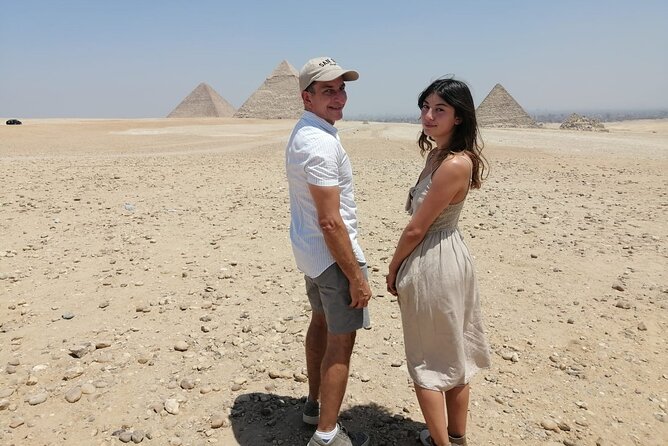
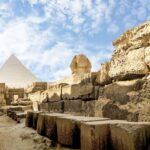
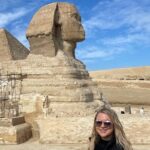
Day two is where the trip earns its name. You start with the Great Pyramid of Khufu (Khafre and Menkaure too), and you also visit the Great Sphinx and its valley temple with your private Egyptologist guide. Admission is included, and this is a focused block of time—about three hours—for the main monuments.
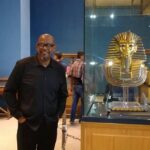
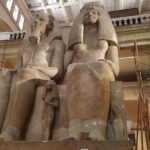
Then you head to the Egyptian Museum for around two hours. This isn’t a generic museum stop. The museum includes a Tutankhamen-focused exhibition with gold and jewelry. If you’ve only seen iconic tomb artifacts in photos, this is where they turn from images into objects you can study.
A practical note for you: Giza is one of those places where it pays to look slowly. The pyramids aren’t just massive. They’re arranged in a way that helps you understand scale and power. And the Sphinx area adds context for the broader “living landscape” around the monuments. You’ll likely get more from the visit if you go in ready to watch for alignments, carvings, and how the guide frames the stories.
One more included touch: the camel ride at the Pyramids area. It’s a classic. But it can also feel short compared with the overall site time, so don’t let it steal your attention from what matters most—the architecture and your guide’s explanation.
Flying to Aswan and stepping into the Nile rhythm
After breakfast, day three is a transition day. You’re transferred to Cairo airport, helped with the flight to Aswan, and picked up on arrival. From there, you get moved to the dock and check into the Nile Cruise around 12:00.
Even though the flight segment is included (economy class), this day still has a travel feel. That’s why the schedule is designed so you get the cruise in place fairly early. Then after lunch onboard, you explore Aswan city highlights: High Dam, Temple of Philae, the Unfinished Obelisk, and Aswan Market.
If you like your “Egypt experience” to go beyond temples, this is a good mix. The market gives you daily-life texture, while Philae and the dam area show how modern Egypt sits with ancient places. The Unfinished Obelisk is especially interesting because it reminds you these monuments weren’t miracles dropped from the sky. They were planned, quarried, and sometimes abandoned mid-process.
Then it’s back onboard for dinner and overnight.
Abu Simbel’s early start and the Kom Ombo stop
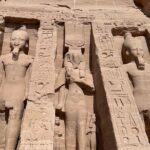
Day four includes one of Egypt’s most dramatic wow-hours: the Abu Simbel Temple Complex. You depart early by air-conditioned vehicle, and you’re told why it matters—Ramses II built these colossal temples about 3,300 years ago, carved into a sandstone cliff and later saved from Nile-related inundation.
This is the kind of day where timing is everything. Going early helps you get the temples when conditions feel more manageable and your guide can focus without rushing you through the story. Admission is included.
After that big hit, the cruise sails and makes a stop at Kom Ombo Temple, dedicated to the gods Sobek and Haeroris. Tonight, the cruise stays docked by Edfu.
Why Kom Ombo matters: it shows you that not every temple stop is “the same temple vibe.” Your guide can help connect why different deities are linked to different parts of Egyptian belief, and the layout gives you a tangible sense of ancient thinking.

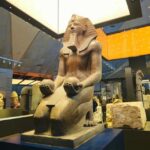

Edfu Temple and Luxor’s East Bank: temples built for scale
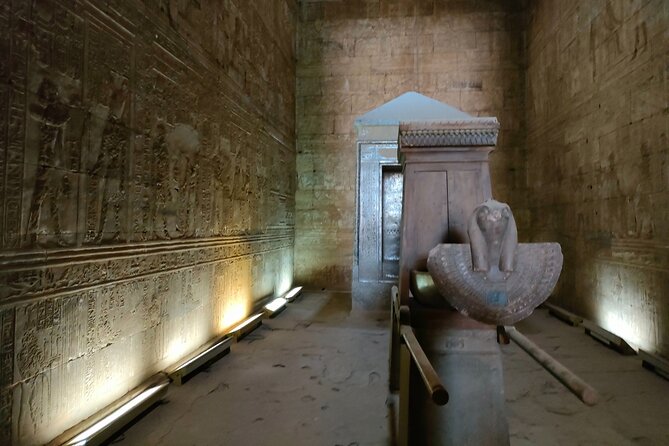
Day five starts with Edfu Temple, which is often highlighted for being one of Egypt’s best-preserved temple sites. It’s dedicated to the Sky God Horus with an eagle’s head and human body form. Admission is included, and you get about two hours here.
Then you head to Luxor. After lunch, your locally based guide brings you through the East Bank, including Karnak Temple and Luxor Temple. You’re back onboard afterward.
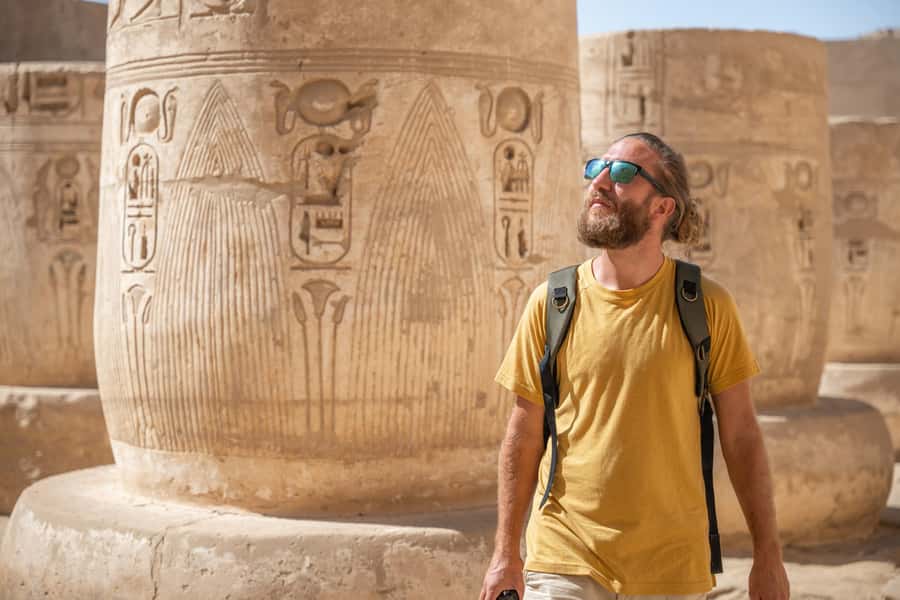
East Bank temples can feel like they go on forever—columns, courts, carvings—because they were designed to impress people. With an expert guide, you’re not just sightseeing. You’re learning what these spaces were meant to do: reinforce authority, support religious practice, and encode symbolism into stone.
A good expectation to set for yourself: you’ll do a lot of standing and looking upward. Wear shoes that won’t betray you by mid-day, and pace your photo stops. You’ll enjoy the temples more if you alternate between walking, pausing for details, and letting the guide explain what you’re seeing.
Luxor West Bank in one strong day: tombs, Hatshepsut, and Medinet Habu
Day six is the West Bank marathon. After an early breakfast onboard, you check out and head to the Valley of the Kings and Valley of Queens. You’ll get a guided tour of around three hours with admission included.
Then comes a tomb-focused segment. Your guide escorts you to visit:
- Tomb of Ramses V and VI (KV9)
- Tomb of Tutankhamun (KV62)
After that, you visit Temple of Hatshepsut at Deir el Bahari, built on three levels on a cliffside—plus a Colossi of Memnon photo stop. Today ends at Medinet Habu, described as the most important mortuary temple for Rameses III.
That list is why this day feels full. But it’s also why it’s valuable. The West Bank is where Egypt’s “afterlife world” becomes physical. You’re not only seeing a temple façade; you’re stepping into the logic of burial, commemoration, and belief.
One practical consideration: tombs can involve stairs, uneven paths, and tighter interior spaces. You’ll appreciate having comfortable walking shoes and a light layer you can handle with changing indoor/outdoor temperatures. And if you’re someone who likes taking time with details, tell yourself you’re doing a lot in a day. A pause here and there will keep you from feeling rushed.
In the evening, you’re transferred to Luxor airport for your flight back to Cairo, and then you stay overnight in Cairo.
Back to Cairo for your final day: easy airport transfer
On day seven, the itinerary keeps things simple: your driver transfers you from the hotel to the airport according to your departure flight schedule.
That matters because travel fatigue is real at this point. You’re not returning to the sites again on your last day. You’re getting a clean finish, which is ideal if you have an international flight later.
Price and value: what $3,009 per person covers (and what you’ll still pay)
At $3,009.00 per person for a 7-day, Egypt-focused program, the value comes from bundling the things that usually cost time and hassle:
What you do get included:
- A professional English-speaking guide
- Air-conditioned private vehicle with chauffeur
- Hotel accommodation in a twin-sharing room
- Economy class airfare inside Egypt (Cairo → Aswan, Luxor → Cairo)
- A camel ride at the Pyramids
- Meals: breakfasts (6), lunches (5), and dinners (3)
- Admission tickets included for most major sights listed throughout the days
What you should budget for separately:
- International flights into and out of Egypt
- Egypt visa fee
- Personal travel insurance
- Possible holiday service surcharges (Christmas, New Year, Easter, and other holidays)
- Christmas and New Year supplement
For you, the big “hidden value” is reduced decision-making. Most travelers don’t just pay for tickets—they pay for confusion, lost time, and planning stress. This package reduces that. The included internal flights and private transfers are the main reasons the schedule is even possible without turning into a blur of bus rides and delays.
If you’re the kind of traveler who hates spending vacation time on logistics, this price starts to make more sense.
Practical tips to make the week feel manageable
A week like this can feel intense, but you can keep it comfortable with a few habits:
- Start early when asked. Days with Abu Simbel and the West Bank don’t leave you much wiggle room. If you’re late, it becomes everyone’s problem.
- Wear footwear you can trust. You’ll be on temple ground and inside tombs. Comfort beats fashion here.
- Carry your passport on travel days. The tour explicitly asks you to have it with you on the day of travel.
- Use the free Cairo time. Day one is there for a reason. If you try to cram errands, you’ll pay for it later.
- Expect a lot of guided explanations. The itinerary includes Egyptology-led stops at major temples and tombs. This is not a “walk around and guess” kind of tour.
- Know what you’ll still need to arrange. International flights and visa are not included, so don’t assume this is a complete package from your home airport.
Also, one small planning edge: the trip includes a mobile ticket and notes group discounts. If you’re traveling with more than one person, ask how that works for your booking.
Who should book this Best of Egypt tour
This itinerary fits best if you:
- Want a first-timer friendly route through Cairo + Nile cruise + Luxor
- Prefer private, guided touring rather than a crowd shuffle
- Like history that you can connect from museum artifacts (Cairo) to temples and tombs (Luxor/West Bank)
- Don’t want to organize internal flights and major transfers on your own
If you’re looking for lots of free roaming time every day, or you hate early starts, you might find the pace a bit tight. But if you like the idea of doing the “greatest hits” with smart scheduling, this route is built for you.
Should you book this 7-day Best of Egypt Tour?
I’d book it if you want maximum ancient Egypt coverage with the logistics handled: guided pyramids and museum time in Cairo, a Nile cruise segment, then Luxor’s East and West Banks with tomb visits.
I’d think twice if you’re sensitive to long days or you want lighter touring. This week is designed to pack in major sites, including Abu Simbel and several tombs on the same Luxor West Bank day.
If you decide to go, do yourself a favor: plan to sleep well before Abu Simbel, wear comfortable shoes, and let the guide’s explanations steer your attention. That’s where the trip turns from seeing monuments into really understanding them.
FAQ
What cities and regions does this tour cover?
It includes time in Cairo, then flights to Aswan and a Nile cruise that goes toward Luxor, with major sightseeing on both the East Bank and West Bank of Luxor.
Are airport transfers included in Cairo?
Yes. You’ll be met at Cairo airport and transferred to your hotel on day one, and you’ll also have hotel-to-airport transfers at the start and end of the trip according to your flight schedule.
Is the tour private?
Yes. It’s listed as private, and only your group participates.
Does the price include internal flights within Egypt?
Yes. Economy class airfare is included for Cairo to Aswan, and Luxor to Cairo.
Are entrance tickets included for the main sights?
Most admission tickets are included for listed stops, such as the Giza sites, Egyptian Museum, Abu Simbel, Kom Ombo, Edfu Temple, Karnak and Luxor Temple, and the Luxor tomb visits.
Is the camel ride included?
Yes. A camel ride at the Pyramids is included.
What meals are included during the week?
Breakfast is included (6), lunch is included (5), and dinner is included (3), tied to the days and cruise hotel timing.
What’s not included in the trip price?
International flights, Egypt visa fees, personal travel insurance, and holiday service surcharges (including Christmas and New Year supplement) are not included.
Can the booking be refunded or changed if plans change?
No. The experience is non-refundable and cannot be changed for any reason.