REVIEW · CAIRO
3 Days Private Guided Cairo Tour Package
Book on Viator →Operated by EMO TOURS EGYPT · Bookable on Viator
Cairo hits fast, and then it keeps going. I love how this private setup turns the city’s chaos into a clear route with an A/C car, and I also love the mix: Giza pyramids and Saqqara on day one, then the Egyptian Museum and Islamic/Coptic Cairo on days two and three. The main thing to plan for is that it’s a packed itinerary, so some stops feel short—and inside the pyramids isn’t included.
One more thing I like: you’re not just ticking boxes. Your guide is in charge of the flow, and groups have praised guides by name (like Habib, Ahmed Zaki, Hossam, and Mo Salah), plus drivers who keep things moving (like Saeed and Walid). If you want a relaxed pace, you may wish you had more time.
In This Review
- Key things you’ll care about
- A private 3-day Cairo route that makes the city feel manageable
- Day 1 at Giza: Sphinx first, then pyramids and the Valley Temple
- Saqqara, Dahshur, and Memphis: how the pyramids expand beyond one plateau
- What the Egyptian Museum stop is really for (and how to use it)
- Khan el-Khalili: the souq hour that keeps Cairo human
- Day 3 Old Cairo: Coptic sites plus big Islamic monuments
- Price and logistics: what $150 covers, and what to expect
- Who this tour suits best
- Should you book this 3-day private Cairo tour?
- FAQ
- How much does the 3 Days Private Guided Cairo Tour cost?
- What’s included in the tour price?
- Do you get pickup from your hotel?
- Is transportation included?
- Are pyramid interiors included?
- What sites are covered over the three days?
- Is this a group tour or private?
- Can I cancel for a full refund?
Key things you’ll care about
- Private guide + A/C car that saves you from Cairo navigation stress
- Giza + Saqqara + Dahshur in one stretch, so you see more than the usual “pyramids only” loop
- Egyptian Museum downtime with a real 3-hour block in the main galleries
- Old Cairo on day three: Coptic sites plus big Islamic monuments in the same day
- Entry fees included, but pyramid interiors are not
- Lunch included, though food quality can vary by day and venue
A private 3-day Cairo route that makes the city feel manageable
This tour is built for one big reality: Cairo is a lot. Roads, traffic, and crowds can turn even a simple plan into a half-day puzzle. The smartest part here is that you’re not fighting the city alone. With pickup offered and transport by private A/C vehicle, you spend your energy on the sights instead of figuring out how to get from one to the next.
It’s also a good match if you want contrast. Day one leans ancient: pyramids, temples, and necropoleis. Day two and three shift gears into Cairo’s religious and historic layers—citadel viewpoints, mosques and madrassas, then Coptic and Jewish history around Old Cairo. If you like seeing how one city stacks eras on top of each other, this schedule does that.
Value-wise, the tour sits at $150 per person and you’re getting more than one day of transport and a guide. The big tradeoff is time density. With so many stops, you’ll likely feel like you’re constantly moving—even when each site visit is clearly timed. If you love lingering in museums or want long views from one specific spot, you may want to add extra free time after the tour.
You can also read our reviews of more guided tours in Cairo



Day 1 at Giza: Sphinx first, then pyramids and the Valley Temple
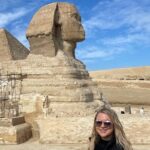
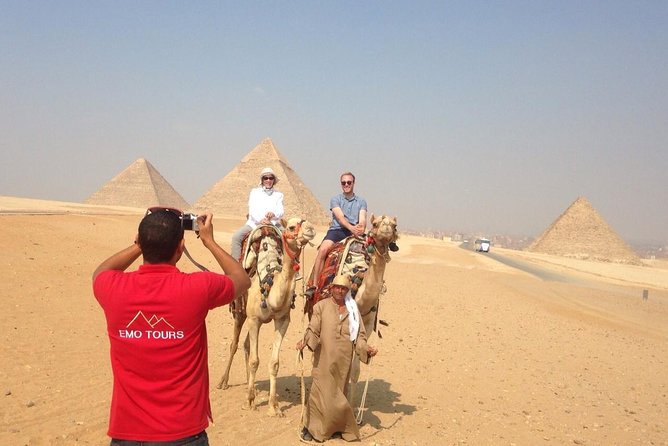
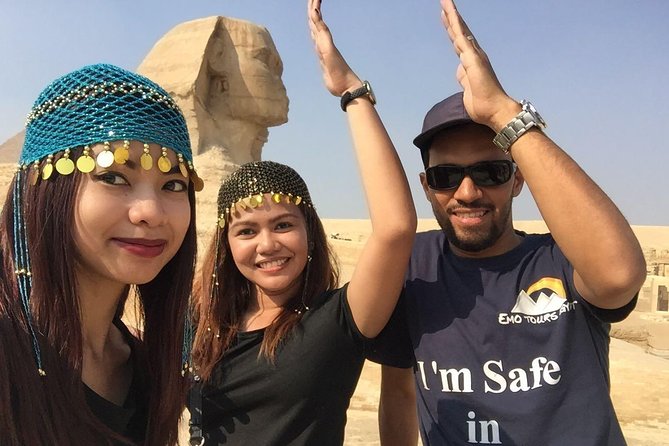
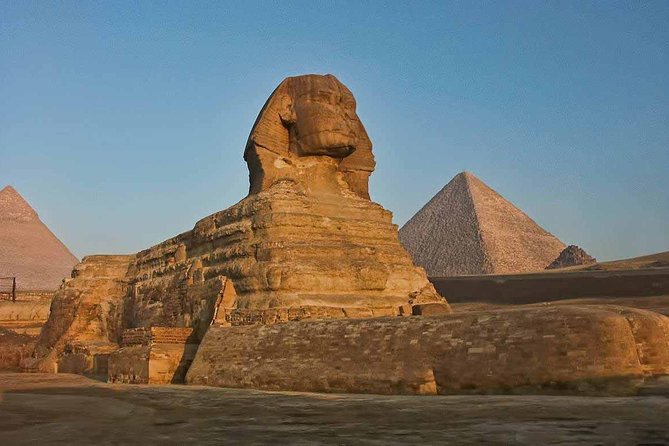
Day one is the big one, and it starts with the Great Sphinx. It’s described as the guardian by the huge funeral complex, with the lion body and the head associated with King Chephren. You don’t need a lot of explanation here. Even in a short visit, the size does the talking.
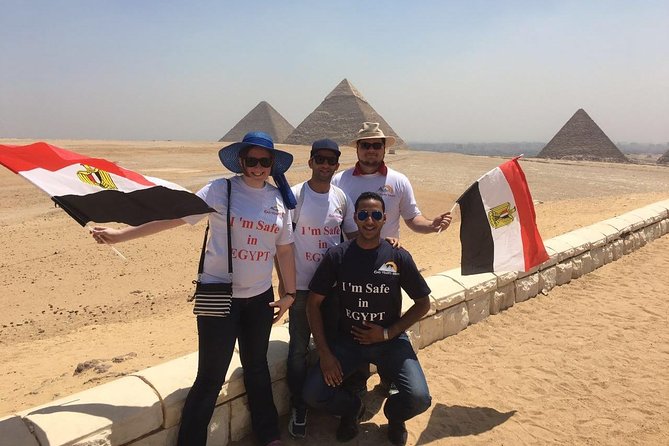
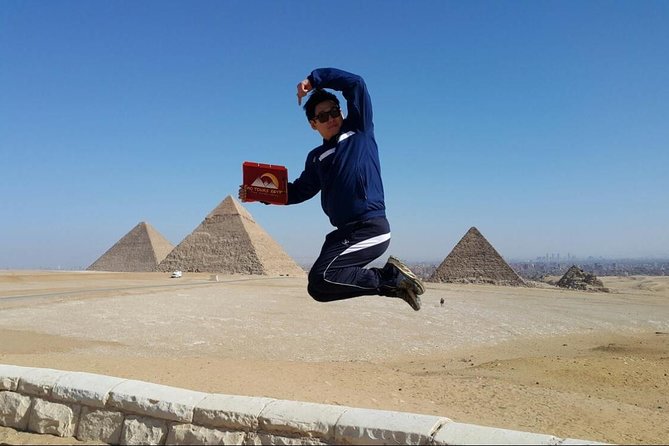
Next comes the Pyramids of Giza and the classic trio: Cheops (Khufu), Chephren, and Mykerinos. The schedule gives you three hours at the pyramids area, with the Valley Temple included. That matters because Valley Temples are part of the processional setup around pyramid complexes, not just photo backdrops.
The itinerary also includes more targeted, shorter stops among the complexes—like Khafre’s Pyramid, Menkaure’s Pyramid, plus separate pyramid-field stops in Saqqara later. The practical takeaway for you: you’re not just watching pyramids from far away. You’ll get a sequence of close-up moments. Even if you only get brief time at each point, the variety helps you understand the layout.
A note on timing: in past experiences with similar Cairo programs, the order and pacing can make a difference. One written caution flagged that the order of pyramid viewing and how much time gets spent near certain pyramids can feel tight. So keep your expectations aligned: this day is a sprint through the highlights, not a slow museum-style stroll.
Saqqara, Dahshur, and Memphis: how the pyramids expand beyond one plateau
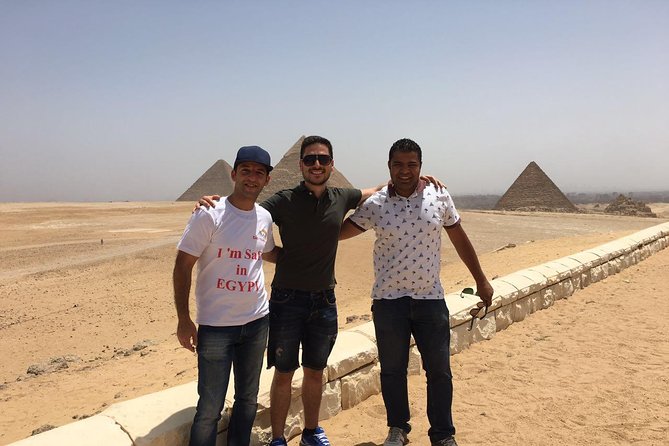
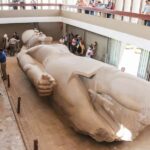
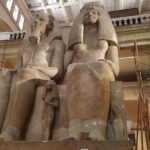
After Giza, the tour widens the lens to places people often skip when they’re only focused on the skyline pyramids. Memphis and Sakkara are built in early, and Memphis is framed as an ancient capital dating back to 3100 B.C. The schedule calls out a colossal statue of Ramses II and an Alabaster Sphinx, plus the idea that you’re stepping into layers of Egyptian civilization—not just one dynasty’s monument.
There’s also a quick stop at the Sphinx of Memphis, described as a stone sphinx near the remains of Memphis, with a carving believed between 1700 and 1400 BC (18th Dynasty). It’s short, but it gives a nice sense of how the sphinx motif appears in different times and contexts.
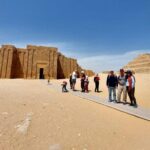
Then you get into Saqqara, which is where the tour really earns its “more than Giza” reputation. The Step Pyramid of Djoser is listed as the earliest colossal stone building in Egypt, with a 6-tier, 4-sided design. That early-stone milestone is a huge reason to care about Saqqara, because it’s the kind of site that makes later pyramid building feel inevitable.
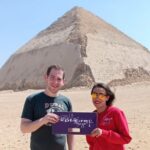
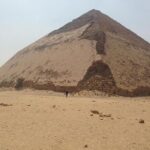
You also visit Dahshur, including a longer stop that highlights the Bent Pyramid area and the idea that Dahshur reads like a story of Ancient Egyptian history. The schedule also notes Dahshur’s necropolis context—linked to dynasties and specific pyramid structures, including the Black Pyramid of Amenemhat III. If you’ve only seen Giza, Dahshur adds variety fast.
Finally, the day loops back through several pyramid-related Saqqara stops—Pyramid of Teti, Pyramid of Unas, and Mastaba of Ti. The mastaba stop is especially worthwhile because it includes details of everyday-life scenes, plus the presence of serdabs. In plain terms: it’s not just stone shapes. It hints at what people thought and did in daily life.
What the Egyptian Museum stop is really for (and how to use it)
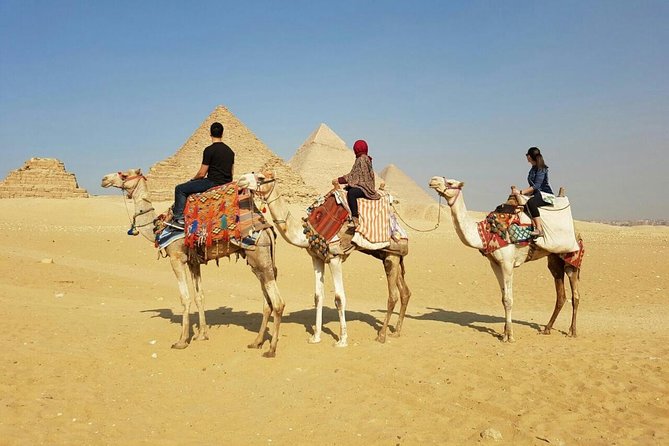
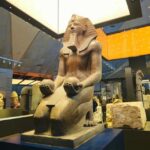
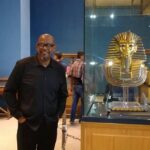
Day two’s center of gravity is The Museum of Egyptian Antiquities in Downtown Cairo, near Midan Tahrir. The schedule gives you three hours, which is enough time to do more than a rushed circuit. The museum is described as one of the world’s most important collections of ancient artifacts, featuring Tutankhamun’s treasures and other objects like mummies, jewelry, and grave goods.
This museum block is valuable for a simple reason: pyramids and temples are stone and sand. The museum adds names, objects, and stuff people actually used. Even without long explanations, you’ll understand why the pyramids matter more once you see the everyday burial items and royal pieces.
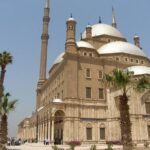
The rest of day two steers you to Cairo’s historic power centers. You’ll visit the Citadel of Cairo (also called the Citadel of Saladin), built by Salah ad-Din and developed by later rulers. The schedule notes it served as the seat of government and residence for centuries. Then you go to the Mosque of Muhammad Ali, commissioned by Muhammad Ali Pasha between 1830 and 1848.
Practically, this is a good pairing: museum objects in the morning mindset, then a citadel and mosque that help you picture how later Cairo rulers built authority into stone.
Khan el-Khalili: the souq hour that keeps Cairo human
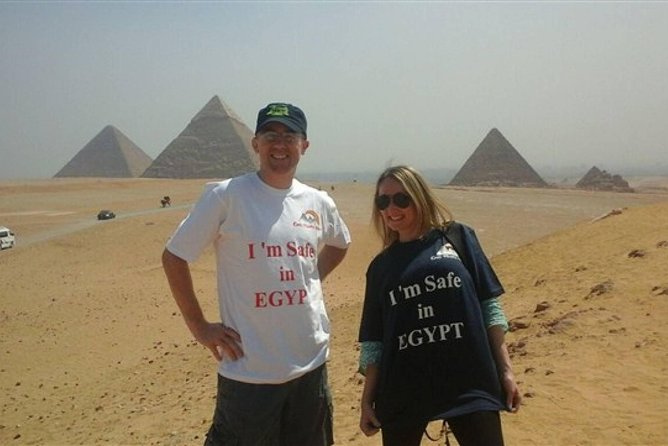
After the Citadel and Muhammad Ali Mosque, you get a Khan Al-Khalili souq stop for about an hour. This is where the tour shifts away from monuments and into everyday Cairo energy.
The souq is described as a major market district in the historic center, for tourists and Egyptians alike. In a schedule this packed, the value of that one-hour window isn’t shopping goals—it’s a change of pace. You’ll feel the city as a living place, not just a museum you drive between.
If you’re sensitive to crowds or want calm walking time, treat this hour as a quick orientation stop. Get what you need, take a few photos, and then let your guide move you on before you burn your patience.
You can also read our reviews of more private tours in Cairo





Day 3 Old Cairo: Coptic sites plus big Islamic monuments
Day three is your “layer cake” day—Coptic Cairo and then major Islamic sites clustered in the historic core. It begins with Coptic Cairo, described as Old Cairo’s early settlement area with origins linked to a canal between the Nile River and the Red Sea.
Next is the Mosque and Madrasa of Sultan Hassan, a monumental complex built between 1356 and 1363 during the Bahri Mamluk period. The schedule gives you one hour here, which is enough time to take in the scale and then get your bearings.
The itinerary then includes the Mosque of Amr Ibn Al-As (also called the Mosque of Amr), originally built in 641–642 AD as the center of Fustat, noted in the schedule as the first mosque in Egypt and Africa. After that, you visit the Al Rifai Mosque, described as the Khedival Mausoleum of Muhammad Ali Pasha’s royal family, and timed at one hour.
Then the tour turns to Jewish and Christian history with Synagogue Ben Ezra and the Hanging Church (Saint Virgin Mary’s Coptic Orthodox Church). The Hanging Church stop is one hour and sits in the same old-city orbit as the earlier Coptic Cairo. The Ben Ezra synagogue stop is also one hour, giving you enough time to understand this part of Cairo is not a single-story attraction.
This is the kind of day that rewards flexibility. If you’re the type who enjoys religious history and architecture, you’ll likely feel satisfied. If you only want the pyramids again, the shift might feel like a lot. But it’s exactly how you get the full Cairo picture in only three days.
Price and logistics: what $150 covers, and what to expect
At $150 per person, the tour feels fair if you consider what you’re buying: a private guide, transport by private A/C vehicle, and entry fees across multiple major sites. You also get bottled water and lunch included in the package.
What costs extra (and it matters): pyramid interiors are not included. That’s a real decision point. If your dream is walking inside a pyramid, you’ll need a different add-on or a separate tour plan. This package is clearly built around the monuments and surrounding areas.
There’s also tipping, personal items, and other small extras outside the included list. On a practical level, tipping is usually part of the Cairo touring math. And personal items means things like sunscreen, snacks, and any paid extras that pop up when you’re out all day.
From real-world experience shared in the provided write-ups, some groups appreciated the comfort side of the operation—like a clean, modern vehicle and even snacks in some cases. Guide quality seems to vary by person, but many names repeat in positive light: Habib, Ahmed Zaki, Hossam, Mo Salah, and Manar Nabil are examples you’ll want to keep in mind when you ask who will guide your group.
One caution to keep your eyes open: one note flags a guide named Sara as something to avoid. You can’t control everything, but it’s smart to ask for your guide’s name in advance and confirm you’re comfortable with that match.
Finally, consider pacing. With so many stops per day, you may feel rushed at peak times. The itinerary clearly tries to cover huge ground, so if you hate tight schedules, plan to add a buffer day on your own after the tour.
Who this tour suits best
This is a strong pick if you want:
- A private guide and a driver so you can focus on history and photos
- Big-name Cairo in only three days: Giza + Egyptian Museum + Citadel + Old Cairo
- One guided route that mixes ancient Egypt with Islamic and Coptic sites
It’s not the best fit if:
- You want lots of free time at one site
- You specifically need pyramid interior access
- You’re looking for a slow, no-pressure pace
Should you book this 3-day private Cairo tour?
Yes, if your goal is to see the essentials and you like having a guide manage the flow. The value comes from private transport, entry fees included, and a route that covers both ancient and later Cairo layers. It’s also ideal for first-time visitors who want a guided framework before they branch out on their own.
But book with eyes open. This plan is packed, and some stops are timed tightly. If you’re the type who needs long museum wandering or wants to enter pyramids, you’ll likely want to pair this with additional independent time or an add-on.
If you’re flexible on pacing and you want a guided hit of Cairo’s top landmarks, this is the kind of tour that can turn a short trip into a real story.
FAQ
How much does the 3 Days Private Guided Cairo Tour cost?
It’s priced at $150.00 per person.
What’s included in the tour price?
The package includes bottled water, a tour guide, a private tour, transport by private A/C vehicle, entry fees, and lunch.
Do you get pickup from your hotel?
Pickup is offered.
Is transportation included?
Yes. You’ll travel by private A/C vehicle.
Are pyramid interiors included?
No. Entry is included, but it doesn’t include inside any of the pyramids.
What sites are covered over the three days?
You’ll visit places like the Great Sphinx and Giza Pyramids, the Egyptian Museum, the Cairo Citadel and Mosque of Muhammad Ali, Khan Al-Khalili, plus Coptic Cairo and historic monuments such as Sultan Hassan and the Hanging Church.
Is this a group tour or private?
It’s private. Only your group will participate.
Can I cancel for a full refund?
Yes. Free cancellation is available if you cancel up to 24 hours in advance for a full refund.