REVIEW · HURGHADA
Visit Valley of Kings ,Karnak & Hatshepsut Temples from Hurghada
Book on Viator →Operated by Nile Valley Tours · Bookable on Viator
Luxor wakes up early from Hurghada. This full-day trip is built around a professional Egyptologist and a small-group van (up to 8), so you get real context instead of just photo stops, plus it includes lunch to keep you fueled. The one drawback is the sheer length: you start at 5:00 am, and the drive takes a chunk of your day, so comfort matters.
You also get a well-paced mix of East Bank and West Bank sights in one shot, with a horse carriage city segment, a stop at an alabaster factory, and a logical order that keeps you moving. Add the convenience of hotel pickup and a mobile ticket, and it’s the kind of day that feels efficient without feeling rushed.
In This Review
- Key Highlights You’ll Actually Feel
- Day Trip Reality Check: 5:00 am Pickup and an Honest 16 Hours
- Karnak Temple: Where the Gods Get Their Own City
- The Horse Carriage Break and Lunch Stop: Keep Your Energy Up
- Valley of the Kings: New Kingdom Royal Burial Ground
- Alabaster Factory Visit: Art Stone, Real-World Egypt Shopping
- Hatshepsut at Deir el-Bahari: Terraces, Ramps, and a Female Pharaoh
- Colossi of Memnon: Kom el-Hatan and the Dawn Legend
- Price and What You’re Really Buying: $32.30 Plus Tickets
- Comfort, Timing, and Who This Tour Fits Best
- Should You Book This From Hurghada?
- FAQ
- What time does the tour start?
- How long is the experience?
- Are entrance tickets included?
- Is lunch included?
- What about hotel pickup and transfers?
- What should I know about weather?
Key Highlights You’ll Actually Feel
- Professional Egyptologist guidance that connects the monuments instead of listing facts
- Small group by van (max 8), which makes questions and timing easier
- Karnak first, West Bank after: a smart flow across Luxor’s two sides
- Horse carriage city tour plus a lunch break that keeps energy steady
- Valley of the Kings time block built for royals of the New Kingdom
- Colossi of Memnon ticket included, so you don’t have to scramble later
Day Trip Reality Check: 5:00 am Pickup and an Honest 16 Hours
This is a classic Luxor-from-Hurghada day. Pickup starts at 5:00 am, and the total time is about 16 hours, using an air-conditioned vehicle. That early start is what makes the schedule possible, but it also means you should plan like a pro: set expectations for a long day, and treat comfort like a priority.
The tour is private/activity style, but the vehicle is also described as small group (max 8 people) by van. In real life, that balance is great. You’ll have space, but you’re still sharing the day with a small number of people, which often helps the guide keep the timing under control.
Also note: entrance tickets for Karnak, Hatshepsut, and the Valley of the Kings are not included (they’re listed as $35). Colossi of Memnon has its ticket included. So when you price it out, you’re looking at a base tour plus the main site entrances.
You can also read our reviews of more tours and experiences in Hurghada.


Karnak Temple: Where the Gods Get Their Own City
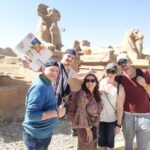
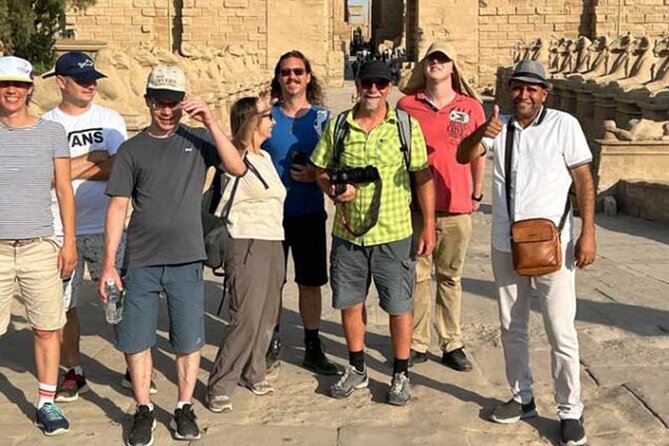
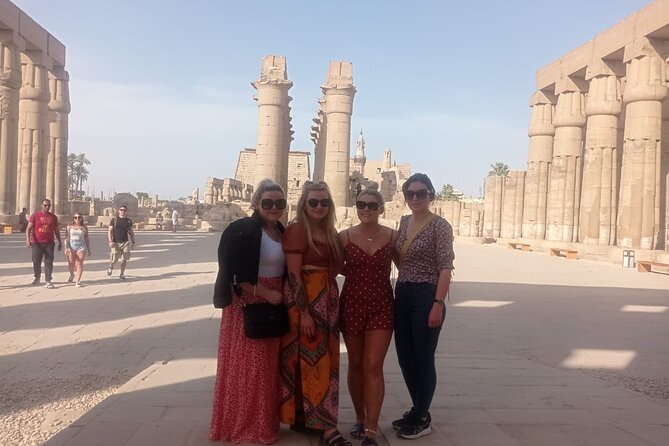
Karnak Temple is the opening act for a reason. It’s described as dating from around 2055 BC to around 100 AD, and it grew over a long stretch of time, dedicated to Amun, Mut, and Khonsu. Even if you’re not a temple-nerd (no judgment), the scale alone can feel like a brain teaser: this isn’t one building, it’s a religious complex that kept evolving.
You’ll spend about 1 hour at Karnak, and since admission isn’t included, you’ll want to budget that $35 total for entrances covering Karnak, Hatshepsut, and the Valley of the Kings. The guide’s role matters here. Karnak has so many columns, halls, and sacred layouts that a good explanation helps you understand what you’re actually looking at.
One practical consideration: an hour goes fast at Karnak. Bring your patience for crowds and stone glare, and focus on what the guide points out—especially the way Karnak was built as a cult temple for major deities. If you like that big, layered feel, Karnak will make your later stops click.
The Horse Carriage Break and Lunch Stop: Keep Your Energy Up
After Karnak, the day shifts gears. You’ll take a horse carriage and do a city tour segment, then you’ll end up at a restaurant for lunch (lunch and mineral water are included).
This part is easy to underestimate, but it’s one of the smarter pieces of the schedule. After a big temple block, your head needs a reset, and your body needs food. A scheduled lunch also helps when the day starts early—otherwise, everyone turns into a grumpy stopwatch.
Here’s how I’d think about the carriage portion: it’s a quick change of pace rather than the main event. Use it to look around and get your bearings for the rest of the day. If you’re sensitive to discomfort or dust, plan to dress for heat and keep water handy, even though mineral water is included with lunch.
Valley of the Kings: New Kingdom Royal Burial Ground
Next up is the Valley of the Kings, the royal burial place for pharaohs of the 18th, 19th, and 20th dynasties—the New Kingdom era. Names you’ll hear here include Tutankhamun, Ramses II, Tuthmosis III, and Seti I, plus other powerful nobles and even family members connected to the pharaohs.
You’ll have about 2 hours at this stop. That time matters because the Valley isn’t just one tomb site you glance at. It’s a collection of burial entrances and layered stories, and the guide can help connect why these kings were put here, and what the Valley represents in ancient Egyptian belief.
Admission for the Valley is not included in the base tour price (it’s part of the $35 entrances total). And while tomb interiors can vary depending on what’s open, you should expect that the experience will be focused on “seeing the tombs” rather than wandering endlessly.
A quick practical tip: it’s a cemetery of stone corridors and sudden shade changes. Wear footwear that works on uneven ground, and keep your phone battery charged enough for the dark interiors.
Alabaster Factory Visit: Art Stone, Real-World Egypt Shopping
After the Valley, the schedule includes an alabaster factory visit. This is one of those stops that can be either educational or slightly sales-forward, depending on how you handle it.
The best way to treat it: go in with curiosity. Alabaster is a material closely linked to Egyptian crafts, and the factory portion helps you see how products move from raw stone to finished items. If you’re shopping, it’s useful to understand what you’re buying—especially because stone items can vary a lot in quality and finish.
If you’re not interested in shopping, you can still get value by watching the process and learning what makes the stone workable. Just don’t let it hijack your day. The monument stops are the headline here, and the factory visit should feel like a bonus.





Hatshepsut at Deir el-Bahari: Terraces, Ramps, and a Female Pharaoh
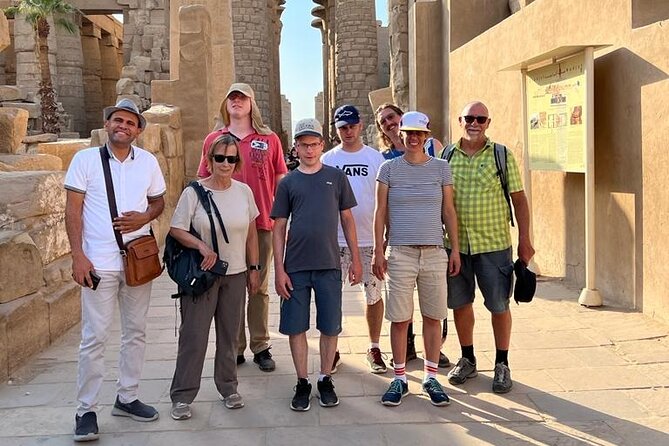
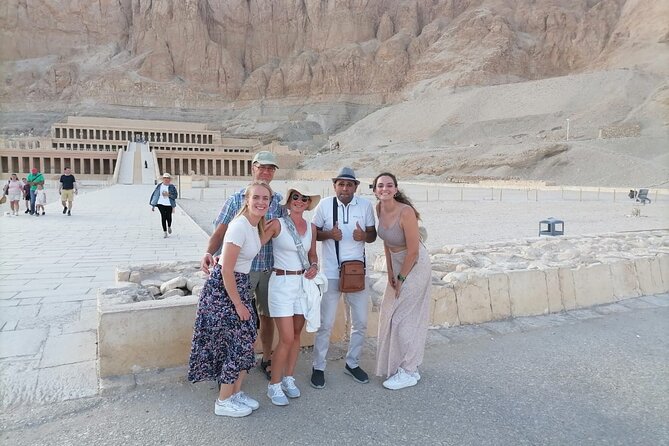
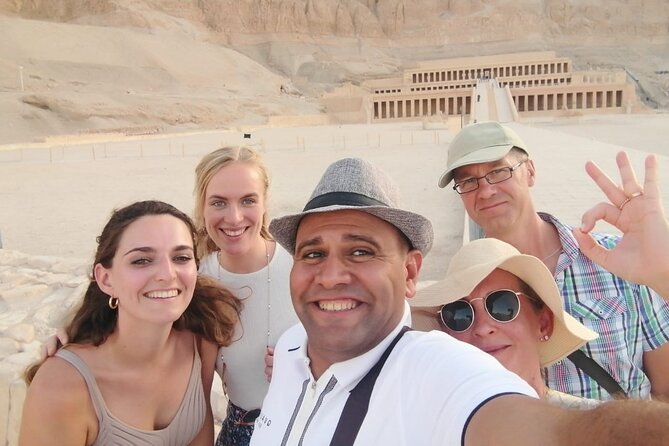
On the West Bank, you’ll visit the Temple of Hatshepsut at Deir el-Bahari. This is one of those sites where the architecture does most of the talking. The temple is built into a cliff face and organized on three enormous terraces, connected by ramps, with each level marked by a colonnade of square pillars.
It’s also tied to Hatshepsut, one of the few female pharaohs in ancient Egypt. Her monument is described as rivaling the pyramids as a great funerary structure, and there’s a specific nickname given to her monument: Splendor of Splendors. At the same time, the site has deeper roots because much of the construction dates from earlier rulers, starting with Mentuhotep II around 2050 BC.
You’ll spend about 1 hour here. Since entrance tickets for Hatshepsut are not included (again, part of that $35 entrance bundle), consider this hour your chance to slow down. Deir el-Bahari is visually strong, and the guide’s job is to help you read it: the terrace layout, how the ramps function, and why this kind of design matters for royal funerary symbolism.
If you like monuments that are more architectural than scenic, this stop will deliver. It’s a temple that feels planned, not accidental.
Colossi of Memnon: Kom el-Hatan and the Dawn Legend
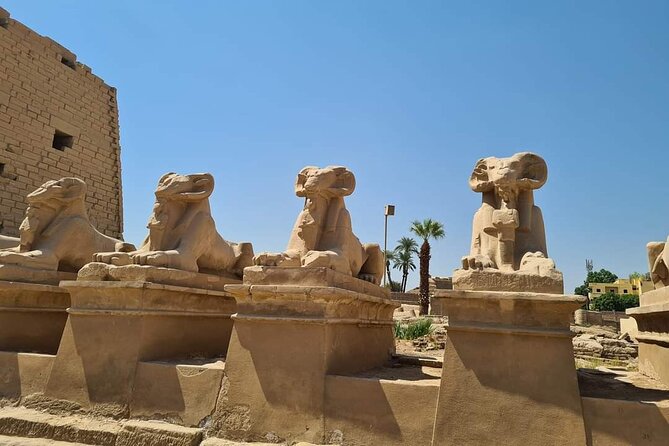
To close out the West Bank highlights, you’ll visit the Colossi of Memnon, known in Arabic as Kom el-Hatan. They’re better known by their Roman association: the Temple of Memnon.
The story attached to these statues is classic and a little dramatic. Memnon is described as a king connected to the Trojan War tradition, and the meaning of the name is given as “the steadfast or resolute,” linked to Eos, the goddess of dawn. The famous angle is the “Vocal Memnon” legend: a cry at dawn associated with the northern statue, which is part of why these statues became known as the “Ruler of the West.”
Practically, this is also the one stop where your ticket is included in the tour package. You’ll have about 1 hour, which is a good length: long enough to understand the story and take photos, without turning it into a random detour.
If you’re tired from the early start, this is a great kind of stop. You don’t have to navigate a complex site plan. You can focus on the moment: two massive figures, one strong legend, and the West Bank feel hanging in the air.
Price and What You’re Really Buying: $32.30 Plus Tickets
The tour is listed at $32.30 per person, and that’s the part that can look like a bargain at first glance. But here’s the honest value math.
- Entrance tickets for Karnak, Hatshepsut, and the Valley of the Kings are not included and are listed as $35.
- Transfer extras depend on your hotel area: $5 if you’re from Makadi or Sahl hashesh, and $10 if you’re from Somabay, Safaga, or ElGouna.
- On the plus side, you get air-conditioned transport, a qualified Egyptologist guide, lunch with mineral water, alabaster factory, and Colossi of Memnon ticket included.
- It’s also small group by van (max 8) and uses a mobile ticket.
So your total day cost isn’t just $32.30. It’s closer to the base price plus entrances, and possibly plus transfer. Still, for a full Luxor sweep with a guide and meals included, the value is solid—especially when you consider that you’re covering multiple major sites in one long day rather than piecing together separate trips.
Where cost can hurt is when you arrive with no plan for entrances and transfers. Bring the full budget and you’ll feel in control. If you budget only for the advertised tour price, you’ll end up doing math on the go.
Comfort, Timing, and Who This Tour Fits Best
This day is not for slow mornings. With a 5:00 am start and 16 hours total, you’ll want a moderate fitness level and a willingness to do a lot of walking on uneven ground. If you’re sensitive to long travel, pack for it: sun protection, water discipline, and something practical for early waking.
One real-world consideration: the ride from Hurghada to Luxor is long, and seats on a full-day van can feel less comfortable than you’d like. The good news is that the day is structured around meaningful stops, not endless transit. When you do feel the “we still have hours left” moment, remember: you’re trading a long ride for fewer logistics headaches later.
This tour suits you if:
- You want a single-day Luxor plan with major East and West Bank monuments
- You like guided context (that’s the big win of an Egyptologist-led day)
- You want lunch included and a schedule that’s designed to keep you moving
It might not fit you as well if:
- You hate early starts or long bus time
- You want a very relaxed, unstructured pace
Should You Book This From Hurghada?
If your goal is a strong first taste of Luxor—Karnak, Valley of the Kings, Hatshepsut, and Colossi of Memnon—this is a smart way to do it. The best parts are the Egyptologist-led explanations, the small-group feel, and the way the schedule strings the sites together with food and short breaks in the right places.
I’d book it if you can handle the long day and you plan for the $35 entrance tickets plus any transfer extra based on where you’re staying. Skip it only if you’re chasing a laid-back pace or you dislike early mornings and extended rides.
FAQ
What time does the tour start?
Pickup starts at 5:00 am.
How long is the experience?
The total duration is about 16 hours.
Are entrance tickets included?
No. Karnak Temple, the Temple of Hatshepsut, and the Valley of the Kings are not included (listed at $35). The Colossi of Memnon ticket is included.
Is lunch included?
Yes. Lunch is included at a restaurant, along with mineral water.
What about hotel pickup and transfers?
Pickup is offered. Transfers cost extra depending on your hotel area: $5 per person from Makadi/Sahl hashesh, and $10 per person from Somabay/Safaga/ElGouna.
What should I know about weather?
The tour requires good weather. If it’s canceled due to poor weather, you’ll be offered a different date or a full refund.
If you tell me where you’re staying (Makadi, Sahl hashesh, Soma Bay, Safaga, El Gouna, or something else) and whether you’re okay with a 5:00 am start, I can help you judge the true total cost and the best expectations for the day.