REVIEW · ABU SIMBEL
Tour to Abu Simbel Temple with a small group and a Professional tour guide
Book on Viator →Operated by Tui Egypt · Bookable on Viator
Sunlight hits Abu Simbel like clockwork. This small-group day trip from Aswan gets you to the UNESCO Abu Simbel temple complex with a professional guide who explains the twin temples of Ramses II and Queen Nefertari (Nefertiti/Nefertari), plus the gods linked to each inner shrine and the twice-a-year solar alignment.
I especially like the early start and the real “human” pacing. You’re picked up from your Aswan hotel and driven in a modern, air-conditioned car, and the small group setup is designed so you can ask questions instead of shouting over a bus. The one drawback to keep in mind: you’re committing to an around-8-hour outing, so the time on site can feel tight compared with how long you’d ideally want in one of Egypt’s most dramatic temple interiors.
If timing works for you, this is a memorable way to see why Abu Simbel still makes people stare—because it’s not just big statues. It’s geometry, ritual, and timing.
In This Review
- Key things to know before you go
- Why Abu Simbel Is Worth the 4am alarm
- Small Group, Pro Guide: what you’ll actually get
- The air-conditioned transfer from Aswan: comfort on a long day
- Inside the Abu Simbel complex: Ramses II and Queen Nefertari’s twin story
- The solar alignment angle: what makes the sun part matter
- Timing reality check: 8 hours overall, often less inside
- Price and value at $40: what you’re paying for
- Communication and cancellation: how to protect your day
- What kind of traveler should book this
- Final verdict: should you book?
- FAQ
- What time is the tour scheduled to start?
- Does the tour include pickup and drop-off from Aswan hotels?
- How long does the trip take?
- Are entrance fees included?
- Is there a mobile ticket?
- Is free cancellation available?
Key things to know before you go
- UNESCO Abu Simbel: a World Heritage Site on Egypt’s southern frontier
- Pro guide focus: small group format for clearer explanations and questions
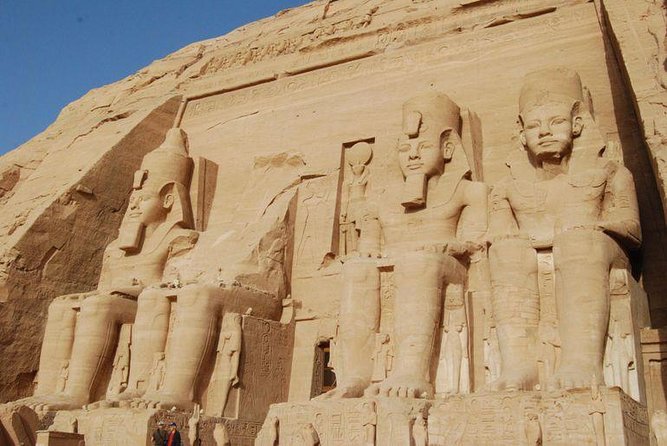
- Twin temples: Ramses II + Queen Nefertari’s temple built into the mountainside
- Solar alignment twice yearly: the sun reaches deep into the temple during specific dates
- Round-trip hotel transfers: pickup and drop-off from your Aswan hotel
- Early 4:00 am start: you’re traveling while the day is still young
Why Abu Simbel Is Worth the 4am alarm
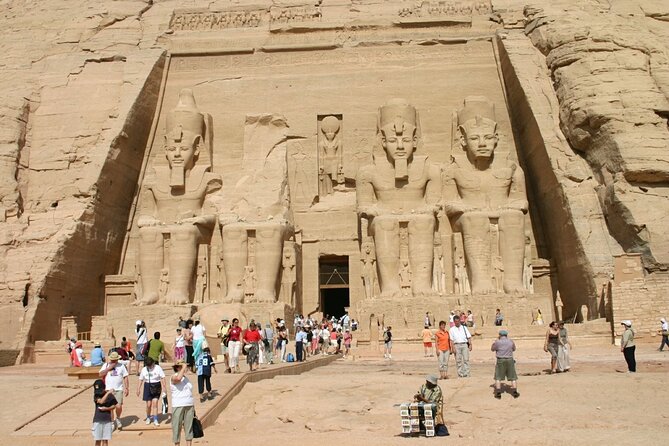
Abu Simbel feels made for early mornings. You leave Aswan at 4:00 am, which means you’re not walking into the day’s heat or the peak crowds on your own schedule. The point of that early departure is simple: it gives you a calmer, more manageable arrival at a site that’s famous enough to attract everyone’s “bucket list” plans.
What makes the place truly special isn’t only the scale of the carved facade. It’s how the temple complex was planned to work. Your guide explains the temple’s purpose and the gods tied to the shrines inside—especially the idea that this site is aligned with the sun. Twice a year, the sunlight shines in so the illumination matches the temple’s ritual symbolism. That’s the kind of detail that turns a photo stop into a real “wait, that’s incredible” moment.
If you like your history with cause-and-effect (why something was built that way), this tour fits. And if you prefer relaxed museum pacing, you’ll want to accept the trade-off: this is an early, scheduled day with driving time built in.
You can also read our reviews of more tours and experiences in Abu Simbel.

Small Group, Pro Guide: what you’ll actually get
This tour is built around two practical advantages: pickup from your Aswan hotel and a professional tour guide traveling with you the whole day. That matters because the long drive isn’t just time passing—it’s where you get the context that makes the temples click when you arrive.
The guide’s job here is clear: explain what you’re seeing and why it matters. You learn how the temples were dedicated and how the complex fits into the religious world of ancient Egypt. The temples of Ramses II and of Queen Nefertari were built in the 13th century BC under Ramses II’s dynasty, and the narration ties the big visible features to the deeper functions of the site.
You also benefit from the small-group format. When the group is smaller, the guide can adjust explanations, answer questions, and keep everyone coordinated without the chaos that often comes with larger tour buses. It’s not just more comfortable. It’s easier to understand.
The air-conditioned transfer from Aswan: comfort on a long day
You ride out to Abu Simbel in a modern, clean, air-conditioned car. That’s not a luxury detail; on a day that starts at 4:00 am and runs about 8 hours total, comfort helps you stay present. A long road trip can flatten your energy. Cool air and a smooth ride make it more likely you’ll actually enjoy the arrival instead of feeling wiped out before you even step into the complex.
There’s also a real crowd strategy to early departure. In smooth runs, people have been picked up on time and even arrived earlier than expected, helping them avoid the heaviest push of visitors. That’s a big deal at Abu Simbel, where everyone wants their best angle and their moment of silence in front of the colossal carved facade.
One more practical note: this is a straight-out-and-back kind of day. You’re not touring multiple stops. The driving isn’t filler. It’s the price of reaching a site that sits on the border region of Egypt and Sudan.
Inside the Abu Simbel complex: Ramses II and Queen Nefertari’s twin story
The main stop is the Abu Simbel Temple Complex, with the day focused on the twin temples carved into the mountainside. Both temples are tied to Ramses II, but they’re not identical in focus. The guide helps you see them as a pair of messages: one centered on Ramses II himself and one honoring Queen Nefertari.
Here are the key historical anchors you’ll hear during the visit:
- The temples were built in the 13th century BC under Pharaoh Ramses II
- The complex includes dedications connected to specific Egyptian deities
- The temples were built from the mountainside, a major engineering and artistic effort
One standout point in the explanation is the list of gods connected to the temple: Ptah, Re-Her-Akhtey, Amun-Re, and Ramses II. Having those names mapped to what you see gives you something to hold onto while you look around. Without that, Abu Simbel can feel like a lot of impressive stone (true), but with it, it becomes a working system—religion, power, and timing all built into rock.
Your guide’s job is to connect the visuals—carvings, temple layout, and the sense of depth—with what those symbols were meant to accomplish.
The solar alignment angle: what makes the sun part matter
You didn’t just come for statues. Abu Simbel is famous because of how the sun interacts with the temple. Twice a year, sunlight shines directly into the temple interior. Your guide explains this solar alignment and ties it back to the site’s religious logic.
Here’s what to take away: this is not a random “nice view” effect. The alignment is the kind of detail ancient Egyptians planned into architecture so the temple could participate in a ritual calendar. That’s why the guide’s explanation is worth your attention during the visit; it helps you look for the functional story behind what you’re seeing.
Even if you’re not visiting on one of those two special days, the explanation still matters. It turns your viewing into “construction + intention,” not just “look at the size.”
If you’re the kind of person who loves when history is measurable—sun angles, dates, and planned illumination—this part is likely to be a highlight.
Timing reality check: 8 hours overall, often less inside
Let’s talk about the schedule honestly. The overall trip is about 8 hours, and while it’s built for a full temple visit, there’s a common mismatch between travel time and on-site time.
In one instance, people have reported around 1 hour 45 minutes at the complex. That might be enough for many visitors to see the major spaces and get guided explanations. But if Abu Simbel is your main interest—and you want extra time to linger, sketch, read plaques, or take more photos from different angles—this is the part to consider carefully.
My practical advice: treat this tour as a “guided highlights” plan. If you want a slower, longer temple experience, you may feel rushed here. If you’re okay with a focused visit, the early start and guide context can make the short time feel efficient rather than stressful.
Price and value at $40: what you’re paying for
At $40 per person, you’re mainly paying for two things: the transportation and the guide time. This tour includes:
- Pickup and drop-off from your Aswan hotel
- A professional tour guide
Entrance fees are not included, and tipping isn’t included either. So yes, you’ll have additional costs on the day.
Is it good value? For many people, it is, because the drive to Abu Simbel isn’t something you want to DIY without local interpretation. The guide adds meaning. And the “small group + hotel pickup” combination reduces the hassle that often makes independent travel feel harder than it should.
Also note: the tour lists group discounts and provides a mobile ticket. Those details can make booking feel smoother and help you avoid last-minute friction.
Just remember: the lowest price isn’t always the best outcome. What matters here is the coordination quality on a very early schedule.
Communication and cancellation: how to protect your day
This is the part you should take seriously. Some people have reported problems like last-minute cancellations or poor communication after paying. Even though the overall rating is strong, those negative stories are enough that you shouldn’t gamble with a vague confirmation.
What you can do:
- Make sure you receive a clear confirmation at booking time
- Confirm the pickup details before you settle in for the night
- Plan for the morning start at 4:00 am with a buffer so you’re not scrambling
Weather can also affect the plan. The experience requires good weather, and if it’s canceled due to poor weather, you’re typically offered a different date or a full refund. So keep an eye on conditions and don’t treat the trip as 100% “no matter what.”
If you like a stress-free early-morning start, do the prep work the night before. That alone prevents most headaches.
What kind of traveler should book this
This tour is a strong fit if you want:
- A guided Abu Simbel visit with context about the gods and purpose of the temples
- The convenience of round-trip hotel pickup from Aswan
- A small-group experience that doesn’t feel like a stampede
- A structured day that gets you there early enough to enjoy the complex
It may be less ideal if you:
- Want lots of time inside the temples on your own (because the schedule can be tight)
- Have very flexible plans and dislike early starts
- Need lots of hand-holding on logistics (because early-day communication has been inconsistent for a small number of customers)
It also works for most people who can participate, since it’s a standard small-group day trip rather than an activity with special physical requirements.
Final verdict: should you book?
If Abu Simbel is on your list, I think this is the kind of tour that can make the difference between seeing stone and understanding a site built with intention. The professional guide, the hotel pickup from Aswan, and the focus on Ramses II + Queen Nefertari’s twin temples are exactly what you want for a short, high-impact day.
My call: book it if you’re okay with a very early start and you’re comfortable with a guided “highlights” pacing. Just take five minutes to double-check your pickup details in advance. With that small bit of homework, you’ll be set up for a smooth morning and a temple experience that’s genuinely worth the drive.
FAQ
What time is the tour scheduled to start?
The start time is 4:00 am.
Does the tour include pickup and drop-off from Aswan hotels?
Yes. Pickup and drop-off to and from your Aswan hotel are included.
How long does the trip take?
The duration is about 8 hours.
Are entrance fees included?
No. The entrance fee for the historical places is not included.
Is there a mobile ticket?
Yes. The tour includes a mobile ticket.
Is free cancellation available?
Yes. You can cancel for a full refund up to 24 hours in advance of the experience start time.