REVIEW · ABU SIMBEL
Abu Simbel temples by Private air-conditioin Vehicle
Book on Viator →Operated by Gate 2 Egypt Tours · Bookable on Viator
Two temples carved into rock are hard to top. This private Abu Simbel excursion is interesting not just because it is UNESCO Abu Simbel, but because you also learn how the site was discovered in 1813, buried under sand, and then saved again in 1960 when the Nile’s water levels rose. I especially like the air-conditioned private transport and the fact that entrance fees and soft drinks are handled for you.
One consideration: the Egyptologist-style guidance is timed so you get clear context, but you may not get a lot of “live commentary” while you are actually inside the temple chambers.
In This Review
- What Makes This Trip Special
- Key Highlights to Expect
- Rock Temples, Sand, and a 1960 Rescue Mission
- Sun Temple of Ramses II: What You’ll Really Notice
- Queen’s Temple and the Twin-Temple Experience
- Why the 1960 Move Changes How You See Everything
- The Long Drive: Comfort Matters on This 11-Hour Day
- Egyptologist Time: Great Context, but Know the Limits
- Price and Inclusions: Does $120 Make Sense?
- Who This Abu Simbel Private Tour Fits Best
- Should You Book This Private Abu Simbel Day Trip?
- FAQ
- How long is the Abu Simbel day trip?
- What does the price include?
- Is this tour private or shared?
- Do I get any ticketing information?
- Do I need to pay entrance fees separately?
- When and where does pickup happen?
- Is tipping included?
- What happens if the weather is poor?
- Can I cancel and get a refund?
What Makes This Trip Special
You are seeing more than two impressive facades. You are walking through a story: royal self-promotion in stone, then the practical reality of saving monuments when a modern river plan changed the future. And because this is a private day trip, your guide can pace explanations to match your group instead of packing everything into a rushed bus schedule.
Key Highlights to Expect
- UNESCO Abu Simbel with time to see both main temples in one day
- Expert explanations from an Egyptologist during your visit
- The 1960 rescue story: moved to protect the temples from Nile flooding
- Rock-carved scenes of Ramses II and the temple’s royal purpose
- Included comfort items like bottled water and soft drinks on board
You can also read our reviews of more tours and experiences in Abu Simbel.
Rock Temples, Sand, and a 1960 Rescue Mission
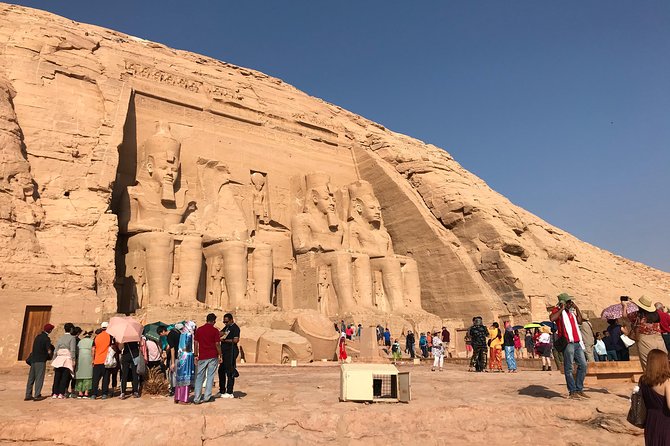
Abu Simbel is one of those places that instantly changes how you think about “ancient.” These temples are not only carved into a cliff. They are also a real-world example of how people respond when nature, politics, and preservation collide.
The starting point is discovery: both major temples were uncovered in 1813, and for a long time they were almost entirely buried by sand. That detail matters because it explains why the site feels “found” rather than “maintained” in the way many visitors expect. When you arrive, you are seeing something that has survived burial, rediscovery, and the next crisis.
Then comes the 1960 rescue. The Nile’s rising levels forced a decision, and the Egyptian government and UNESCO helped move the temples to keep them from being swallowed by water. That is a huge part of why the trip feels worthwhile even before you go inside: you are not just admiring ancient art. You are understanding a conservation engineering challenge, too.
Sun Temple of Ramses II: What You’ll Really Notice
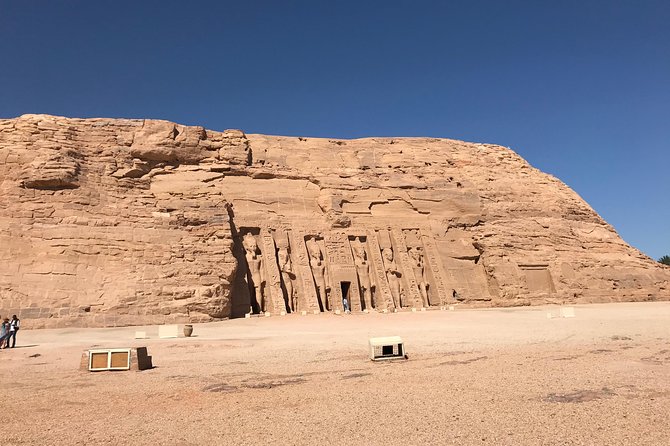
The main draw is the great Sun Temple of Ramses II. Even if you have only a basic grounding in Egyptian history, the temple’s intent comes through quickly: it was built mostly to honor Ramses II, and you can see how power was meant to be shown in stone.
A standout detail is the mural depicting Ramses II’s famous victory at the Battle of Kadesh. If you look for it, you will understand why this temple works as propaganda as well as architecture. The art is not random decoration; it is a statement about victory, legitimacy, and who held the upper hand.
Practical note: this is a day trip, so you will want to be ready to switch from “listening mode” to “looking mode” fast. When your guide shares the meaning of what you are seeing, it helps. But once you are in the temple spaces, your best payoff comes from taking your time to actually see the carvings and murals with your own eyes.
Queen’s Temple and the Twin-Temple Experience
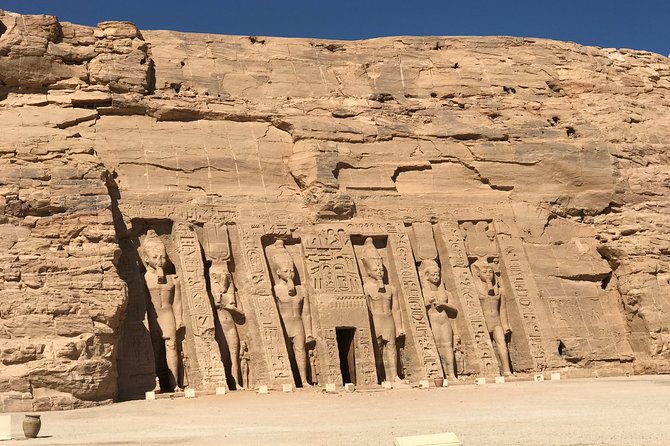
Next you visit the temple associated with Queen Nefertari (some descriptions call it Nefertiti, but the commonly used name for the royal figure here is Nefertari). Having both temples in one outing is a smart design of the day, because the site lets you compare two ideas: one centered on the king’s public greatness, and the other shaped around a queen’s major ceremonial role.
What I like about doing both back-to-back is the “rhythm” of the visit. You get a complete arc: first the emphasis on Ramses II’s triumphs and royal messaging, then the queen’s temple experience that keeps the focus on the broader dynastic story. It is also convenient. On a long travel day, saving the guesswork matters.
If you are the kind of visitor who likes photos, you will probably understand why one reviewer pointed out that staying a little longer can give you more space and better picture opportunities. July can be intense, but timing and pacing on-site can make a real difference in how crowded it feels.
Why the 1960 Move Changes How You See Everything
It is easy to treat Abu Simbel like a museum exhibit, but the 1960 move keeps it grounded in real history. UNESCO and the Egyptian government helped relocate the temples so the rising Nile would not destroy them. That is not a minor footnote. It is one of the main reasons the temples still exist in something close to their intended form.
When you understand that, you start noticing the care in how the site is arranged. You also start thinking like a preservation-minded traveler: this was not “just art.” It was a deadline problem. And it is a reminder that modern decisions shape what future generations get to see.
For me, the biggest value is how your guide turns this into something you can picture. The explanation makes the temples feel less like static scenery and more like a monument saved by human effort.
The Long Drive: Comfort Matters on This 11-Hour Day
This trip is built around a long day, roughly 11 hours total. The good part is you do not do it in discomfort. You get picked up in Aswan and travel by a private air-conditioned vehicle, which is the difference between enjoying the scenery and just trying to survive it.
Comfort details are not “extras” here; they are part of what lets you actually enjoy the temples when you arrive. With bottled water and soft drinks included on board, you are not scrambling for basics once you are far from your hotel.
If you’re going in summer, plan for heat. One of the helpful tips from the experience notes is that July visits can still be rewarding, and if you can stay a little longer on-site, you can find moments that feel quieter for photos and slower looking. That is especially useful here because your schedule is tight: it is easy to feel hurried unless you intentionally slow down when you can.
Egyptologist Time: Great Context, but Know the Limits
The value of an Egyptologist is not just facts. It is interpretation—helping you connect carvings to meaning. On this excursion, your guide explains the discovery story, the temple purpose, and the reason for the big 1960 relocation so you understand what you are seeing instead of treating it like carved decoration.
There is, however, a real limitation to be aware of: the rules around guiding inside the temple spaces can restrict how much narration you get once you step into the inner areas. In other words, your guide may spend more time briefing you outside or at thresholds, then you experience the interior without constant commentary.
That is the part that can disappoint if you expected a running “tour talk” in every chamber. If you are okay with a structured explanation and then a quieter, self-paced look inside, you will probably feel it is the right balance. If you want someone talking the whole time you are walking on the floor, this format might feel too controlled.
Price and Inclusions: Does $120 Make Sense?
At $120 per person for a full day, this is not the cheapest way to reach Abu Simbel—but it is also not “tourist-tax” pricing when you look at what you get.
Included items matter here:
- Hotel pickup and return from Aswan
- A private air-conditioned vehicle
- Entrance fees to the historical places on the program
- Bottled water and soft drinks in the car
- All fees and taxes
- A mobile ticket
When a day trip includes both transport and admission, your real cost becomes time and comfort, not administrative hassle. For many people, that is where private tours earn their keep: fewer coordination problems, less waiting, and a smoother day from start to finish.
If your main goal is maximum flexibility—pause for photos, ask extra questions, set a pace that fits your group—private usually wins. If you are chasing the absolute lowest price, a group option could feel smarter. But this is one of those places where arriving calm and hydrated helps a lot.
Who This Abu Simbel Private Tour Fits Best
This works especially well if you:
- Want one-day access to both main temples without managing details yourself
- Appreciate a guide’s explanations before you go in
- Prefer private comfort on a long day (Aswan to Abu Simbel and back)
- Like UNESCO sites where the story behind the monument matters, not just the view
It may be less ideal if you:
- Expect heavy, continuous guiding inside the temple chambers
- Want a looser schedule with lots of unscripted wandering time
- Are primarily cost-driven and would rather trade comfort for savings
Still, even with those limitations, the core experience here is strong: you get the key temples, the important historical context, and a logistics package that removes stress.
Should You Book This Private Abu Simbel Day Trip?
If you want a smooth, well-supported way to visit Abu Simbel, I would lean yes. The biggest reasons are practical: private air-conditioned transport from Aswan, included entrance fees, and an Egyptologist-led explanation that helps you understand the temples’ purpose and their 1813 discovery and 1960 rescue story.
If you know you will be frustrated by rules that limit guiding inside the chambers, consider that ahead of time. But if you can enjoy a structured briefing and then your own careful looking inside the rock-cut spaces, this day trip is a genuinely solid way to make Abu Simbel feel real and not just impressive.
FAQ
How long is the Abu Simbel day trip?
It lasts about 11 hours (approx.), with a dedicated on-site visit to the temples.
What does the price include?
The price includes air-conditioned private transportation, hotel pickup and return in Aswan, entrance fees to the mentioned historical places, bottled water and soft drinks on board, and all fees and taxes.
Is this tour private or shared?
It is a private tour/activity, meaning only your group participates.
Do I get any ticketing information?
You receive a mobile ticket.
Do I need to pay entrance fees separately?
No. Entrance fees to the historical places in the program are included.
When and where does pickup happen?
Pickup starts from your hotel in Aswan, and the meeting point is in Aswan Governorate, Egypt.
Is tipping included?
No. Tipping is not included.
What happens if the weather is poor?
The experience requires good weather. If it is canceled due to poor weather, you’ll be offered a different date or a full refund.
Can I cancel and get a refund?
Yes. Free cancellation is offered, with a full refund if you cancel at least 24 hours in advance.