REVIEW · CAIRO
Private Tour to the Pyramids of Giza, Djoser and Dahshour
Book on Viator →Operated by Easy Tours Egypt · Bookable on Viator
Three pyramids, one early-morning plan. This private tour links Giza with Dahshur and Djoser, so you see how pyramid building evolved instead of just ticking one site. I love that lunch and hotel pickup/drop-off keep the day efficient, and that your guide brings the place to life using real names like Cheops, Snefru, and Imhotep. The main tradeoff: entrance fees are not included, so you’ll want some extra money ready on top of the ticket.
You’re looking at about 7 hours starting at 7:30am, with focused time at each location rather than a rushed sprint. You’ll also get a free 20-minute camel ride at Giza, long enough for photos without taking over the whole morning.
If you’re lucky with your guide (Sahl is one name that shows up often), you’ll have someone who’s quick to answer questions and clearly enjoys explaining how ancient Egypt worked, from builders to beliefs.
In This Review
- Key things I’d zero in on
- Why this private Giza + Dahshur + Saqqara day makes sense
- The 7:30am start and how the day stays manageable
- Giza Pyramids first: Cheops, limestone blocks, and a quick camel break
- Great Sphinx stop: what 73 meters really looks like
- Dahshur: Bent (Pent) and Red pyramids of Snefru
- Step Pyramid of Djoser at Saqqara: Imhotep and limestone innovation
- Money matters: $32 value plus the entrance fees you pay on site
- How the camel ride fits (and who should think twice)
- Who this tour is best for
- Should you book this private pyramids tour?
- FAQ
- What is included in the private tour?
- Are entrance fees included?
- How much are the entrance fees for each site?
- What time does the tour start, and how long is it?
- Is hotel pickup and drop-off included?
- Is this tour private?
- How long is the camel ride?
- Can I cancel for a full refund?
Key things I’d zero in on
- Private, only-your-party tour: you’re not sharing the day with strangers.
- Hotel pickup and drop-off: less stress than trying to coordinate transport on your own.
- Camel ride at Giza (20 minutes): included, and timed so it doesn’t hijack your schedule.
- Three major sites in one run: Giza + Dahshur + Saqqara means you compare styles, not just landmarks.
- Lunch and water included: you stay comfortable through the hottest part of the day.
- Strong guide focus: the best value here is the way your guide explains what you’re seeing.
Why this private Giza + Dahshur + Saqqara day makes sense
The classic Egypt plan is often one big pyramid stop and then a long return trip. This experience does something smarter: it strings together sites that show different steps in the story of pyramid building. You start at Giza, where the most famous giants live. Then you move to Dahshur, which is where the engineering starts to look like it’s experimenting. Finally, you finish at Saqqara for the Step Pyramid of Djoser, one of the earliest breakthroughs.
I like tours that help you see patterns, not just scenery. Here, you can look at the change in shapes and materials and actually understand why people were obsessed with building in stone. You’re also not stuck spending your time negotiating with drivers or trying to figure out which gates lead where. The tour handles the driving in an air-conditioned vehicle and builds in lunch.
The downside is straightforward: because entrance tickets are not included, your final cost depends on how many sites you visit that day. The tour includes the experience and the logistics; you still pay site entry on arrival.
You can also read our reviews of more private tours in Cairo

The 7:30am start and how the day stays manageable
Starting at 7:30am matters more than it sounds. Cairo’s pace can turn slow, and the pyramids area gets busy. An early start also gives you better light for photos and less heat in the first hours—especially when you’re walking between stops.
The total duration is about 7 hours, which is just enough time to enjoy each site without feeling like you’re being chased. Your time blocks are realistic: you’ll spend around 2 hours at Saqqara for the Step Pyramid complex, about 1 hour at Dahshur, and smaller chunks at Giza and the Sphinx.
A practical win: bottled water and lunch are included. That’s one less thing to worry about when you’re trying to keep your energy up. It’s also a good way to avoid overpriced, last-minute purchases right when you’re tired.
One thing to plan for: you’ll be outdoors for long stretches. Comfortable shoes, sun protection, and a light layer help a lot. If you’re sensitive to walking, pace yourself and lean on your guide for route tips.
Giza Pyramids first: Cheops, limestone blocks, and a quick camel break
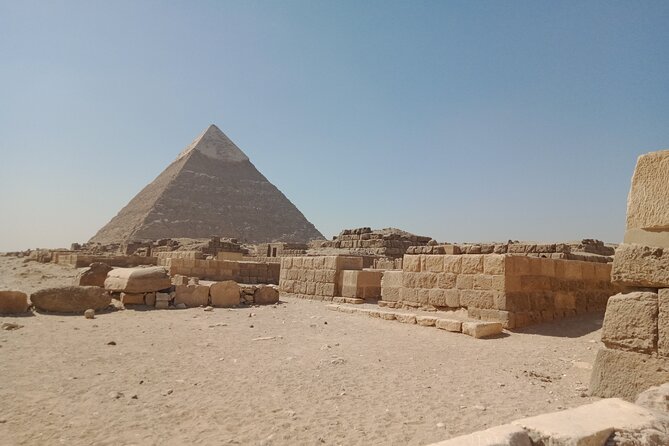
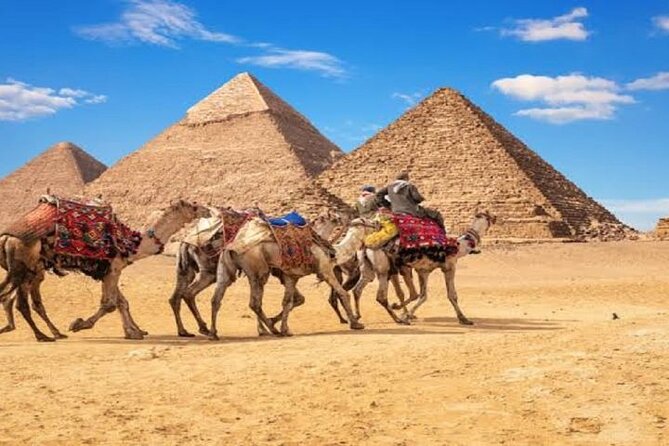
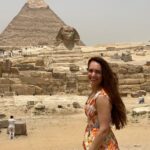
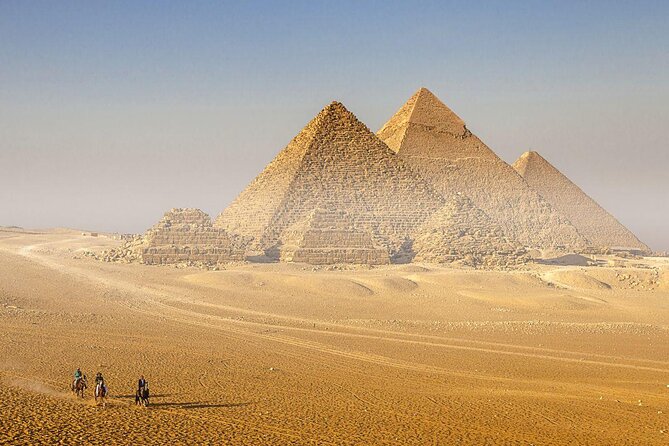
Your morning begins at the pyramids of Giza, home of the Great Pyramid of King Cheops—a fourth-dynasty giant built from limestone blocks. The scale here is so huge that it stops feeling like a building and starts feeling like a landscape. Your guide helps you connect the facts to what you’re actually looking at, like how many blocks were used and what the Giza plateau covers.
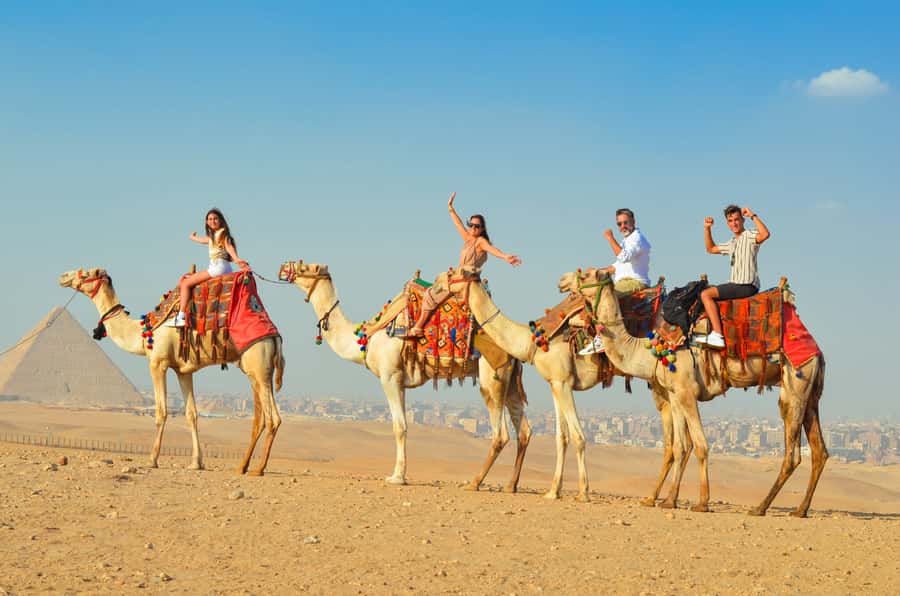
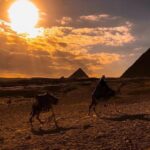
You’ll also have time for the 20-minute camel ride, and it’s included. This is a nice touch because camel rides are often optional, separate, and sometimes expensive. Keeping it to around twenty minutes is the smart compromise: it’s enough time to do it, without turning your entire visit into a ride.
A common value of this first stop is orientation. Standing at Giza with an explanation of who built what and when makes it easier to understand the layout—especially since there are multiple pyramids on the plateau and the Great Sphinx is part of the broader scene.
What to watch: camel ride conditions can vary by animal and handler. Wear closed-toe shoes, follow the handler’s instructions, and treat it as a short add-on rather than a must-do adventure. If you’re not comfortable, it’s fine to skip it and spend that energy on photos and shade.
Great Sphinx stop: what 73 meters really looks like
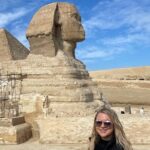
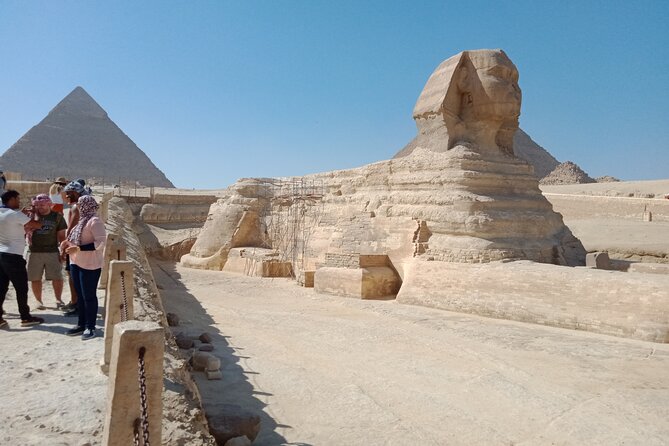
Next comes the Great Sphinx of Giza, a limestone statue with the body of a lion and the head of an Egyptian king. The measurements your guide shares—about 73 meters long and 20 meters high—give you an anchor, and once you see it in person, the numbers stop being trivia.
This is the kind of stop where a guide matters. If all you do is look, it can feel like another giant statue. With context—what it represents, how it relates to the pyramid complex—it becomes a focal point. You’ll usually get around 30 minutes here, which is enough time to walk in close, take pictures, and not feel trapped in one spot.
Because the Sphinx sits near the main pyramids, it’s also a great place to regroup and ask specific questions while your bearings are fresh. If your guide is the type to answer well (Sahl is one name that’s been mentioned as strong at explaining everything from mysteries to religion), this is where you can get the most clarity.
Practical advice: bring a plan for photos that doesn’t block everyone behind you. The area around iconic monuments can get crowded fast. Step aside for your “main” shot, then move on.
Dahshur: Bent (Pent) and Red pyramids of Snefru
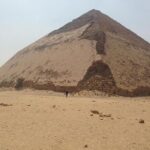
Then you head to Dahshur, a site that many people miss because it’s not as famous as Giza. That’s exactly why it’s worth including. Here you can see the Pent pyramid (often referred to as the Bent pyramid style) and the Red pyramid, linked to King Snefru—also known by the Greeks as Sawerius.
The Red pyramid is described as the first smooth-sided pyramid, and that detail changes how you look at it. You’re not just admiring a famous shape; you’re seeing a step in the evolution from earlier forms toward the kind of sleek sides people associate with later pyramids. Dahshur helps you understand pyramid building as a process, not an instant achievement.
You’ll spend about 1 hour here. That’s short enough to keep the day moving, but long enough if your guide is explaining while you walk. If you tend to enjoy architecture and engineering, Dahshur is often the most satisfying stop because it feels less like a museum and more like a working timeline.
Drawback to be aware of: because Dahshur is less visited than Giza, you may need to rely on your guide’s explanations more than you rely on signage. Pay attention as you arrive; your time goes quickly.

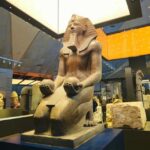

Step Pyramid of Djoser at Saqqara: Imhotep and limestone innovation
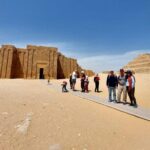
The final big highlight is the Step Pyramid of Djoser at Saqqara, often described as the oldest pyramid type you’ll see on this route. This stop is where the story clicks into place. Your guide explains the role of Imhotep, the designer credited with a major shift in construction: using limestone instead of mud brick.
That’s a big deal for understanding why this matters. The Step Pyramid doesn’t look like the sharp, perfect triangles that make Giza so iconic. Instead, it shows an early, ambitious approach—the move from mastaba forms into a true pyramidal shape.
Your time here is longer than the Dahshur stop: about 2 hours. The broader Saqqara necropolis area also includes named tombs associated with figures like Kagemni, Meryroka, and Princess Idot (as part of what you’ll spend time around). Even if you’re not a deep Egypt-studies person, having names anchored to the places helps you remember what you saw.
One practical benefit of the longer Saqqara segment is pacing. You can take your time walking, looking, and asking questions without feeling rushed to reach the next photo point. It’s also the kind of place where shade matters—so use your guide’s timing and take breaks when you can.
Money matters: $32 value plus the entrance fees you pay on site
At $32 per person, this tour can feel like a steal—until you factor in entrances. Here’s what’s explicitly listed as not included:
- Pyramids of Giza: 200 le
- Pyramid of Djoser (Saqqara): 180 le
- Pyramids of Dahshour: 60 le
Add those up and you’re looking at 440 le in entrance fees if you visit all three locations as planned. Your total cost is therefore closer to a base tour price plus these on-site entries.
What you get for the base price is not just a guide. It includes:
- Lunch
- Bottled water
- Air-conditioned vehicle
- Hotel pickup & drop-off
- Expert tour guide
- 20-minute camel ride
That combo is the real value. In Cairo, transport and guide time can get expensive if you book everything separately. Here, you’re paying one price that covers the flow of the day, which is what you want when you’re short on time.
My advice: set aside the entrance fees first, then budget for small extras like snacks, tips, and photos. Also keep some cash handy for any on-the-spot purchases you decide you want.
How the camel ride fits (and who should think twice)
The camel ride is included and limited to about 20 minutes, which I like because it reduces the risk of the day turning into a ride experience. It’s also an easy add-on for people who want the classic Egypt moment without spending half a morning on it.
Still, you should think about your own comfort and safety. If you’re uneasy with heights or animals, it may not be your thing. If you do ride, wear shoes you can grip in and follow the handler’s instructions immediately—don’t negotiate mid-ride.
Who tends to enjoy this most:
- First-timers to Egypt who want one signature activity
- People who don’t want camel riding to consume the schedule
- Families who want a short, memorable moment (assuming everyone’s comfortable)
Who this tour is best for
This is a strong match if you want more than one pyramid site without doing logistics. Because it’s private and guided, it’s also a good pick for couples, solo travelers, and small groups who want flexibility in questions and pacing.
It’s especially worth it if you like:
- Comparing pyramid styles across Giza, Dahshur, and Saqqara
- Learning the “why” behind construction changes, like limestone use and the shift toward pyramidal forms
- Getting a guide who can answer questions in real time
If you’re the type who wants only the absolute most famous landmark and nothing else, you might feel the day is packed. But if you enjoy having your brain turned on as you walk, this format does a lot of work for you.
Should you book this private pyramids tour?
I’d book it if you want a guided, efficient pyramid day with hotel pickup, lunch, and a clear route that covers Giza plus Dahshur plus Saqqara. The price is attractive, and the entrance fees are clearly identified upfront, so you can plan your budget.
I’d think twice if you dislike walking in the sun, if you’re trying to keep costs ultra-tight after adding entrances, or if you’re not comfortable with a camel ride. In those cases, you may prefer a tour focused solely on Giza, or one that lets you customize which activities you do.
FAQ
What is included in the private tour?
The tour includes lunch, bottled water, an air-conditioned vehicle, pickup and drop-off, an expert tour guide, and a free 20-minute camel ride.
Are entrance fees included?
No. Entrance fees are not included for the pyramids and sites.
How much are the entrance fees for each site?
The listed entrance fees are 200 le for Pyramids of Giza, 180 le for the Pyramid of Djoser, and 60 le for Pyramids of Dahshour.
What time does the tour start, and how long is it?
The tour starts at 7:30am and lasts about 7 hours.
Is hotel pickup and drop-off included?
Yes. Cairo/Giza hotel pickup and drop-off are included.
Is this tour private?
Yes. This is a private tour/activity, and only your group will participate.
How long is the camel ride?
The camel ride is included for about 20 minutes at Giza.
Can I cancel for a full refund?
Yes. You can cancel for free up to 24 hours in advance of the experience’s start time for a full refund.