Cairo can feel like sensory overload. This private day tour turns it into a focused, guided walk through Giza and Saqqara. I like that the day starts with hotel pickup and goes with an Egyptologist guide who actually answers questions, not just recites dates.
Two big wins for me: you get time at the Step Pyramid of Djoser (the early blueprint of pyramid-building) and then you’re back outside in Giza for close-up pyramid viewing. One thing to consider: the big stops are timed, so if you’re hoping for a slow, lingering museum-style pace, this is more “see the highlights well” than “stay forever.”
The camel ride is included, but it’s short. Think 10 minutes for a fun photo-and-feel moment, not a long ride through the desert. If you want a deeper wander, plan extra independent time on your own after the tour.
In This Review
- Key things that make this tour worth your time
- Starting the day right: pickup, comfort, and a private-group pace
- Step Pyramid of Djoser: the “first big pyramid lesson” in Saqqara
- Memphis and Mit Rahina Museum: colossal statues and royal faces
- Lunch with a pyramids view: the break that doesn’t break the day
- Giza Pyramids: what you should focus on in a guided two hours
- Camel ride at Giza: short, fun, and better than you fear
- Valley Temple of Khafre and the Great Sphinx: closing with the classic mood
- Price and value: what $20 buys you (and what to confirm)
- How long is long enough? Timing that fits most schedules
- Who this tour suits best
- Should you book it? My straight answer
- FAQ
- How long is the tour?
- Is hotel pickup and drop-off included?
- Is this a private tour?
- Which places does the tour include?
- Is lunch included?
- Is there a camel ride?
- What drinks are included?
- Are admission tickets included?
- Is tipping mandatory?
- What’s the cancellation policy?
- Do I get a ticket on my phone?
Key things that make this tour worth your time
- Hotel pickup and drop-off in an air-conditioned car, so you spend less time guessing transport
- A real Egyptologist guide who can talk context, not just point at stones (Mustafa is one standout name from past days)
- Step Pyramid of Djoser in Saqqara, where you see the start of Egypt’s pyramid story
- Memphis and Mit Rahina Museum for colossal statues, including a giant Ramses the Great presence
- Lunch with a pyramids view to turn a break into part of the experience
- Giza highlights plus a 10-minute camel ride inside the plateau for an easy add-on
Starting the day right: pickup, comfort, and a private-group pace
The first thing you’ll feel is the difference between doing Cairo sights on your own and doing them with a guide and a car waiting. Your day begins with hotel pickup, then you’re in an air-conditioned vehicle that keeps things sane in the Egyptian heat.
This is a private tour, meaning it’s just your group. That matters more than it sounds. You can ask questions without waiting your turn, and the guide can adjust pacing a bit if someone needs a bathroom break or a slower photo stop.
You’ll also get bottled water and sugarcane juice or mango juice during the day. It’s a small detail, but it helps you stay comfortable when you’re hopping between sites. You’ll still want to pace yourself, but at least you won’t be scrambling for drinks mid-day.
You can also read our reviews of more private tours in Cairo

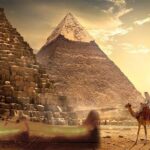
Step Pyramid of Djoser: the “first big pyramid lesson” in Saqqara
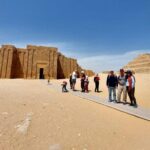
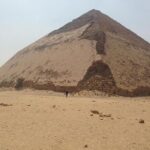
Saqqara is where you go to understand the evolution of pyramid building. The Step Pyramid of Djoser is the star here. You’ll spend around two hours exploring the monument, and the big reason it’s special is simple: it’s considered one of the earliest colossal stone buildings in Egypt.
You’re not just looking at a famous shape. You’re seeing a key moment in design history—how monumental stone construction became possible at a giant scale. When your guide explains that it was built during Pharaoh Djoser’s reign and connected to Imhotep’s architectural influence, the structure stops being “a pyramid photo” and turns into a story of experimentation that worked.
Practical note: two hours goes fast here if you want time for photos and questions. If you’re the type who likes to understand what you’re looking at, this is where your Egyptologist time pays off.
Memphis and Mit Rahina Museum: colossal statues and royal faces
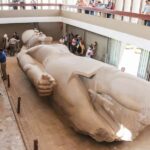
After Saqqara, you move to Mit Rahina Museum (Memphis). This is one of those stops that makes you feel the “ancient power” side of Egypt, fast. Memphis is described as the oldest capital, and the museum experience centers on major statuary.
You’ll have about one hour here, and the highlights listed for this stop are the kind that grab you immediately:
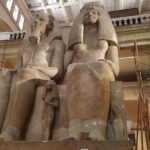
- the colossal statue associated with King Ramses the Great (noted as weighing over 120 tons)
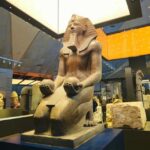
- sphinx statues representing Queen of Egypt and Hatshepsut (noted as Egypt’s first woman queen)
- a huge granite statue, plus other major works
Even if you don’t know everything going in, the sheer scale does the explaining. A colossal statue isn’t subtle. It tells you that these rulers wanted permanence, not just remembrance.
One consideration: a museum hour is exactly that—an hour. If you’re the person who reads every label slowly, you may want extra time in Cairo at another moment. But for a day focused on the biggest sites, this is a strong “context stop” between Saqqara and Giza.
Lunch with a pyramids view: the break that doesn’t break the day
Then comes lunch—about 30 minutes at a high-quality restaurant with a pyramids view. This is a smart setup. You’re not eating somewhere generic and then commuting back into the same headspace. You’re eating while the Giza experience is still in front of you.
I like this approach because it reduces that tired, post-travel blur. Instead of rushing through food, you get a short pause with a payoff: you’re watching the area that you’re about to explore again on foot.
Time check: 30 minutes is enough to eat without turning the day into a half-day rest period. It’s also why the rest of the tour stays efficient. If you’re a slow eater, do yourself a favor and keep lunch simple.
Giza Pyramids: what you should focus on in a guided two hours
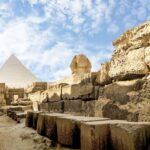
Now you’re in the heart of it: the Pyramids of Giza. You’ll have about two hours here, and you’ll cover the big trio—Khufu, Khafre, and Menkaure—plus the Sphinx.
With a guide, your goal changes. Instead of trying to memorize names, you’re learning what matters visually and historically while you walk:
- how the plateau setting makes these tomb complexes feel “built into” the landscape
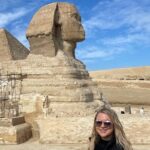
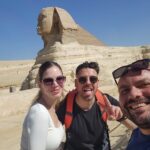
- how the Sphinx is described as having a lion’s body and a pharaoh’s face, associated with King Khafre
- why the architecture and engineering still feel impressive, even if you’ve seen photos before
Two hours is plenty to see the essentials and get your questions answered, but it’s not endless. Expect some walking and some waiting for the best angles. If you’re going for the best photos, ask your guide when to step to different viewpoints—timing can matter.
Also, this is a popular area. You’ll want to keep your pace steady and listen for your guide’s instructions. It’s easy to drift when you’re surrounded by the most photographed stone structures on earth.
A few more Cairo tours and experiences worth a look



Camel ride at Giza: short, fun, and better than you fear
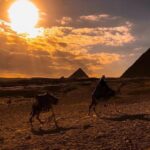
Included here is a 10-minute camel ride at a panoramic area inside the Giza plateau. The key word is short. That’s not a complaint—it’s a feature.
A short ride is enough to feel the novelty and get the photos without turning your day into “mostly camel.” It also helps you keep energy for the final temple and Sphinx section.
If you’re cautious about riding, this is the kind of add-on that won’t trap you for hours. You’ll do it, you’ll be done, and you’ll still have time for the rest of the sights.
Valley Temple of Khafre and the Great Sphinx: closing with the classic mood
The final major stretch is the Valley Temple of Khafre and the Great Sphinx area. You’ll get about 30 minutes here.
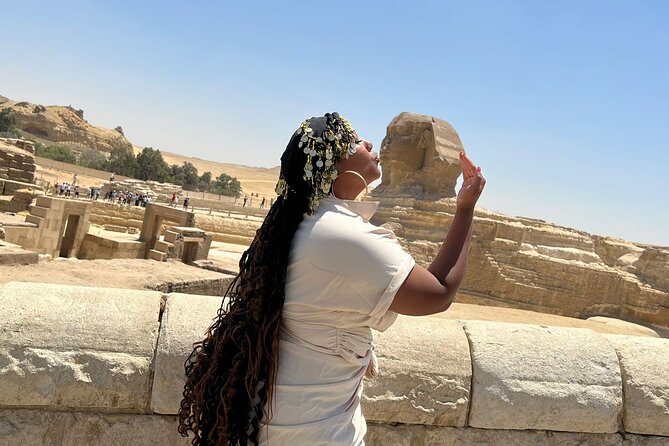
Why this works as a finish: it’s the iconic pairing that many people remember most from Giza. After walking the pyramids, you shift your attention from massive tomb complexes to the temple setting and the Sphinx’s looming presence.
Your guide will likely connect what you’re seeing to why this area matters in the Giza complex. Even if you’ve read about it before, seeing it in person with context makes a difference. The Sphinx doesn’t feel like a cartoon here. It feels like a real monument with real scale.
Then you’re back on the road for the drop-off to your hotel.
Price and value: what $20 buys you (and what to confirm)
The headline price is $20 per person, and for a 7-8 hour private day with hotel pickup, an air-conditioned car, an Egyptologist guide, bottled water and juice, lunch, plus camel time and major-site access, that price can feel like a bargain.
Here’s the practical part: the information on admission can be a little mixed in wording. The tour description highlights admission fees as an additional option for a VIP setup, while the stop details also list admission tickets for specific sites.
So my advice is simple: confirm at booking what’s covered in your exact package. Ask directly if your admissions for each stop are included or if any VIP upgrade applies. That’s the only way to avoid surprises.
Also note the included list says admission fees are listed as an option; tipping isn’t mandatory, but tipping is often part of how you show appreciation in Egypt. You don’t have to overthink it—just budget a little if you feel your guide and driver earned it.
Bottom line: if admissions are handled smoothly and your lunch/camel ride are included the way the tour name promises, this is strong value for Cairo.
How long is long enough? Timing that fits most schedules
This day runs about 7 to 8 hours. That’s a good sweet spot in Cairo. You’re hitting major sites without turning your whole vacation into one long archaeological sprint.
The timing breakdown you’ll feel most:
- Two hours at Djoser for the story-start context
- One hour at Memphis/Mit Rahina to reset your brain with colossal statuary
- Short lunch with a pyramids view so you don’t lose the day
- Two hours at Giza pyramids for the main hits
- 10 minutes camel ride for fun without fatigue
- 30 minutes valley temple and Great Sphinx to finish strong
If you like structure and you want the big payoff, this schedule is built for you. If you love slow wandering, you’ll probably want to add extra independent time on another day.
Who this tour suits best
This is a great match for you if:
- you want a private experience rather than a crowded group day
- you enjoy learning context from a guide who answers questions
- you want the top Cairo classics—Saqqara + Memphis + Giza—in one outing
- you value a plan that includes comfort and food, not just walking
It also suits solo travelers who want their questions handled and their transport taken care of. With a private group, you’re not stuck waiting for someone else to move.
Should you book it? My straight answer
Yes, if your goal is to see the core ancient Egyptian sites with a guide and a smooth day pace. The pairing of Saqqara’s Step Pyramid, Memphis’ museum statuary, and then Giza pyramids plus the Sphinx is a smart way to understand both the “beginning” and the “peak.”
I’d book this when you want:
- hotel pickup and AC
- an Egyptologist-led explanation (with guides like Mustafa noted for passion and quick answers)
- lunch included with a pyramids view
- a camel ride that’s fun and manageable
Before you hit confirm, do one quick check: confirm how admission fees are handled for your package (including whether any VIP option applies). If that’s clear, this becomes a very good-value way to experience Cairo’s ancient legends without wasting half your day on logistics.
FAQ
How long is the tour?
It runs about 7 to 8 hours.
Is hotel pickup and drop-off included?
Yes. You get pickup from your hotel and return drop-off back to your hotel.
Is this a private tour?
Yes. It’s private, and only your group participates.
Which places does the tour include?
It includes Saqqara (Step Pyramid of Djoser), Memphis (Mit Rahina Museum), and Giza (pyramids area, camel ride inside the plateau, Valley Temple of Khafre, and the Great Sphinx area).
Is lunch included?
Yes. Lunch is included at a restaurant with a pyramids view.
Is there a camel ride?
Yes. You get a 10-minute camel ride at a panoramic area inside the Giza plateau.
What drinks are included?
You’ll have bottled water and sugarcane juice or mango juice.
Are admission tickets included?
Admission fee coverage is listed as an additional option for a VIP setup. Some stops also list admission tickets as included, so it’s smart to confirm what’s covered in your package.
Is tipping mandatory?
No. Tipping isn’t mandatory; it’s treated as a way to show appreciation.
What’s the cancellation policy?
Free cancellation is offered. You can cancel up to 24 hours before the experience start time for a full refund.
Do I get a ticket on my phone?
Yes. The tour lists a mobile ticket.