REVIEW · HURGHADA
Private Overday from Hurghada to luxor by Car
Book on Viator →Operated by Luxor Magic Tours · Bookable on Viator
A desert drive sets the tempo for Luxor. This is a long-but-rewarding day that turns the Hurghada–Luxor trip into part of the experience, with a private Egyptologist guide and a guided sweep of Luxor’s most famous sights, from tombs to grand temples. I like that it’s planned as a full circuit rather than a rushed stop-and-snap.
I also love the comfort and control: a spacious, air-conditioned car plus a schedule you can pace with your guide. The one real consideration is time—this is roughly a 17-hour day end to end, so you’ll want to be ready for an early start and a late, sleepy return.
In This Review
- Key highlights to pay attention to
- Hurghada to Luxor by car: comfort on a long day
- A private plan in Luxor: how the “hit list” works
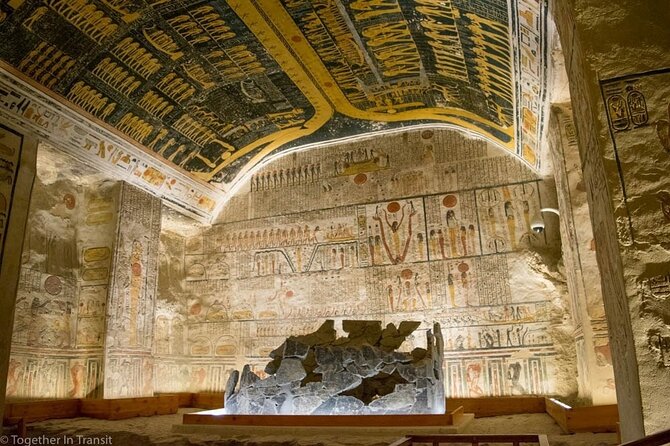
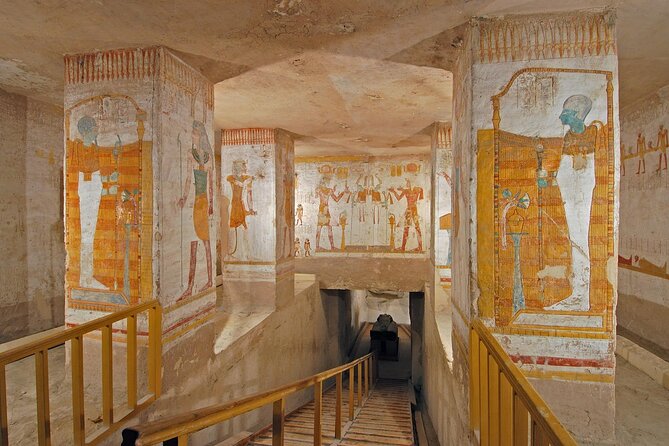
- Valley of the Kings: where the afterlife got organized
- Temple of Hatshepsut at Deir el Bahari: beauty with a purpose
- Colossi of Memnon: a short stop with huge presence
- Karnak Temple complex: when “size” becomes the story
- Luxor Temple: the East Bank finale before the drive back
- Lunch and the road: small breaks that keep the day enjoyable
- Price and logistics: does $277 per person feel fair?
- Who should book this Hurghada to Luxor car day trip
- Practical tips to make your day smoother
- Should you book Luxor Magic Tours for this day trip?
- FAQ
- How long is the Hurghada to Luxor private car day trip?
- What is included in the price of $277 per person?
- Which Luxor sites have admission fees included?
- Is hotel or port pickup and drop-off included in Hurghada?
- Is this a private tour?
- What is the cancellation policy?
Key highlights to pay attention to
- Door-to-door pickup in Hurghada with hotel/port transfer built in, so you don’t waste time hunting meeting points.
- Private Egyptologist guidance through the West and East Bank highlights, so the sites make sense fast.
- Admission fees included for the main sights: Valley of the Kings, Hatshepsut at Deir el Bahari, Colossi of Memnon, Karnak, and Luxor Temple.
- Lunch included (chicken or fish), which matters when you’re out most of the day.
- Car comfort plus photo flexibility, with room to pause along the way for views and a few quick stops.
- Mobile ticket and group discounts, useful if you’re traveling with friends and want easy access on the day.
Hurghada to Luxor by car: comfort on a long day
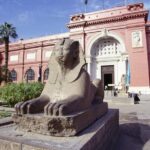
This trip starts with the reality check: you’re traveling across a big chunk of Egypt. The drive is part of the deal, and the best operators treat it like more than just transportation. A smooth, punctual pickup, an air-conditioned vehicle, and the ability to make quick stops for photos can turn the long road into something you don’t resent.
From what I’ve seen in the tour writeups and the way people describe the day, the ride is also where the tone is set. The desert views feel big and open, and it helps when your guide or driver shares context so you’re not just watching the scenery pass. Even small breaks—like a short roadside café pause for Egyptian tea on at least some runs—make the trip feel more human and less like a bus transfer.
Just keep expectations realistic: you’re out for about 17 hours. If you hate long travel days, this might feel like too much. If you’re the kind of person who likes ticking off major landmarks with real interpretation, it’s a very satisfying format.
You can also read our reviews of more private tours in Hurghada



A private plan in Luxor: how the “hit list” works
Luxor is two cities in one—West Bank and East Bank—connected by the Nile and a lot of history. Doing both sides in a single day is the main value here, because you get contrast: royal tombs on the West, and huge temple complexes on the East.
It’s also private, meaning you’re not stuck moving with a big herd. That’s a big deal at places like Karnak, where the scale can overwhelm you if you have to follow a strict group line. With your own schedule window and guidance, you can slow down where you care and speed up where you don’t.
The other smart part is that the itinerary is built around clear themes:
- West Bank: royalty and the afterlife (Valley of the Kings, Hatshepsut, Colossi of Memnon)
- East Bank: worship and power (Karnak and Luxor Temple)
That structure is what makes the day feel coherent, not random.
Valley of the Kings: where the afterlife got organized
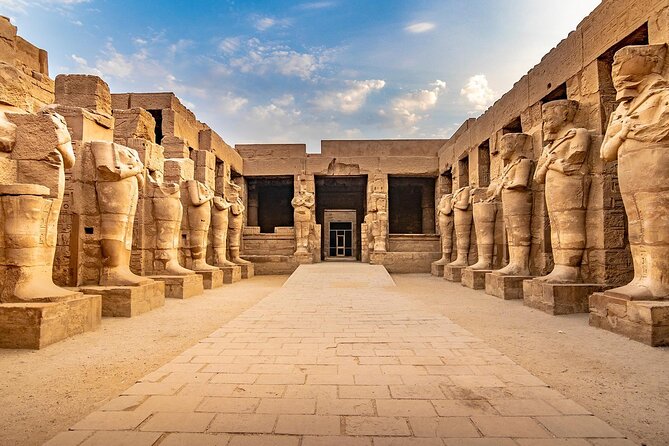
The Valley of the Kings is the first true big-ticket moment. It’s on the West Bank of the Nile opposite Luxor, and it served as the principal burial ground for New Kingdom pharaohs and their consorts (roughly 1570–1070 BC). That time period matters, because it shaped what Egypt’s rulers wanted their tombs to communicate: protection, status, and a very specific idea of life after death.
You get about two hours here with a guide, which is enough time to understand the layout and the logic without feeling like you’re trapped in a checklist. This is also where storytelling makes a difference. When your guide connects the tombs to burial practices—why certain rooms, what the symbols were meant to do—you end up looking at the valley with more than just starry-eyed awe.
Practical note: tomb sites tend to be dim and can vary a lot in how crowded they feel. Private pacing helps, but your best move is to stay flexible with your expectations for indoor conditions.
Temple of Hatshepsut at Deir el Bahari: beauty with a purpose
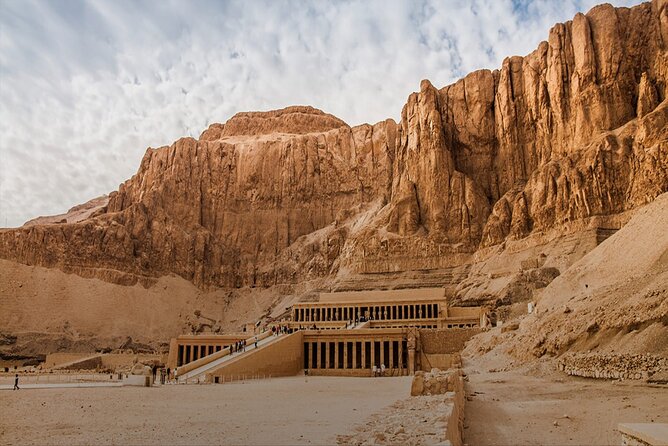
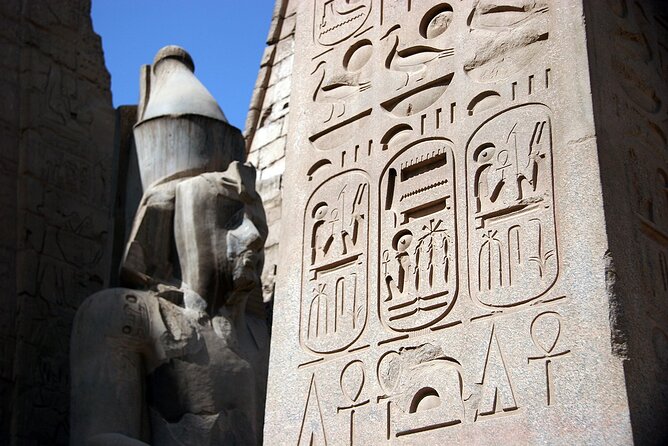
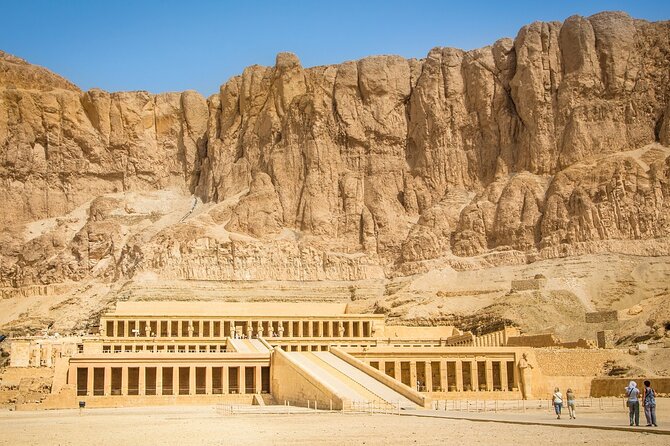
Next is the Temple of Hatshepsut at Deir el Bahari, also known as Djeser-Djeseru. This is a mortuary temple built for Queen Hatshepsut, and it’s often described as one of the most elegant temple designs in ancient Egypt. The layout—terraces and dramatic geometry—feels made for lingering, not just walking past.
Your time here is about one hour. That’s a good balance because you can get oriented, take in the overall architecture, and still keep the day moving. If you care about Egypt’s rulers beyond the generic “pharaoh” label, this stop gives you a much sharper picture of how power was presented and justified.
With a private guide, you’ll also get more meaning out of the stonework. Instead of treating it like scenery, you’ll likely hear what the temple was intended to honor and how it fits into the wider West Bank setting.
Colossi of Memnon: a short stop with huge presence
The Colossi of Memnon are two enormous stone statues of Pharaoh Amenhotep III. They sit at the front of the ruined Mortuary Temple of Amenhotep III, part of the Theban Necropolis.
This is a 30-minute stop, so you won’t spend forever here. But it’s worth it because the scale hits you quickly—two figures that look like they’ve been staring down the Nile for centuries. It’s one of those places where photos are easy, but the real value is seeing how mass and placement create mood even when the surrounding temple is gone.
If you’re tired, this is also the kind of stop that works. It’s short, so you can still enjoy it without losing the energy you’ll want later at Karnak and Luxor Temple.





Karnak Temple complex: when “size” becomes the story
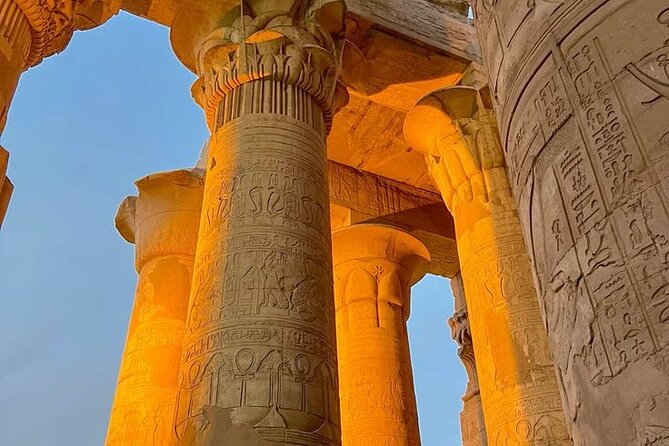
Karnak Temple is the main East Bank wow-factor. This temple complex is a huge mix of temples, pylons, chapels, and other buildings, and it’s described as one of the largest religious sites ever built. It was also the most important worship center in ancient Egypt for generations.
You get about two hours here, which is important. Karnak can feel endless. More time doesn’t always fix that, but two hours with a guide gives you a path through the complexity so it doesn’t just become a blur of columns.
One of the best parts of doing Karnak privately is pacing. A big group can force you forward even when you want to stop and process what you’re seeing. With your own rhythm, you can look longer at the details that matter to you, and your guide can point out the connections that make it all feel less random.
If you want a quick mental trick: don’t try to “see everything.” Instead, pick a few key areas to understand. Once the site’s logic clicks, the rest becomes easier to read.
Luxor Temple: the East Bank finale before the drive back
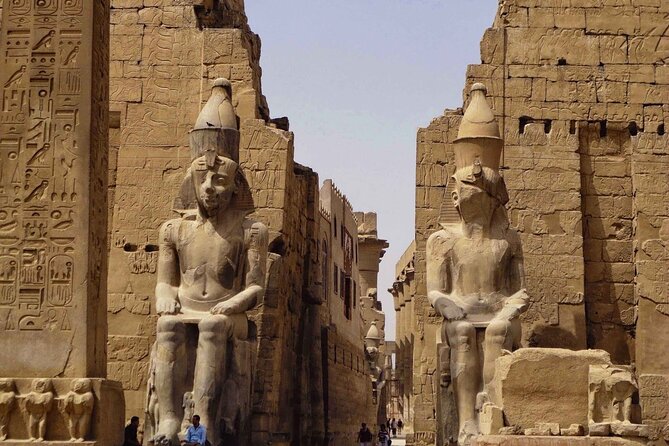
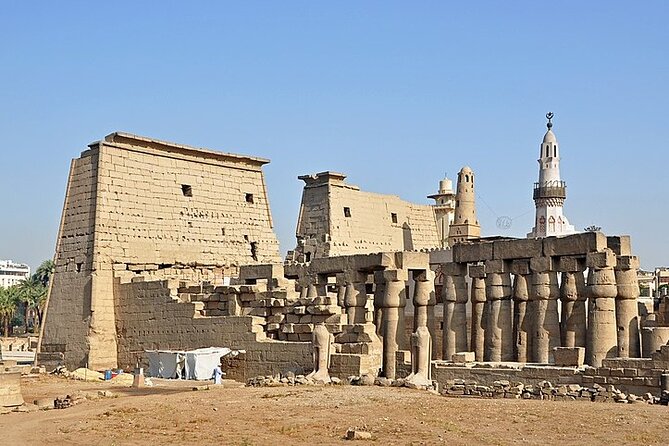
After Karnak comes Luxor Temple, about 1.5 hours. This complex is also known as the Southern Sanctuary and was one of the important religious centers of ancient Thebes. It’s on the East Bank, tying the story together after the immense, sprawling Karnak experience.
This stop also functions as a natural close to the day. The tour notes have you returning toward Hurghada as the sun begins to set, which is the right emotional cue: you finish with temples that still feel like living places, then transition back into the travel rhythm.
You’ll probably leave Luxor Temple with a different feeling than you had at Karnak. Karnak is scale and complexity. Luxor Temple often lands more as symmetry and presence—less of a puzzle, more of a statement.
Lunch and the road: small breaks that keep the day enjoyable
Lunch is included, with a choice of chicken or fish. Having that covered is a real practical win on a 17-hour day. It prevents the classic problem: you get stuck hunting food at the wrong moment and suddenly you’re too tired to enjoy what’s next.
And then there are the little roadside moments. One of the most repeated details in the tour descriptions is that the drive can include a brief pause at a traditional roadside café for Egyptian tea. That kind of break doesn’t change the main sights, but it does make the day feel less like work.
If you’re someone who gets irritable when plans run tight, these built-in comfort points matter.
Price and logistics: does $277 per person feel fair?
At $277 per person, this is not a budget excursion—but it also isn’t a bare-bones transfer. Your price is doing a lot of work: air-conditioned private vehicle, hotel/port pickup and drop-off, a private qualified Egyptologist guide, lunch (chicken or fish), and all fees and taxes. Entry fees are also included for the core Luxor sites listed in the itinerary.
That matters because the cost of admission tickets can stack up quickly when you’re trying to do multiple major sites in one day. Here, you’re not walking into Luxor thinking you’ll need to pay separately at each stop for the big sights. You can focus on the experience instead of the meter.
What’s not included is simple: tipping or personal extras, and any entry fees for sites not mentioned in the itinerary. So plan for tips if you want to show appreciation for the guide and driver, and bring a little cash or card access just in case you decide you want something not covered.
In plain terms: the value is strongest if you want a guided, private “greatest hits” day with admissions and lunch handled.
Who should book this Hurghada to Luxor car day trip
This is a good fit if you want:
- A private guide explaining what you’re seeing, not just escorting you through.
- Both West and East Bank highlights in one day.
- Comfort and timing control, especially compared with shared tours.
- A day designed to be “full,” but not chaotic.
It may be less ideal if you:
- Hate long travel days and struggle with fatigue.
- Want a slow, deep exploration with lots of free time at only one site.
- Prefer not to move between multiple locations in a single day.
The good news is the tour format is built for most people to participate, and the private setup helps when you want flexibility with pacing.
Practical tips to make your day smoother
A few small things make a noticeable difference on a 17-hour day:
- Wear comfortable shoes. You’ll be walking across uneven temple and tomb terrain.
- Protect yourself from sun and heat. Temple time is outdoor time before it becomes indoor time.
- Bring a hat and something for hydration habits, since the schedule spans much of the day.
- Keep your phone charged for mobile ticket use and photos, especially with the photo-stop flexibility on the route.
- If you’re sensitive to long seating, pack a light layer—cars can swing between warm and cool.
Also, lean on your guide. Ask questions as you go. When you’re doing Valley of the Kings and Karnak in the same day, a few targeted questions can help your brain connect the themes instead of treating each site as a separate box to tick.
Should you book Luxor Magic Tours for this day trip?
If you want a guided, private Luxor day that includes admissions and lunch, and you don’t mind a long day, I think this is a strong choice. The clearest strengths are the private comfort, the Egyptologist guidance, and the way the itinerary pairs the big West Bank and East Bank classics into one coherent route.
Book it if you’d rather spend your energy actually understanding Luxor than managing transport details. Skip it if you’re looking for a short outing or you’d rather split Luxor over multiple days so you can slow down.
Either way, do yourself a favor: plan on being impressed—and also plan on sleeping well that night.
FAQ
How long is the Hurghada to Luxor private car day trip?
The total duration is approximately 17 hours.
What is included in the price of $277 per person?
The package includes lunch (chicken or fish), an air-conditioned vehicle, all fees and taxes, hotel/port pickup and drop-off, a private qualified Egyptologist guide, and entry fees for the sites listed in the itinerary.
Which Luxor sites have admission fees included?
Admission fees included in the itinerary are for the Valley of the Kings, the Temple of Hatshepsut at Deir el Bahari, the Colossi of Memnon, the Temple of Karnak, and Luxor Temple.
Is hotel or port pickup and drop-off included in Hurghada?
Yes. The tour includes hotel/port pickup and drop-off, and the activity ends back at the meeting point.
Is this a private tour?
Yes. It’s a private tour/activity, and only your group will participate.
What is the cancellation policy?
Free cancellation is available up to 24 hours in advance of the experience start time for a full refund. If you cancel less than 24 hours before, the amount you paid is not refunded.