REVIEW · HURGHADA
private Luxor Valley of Kings &Karnak& Hatshepsut from Hurghada
Book on Viator →Operated by alfa travel · Bookable on Viator
Four a.m. makes Luxor feel real. I love how this private day stacks two major site times: a scheduled two hours in the Valley of the Kings and a focused hour at Deir el Bahari’s Temple of Hatshepsut, with included admission and a guide who explains what you’re seeing. The one drawback: it’s a long 15–16 hour sprint, and the schedule starts at 4:00 am whether you’re awake or not.
Pickup from Hurghada comes early, and the drive is in air-conditioned comfort with breaks to reset—there’s a 30-minute stop in Qena on the way out and another on the return. Since it’s private, your group gets the attention of the team, and if you’re paired with a guide like Ana Romany (or the support help like Ismail, plus guide Ahmed), you’ll likely get clear, confident explanations instead of rushed facts.
In This Review
- Key points before you go
- The long-day logic: how this route hits Luxor’s must-sees
- 4:00 am pickup from Hurghada (and why AC is a real deal)
- Qena break times: the small pauses that keep you human
- Valley of the Kings: your two-hour window into tomb life
- Deir el Bahari and the Temple of Hatshepsut: a powerful hour
- Karnak’s hypostyle hall and sacred lake: when size becomes obvious
- Colossi of Memnon: Nile-side scale and easy photo time
- Lunch on the Nile River Valley drive: simple and timed
- Luxfour Alabaster Factory in Al Qarnah: watch alabaster shaping
- Price and value: what $140 buys you in one day
- Should you book this private Luxor tour from Hurghada?
- FAQ
- What time does the tour start?
- How long is the tour?
- Is this tour private?
- Does the tour include admissions?
- Is lunch included?
- Are tickets provided digitally?
- Is transportation air-conditioned?
- Can I cancel for a full refund?
Key points before you go
- 4:00 am departure from Hurghada: you’ll feel the early start all day, but it saves you from worse timing.
- Full admission included at the big three: Valley of the Kings, Hatshepsut at Deir el Bahari, and Temple of Karnak.
- A tight Valley of the Kings block (2 hours): enough time to actually see tomb chambers and colorful scenes without feeling hopelessly rushed.
- Karnak’s hypostyle hall and sacred lake: a focused hour where scale does the talking.
- Colossi of Memnon for photos and atmosphere (1 hour): Nile-side viewpoints with time to stop, stand, and shoot.
- Luxfour Alabaster Factory stop (30 minutes): watch artisans shape alabaster sculptures and vases before you head back to the coast.
The long-day logic: how this route hits Luxor’s must-sees
This is the classic Luxor mix, but what makes it work is the order and the built-in time blocks. You start with the Valley of the Kings, then shift to Deir el Bahari for Hatshepsut, then move on to Karnak’s Temple Complex, and finish with Colossi of Memnon.
That sequencing matters because you’re not cramming everything into one single “temple hour.” Instead, each stop has its own lane: two hours at the Valley of the Kings for tomb viewing, then one hour chunks for Hatshepsut, Karnak, and Colossi of Memnon.
It’s still a packed day, so don’t plan extra sightseeing on your own afterward. This tour is designed to do a lot. Your job is to show up rested enough to enjoy it.
You can also read our reviews of more private tours in Hurghada



4:00 am pickup from Hurghada (and why AC is a real deal)
The tour starts at 4:00 am, with pickup offered from Hurghada. That’s early enough to make you question your life choices—then you’re on the road, and the day starts paying off in the form of time on site.
The transport is air-conditioned, which is not a small detail in Egypt’s heat and sun. When you’re doing 15–16 hours total, comfort helps. You can’t enjoy tomb paintings and towering temple columns if you’re cooked in the vehicle.
Practical tip: eat something light before you’re picked up, and keep water handy. During the drive, you also get two Qena breaks to stretch and reset, which helps your energy level more than you’d think.
Qena break times: the small pauses that keep you human
You get a 30-minute break in Qena during the outward drive and another 30 minutes on the way back. The goal here is simple: stretch your legs, grab a drink, and regroup before the next site.
These aren’t long lunch breaks. They’re timing buffers so you don’t arrive at the next location drained and impatient. In a day this long, those short pauses are part of why the itinerary feels manageable instead of chaotic.
If you’re the type who hates rushing, use these breaks to do the boring stuff early: bathroom stop, quick snack, and making sure your phone and ticket are ready for whatever comes next.
Valley of the Kings: your two-hour window into tomb life
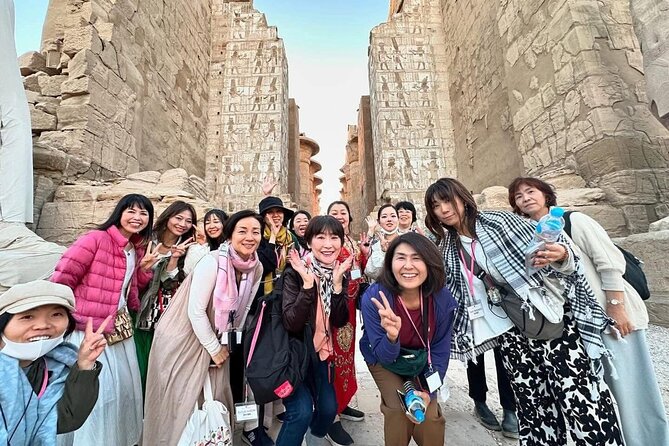
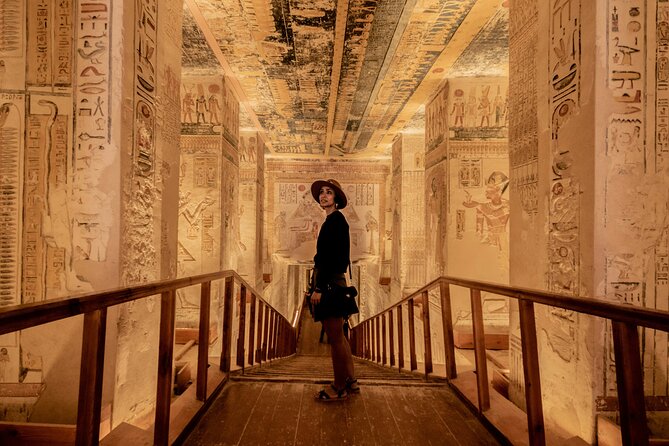
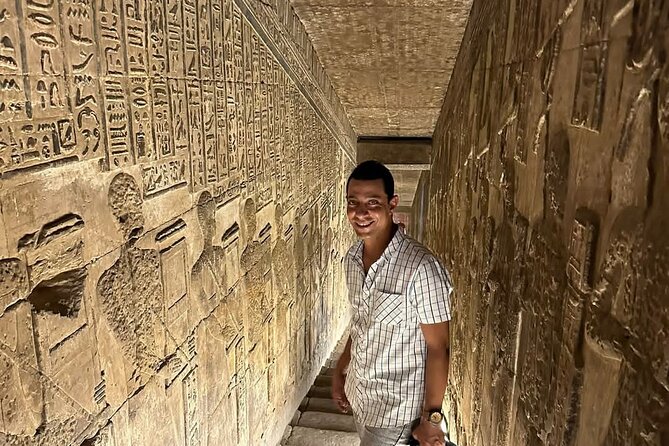
Valley of the Kings is your main tomb stop, with 2 hours on the schedule and admission included. You’re going into a place built for the royal afterlife, and the tour focuses on the decorated chambers—those colorful paintings that bring the stories to life.
This is where your guide’s style really matters. A great explanation can help you connect what you’re seeing—murals, scenes, and the idea of royal burials—to the bigger picture of how ancient Egyptians imagined what happened next.
What you’ll like most here is the pacing. Two hours gives you time to move, pause, and actually look, not just walk through. If you treat it like a checklist, you’ll miss the fun.
Possible consideration: because it’s a cave/tomb environment and the day is long, you may need breaks from staring at the walls. Plan to take a breath after the first chambers so your eyes can adjust for what comes next.
Deir el Bahari and the Temple of Hatshepsut: a powerful hour
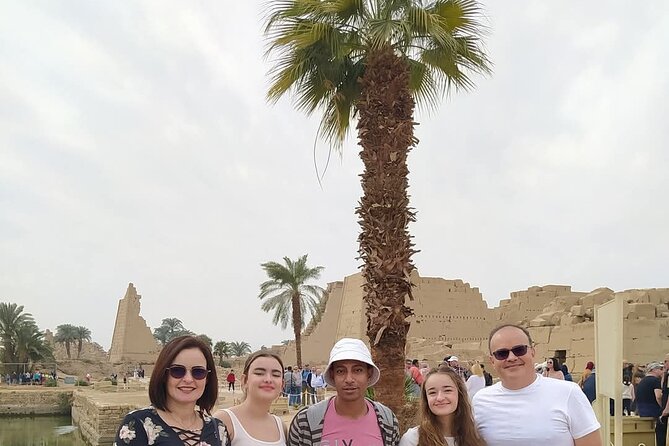
Next up is the Temple of Hatshepsut at Deir el Bahari, with 1 hour and admission included. This stop centers on a female pharaoh and the reign of a ruler from more than 3,500 years ago.
Here, the architecture does a lot of the storytelling. Expect towering statues, courtyards that feel peaceful even in the middle of a tourist day, and a layout you can understand more easily when someone points out what you’re looking at.
I like this stop because it slows the day down. Compared to a tomb, a temple works better at an unhurried pace. You can stand, look around, and let the scale sink in—without feeling like you’re trapped indoors.
If you’re tired from the early start, this is also a good time to pace yourself. One hour is long enough to absorb it, but short enough that it won’t grind you down.





Karnak’s hypostyle hall and sacred lake: when size becomes obvious
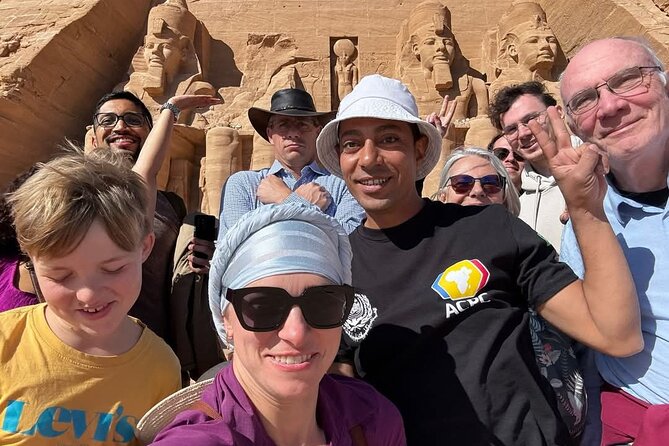
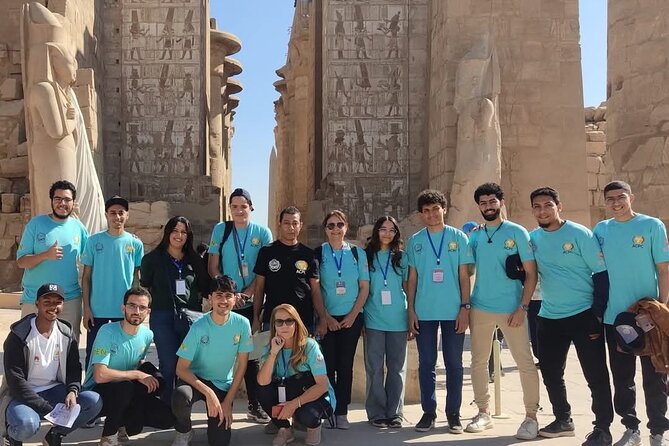
Temple of Karnak gets 1 hour with admission included. It’s described as one of the largest ancient religious complexes in the world, and you’ll see why fast—starting with the hypostyle hall, plus carvings and hieroglyphs on the walls.
There’s also a sacred lake included in the visit plan. That detail matters, because it breaks up the stone-on-stone intensity. You’re not stuck only staring upward; you get a different kind of view within the complex.
What I appreciate about a guided hour here is the focus. Karnak can overwhelm you if you’re just wandering. With a guide, you get help choosing what to look at first so your hour feels full instead of scattered.
Consideration: if you prefer quiet, you might find busier areas within Karnak. The tour’s value is that you’re not stuck deciding where to go. You get a path.
Colossi of Memnon: Nile-side scale and easy photo time
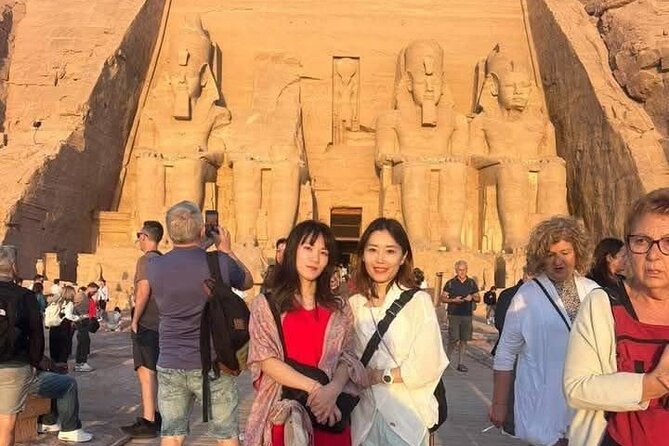
The Colossi of Memnon stop lasts 1 hour with admission included. These are two massive statues of Amenhotep III, and they’ve been standing guard over the Nile River for millennia.
This is a fun one because it’s open-air and photogenic. You can step back, take full shots, and then walk closer for the scale. After hours of stone interiors and temple layouts, it’s a change of pace.
I also like the way this stop reinforces perspective. When you’ve just been inside tomb and temple spaces, it’s useful to see how huge the monuments were meant to look from the river side.
Practical tip: bring your “I’m taking photos” mindset here, but also take a moment to just stand and look. That’s when the statues stop being a picture and start being a place.
Lunch on the Nile River Valley drive: simple and timed
Lunch is included as 1 hour at a local restaurant during the ride back through the Nile River Valley. The plan keeps it straightforward so you’re not losing time after Karnak and Colossi.
What you should expect: traditional Egyptian food at a place that’s set up for day tours. The timing is the real feature here, because in Luxor you don’t want to gamble on finding food that fits your schedule.
If you’re sensitive to spice or strong flavors, eat slowly and drink water. You’ll still have a couple more stops after lunch, including another Qena break and the alabaster workshop visit.
Luxfour Alabaster Factory in Al Qarnah: watch alabaster shaping
The tour includes a 30-minute stop at the Luxfour Alabaster Factory in Al Qarnah. This is where you can see artisans crafting sculptures and vases from alabaster, described as a soft mineral commonly used for carving.
I find this stop useful for two reasons. First, it gives context for what you might be seeing in Egypt souvenir shops—material and craft basics, not just end products. Second, it’s a short, hands-on-feeling break between outdoor monument time and your drive back to Hurghada.
Don’t treat it like your main shopping mission. Treat it like a look behind the scenes, with enough time to ask basic questions and move on.
Possible consideration: if you strongly prefer to avoid any “watch craftsmen” type stops, this is the only part of the day that’s not a temple/tomb monument. Still, it’s only 30 minutes.
Price and value: what $140 buys you in one day
At $140 per person, this is a lot of itinerary for a single day: pickup from Hurghada, air-conditioned transport, admission included for Valley of the Kings, Hatshepsut, Karnak, Colossi of Memnon, and the alabaster factory visit. You also get lunch and the structure of guided time blocks.
The value isn’t just the number of stops. It’s the fact that admissions and transitions are handled for you, which matters when you’re doing 15–16 hours and you want the day to stay smooth.
You also have group discounts listed, which can help if you’re traveling with others. And because it’s private, you avoid the frustrating feeling of being stuck with a pace that isn’t yours.
Who this suits best:
- You want a high-impact Luxor day without planning or ticket wrangling.
- You like guided explanations that connect what you see to what it meant.
- You’re okay with early mornings and a long day for big monuments.
Who might rethink it:
- If you hate very early starts, this tour will feel like punishment before it feels like fun.
- If you want lots of free time at each site to wander alone, the timeboxed schedule may feel limiting.
Should you book this private Luxor tour from Hurghada?
I’d book it if you want a structured Luxor hits tour that gives you real time at the key sites, not just a quick walk-through. The Valley of the Kings’ 2-hour slot and the included admission across multiple major monuments make it easier to feel like you got your money’s worth.
Also, you’ll benefit from the guide element. The best part of these days is when someone helps you look correctly at what’s already in front of you. If you get a guide pairing like Ana Romany (or the support team energy associated with Ismail and Ahmed), that can turn “I went” into “I understood what I saw.”
If you can handle a 4:00 am wake-up and a long drive day, this is a practical way to see Luxor’s top ancient sights from Hurghada with comfort, included tickets, and a lunch break that keeps you going.
FAQ
What time does the tour start?
The experience starts at 4:00 am. Pickup is offered from Hurghada, and you’ll be leaving early to cover Luxor’s major sites in one day.
How long is the tour?
Plan on about 15 to 16 hours total. The day includes time for multiple sites, two Qena breaks, and lunch.
Is this tour private?
Yes. It’s a private tour/activity, so only your group participates.
Does the tour include admissions?
Admissions are included for the main stops listed with included ticket time: the Valley of the Kings, Temple of Hatshepsut at Deir el Bahari, Temple of Karnak, Colossi of Memnon, and the Luxfour Alabaster Factory. Qena breaks and the general driving stops are listed as admission ticket free.
Is lunch included?
Yes. Lunch is included at a local restaurant, with 1 hour allocated for the meal.
Are tickets provided digitally?
Yes. The tour lists a mobile ticket.
Is transportation air-conditioned?
Yes. The tour uses air-conditioned transportation to keep the long travel day more comfortable.
Can I cancel for a full refund?
You can cancel for a full refund if you cancel at least 24 hours in advance of the experience start time. If you cancel less than 24 hours before, the amount paid is not refunded.