REVIEW · CAIRO
Private Tour To Giza Pyramids ,Memphis,Saqqara & Dahshur Pyramids
Book on Viator →Operated by EMO TOURS EGYPT · Bookable on Viator
Nine hours, four pyramid zones, zero guesswork. This private Cairo day stitches together the big monuments across Giza, Memphis, Saqqara, and Dahshur, with AC pickup and transfers that get you out of the city rhythm fast. It also gives you flexible choices on whether you want a guide and entry fees, or just transport.
I love how the Giza circuit is set up to let you compare the pyramids in sequence: Khufu (Cheops), Menkaure, then Khafre, before you tackle the Sphinx. I also like that you can keep it simple with a transport-only package or upgrade for a guide plus tickets and an optional koshari lunch.
The main consideration is that the schedule can include short, government-approved souvenir and artisan stops. If you really hate shopping interruptions, tell the driver up front and stay firm on your timing.
In This Review
- Key things that make this tour work
- Price and upgrades: what you’re really paying for
- 8:00 am starts: the logistics that protect your energy
- Giza Plateau: starting at the best altitude
- Khufu, Menkaure, and Khafre: comparing three pyramid styles in one day
- The Great Pyramid of Cheops (Khufu)
- Pyramid of Menkaure
- Khafre’s Pyramid
- The Great Sphinx: close-up drama, practical viewing habits
- Memphis and Saqqara: two different ways to feel the Old Kingdom
- Memphis
- Saqqara: Step Pyramid area, plus more Saqqara stops
- Dahshur: Bent Pyramid and Red Pyramid, where design evolves
- Bent Pyramid
- Dahshur: the Red Pyramid
- Panoramic view stop
- Artisan and souvenir stops: useful cultural breaks or wasted time
- Inside pyramids: how to plan it without ruining your day
- Tips for photos and time: the difference between a good day and a stressful one
- Who this private tour suits best (and who should rethink it)
- Should you book this tour to Giza, Memphis, Saqqara & Dahshur?
- FAQ
- What time does the tour start?
- How long is the private tour?
- Is pickup and transport included?
- Are entry fees included in the price?
- Is lunch included?
- Can I cancel and get a full refund?
Key things that make this tour work
- Private, air-conditioned transfers with bottled water, so you spend less energy on logistics.
- Giza in smart order (Khufu → Menkaure → Khafre → Sphinx) for quick comparisons of scale and style.
- Old Kingdom landmarks in one sweep: Memphis (linked to the 3100 BC founding of the city) plus Saqqara’s Step Pyramid area.
- Dahshur for the story of pyramid design: the Bent Pyramid and the Red Pyramid (smooth-sided ambition).
- Short cultural stops by choice: papyrus-making viewing, cotton shopping areas, and handmade carpet weaving.
Price and upgrades: what you’re really paying for
The headline price is listed as $16 per person, but the important part is how the day is structured around options. That base rate is best understood as a transport-focused deal: you’re paying for a private vehicle, 2-way transfers, and a full day of getting from site to site without dealing with Cairo traffic and parking.
Then you can upgrade depending on how you want the experience to feel. If you add a guide and entry fees, you’ll get help moving through the sites with context, and you’ll also be covered for most site access included in the option. You can also add lunch at a local restaurant (koshari is mentioned as the meal type).
Here’s the practical takeaway: if you’re the type who enjoys reading on your own and you just want the route and convenience, transport-only can be great value. If you want the story told clearly while you’re standing in front of stone that’s thousands of years old, the upgrade usually pays off fast.
Also, note what’s not included by default: inside any pyramids is specifically listed as not included. That matters because the “wow” factor for many people is the interior, not just the exterior viewing. If that’s your priority, budget extra time and money for pyramid-entry access through the option you choose.
You can also read our reviews of more private tours in Cairo


8:00 am starts: the logistics that protect your energy
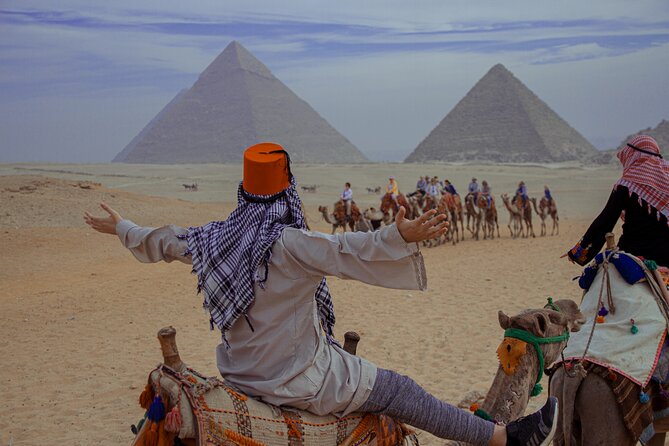
This tour starts at 8:00 am and runs about 9 hours. That early departure is a big deal in Cairo, because you’ll typically get the key Giza sights earlier in the day, when the light is better and the heat is easier to manage.
The tour includes pickup offered from Cairo or Giza addresses, plus private AC vehicle transfers for the whole route. In plain terms, you avoid the two biggest stress points: waiting around and negotiating with multiple drivers.
Two practical tips for making the day smoother:
- Wear shoes you can walk in for long stretches. The sites include sand, uneven ground, and lots of moving between viewpoints.
- Bring a light layer. Morning can feel cooler, and once you’re at desert sites, shade can be limited.
Giza Plateau: starting at the best altitude
The tour’s first major focus is the Giza Plateau (Giza Necropolis). It’s the western desert edge, about 9 kilometers west of the Nile, and it’s where you start to understand why these monuments mattered so much. The complex includes the Great Pyramid of Giza, plus the pyramids of Khafre and Menkaure, along with the Sphinx and other remains tied to workers’ life and cemeteries.
One nice thing here is pacing. You begin with the broad setting first, so when you move closer to the famous pyramids later, you don’t feel like you’re jumping from one random spot to another.
There’s also a simple timing factor: this portion is listed with free admission (basic area). That means you can get the big-picture views without immediately worrying about tickets.
Khufu, Menkaure, and Khafre: comparing three pyramid styles in one day

After the plateau orientation, you move into the core pyramid complexes.
The Great Pyramid of Cheops (Khufu)
This is the showpiece stop, and it’s where the day’s first “whoa” usually lands. The complex details are laid out clearly: you’ll be within the Khufu pyramid complex with the association of valley temple elements. The stop is about 1 hour, and entry is listed as included for this segment.
One advantage of doing Khufu first is mental comparison. Once you’ve seen the biggest one, the next pyramids feel more understandable rather than just smaller replicas of the same thing.


Pyramid of Menkaure
Menkaure’s pyramid complex is more than just a single angle. The site includes elements like a valley temple, causeway, mortuary temple, and the king’s pyramid. Expect about 30 minutes here, with entry listed as included.
This is a good stop for photo practice. The trick is to look for viewpoints where you can capture the relationship between the complex buildings, not just the pyramid face.
Khafre’s Pyramid
Khafre’s complex includes the valley temple, a sphinx temple area, causeway, mortuary temple, and the king’s pyramid. Your time here is also listed around 30 minutes. Entry is included.
The reason Khafre is worth prioritizing is that this stop sets up the Sphinx correctly. If you’re going to see the Sphinx later, it helps to already be thinking about the layout and the king’s funerary setting.
A note on interior access: while some people love going inside, that’s not automatically covered as part of the standard inclusions. If you want to go inside a pyramid, treat that as a planned add-on rather than an assumption.
The Great Sphinx: close-up drama, practical viewing habits
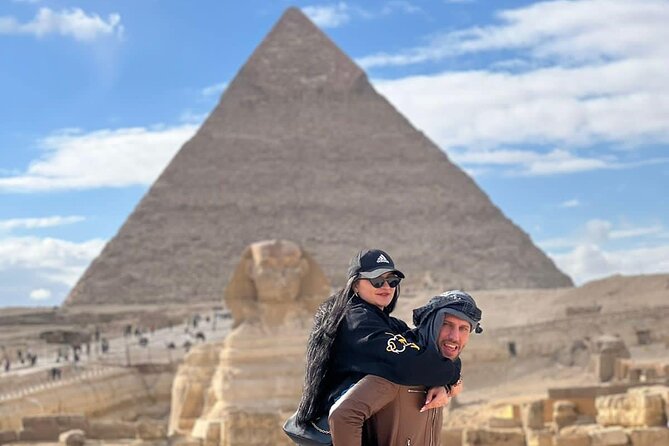
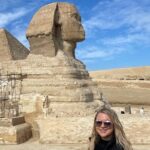
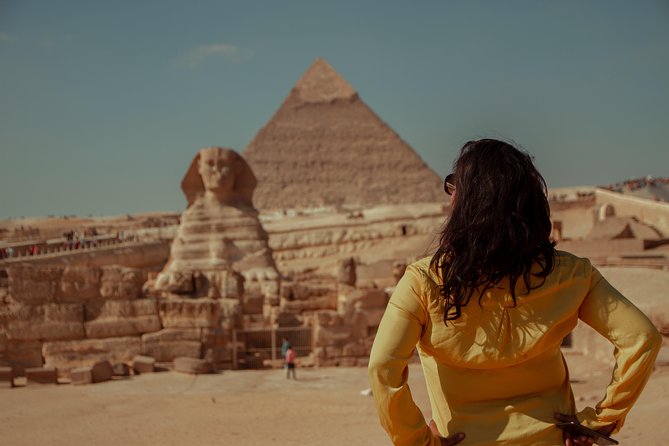
The Great Sphinx is listed as its own stop after the Khafre complex. The description you’re working with is classic and specific: the lion body and the head of the king associated with Chephren, guarding a monumental funerary zone.
Plan for about 30 minutes here, with entry listed as included.
Practical viewing advice:
- Take a few minutes from multiple angles. The head and body proportions change as you move.
- Bring water and pace yourself. Sitting in the sun for long minutes doesn’t do you any favors later when you switch to Saqqara and Dahshur.
Language and guide quality can matter at this stop. Some guides are excellent at translating the visual details into a clear story, while others can struggle to make the explanations audible. If you care about the narrative, ask your operator what languages your guide speaks and confirm that they can communicate clearly at normal speaking volume.
Memphis and Saqqara: two different ways to feel the Old Kingdom
After Giza, the day shifts from iconic pyramid outsiders to the places that help you understand how the system worked.
Memphis
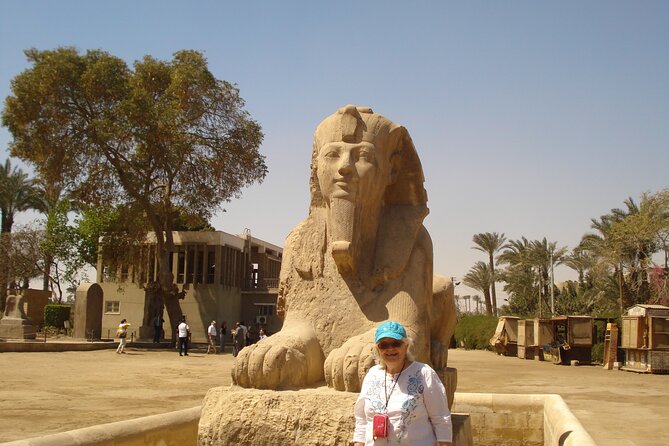
The tour includes Memphis City, described as the first capital of Egypt, founded around 3100 BC. You get about 1 hour here, with entry listed as included.
One practical reason Memphis is worth it: it’s not just about stones. It’s about context. Seeing a capital site helps connect why tombs and pyramids were built the way they were.
Saqqara: Step Pyramid area, plus more Saqqara stops
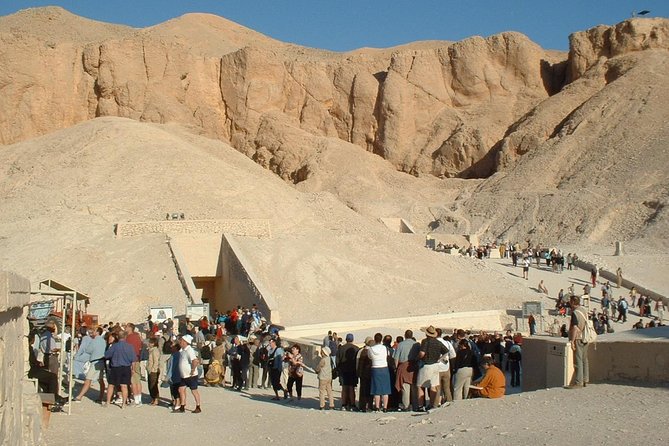
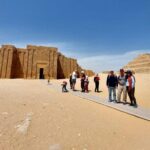
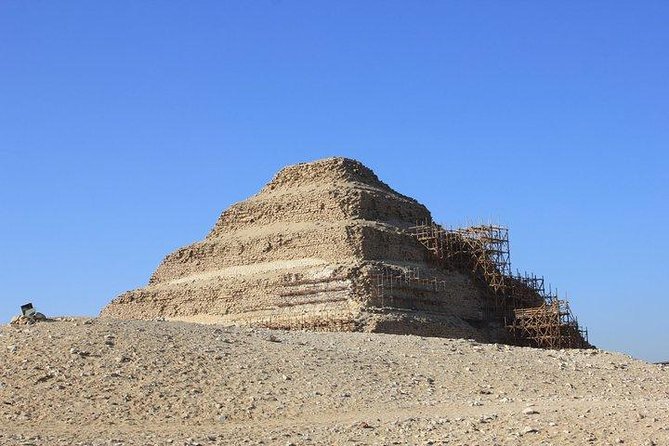
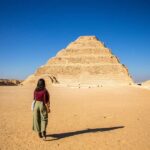
The tour then moves into Saqqara, including the Step Pyramid area (also called Zoser or Zoser Pyramid). You’ll spend time around the Step Pyramid complex area, which is the older, more experimental face of pyramid-building.
But it doesn’t stop there. The day includes additional Saqqara-focused stops:
- Pyramid of Unas replica is listed as a short 30-minute stop.
- Pyramid of Teti with an included 30-minute slot, described as the final resting place of Pharaoh Teti.
- Mastaba of Ti, another important Saqqara site, also around 30 minutes, with two serdabs and wall scenes showing everyday life.
This combination can feel like a lot, but it works if you think of Saqqara as a “family of tomb styles.” Step-style beginnings, later pyramid variants, and tomb structures like mastabas give you a broader sense of how ancient Egyptians organized remembrance across generations.
If you’re feeling tired by mid-afternoon, prioritize two things: the Step Pyramid area and one extra Saqqara tomb stop. You can use the rest for shorter viewing and photos if energy runs low.
Dahshur: Bent Pyramid and Red Pyramid, where design evolves
Dahshur is where the day gets less crowded-feeling and more design-focused.
Bent Pyramid
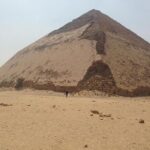
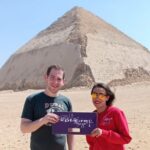
The Bent Pyramid is described as an early example of pyramid development, built under Pharaoh Sneferu. What makes it special is the “bent” engineering: it shifts angles, with the lower part steeper and the upper part shallower.
Your time here is listed around 1 hour, with entry listed as included.
This is the stop where you can actually see experimentation. Stand back and take it in as a structure trying to solve a building problem. It’s not just an ancient landmark; it’s a design document made of stone.
Dahshur: the Red Pyramid
Next comes Dahshur and the Red Pyramid, also called the North Pyramid. It’s described with its rusty reddish hue from red limestone and noted as one of the largest pyramids in Egypt. The tour also includes the background that the pyramid was once cased with white Tura limestone, much of which was taken in later centuries.
Time for this part is about 1 hour, and it’s listed as free for basic area access.
Even better: the Red Pyramid is a great change of scenery after Saqqara. You get more open desert feeling and cleaner sightlines in many areas.
Panoramic view stop
The schedule includes a panoramic view of the pyramids for about 30 minutes. This is a helpful buffer when you’ve been walking and want a visual reset before the final Saqqara / late-day segments.
Artisan and souvenir stops: useful cultural breaks or wasted time
This tour includes government-approved shopping and artisan stops, and your time is affected by them.
The stops referenced include:
- Paradise Perfumes palace and a Key of Life Papyrus area, where you might see papyrus making and view traditional artwork.
- Flower cotton store and Memphis Handmade carpets, where you can watch skilled rug weaving at a local school.
- Government souvenir zones, described as places to find high-quality items.
The info also points to short 20-minute stops at each location for exploring natural oils, soft Egyptian cotton, papyrus making, and carpet weaving.
Here’s how to handle this intelligently:
- If you like handicrafts, these stops can be a genuine cultural interlude. You’ll learn how products are made and you can buy directly from the makers rather than from random roadside sellers.
- If you don’t want shopping, you need to say so before you’re committed to the drive. Some guides are willing to adjust the plan when asked, and a firm approach can save you a lot of time.
Inside pyramids: how to plan it without ruining your day
A big point in the tour details is that inside any of the pyramids is not included. That means you’re choosing between two different styles of visiting:
- Exterior-first: you focus on the monuments from outside, which still looks spectacular.
- Interior add-on: you pay for access separately or through an upgraded option, but you lose time and you may feel rushed if the rest of the schedule is tight.
If you’re deciding, ask yourself this: do you want the interior for the thrill, or do you want to keep your day moving efficiently between sites?
Also keep in mind that some guides are better at timing. In past cases, guides such as Merna, Aya, Mohammed, Kareem, and Kareem (names that came up often) were praised for pacing, explaining, and helping with photos. Other experiences mention guides who spoke softly or seemed less invested, so language clarity matters. If you care about being able to ask questions, bring a small list of what you want explained and watch for whether your guide answers clearly.
Tips for photos and time: the difference between a good day and a stressful one
With multiple pyramid zones in one outing, the day can feel busy. The winners are the people who treat the schedule like a checklist, not like a marathon.
Do this:
- Take wide shots early, then close-ups later.
- Ask your driver or guide for the best spots for photos before you commit to walking farther.
- Keep your expectations realistic at the smaller sites. The first stops tend to do the heavy lifting for awe.
You’ll also see a lot of souvenir activity around certain points. If you get distracted easily, set a rule for yourself: one quick stop, then back to monuments.
Who this private tour suits best (and who should rethink it)
This tour is a strong fit if you:
- Want to cover Giza + Memphis + Saqqara + Dahshur in a single private day without juggling transport.
- Prefer an organized route with private AC transfers.
- Like a mix of pyramid exteriors plus Saqqara tomb variety.
It may be less ideal if you:
- Want to spend hours inside pyramids and linger at one monument.
- Really dislike any shopping stops, even short ones.
In terms of overall feel, it’s best described as efficient, stone-heavy, and best enjoyed when you go in with a “see the big picture today” mindset.
Should you book this tour to Giza, Memphis, Saqqara & Dahshur?
I’d book it if your top goal is to see the major monuments without wasting your day on transit. The value is strongest when you upgrade for a guide and entry fees if you want context, and when you treat pyramid interior access as a planned choice rather than a given.
I’d hesitate if you need a slow pace, deep museum-style explanations, or you’re allergic to artisan/souvenir stops. In that case, a more focused itinerary (fewer sites, more time at each) might fit better.
If you do book, send a clear message about what you want most: pyramids and Sphinx photos, time for Saqqara tombs, and whether you want to skip the shopping segments. The day runs much better when expectations are set early.
FAQ
What time does the tour start?
The tour starts at 8:00 am.
How long is the private tour?
It runs for about 9 hours.
Is pickup and transport included?
Yes. Pickup is offered, and the tour includes 2-way private transfers from addresses across Cairo and Giza in a private AC vehicle.
Are entry fees included in the price?
Entry fees depend on the tour option you choose. The day also notes that entry fees include basic area only, and inside pyramid tickets are not included by default.
Is lunch included?
Lunch at a local restaurant (koshari) is listed as optional, depending on the tour option you select.
Can I cancel and get a full refund?
Yes. You can cancel for free up to 24 hours in advance for a full refund.