REVIEW · CAIRO
Private Half-Day Tour with Guide to Pyramids of Giza with Camel Ride
Book on Viator →Operated by Cleopatra Egypt Tours · Bookable on Viator
Giza can feel overwhelming fast. This private half-day tour keeps it simple: a tight route across the plateau, an Egyptologist guide, and built-in help with the usual Cairo chaos. I love that you get door-to-door pickup and drop-off (so you’re not burning half your day negotiating rides), and I also like that the pace is realistic for a 4-hour visit.
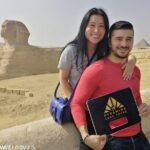
You’ll hit the big names: the Great Sphinx, the Great Pyramid area, and the Valley Temple tied to King Khafre’s mummy preparation. The camel ride adds a fun, memorable angle—something you can’t really replicate if you just walk. One possible drawback: entrance fees to the pyramids and sphinx are not included, so you’ll want to budget extra once you’re there.
In This Review
- Key things that matter most on this Giza tour
- How the door-to-door setup changes your Giza day
- The group size: small enough for focus, fast enough for momentum
- Great Pyramid area: where you actually get your bearings
- Valley Temple and Khafre’s mummy preparation
- The Great Sphinx: the stop that turns into a story
- Camel ride: the best kind of tourist splurge
- Lunch at a local restaurant: you’ll thank yourself later
- The guide experience: why Mimo’s name keeps coming up
- Value and pricing: $24 plus what you must budget separately
- Timing and pacing: why 4 hours can be the sweet spot
- Who this tour fits best (and who might want something else)
- Should you book this Giza tour?
- FAQ
- FAQ
- What’s the tour duration?
- Is pickup and drop-off included?
- How big is the group?
- Is this a private tour?
- What’s included with the price?
- Are entrance fees included?
- Is Wi-Fi provided?
- What’s the camel ride like?
- How and when will I get confirmation?
- What’s the cancellation policy?
Key things that matter most on this Giza tour
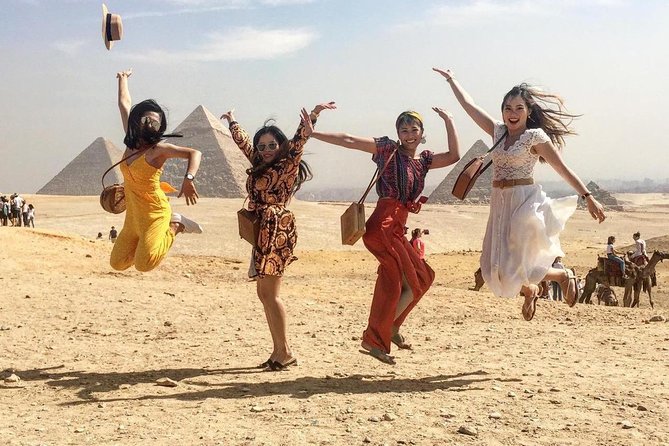
- Max group size of 15 for easier attention and fewer bottlenecks at the photo stops
- Egyptologist guide to help you make sense of what you’re seeing, without guesswork
- Camel ride included to see more of the plateau from sand level
- Local light lunch included, so you’re not hunting food mid-sightseeing
- Wi-Fi included during the tour (helpful for maps, messaging, and keeping plans smooth)
How the door-to-door setup changes your Giza day
Cairo traffic can be a whole event. What I like about this tour is that it treats Giza as a half-day mission, not a half-day gamble. You get hotel pickup and drop-off, so you start where you’re staying and you end back there—less stress, fewer handoffs, and less time wasted.
The tour runs about 4 hours. That matters because Giza is spread out. With a guided route, you’re not walking between sights trying to figure out what’s closest, what’s worth it, and where the best viewing spots are.
Another small but real plus: Wi-Fi is provided during the tour. On day trips, I always appreciate having your phone ready for quick confirmations, navigation, or just staying in touch without burning data.
You can also read our reviews of more guided tours in Cairo


The group size: small enough for focus, fast enough for momentum
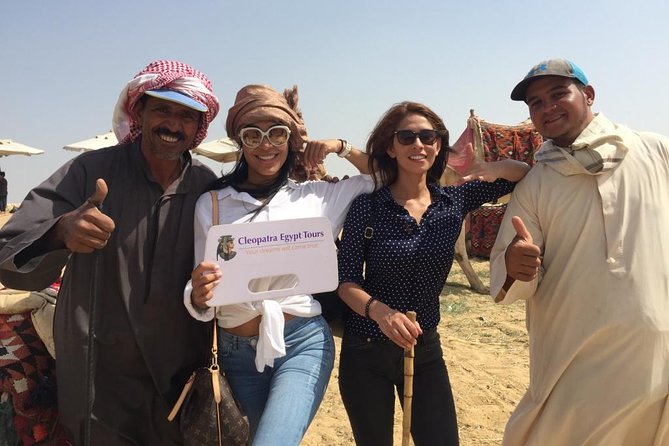
This isn’t a giant bus crowd. The tour caps groups at 15, and it’s described as private for your group only. Practically, that usually means less waiting and more chances to ask questions when something catches your eye.
Your guide is there to keep the day moving and make the stops make sense. In a place like Giza, that helps because it’s easy to see “cool stuff” and still leave with blank spots. You’ll want context: what you’re looking at, why the layout matters, and what each stop represents.
Also, the tour is built around an easy flow: you’re not trying to cram in every single angle, museum, and side alley. It’s a focused “see the essentials” plan, with the camel ride as a bonus.
Great Pyramid area: where you actually get your bearings
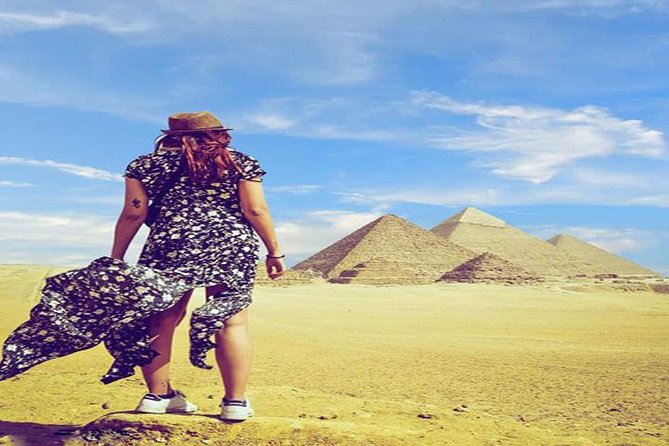
The centerpiece is the Great Pyramid of Giza, described as the largest of the three pyramids in the Giza complex. Even if you’ve seen it in photos a thousand times, the first time you see it in person is different. It’s huge in a way that doesn’t translate well through screens.
On this tour, you’ll have time at the pyramid area as part of a structured route across the plateau. The value here isn’t that you’re being dragged from one spot to the next—it’s that you’re guided toward the sights that make the pyramid complex feel coherent instead of random.
A practical note: entrance fees are not included. That means you should be ready to pay separately for pyramid and sphinx entry (exact amounts aren’t provided here). I’d treat this as “base tour cost plus site entry,” and you won’t get surprised at the end.
Valley Temple and Khafre’s mummy preparation
One of the more interesting stops is the Valley Temple, tied to King Khafre’s mummy preparation. That detail matters because it connects the structure to a specific ancient process—not just stone monuments for photos.
A lot of people focus only on the pyramid silhouettes. This stop shifts the day toward how these places fit into the religious and preparation practices of the time. You’re still outdoors and walking, but the meaning of what you’re looking at feels closer than a generic “here’s a temple” moment.
I also like that the itinerary includes this stop because it helps you understand Giza as more than a single monument. It’s a whole working complex, not just a giant landmark.
The Great Sphinx: the stop that turns into a story
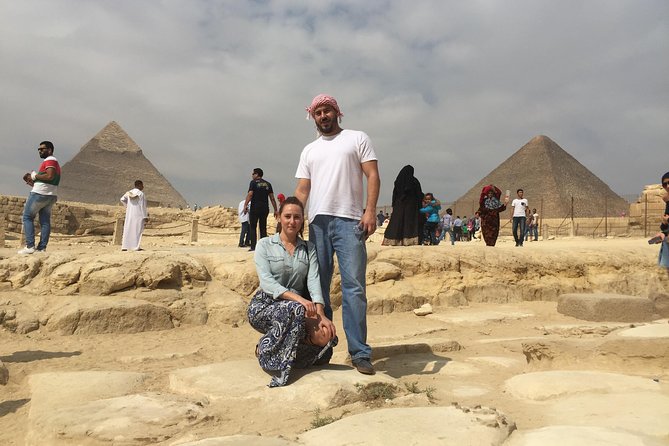
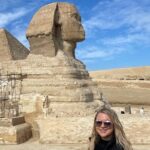
The Great Sphinx is the other can’t-miss anchor of the tour. It’s described as a large half-human, half-lion statue, and that blend is exactly why people remember it. Up close, it reads differently than it does from a distance—you notice proportions, wear, and the way it dominates the surrounding area.
A guide really helps here. When you’re standing there, your brain wants answers: what you’re looking at, how it fits into the wider plateau, and what the sightline relationship is with nearby structures. That’s where an Egyptologist can make your visit feel less like trivia hunting and more like you’re following a story.
And yes, you’ll want the classic photos. But take a minute to slow down and look past them. The Sphinx is one of those sights where your first reaction is awe, and your second reaction is curiosity.
You can also read our reviews of more private tours in Cairo




Camel ride: the best kind of tourist splurge
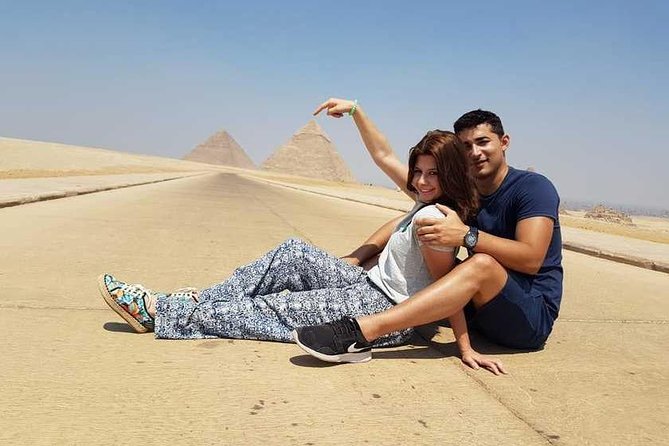
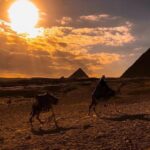
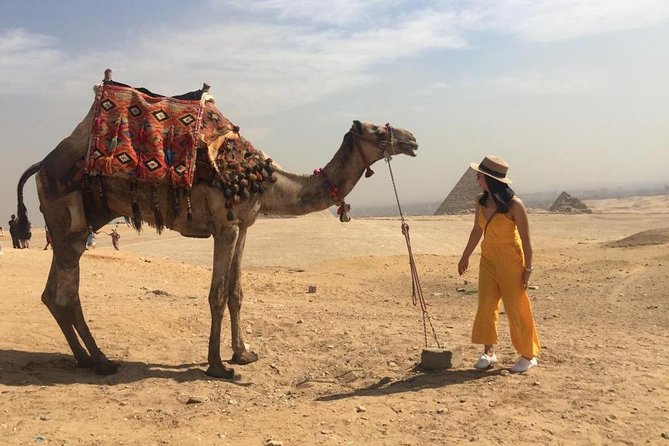
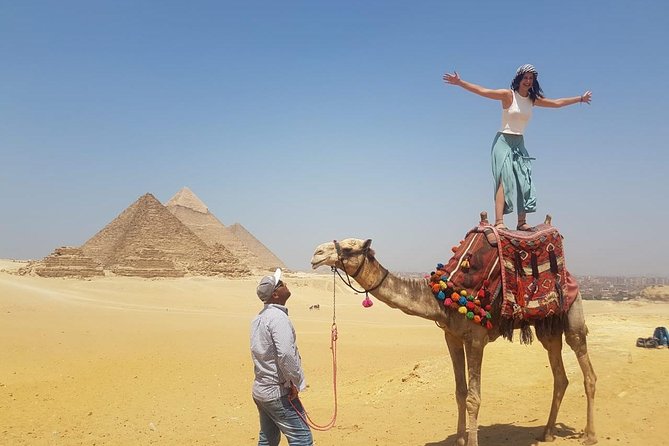
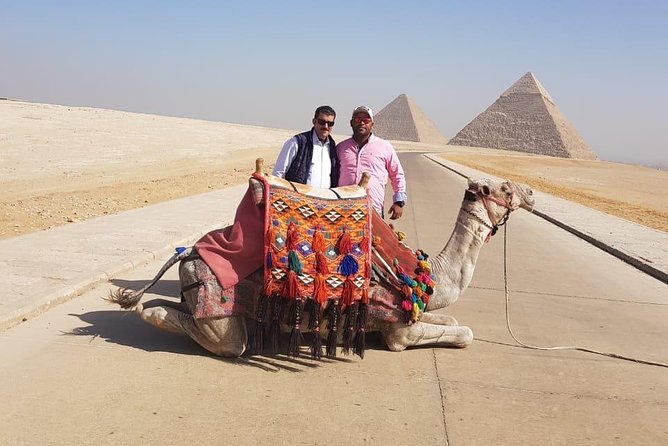
The tour includes a camel ride across the sands. This is one of those things that can go either way on many tours—some feel rushed, some feel short, and some feel like the camel is the whole show. Here, the camel ride is positioned as a way to see more pyramids along the Giza plateau at the edge of the Sahara Desert.
That framing is important. You’re not just doing it for the novelty. You’re doing it to change your perspective. Camel level is different. Your view stretches and the plateau’s scale becomes clearer, especially when you’re looking out across the sand toward additional pyramid forms.
Practical reality check: you’ll want to wear comfortable footwear and plan for sun exposure since you’re outside. The tour includes bottled water, which helps a lot in Cairo heat.
Lunch at a local restaurant: you’ll thank yourself later
This tour includes a light lunch with Egyptian local food. That’s a big deal on a half-day plan because the alternative is usually searching for food near the sights, which can turn into a stressful scavenger hunt between major viewing stops.
The tour doesn’t promise an all-day meal break, but it does give you the basics: you’re fed, you’re not starving, and you can keep sightseeing without losing momentum. If you’re the type who gets grumpy when you miss meals, this included lunch is a quiet win.
The guide experience: why Mimo’s name keeps coming up
The standout from the reviews is the guide. One review specifically called out Mimo (Cleopatra Egypt Tours) as amazing—there on time, working with the group, and strong at explaining what you were seeing. The reviewer even booked an additional half day with the same guide, which is a pretty clear sign that the experience didn’t just check boxes. It felt worth extending.
That lines up with how this type of tour should work. In a place like Giza, the “real value” is the person steering your attention. When a guide is organized and communicative, you spend less time guessing and more time noticing.
So if you book, pay attention to the guide assignment when you receive confirmation. A great guide can turn a checklist tour into a story you actually remember.
Value and pricing: $24 plus what you must budget separately
The price is $24 per person, and it’s described as a door-to-door, guided half-day with camel ride, bottled water, and light lunch included. For Cairo tourism, that sounds like solid value if you’re okay with a shorter route and you want the big highlights in one go.
But don’t forget what’s not included: entrance fees to the Giza Pyramids and sphinx. Since those are separate here, you should think of the $24 as the guided experience portion, not the full “everything” price.
Still, the overall structure is cost-effective: transport is covered (hotel pickup/drop-off), the guide is included, and you’re not paying extra for the camel ride. For many people, that’s the practical equation:
- pay for site access separately
- pay for the rest as part of the tour
Timing and pacing: why 4 hours can be the sweet spot
This is an about 4-hour outing. That’s not a full day, which can actually be a plus. Giza doesn’t just tire your legs; it wears on your brain. After a few hours of heat, walking, and staring upward, your attention shifts.
The tour’s half-day format keeps it focused. You see the headline sites—Great Pyramid area, Valley Temple, Great Sphinx—and you add the camel ride and lunch. Then you’re back before you turn sightseeing into survival.
Also, the tour is set up as a planned schedule with confirmation at booking time. You’ll get your timing sorted so you’re not piecing it together last-minute.
Who this tour fits best (and who might want something else)
This tour is a strong match if you want:
- A straightforward Giza highlight route without spending hours figuring out logistics
- Small group dynamics (max 15) rather than a chaotic crowd
- Camel ride plus lunch built into the experience
- Help with the usual street pressure outside major attractions
It may be less ideal if you’re the type who wants deep exploration, extra sites beyond the main landmarks, or lots of unstructured wandering. Since entrance fees aren’t included and the schedule is only half a day, you’ll want to be comfortable with a curated route.
Should you book this Giza tour?
I’d book it if your priority is a smooth, guided Giza visit with the core sights—Sphinx, pyramids, Valley Temple, plus a camel ride—without turning your day into a navigation project. The included lunch and bottled water also make it feel designed for real humans, not just photo ops.
I’d pause and do a little extra budgeting if you know entrance fees will push you over a planned daily spend. And if you’re set on extra time at each monument, you might prefer a longer tour so you’re not watching the clock.
FAQ
FAQ
What’s the tour duration?
It’s about 4 hours.
Is pickup and drop-off included?
Yes. The tour offers hotel pickup and drop-off.
How big is the group?
It’s listed as a group of no larger than 15.
Is this a private tour?
Yes. It’s described as private, with only your group participating.
What’s included with the price?
Included are a qualified Egyptologist guide, hotel pickup/drop-off, private tour, bottled water, light lunch (Egyptian local food), and the camel ride.
Are entrance fees included?
No. Entrance fees to the Giza Pyramids and sphinx are not included.
Is Wi-Fi provided?
Yes. Wi-Fi is provided throughout the experience.
What’s the camel ride like?
The tour includes a camel ride at the pyramids, described as offering views of more pyramids along the plateau near the edge of the Sahara Desert.
How and when will I get confirmation?
Confirmation is received at the time of booking.
What’s the cancellation policy?
Cancellation is free up to 24 hours in advance for a full refund, and changes within 24 hours aren’t accepted.