REVIEW · CAIRO
Private guided shopping tour in Khan el-Khalili with Lunch
Book on Viator →Operated by Hesham Egypt tour guide · Bookable on Viator
Cairo can feel like sensory overload, but this half-day plan keeps you moving with purpose. You start in the Pharaonic Village in Giza, where your Egypt-focused guide walks you through themed stops that connect everyday shopping to Ancient Egypt. I like that you get an air-conditioned ride to beat the heat, and I also like the shopping coaching so you know how Egyptian bazaar culture works. One thing to consider: bazaars are busy and prices vary, so you’ll still need to shop carefully—especially if authenticity matters a lot to you.
The tour is priced to feel like a deal because it bundles pickup and drop-off, private transport, bottled water, lunch (ksohry), and admission tickets. Then it ends at Khan el-Khalili, the famous market where you can browse and compare without feeling totally on your own. This is a good choice if you want shopping with context, not just a long wander.
In This Review
- Key Highlights to Pay Attention To
- Giza-to-Cairo Rhythm: Why This Tour Works Better Than a Random Shopping Day
- Hotel Pickup and Private Transport: Cairo Without the Guesswork
- Stop 1: Sultan & adam Perfumes and the Lotus-Flower Scent Story
- Stop 2: Nile Cotton and the Real Reason Cotton Matters
- Stop 3: Merit Bazaar, Cartouches, and a Royal-Sounding Takeaway
- Stop 4: 3 Pyramids Papyrus Institute and a Quick Lesson You’ll Remember
- Khan el-Khalili Bazaar: Haggle Help and a Proper Browse Window
- Lunch Ksohry and the Break That Makes the Shopping Go Smoothly
- Price and Value: $15 That’s Either a Deal or a Warning Sign
- Shopping Reality Check: How to Avoid Fake Finds and Overpaying
- Who This Tour Fits Best (and Who Might Want Another Option)
- Should You Book This Private Shopping Tour With Lunch?
- FAQ
- What does the tour include besides the guide?
- How long is the tour?
- Is lunch included, and what is it?
- Do I get picked up from my hotel?
- Is this tour private or shared with other groups?
- Is there any extra fee for some areas?
Key Highlights to Pay Attention To
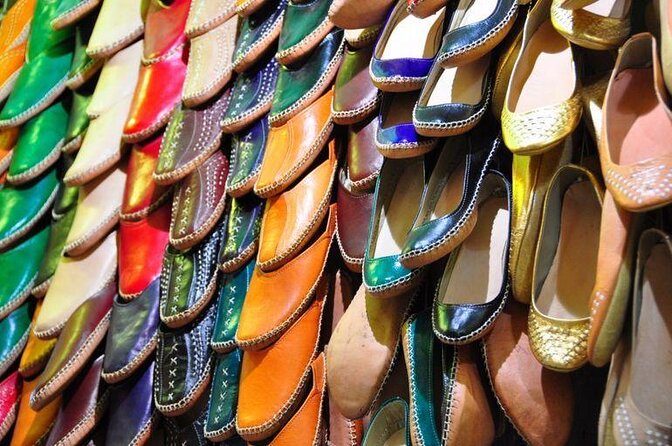
- Private guided shopping with a focus on Egypt-themed stops and practical market behavior
- Air-conditioned transport from hotel to Giza and back to Cairo
- Included admissions at each themed shop stop, so you’re not guessing what costs extra
- Cartouche writing at Merit Bazaar for a fun royal souvenir moment
- Papyrus demonstration at the 3 Pyramids Papyrus institute, showing how paper was made from the plant
- Haggle help plus a real bazaar ending at Khan el-Khalili
Giza-to-Cairo Rhythm: Why This Tour Works Better Than a Random Shopping Day
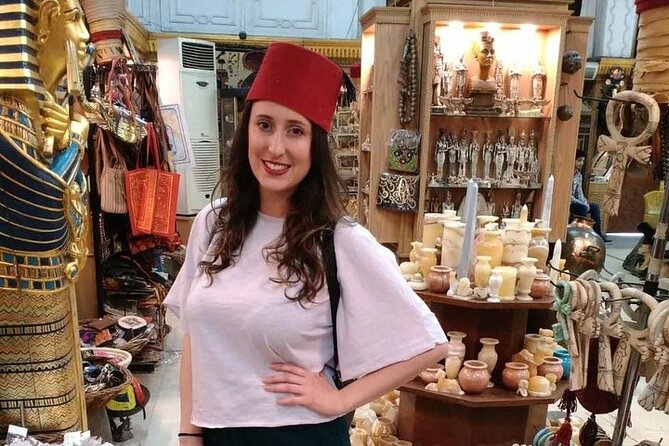
I like tours that solve a real problem. In Cairo, the problem is simple: you can spend hours getting oriented, dealing with traffic, and figuring out where to shop. This itinerary gives you structure. You start in the Giza area at the Pharaonic Village, where the theme is Ancient Egypt and the stops are short and purposeful. Then you move into the city for Khan el-Khalili, where the browsing energy really kicks in.
You’re not doing “museum plus shopping” in two separate worlds. The guide keeps tying things back to Egyptian culture—perfumes, cotton, papyrus, and the kind of souvenirs people actually buy. That makes your time feel earned, not random.
One more practical benefit: the tour runs about 4 hours. For a first-time visit or a day you want to keep flexible, that’s a smart length.
You can also read our reviews of more guided tours in Cairo



Hotel Pickup and Private Transport: Cairo Without the Guesswork
The tour includes hotel pickup and drop-off and transport by a private vehicle. That matters in Cairo because timing and comfort can make or break your day. You’re also escaping the heat early with an air-conditioned minivan-style ride, so the “shopping day” doesn’t turn into a sweaty slog before you even reach the market.
Because this is listed as a private tour, it’s only your group. That usually means the guide can adjust pace—staying longer in the areas you care about and cutting short the parts you don’t.
Also, you get bottled water, which you’ll be happy about once you’re walking around in the bazaar zone.
Stop 1: Sultan & adam Perfumes and the Lotus-Flower Scent Story
Your first stop is Sultan & adam perfumes, with about 30 minutes there. The point isn’t just smelling things. The guide gives a quick primer on lotus flower and other Ancient Egypt references, then you test scents described as 0 alcohol or chemical, across categories like massage, skin, and hair.
Why I think this stop is worth it:
- You get a sensory souvenir idea that’s tied to the theme of the day, not just another generic shop.
- The time is long enough to actually compare products, not rush through.
A practical note for perfume shopping: smell preferences are personal. If you’re sensitive to fragrance or you want something subtle, take a moment to test on skin (if the shop allows it) and compare notes. Don’t buy the first thing that smells good in the air-conditioned store.
And because one review complaint was about products not matching expectations later, I’d treat any consumable or spice-style buy with extra caution. For perfumes, you’re less likely to face the same issue, but it’s still wise to know what you’re paying for.
Stop 2: Nile Cotton and the Real Reason Cotton Matters
Next you’ll spend about 20 minutes at Nile cotton. The tour frames this as one of Egypt’s major income sources, alongside the Suez Canal and tourism. You’re shown the number one category Egyptian cotton.
This stop is short, but it has two strong advantages:
- You learn what you’re looking at. If someone says cotton is a big deal here, it’s easier to judge quality when you know why it matters.
- It sets you up to shop smarter later at Khan el-Khalili, where textiles and home goods are common.
What to watch:
If you’re buying cotton items, compare weight and feel. Don’t rely only on “Egyptian cotton” wording. Ask clear questions about what you’re getting (type, size, intended use) and check that the item matches the price.
Stop 3: Merit Bazaar, Cartouches, and a Royal-Sounding Takeaway
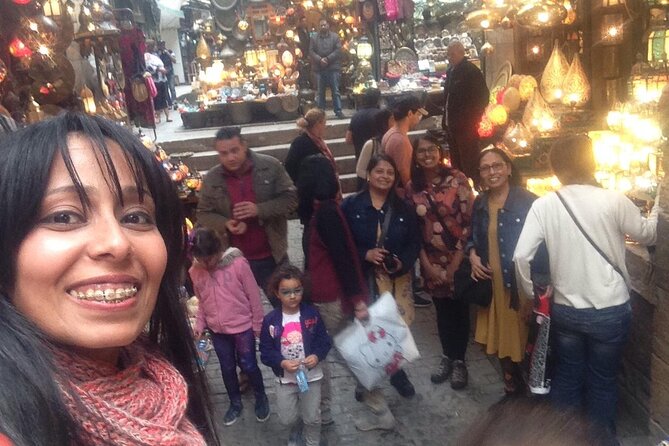
Merit Bazaar is another 20-minute stop, and it leans into the fun souvenir side of Ancient Egypt. You have a chance to write your name in a golden or silver shape called a cartouche, meant to imitate royal life from the pharaohs.
You also see Egyptian made statues and related “Egypt-style” items. This is where the tour becomes less educational and more playful, but in a way that still fits the theme.
My take: the cartouche moment is a great option if you want a meaningful souvenir that doesn’t require a whole luggage plan. It’s also a quick activity, which fits the tour’s pace.
If you’re sensitive to authenticity concerns, this category is usually safer than high-value food or spices. Still, compare quality, and think about what you want on your shelf versus what looks impressive in the shop.
You can also read our reviews of more private tours in Cairo





Stop 4: 3 Pyramids Papyrus Institute and a Quick Lesson You’ll Remember
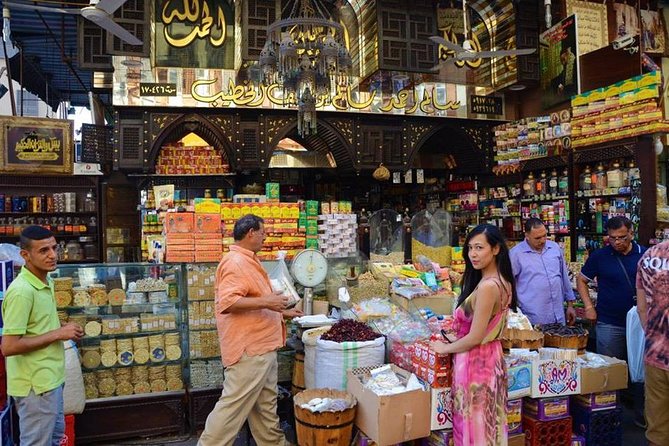
At the 3 Pyramids Papyrus institute, you get a 30-minute lecture on how the first paper was made from the papyrus plant. An artist shows the drawing side too, so it’s not just a talk—it’s visual.
This stop is a nice balance against the shopping intensity later. It breaks up the day with something you can’t just Google in 30 seconds, because you’re seeing how the process is presented in the local setting.
What I like about this kind of stop:
- It gives context for a souvenir category you’ll see everywhere.
- It turns “papyrus products” from random crafts into a story.
If your goal is purely shopping, you might find this a bit “lecture-ish.” But even as a shopper, I’d still give it your attention for the knowledge and the calmer pace.
Khan el-Khalili Bazaar: Haggle Help and a Proper Browse Window
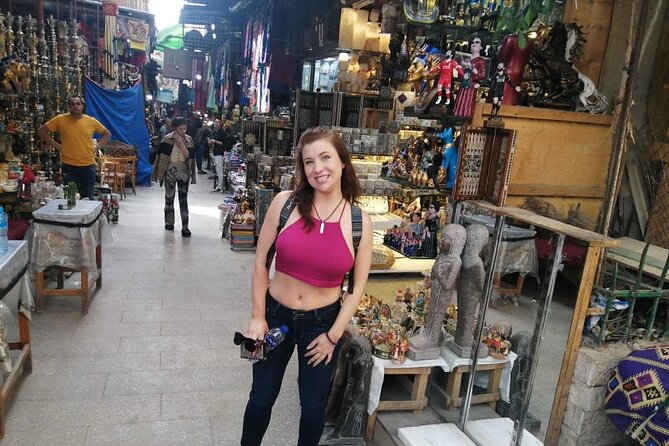
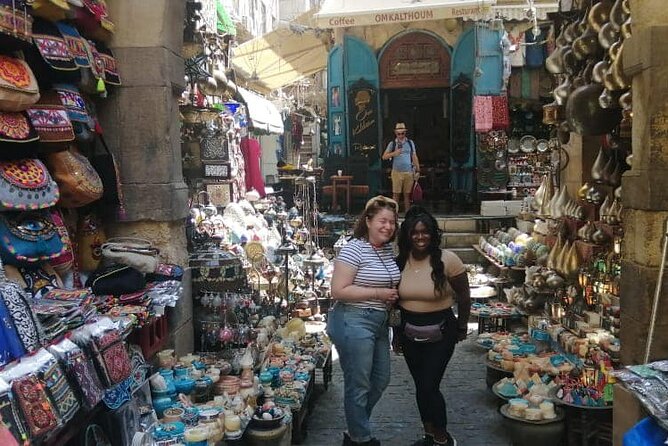
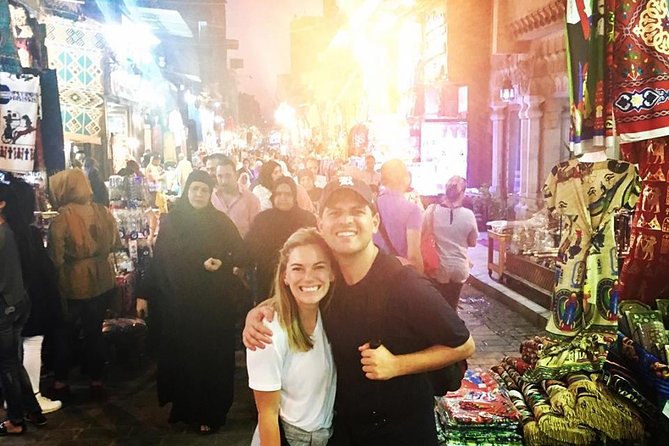
Finally, you head to Khan el-Khalili for about 1 hour. This is where the day becomes Cairo. You can check out local shops, and you can stop for Egyptian tea with mint if you want—on your own.
The big value here is the guide’s shopping culture lesson. You’re not just dumped into a maze and told good luck. The guide explains how haggling works, and that changes the whole experience. You’ll know when to negotiate, when to step back, and how to keep your cool as prices get thrown around.
One more thing: Cairo’s energy can feel intense, even at night. Build in patience. In a market like Khan el-Khalili, rushing usually leads to bad choices.
A balanced shopping reality check:
- One past experience included a complaint about fake saffron and surprise pricing on coffee.
- That’s not something I’d ignore, and it’s exactly why your shopping strategy matters here.
Lunch Ksohry and the Break That Makes the Shopping Go Smoothly
Lunch is included: ksohry. The tour also includes bottled water, which helps you avoid that mid-shopping slump when your brain goes offline and you start paying too much just to move on.
Even if you’re not a “food person,” having lunch planned for you is a real value. It keeps you from hunting for a restaurant in traffic after you’ve been walking and negotiating all morning.
Timing can vary depending on how the guide sequences the stops, but you should expect the lunch to be part of that roughly 4-hour block.
Price and Value: $15 That’s Either a Deal or a Warning Sign
At $15 per person, this tour can feel like a steal—especially because it includes:
- Hotel pickup and drop-off
- Private transport
- Admission tickets listed for the stops
- Bottled water
- Lunch (ksohry)
- A private guide
That said, low cost can come with a trade-off. Here, the trade-off is that shopping is part of the experience, and the tour will naturally guide you toward certain vendors and themed stores. That doesn’t automatically mean you’ll get bad deals. It does mean you should shop with your eyes open.
Also note an extra cost that’s easy to miss: there’s a $30 surcharge for 6th October City, the airport and its area, and Nasr City. If you’re staying outside the main pickup zones, ask up front so there are no surprises later.
Shopping Reality Check: How to Avoid Fake Finds and Overpaying
I’ll be blunt in a helpful way: in Cairo markets, you need to assume that not every item is priced fairly or labeled honestly. Your guide can help you negotiate and navigate, but they can’t magically control every vendor’s honesty inside a busy bazaar.
Here’s how to protect yourself while still having fun:
- Compare prices across multiple stalls when possible, not just once.
- For consumables or “testable” items (like spices, food products, or anything that might be hard to verify later), ask more questions before paying.
- If a shop offers a strong claim, ask what proof looks like in that shop—packaging details, how it’s stored, and whether you get a sealed product.
- Keep your budget in mind. If the price jumps dramatically, pause and decide if the item is worth it to you.
And if something feels off, don’t ignore your instincts. One review experience mentioned buying saffron that didn’t match expectations at home. That’s exactly the sort of outcome you want to avoid by checking details and not letting the moment rush you.
The good news: another review described vendors as kind and welcoming and said there was no pressure to buy outside of the bazaar. That’s a sign the tour can feel friendly when you treat it like a browse with guidance, not a sales sprint.
Who This Tour Fits Best (and Who Might Want Another Option)
This tour is a great match if you:
- Want a guided shopping day with context (perfumes, cotton, papyrus, cartouche)
- Appreciate being picked up and dropped back without planning transport
- Like the idea of ending at Khan el-Khalili with help on how to haggle
- Prefer a shorter day—about 4 hours—instead of spending the entire afternoon wandering
It may be less ideal if you:
- Plan to buy high-value items and need guaranteed authenticity with zero risk
- Hate shopping at all and would rather do a longer, pure sightseeing day
- Expect a very hands-off “look only” experience—this is shopping-focused by design
Should You Book This Private Shopping Tour With Lunch?
Yes, I’d book it if your main goal is to shop in Cairo with a guide who explains the culture and helps you pace yourself. The combination of Giza’s themed stops, air-conditioned transport, included admissions, and lunch makes the time feel efficiently packaged.
If you’re the kind of shopper who buys only sealed, easy-to-verify items (or you’re careful with food and spices), you’ll likely have a smoother experience. If you’re hoping for totally risk-free shopping in a bazaar, keep expectations grounded and ask questions before you pay.
Overall: for first-timers or anyone who wants a guided shopping half-day with personality, this is a solid pick.
FAQ
What does the tour include besides the guide?
You get hotel pickup and drop-off, private transport, bottled water, lunch (ksohry), and admission tickets at each stop. It’s a private tour, so only your group participates.
How long is the tour?
The duration is about 4 hours (approx.), with time spent at several stops before ending at Khan el-Khalili.
Is lunch included, and what is it?
Lunch is included, and it’s listed as ksohry.
Do I get picked up from my hotel?
Yes. Hotel pickup and drop-off are included as part of the experience.
Is this tour private or shared with other groups?
It’s a private tour/activity. Only your group will participate.
Is there any extra fee for some areas?
Yes. There’s an extra $30 surcharge for 6th October city, the airport and its area, and Nasr City.