REVIEW · CAIRO
Private Full Day Tour to Luxor from Cairo with Flight
Book on Viator →Operated by Luxor Travels · Bookable on Viator
Luxor in one day feels impossible, until you take this flight-based private tour. The idea is simple: you leave Cairo early, land in Luxor, then get a full Luxor hits tour with a personal Egyptologist. You’re also moving efficiently, so the day stays focused on the sites that matter most.
What I like most is the private Egyptologist guide in Luxor. You get explanations at the right stops, including the stories behind the Valley of the Kings tombs and how Karnak was built and rebuilt across reigns. I also love that lunch is included at a restaurant with Nile views, so you get a proper break instead of a rushed snack between temples.
The main drawback is the trade-off for speed: the day runs long, and entrance fees are extra. At this price point ($500 per person), you’ll want everything to feel smooth, so it’s smart to plan for a long schedule and double-check what you’ll pay on-site.
In This Review
- Key takeaways before you book
- Price and Logistics: what you’re actually paying for
- The 4:30 am Cairo pickup and Luxor flight rhythm
- Valley of the Kings: tombs, scale, and why Tutankhamun hits differently
- Tomb highlights you’ll likely notice inside
- Deir el-Bahari and Hatshepsut’s temple: unusual power made stone
- Colossi of Memnon: two statues, one emotional pause
- Lunch by the Nile: when your day pace actually matters
- Karnak Temple complex: Avenue of Sphinxes to the Hypostyle Hall
- Beyond the headliners: Luxor Temple, Ramesseum, and Thebes tomb corners
- Your guide experience: what to expect from the private format
- Who should book this Luxor day tour from Cairo
- Should you book this private Luxor day tour with flights?
- FAQ
- How long is the private Luxor day tour from Cairo?
- What time is the pickup in Cairo?
- Is this tour private?
- What’s included in the price besides the tour guide?
- Are entrance fees included?
- Does the tour include lunch, and is vegetarian food available?
- What major sites are covered?
- How does the flight affect the schedule?
- If there’s a flight delay or weather problem, can the itinerary change?
- What is the cancellation policy?
Key takeaways before you book
- Flight-based schedule: start in Cairo and reach Luxor quickly enough for a full day.
- Valley of the Kings tomb focus: multiple royal tombs, including Tutankhamun’s.
- Hatshepsut at Deir el-Bahari: see a rare story of a female pharaoh’s power.
- Karnak Temple time: walk the big stages like the Avenue of Sphinxes and the Hypostyle Hall.
- Private guide service: from meeting on arrival to site-by-site explanations.
Price and Logistics: what you’re actually paying for
This tour costs $500 per person, and that number makes sense only if you value time. The biggest “cost drivers” here are the private setup and the fact that you’re flying from Cairo to Luxor to compress what would normally be a two-day trip.
Also, the day is long—about 17 hours—with an early departure. That means the tour works best if you’re comfortable getting up early, moving steadily, and spending more time on-site (and in your car/driver transfers) than lingering.
One important budgeting note: entrance fees are not included. Expect to pay separately for sites like the Valley of the Kings and Karnak Temple complex. Drinks (like soda/pop) aren’t included either, so if you want bottled water or soft drinks, plan ahead.
You can also read our reviews of more private tours in Cairo


The 4:30 am Cairo pickup and Luxor flight rhythm
Your day starts with pickup from your Cairo hotel at 4:30 am. From there, you transfer to Cairo Airport and take a flight to Luxor, where the rest of the tour kicks into gear.
This is the key advantage of flying: Luxor’s West Bank sites and East Bank temples are both “must sees,” but they’re far apart by road. By landing in Luxor early enough, you avoid losing half a day to driving across the country.
Once you arrive in Luxor, you’re matched with your qualified Egyptologist guide. The flow is built around getting you into the Necropolis of Thebes quickly, so your morning isn’t wasted on logistics.
Valley of the Kings: tombs, scale, and why Tutankhamun hits differently
The tour’s centerpiece is the Valley of the Kings on Luxor’s West Bank, in the Thebes mountain necropolis. This is where you feel the real logic of ancient Egyptian burial: royal power engineered into rock, with careful decoration designed for the afterlife journey.
You visit several royal tombs, including:
- the Tomb of Tutankhamun, plus other royal tombs such as Ramses IX, Horemheb, Merenptah, and Ramses III
Each stop is short (often around 15–25 minutes), which means you’re not meant to “soak.” You’re meant to see, understand, and move on.
Why Tutankhamun matters here: the tour notes that the tomb of Tutankhamun is the one discovered nearly intact in 1922, credited to Howard Carter. And while Tut’s famous golden mask is housed in Cairo’s Egyptian Museum, this is where you get the wow factor of standing in front of the tomb environment linked to his mummy in the Valley of the Kings.
A practical note: the tombs are not all equally decorated, and some are more visually dramatic than others. If you care about art details, you’ll appreciate the guide pointing out what to look for—painted sunken reliefs, corridor and chamber design, and the way scenes repeat funerary texts.
Tomb highlights you’ll likely notice inside
- Tomb of Ramses III (KV 11): the decorations include colorful painted sunken reliefs with ritual texts (like the Litany of Ra and Book of Gates themes). It’s also described as featuring some unusual secular scenes, including foreign tributes such as pottery imported from the Aegean.
- Tomb of Merenptah: the focus is on how royal tomb design shifts over time, including height changes and a change in corridor/room structure.
- Tomb of Ramses IX and Horemheb: expect rich color and detailed wall programs that reward even short visits.
Because time is tight, your best strategy is to keep moving but ask quick questions as you go. With a private setup, that’s exactly how you get more meaning from less time.
Deir el-Bahari and Hatshepsut’s temple: unusual power made stone
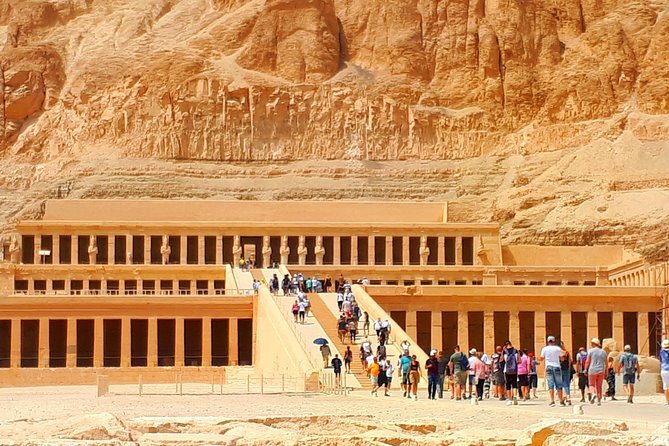
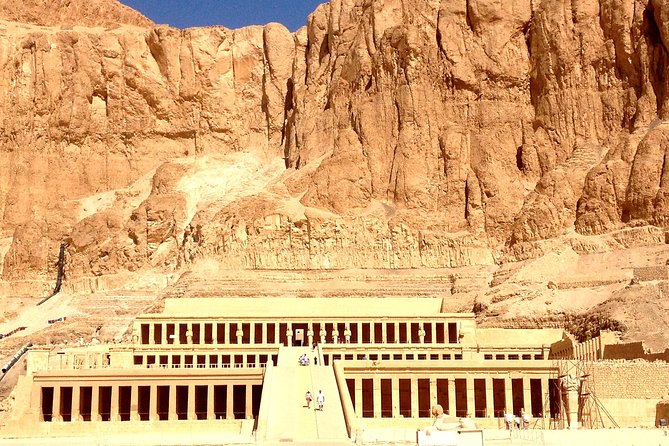
After the Valley of the Kings tombs, you head to the Temple of Queen Hatshepsut at Deir el-Bahari. This stop matters because Hatshepsut is unusual in Egyptian royal history: the tour frames her as the only woman to reign as pharaoh.
What makes Deir el-Bahari feel special is the layout and the setting. It’s tied to the story that Hatshepsut was an ancestor of Tutankhamun’s dynasty, so seeing it after Tut-related tombs creates a neat historical chain in your mind.
Even with about one hour here, it works because your guide can connect architectural choices to royal messaging. You’ll be looking at a temple that isn’t just a memorial—it’s political theater in stone.
A few more Cairo tours and experiences worth a look



Colossi of Memnon: two statues, one emotional pause
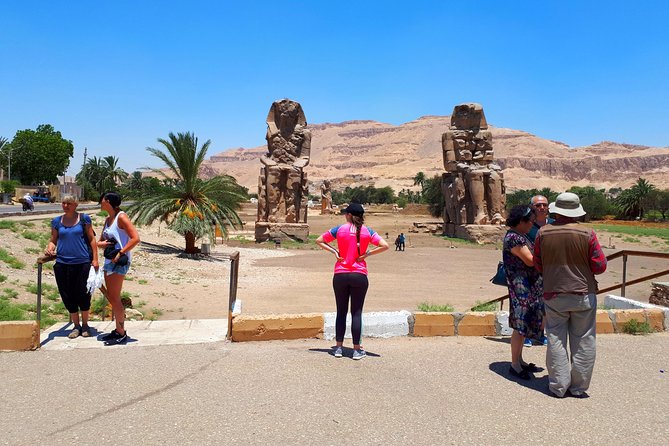
Next comes a quick stop at the Colossi of Memnon, two of the largest ancient statues associated with the reign of King Amenhotep III. The tour schedules this as a brief visit (around 10 minutes), which means it’s a moment, not a long walk.
The value is that these statues give you a sense of scale. Even when you’re rushing, your brain absorbs the “this took serious power and planning” message fast. It’s also one of those places where your guide can explain the historical context in a way that makes the stone feel alive.
If you’re the kind of traveler who likes photos, aim to get your shots early, since later you’ll be pulled toward Karnak.
Lunch by the Nile: when your day pace actually matters
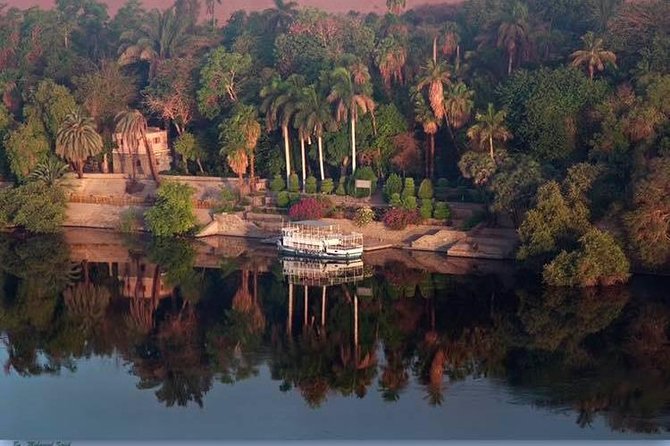
After the morning’s heavy site concentration, you get lunch at a restaurant overlooking the Nile. Lunch is included, and the tour says a vegetarian option is available if you request it at booking.
This break is more than a meal. It’s a reset for energy and focus, which matters because Karnak is big, and the afternoon can slide into “I’m just walking now” mode if you don’t eat and hydrate.
Practical tip: if you know you get sluggish after meals, keep it moderate. Save your energy for Karnak’s Hypostyle Hall and the slower temple moments where details matter.
Karnak Temple complex: Avenue of Sphinxes to the Hypostyle Hall
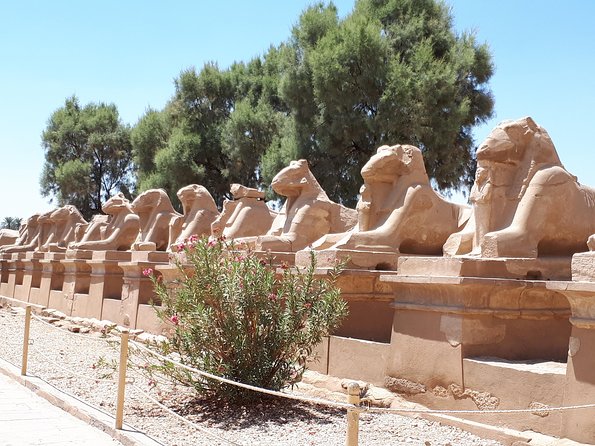
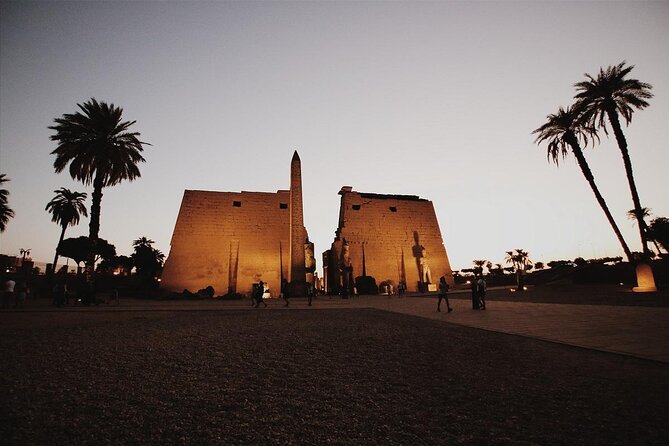
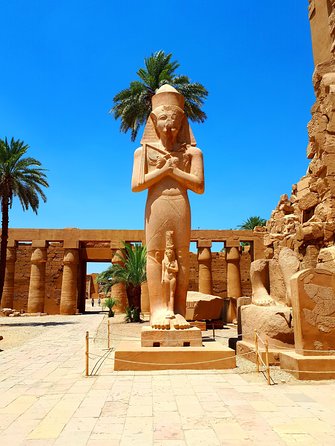
In the afternoon you head to Karnak Temples on Luxor’s East Bank, one of the world’s major pharaonic temple complexes. This is where the tour turns from “tombs and royal burial” to “religion and empire scale.”
You’ll see key elements including:
- the Avenue of Sphinxes
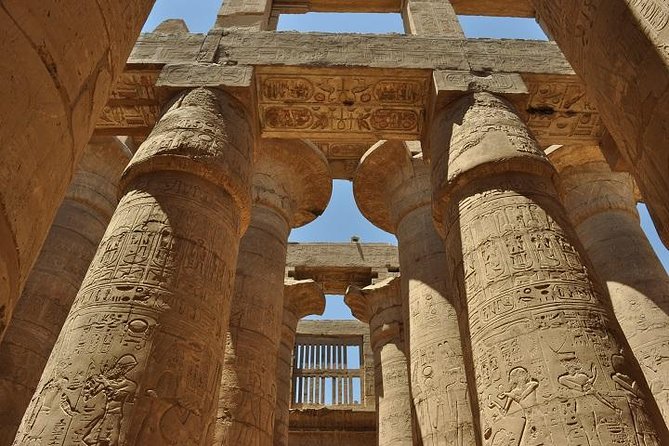
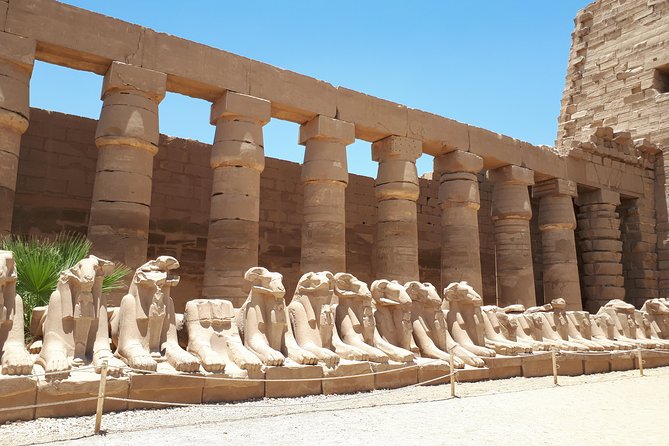
- the Hypostyle Hall with 134 gigantic columns
- obelisks linked to Queen Hatshepsut and Tutmosis I
- the Temple of Amon with lotus and papyrus design motifs
- the Granite Scarabeus of Amenophis III
- the Sacred Lake
Your time here is around two hours (with added shorter checkpoints like obelisks at certain points). That’s enough to understand the overall layout if you let your guide steer you. Karnak is built in phases across different reigns, so without interpretation it can feel like a pile of stones. With interpretation, it becomes a map.
One thing I appreciate about how the tour breaks Karnak down: it gives you both the drama (the Hypostyle Hall) and the storytelling details (how different rulers added to earlier structures). The Sacred Lake and the Temple of Amon stop you from thinking this was only about monuments. It was also about rituals and beliefs.
Beyond the headliners: Luxor Temple, Ramesseum, and Thebes tomb corners
After or around the Karnak block, the tour also includes other Thebes West Bank and Luxor highlights listed in the program. These can be the difference between a “checklist tour” and a more layered day.
Among the additional stops called out are places like:
- Luxor Temple
- Ramesseum (the mortuary temple of Ramses II)
- Tombs of the Nobles in areas such as Al Asasif
- Howard Carter House
- additional Valley of the Kings and nearby tomb sites such as Tomb of Ramses VI and the Valley of the Nobles near Gurna
Because the schedule is tight, some of these are shorter visits. But that’s part of the value: you get a wider sense of what Luxor’s ancient world looked like beyond just the most famous tomb doors.
Howard Carter House is a neat pairing with the Tutankhamun tomb story. It connects the discovery narrative to the people and work behind it, helping you see Carter as part of the modern bridge to ancient Egypt.
Your guide experience: what to expect from the private format
This is a private tour, so the guide-to-you ratio is the biggest quality variable. The tour is specifically described as including a qualified Egyptologist guide in Luxor, and feedback highlights guides like Ragab, Abdul, Saber, and Omar for being professional and engaging.
In practice, this means you can ask quick questions without feeling rude. If you want to know why a tomb is designed a certain way, or what a temple feature signals about worship, you can. In a private format, the guide can also pace you based on your attention span and energy.
At the same time, no guide is a robot. I’d expect a range in how talkative people are during certain stops. If you’re the type who wants lots of back-and-forth questions, it helps to speak up early in the day.
Who should book this Luxor day tour from Cairo
This tour is a strong fit if:
- you want Luxor highlights in one day without adding an overnight stay
- you prefer a private format where the pace and explanations match your group
- you love Egypt for the details: tomb decoration, temple layout, and the stories behind Hatshepsut and Tutankhamun
It may not be the best match if:
- you hate very early mornings and long schedules
- you’re sensitive to strict timing (many tomb visits are short)
- you don’t want to pay extra on-site for entrance fees and drinks
If you’re traveling with kids, it can work because the private guide format can keep attention tighter. Just be ready for a marathon day.
Should you book this private Luxor day tour with flights?
If your goal is to see Luxor’s core sites—Valley of the Kings, Hatshepsut at Deir el-Bahari, Karnak’s Hypostyle Hall—and you’re willing to trade comfort for speed, this is a smart way to do it. The flight from Cairo is the big win, and the private Egyptologist guide is what turns famous stones into understandable stories.
Before you book, do three quick checks:
- Budget for entrance fees since they’re not included.
- Plan for a long day starting at 4:30 am.
- If vegetarian matters, confirm your option in advance.
If those points line up with your travel style, this is the kind of tour that gets you the “I saw it” moments without losing the “I understood it” part.
FAQ
How long is the private Luxor day tour from Cairo?
The duration is about 17 hours.
What time is the pickup in Cairo?
Pickup from your Cairo hotel is at 4:30 am.
Is this tour private?
Yes. It’s a private tour/activity, and only your group participates.
What’s included in the price besides the tour guide?
The tour includes a qualified Egyptologist guide in Luxor, lunch, hotel pickup and drop-off, and transport by air-conditioned vehicle.
Are entrance fees included?
No. Entrance fees for the mentioned sites are not included, and you’ll pay total entrance fees on-site.
Does the tour include lunch, and is vegetarian food available?
Yes, lunch is included. A vegetarian option is available if you advise at booking.
What major sites are covered?
Key stops include the Valley of the Kings (with multiple royal tombs including Tutankhamun’s), the Temple of Hatshepsut at Deir el Bahari, the Colossi of Memnon, and Karnak Temples on the East Bank.
How does the flight affect the schedule?
You’ll be transferred to Cairo Airport in the morning, fly to Luxor, then meet your Egyptologist guide after arrival to start the day’s sightseeing.
If there’s a flight delay or weather problem, can the itinerary change?
Yes. If there is any unforeseen event like delay or extreme weather, the provider may change the itinerary and offer an alternative. It notes this does not form a basis for a refund.
What is the cancellation policy?
The experience is non-refundable and cannot be changed for any reason. If you cancel or amend, the amount paid is not refunded.