REVIEW · CAIRO
Private Day Trip To Giza Pyramids, Memphis City Dahshur & Saqqara Pyramids
Book on Viator →Operated by Emo Tours Egypt · Bookable on Viator
Pyramids, but on a sane schedule. This private full-day loop links Cairo’s biggest icons—Giza, Memphis, Dahshur, and Saqqara—so you’re not spending your whole trip just staring at one corner of the map. You’ll ride in a private air-conditioned vehicle, then follow your guide through each site at a pace that actually lets you look up from your photos.
I especially like two parts of this tour: the hassle-free hotel pickup/drop-off in a private car, and the fact that entry fees are included for the basic areas. That combo matters in Cairo, where time lost to logistics can wreck the vibe of a day like this. If your guide is strong, the history also turns from bullet points into something you can picture.
One possible drawback: this is a long day of multiple stops, and while entry fees are included, inside access isn’t—so if you want to go into pyramid interiors, expect extra costs and extra walking. Add heat, crowds, and a lot of “desert mileage,” and you’ll want to be ready for 9 hours of moving.
In This Review
- Key Highlights Worth Noticing
- Private A/C Pickup and a 9-Hour Plan That Fits Real Life
- Giza Plateau Morning: Cheops, Chephren, Mykerinos, Valley Temple, and the Sphinx
- Inside vs Outside: How to Think About Pyramid Entry Fees
- The Giza Stops That Stay Crisp: Cheops, Khafre, Menkaure
- Memphis City: Ramses II and the Alabaster Sphinx (Yes, It’s Worth the Detour)
- Dahshur’s Bent and Red Pyramids: When You Want Older, More Human-Scale Wonder
- Saqqara: Step Pyramid Evolution Plus Pyramid Texts at Unas
- Shopping Stops: Perfume, Papyrus, Cotton, Carpets, and How to Stay in Charge
- Where the Day Can Go Off Track: English Levels, Driver Style, and Photo Time
- Price and Value at $65: What You’re Actually Buying
- Who Should Book This Tour (and Who Might Prefer a Shorter Day)
- Should You Book This Private Giza, Memphis, Dahshur and Saqqara Day Trip?
- FAQ
- How long is the tour?
- What time does the tour start?
- Is this tour private?
- Does the price include hotel pickup and drop-off?
- Are entrance fees included?
- Are the pyramids inside included?
- Is bottled water included?
- Is lunch included?
- What sites are included in the day?
- What’s the cancellation policy?
- Is there a mobile ticket?
Key Highlights Worth Noticing
- Private A/C transfers that keep the day from turning into a bus-stuffed endurance test
- Included entry fees for basic areas at each major site (interiors are extra)
- Giza + Memphis + Dahshur + Saqqara so you see more than the usual checklist
- Guides who bring the sites to life (names like Khadija, Mizo, Essam, Rio, Amira, Zaineb show up in standout accounts)
- Memphis and Saqqara feel like context, not just extra stops
- Optional shopping stops exist, so decide in advance how you want to handle them
Private A/C Pickup and a 9-Hour Plan That Fits Real Life
This is built as a true private day trip: you get picked up from your Cairo or Giza accommodation, ride in a private “latest model” A/C vehicle, and return back at the end of the day. The big win is control. You’re not waiting around for strangers, and you’re not stuck with a fixed group rhythm.
The tour runs about 9 hours. That sounds short until you remember you’re visiting several major complexes spread across the west bank of the Nile. I’d plan for a long sit-and-walk rhythm: drive time between sites, then periods of standing and slow strolling once you’re there.
It’s also priced per person at $65. The value here comes from bundling the car, the guide, and the entry fees for basic areas. If you were to DIY this across four sites, you’d lose time (and probably patience) fast.
You can also read our reviews of more city tours in Cairo

Giza Plateau Morning: Cheops, Chephren, Mykerinos, Valley Temple, and the Sphinx
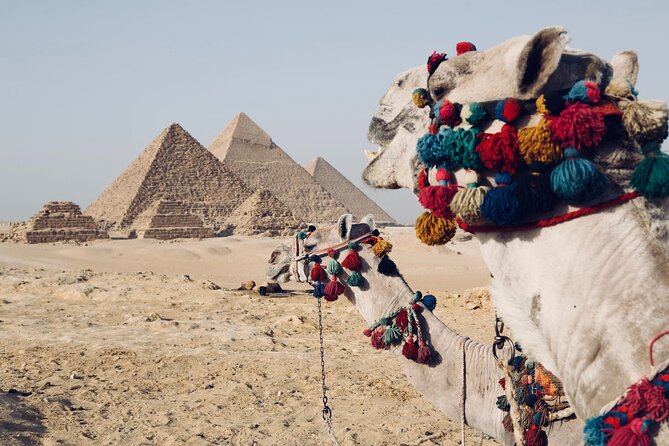
Giza is where the day starts—around 8:00 am. You’ll spend about 3 hours on the plateau, with the main monuments lined up so you can get the big-picture story quickly: the Great Pyramids of Cheops (Khufu), Chephren, and Mykerinos, plus the Valley Temple and the Sphinx area.
The Valley Temple stop is one of the more memorable moments because it’s tied to the ritual side of the story: priests mummified the dead body of King Chephren here. It’s not just “big rocks.” Your guide’s job is to connect the locations to how the funerary process worked.
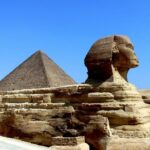
Then comes the Sphinx. Expect a close-up look at the guardian with the lion body and the head associated with King Chephren. Even if you’ve seen photos before, being there in the desert light hits differently—because you can feel how the complex was designed to dominate the horizon.
A practical tip: if you’re even slightly photo-driven, give yourself a little time to reposition. This stop is one of those places where “one perfect angle” can take longer than you think.
Inside vs Outside: How to Think About Pyramid Entry Fees
The tour includes entry fees, but they’re described as basic area only. Also, the tour doesn’t include going inside any of the pyramids. That’s the key detail that changes expectations.
What you can expect in practice:
- You’ll see the monuments and the main grounds at Giza (and elsewhere).
- If you want to go inside specific pyramid interiors, that’s an add-on you’d handle with the guide on the day.
There’s also a time split in the Giza portion that helps manage the “too much, too fast” problem. After the plateau overview, you get separate short stops (around 30 minutes each) for the Great Pyramid of Cheops and Khafre’s pyramid, then Menkaure’s pyramid later. Those are quick, but they’re sized for people who want to see a lot without spending half a day queueing.
If you hate crowds or narrow tunnels, keep this in mind. Most people are happiest when they pick one “inside” choice (if any) and then enjoy the rest from the outside.
The Giza Stops That Stay Crisp: Cheops, Khafre, Menkaure
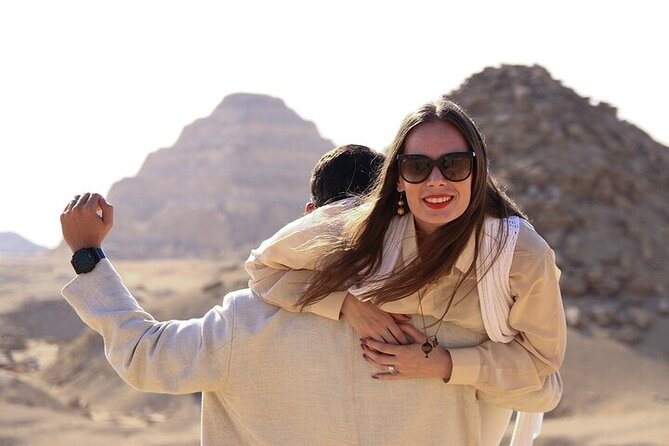
After the plateau overview, the tour moves through the three main pyramid complexes with short, focused time slices. Each stop is brief, but that’s kind of the point: you get to compare shapes and layout without getting stuck in one place too long.
At the Great Pyramid of Cheops, you’ll hear context that goes beyond “this is the largest.” For example, your guide may share how Khufu is tied to sources like inscriptions in his necropolis at Giza and later documents. That kind of detail helps you understand why historians keep coming back to this ruler’s footprint.
Khafre’s pyramid complex is often treated as a layout lesson. You’ll cover the valley temple, Sphinx temple, causeway, mortuary temple, and the pyramid itself. There’s also an archaeological angle here—statues of Khafre have been found in temple areas during excavation work—so you aren’t only looking at monuments, you’re seeing how knowledge about them was built.
Menkaure’s pyramid complex follows the same idea. Expect the valley temple, mortuary temple, and the pyramid structure, plus explanations connected to how parts of the complex changed over time.
One more practical note: these shorter stops can feel intense if you’re exhausted from the morning heat. If you’re the type who needs slow time between sites, tell your guide you’d like extra minutes at one stop and less at another.
Memphis City: Ramses II and the Alabaster Sphinx (Yes, It’s Worth the Detour)
A lot of people come to Cairo and forget that Egypt’s story isn’t only pyramids. This tour doesn’t let you skip that part.
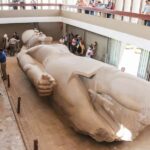
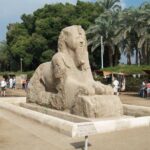
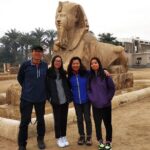
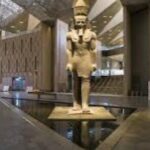
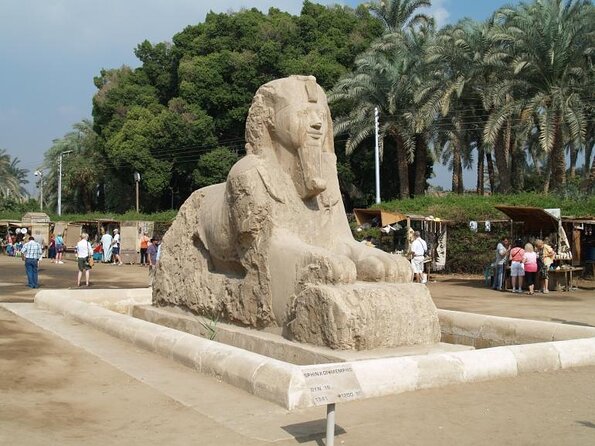
You’ll visit Memphis City for about 1 hour. The highlight here is the colossal statue of Ramses II and the great alabaster Sphinx. It’s also placed in a very old timeline in the tour notes—Memphis dates back to 3100 B.C.—so the stop gives you a sense that Egypt’s power centers shifted, grew, and reused older ideas across dynasties.
Memphis works best when your guide talks about how the capital functioned and how monumental art supported royal messaging. Even if you don’t go deep into archaeology, the feel of the place is different from Giza: less “single giant spectacle,” more “ancient city memory.”
You can also read our reviews of more private tours in Cairo




Dahshur’s Bent and Red Pyramids: When You Want Older, More Human-Scale Wonder
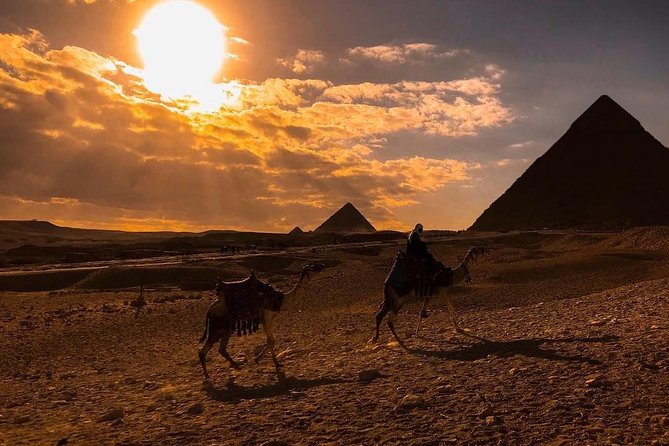
After Memphis, the day heads south to Dahshur, roughly 40 km (25 mi) from Cairo. Here, you’ll see the Bent Pyramid and the Red Pyramid in about 1 hour.
Dahshur is a royal necropolis and is known for pyramids among the oldest, largest, and best preserved in Egypt, built around 2613–2589 BCE. That matters because it shows you pyramid design as something that evolved, not just something that appeared fully finished.
The desert setting also helps. At Giza, the pyramids feel like a fortress wall from afar. At Dahshur, the monuments feel more exposed, more “in the wind,” which can be a refreshing change if you’ve already spent time in the wider Giza plateau area.
Saqqara: Step Pyramid Evolution Plus Pyramid Texts at Unas
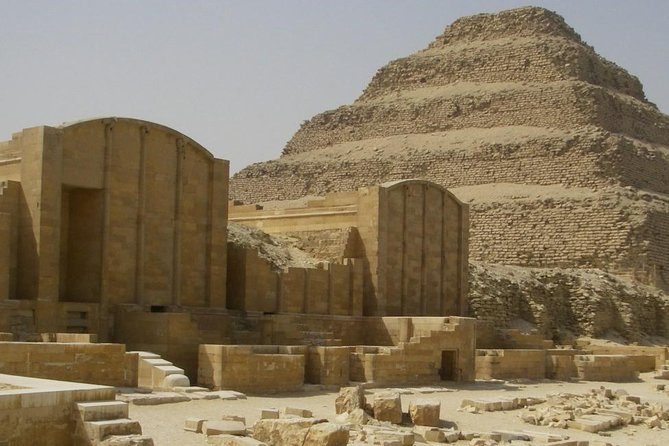
Saqqara is where many people slow down without meaning to. In multiple standout accounts tied to this tour, Saqqara is described as the most beautiful and the one that feels most striking once you’re there.
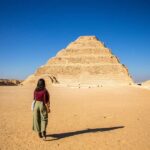
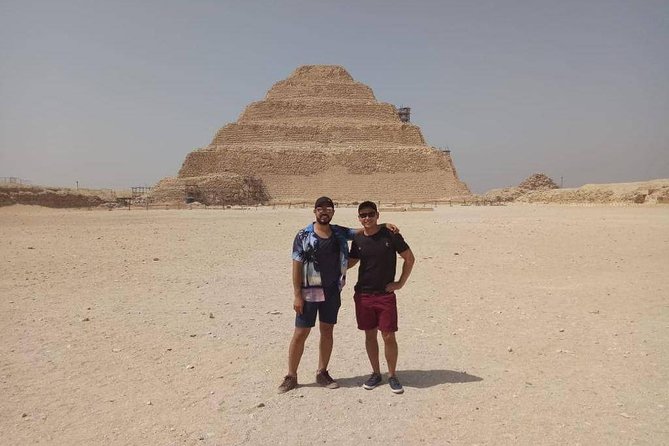
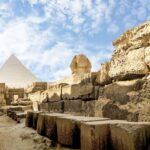
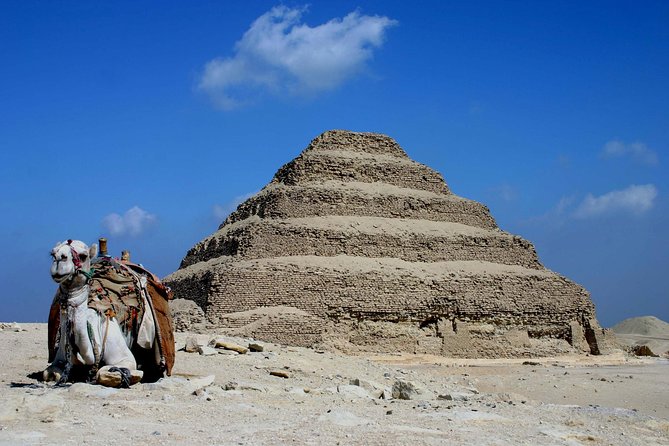
You’ll visit the Step Pyramid built for King Zoser (Zoser). The tour frames it as an important part of how pyramids evolved from the simpler mastaba form into the later “classic” pyramid shape. That is a big deal if you like architecture, because it explains why the site matters beyond being another set of ruins.
Then the tour continues deeper into Saqqara with smaller, more specific stops:
- Pyramid of Unas (about 30 minutes): highlighted for the Pyramid Texts—spells incised into subterranean chamber walls for the king’s afterlife.
- Pyramid of Teti (about 15 minutes): the final resting place for Pharaoh Teti.
- Mastaba of Ti (about 15 minutes): a significant archaeological site with scenes of everyday life and a note about two serdabs.
These shorter stops can feel like “bonus homework,” but the advantage is you’re getting variety without spending all day inside one area. If you’re the type who loves when history gets specific—names, inscriptions, functions—this part of the schedule tends to pay off.
Shopping Stops: Perfume, Papyrus, Cotton, Carpets, and How to Stay in Charge
The tour includes additional shop-style visits listed in the extra info: Paradise perfumes palace & Key of life Papyrus, plus a Flower cotton store and Memphis Hand made carpets. One review also referenced a carpet-making stop and noted that it’s set up so you can decline purchases, but it can still be hard to say no because there’s often a guide and small treats involved.
Here’s the practical way to handle this:
- Decide your rule before you go. For example: no buying unless something is genuinely useful for you.
- If you’re tired, tell your guide you’ll pass. With a private tour, your “no” should matter more than on a big group.
Some accounts say the stops weren’t pushy. Others suggest you might run into constant small requests for money from locals. So don’t treat Cairo like a place where everyone leaves you alone. Build in mental space for it.
Where the Day Can Go Off Track: English Levels, Driver Style, and Photo Time
The biggest factor you can’t fully control is guide quality. This tour includes a guide, and some guides in standout accounts are praised for humor, clear explanations, and even photo skills. Names like Khadija, Mizo, Essam, Rio, Amira, Bibo, Fatma Salah, Mahmoud, Zaineb, and Entissar show up as examples of guides who helped people feel comfortable and kept the day moving smoothly.
But there is also at least one account where communication didn’t land well due to English limitations, and the guest felt they couldn’t connect with the historical context. That doesn’t mean your guide will be the same, but it does mean you should ask about language fit if that’s crucial for your enjoyment.
Then there’s the driver angle. A few reviews mention driving that felt risky, with close calls from fast lane changes and hard braking. On the flip side, other reviews say drivers were professional and that the car was clean and cool.
My advice: if driving style makes you anxious, mention it early. It can help your guide and driver keep things calmer.
Price and Value at $65: What You’re Actually Buying
At $65 per person, you’re paying for a package that includes:
- private A/C vehicle
- hotel pickup and drop-off
- a private guide
- entry fees to basic areas
- bottled water
That’s the value logic. Your money goes to time saved and the convenience of having someone handle transitions between Giza, Memphis, Dahshur, and Saqqara.
The cost risk comes from two places:
- anything beyond basic areas (especially pyramid interiors)
- optional activities and add-ons (some people do camel rides or other paid experiences)
So this tour is usually a strong deal if you’re happy seeing monuments and complexes from the ground up. If you specifically want to go inside multiple pyramids, budget extra.
Who Should Book This Tour (and Who Might Prefer a Shorter Day)
This tour is a great match if:
- you’re seeing Cairo for the first time and want more than Giza
- you like a guided day with someone to explain what you’re looking at
- you want private comfort rather than riding with a large group
- you’re okay with a full schedule and a lot of site-to-site movement
I’d reconsider if:
- you hate long days and want only one “major” complex
- you’re sensitive to heat and long outdoor walks
- you need very advanced English explanations to fully enjoy the sites
If you do book, a smart strategy is to tell your guide what you care about most: architecture, inscriptions, or the funerary story. Then ask for the “why this matters” version, not just the “what it is” version.
Should You Book This Private Giza, Memphis, Dahshur and Saqqara Day Trip?
I’d book it if you want a single day that connects the big pyramid story across multiple sites, with private comfort and included entry fees for basic areas. The fact that this itinerary reaches Memphis and includes Saqqara’s smaller tombs and texts makes it feel more complete than the usual Giza-only plan.
Just go in with two expectations: it’s a long day, and inside pyramid access isn’t part of the included package. If you’re clear about that, you’ll likely get a fun, memorable overview that makes Egypt’s ancient world feel closer, not farther away.
FAQ
How long is the tour?
It runs about 9 hours.
What time does the tour start?
Pickup starts at 8:00 am.
Is this tour private?
Yes. It’s a private tour, and only your group participates.
Does the price include hotel pickup and drop-off?
Yes. Hotel pickup and drop-off are included.
Are entrance fees included?
Yes. Entry fees are included for basic area access.
Are the pyramids inside included?
No. Inside any of the pyramids is not included.
Is bottled water included?
Yes. Bottled water is included.
Is lunch included?
Lunch is not included, but it’s optional.
What sites are included in the day?
You’ll visit Giza Plateau (including the Great Pyramids and the Sphinx area), Memphis, Dahshur (Bent and Red Pyramids), and Saqqara (including the Step Pyramid and other Saqqara pyramids).
What’s the cancellation policy?
Free cancellation is available up to 24 hours in advance for a full refund.
Is there a mobile ticket?
Yes. The tour uses a mobile ticket.