REVIEW · CAIRO
National Museum of Egyptian Civilization Private Guided Tour
Book on Viator →Operated by Twitter Egypt Travel · Bookable on Viator
Cairo has a way of making history feel close—fast. This private guided visit to the National Museum of Egyptian Civilization (NEMC) is a smart way to make sense of Egypt’s long timeline, with an Egyptologist guiding you through thousands of objects in a couple of focused hours. The museum’s organization is built for learning, and having a guide helps you connect what you see to why it mattered.
Two things I really like about this format are the personal pace and the way the guide’s explanations go beyond the labels. Guides such as Mario, Gina, and Dina are specifically praised for clear, helpful context about everyday ancient Egyptian life and what the objects are telling you. The main drawback to plan around: entrance fees are not included (500 EGP per person), so you’ll need to budget a little extra on the day.
In This Review
- Key points worth your attention
- Why NEMC is different from the usual Cairo museum routine
- The real value of a private Egyptologist (not just a ticket)
- Your 9:00 am route inside the museum (and how to not get lost)
- Chronological galleries: Egypt through the ages
- Thematic galleries: big ideas you can actually remember
- The Gallery of Royal Mummies: the moment everyone pictures
- A closer look at what you’ll likely see (and what to pay attention to)
- Artifacts from many sources, one museum story
- How to use the guide’s explanations
- Price and what you’re really paying for at $45 per person
- When this tour fits best (and when it might not)
- Practical tips to make your 2–3 hour visit feel worth it
- Quick compare: private guided value vs. doing it on your own
- Should you book this private NEMC tour?
- FAQ
- How long is the National Museum of Egyptian Civilization private guided tour?
- What time does the tour start?
- Is hotel pickup and drop-off included?
- Is the museum entrance fee included in the tour price?
- What’s included in the tour?
- Is this tour private for just our group?
- What is the cancellation policy?
Key points worth your attention
- Private, Egyptologist-led tour for just your group, so questions don’t get swallowed by a crowd
- Two ways to navigate the museum: chronological galleries plus thematic sections like Writing and State and Society
- Royal mummies gallery included in the museum route, with enough time to actually look, not just pass by
- Hotel pickup and drop-off in an air-conditioned vehicle, which makes Cairo touring feel less stressful
- Museum vibe is described as organized and cool, which matters when you’re walking for a short, efficient visit
- Guides get high marks for explaining what’s behind the artifacts, not just repeating the display text
Why NEMC is different from the usual Cairo museum routine

Most Cairo museum days boil down to one big room or one famous collection. NEMC is set up to teach you Egypt as a full continuum, from early prehistory through changing eras up to modern times. That’s a lot of ground for one visit, but the museum’s layout makes it manageable: parts of the collection are organized chronologically, and other parts are organized thematically.
You’ll notice the museum’s structure almost acts like a built-in lesson plan. The chronological areas include Archaic, Pharaonic, Greco-Roman, Coptic, Medieval, Islamic, and modern and contemporary sections. Then, parallel to that, thematic areas focus on big ideas and daily realities: Dawn of Civilization, the Nile, Writing, State and Society, Material Culture, Beliefs and Thinking, plus the Gallery of Royal Mummies.
Another detail that’s worth knowing: the museum received UNESCO technical help, which fits the overall design goal. In practice, that means the displays are meant to guide you step by step, not just present objects in isolation. With a guide, you get the extra layer—how the pieces fit together.
You can also read our reviews of more guided tours in Cairo



The real value of a private Egyptologist (not just a ticket)
A museum ticket buys entry. This kind of tour buys orientation. Cairo traffic, heat, and the mental load of planning can eat up your energy. The tour is designed to reduce that friction: you get hotel pickup and drop-off, plus an air-conditioned vehicle and bottled water. That helps you show up ready to pay attention.
Then there’s the guide. The difference between reading labels and understanding them is often one good explanation at the right moment. In the feedback for this tour, guides like Mario, Gina, and Dina are praised for going beyond what’s written on the displays. They also tend to connect objects to how people lived—what you might call the human angle of archaeology.
Because it’s private, the guide can also shape the route to your group’s interests. Two hours can feel short in a museum with 50,000+ artifacts. A guide helps you prioritize so you don’t end up hunting for a few highlights while missing the bigger story. And if someone in your group wants to slow down for mummies or writing, you’re not trapped in a fixed group pace.
Your 9:00 am route inside the museum (and how to not get lost)
This tour typically runs 2 to 3 hours, starting at 9:00 am. The visit is centered on one stop: the National Museum of Egyptian Civilization, so you’re not spending your time switching locations. Admission is not included, and the entrance fee is 500 EGP per person, so plan to handle that on site.
What makes NEMC easier is that you can think of it as two museum experiences in one:
Chronological galleries: Egypt through the ages
If you follow the chronological sections, you’re basically tracing the story of Egypt over time. The museum’s areas cover:
- Archaic
- Pharaonic
- Greco-Roman
- Coptic
- Medieval
- Islamic
- Modern and contemporary
For most first-time visitors, this structure is the fastest way to get your bearings. You’ll see how artistic styles, religious symbols, materials, and social life shift as centuries pass. The guide’s role here is key: they can explain what you’re seeing in simple terms, and point out which object details signal a change in era.
Potential drawback: if your group is very focused on one era (say, only Pharaonic Egypt), the chronological layout can feel like a lot of transitions in a short time. A private guide can help you spend more attention where your interests land.
Thematic galleries: big ideas you can actually remember
The thematic sections are where a museum like this turns into personal learning. Instead of asking only what time period something belongs to, you ask what it represents. The thematic areas include:
- Dawn of Civilization
- The Nile
- Writing
- State and Society
- Material Culture
- Beliefs and Thinking
Here’s what I think is so useful about this approach: it turns “a pile of artifacts” into a set of repeatable themes. After you leave, you’re more likely to remember concepts like writing systems, the role of the Nile, or how social structures show up in objects. It’s also a good match for mixed-interest groups—someone may love the royal mummies, someone else might care more about writing and daily life.
If you only have a couple of hours, combining chronological and thematic browsing is the sweet spot. You get the timeline plus the meaning.
You can also read our reviews of more private tours in Cairo






The Gallery of Royal Mummies: the moment everyone pictures
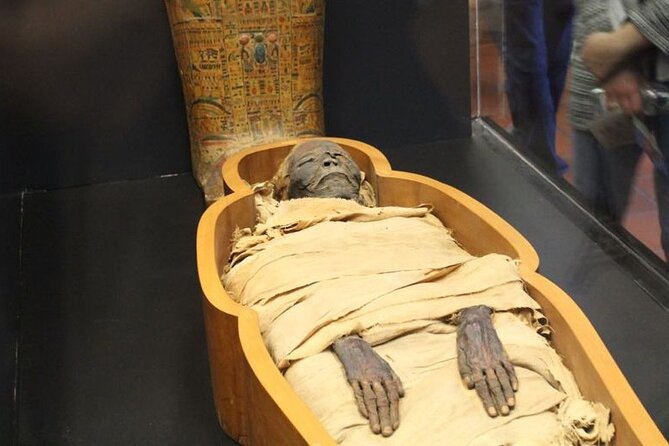
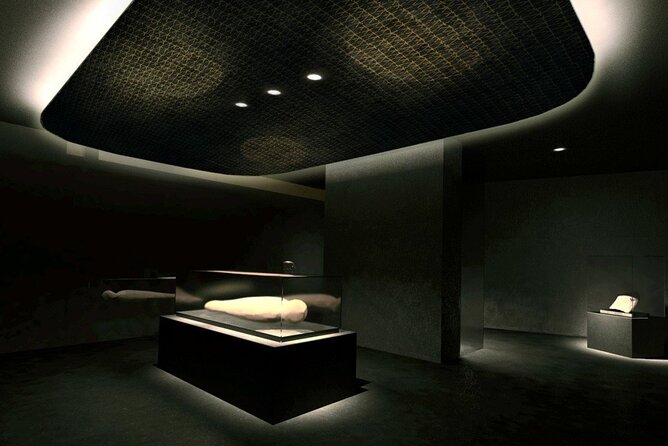
The museum route includes the Gallery of Royal Mummies, which is one of the major draws. The best way to experience this area is slowly and with context. When you have an Egyptologist guide, you’re not just looking at remains—you’re learning why these people were treated with such care, what the funerary choices meant, and how the practice fits into broader beliefs.
Also, the environment helps. In the feedback for this experience, people highlight the museum as serene, organized, and cool—a practical detail that matters because you can only concentrate for so long in a hot city. When the museum is comfortable and well organized, you can actually enjoy what you’re seeing rather than rushing to escape discomfort.
A closer look at what you’ll likely see (and what to pay attention to)
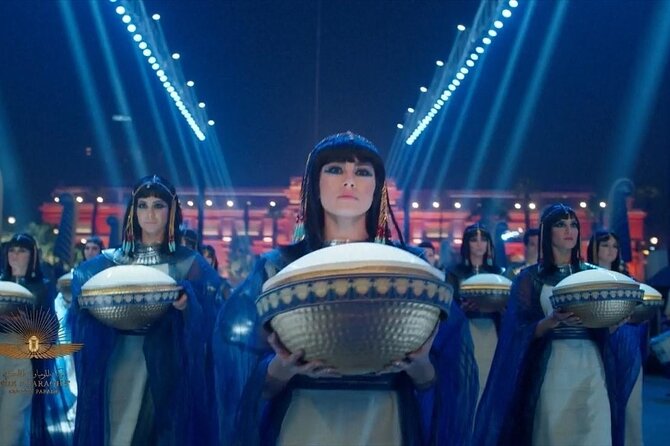
Even without getting lost in every single display case, you can make your visit more satisfying by aiming your attention at a few big categories.
Artifacts from many sources, one museum story
NEMC’s collections were gathered from other Egyptian museums, including the Egyptian Museum, the Coptic Museum, the Museum of Islamic Art, the Manial Palace and Museum, and the Royal Jewelry Museum in AlRead more (the exact location is less important than the point). The practical takeaway: the museum isn’t only one kind of collection. You’re seeing a wider snapshot, shaped to fit NEMC’s teaching structure.
That’s a good thing for first-timers. You don’t have to know where everything “normally” lives to benefit.
How to use the guide’s explanations
The strongest praise in the feedback centers on guides explaining more than signage. I’d treat that as your cue to interact. When something catches your eye—writing, an object with symbols, a style of craft—ask a simple question:
- What does this tell us about everyday life?
- Why is this object important?
- How does it reflect the era we’re in?
You’ll get more out of the tour when you treat it like a conversation, not a lecture. And because it’s private, your questions won’t compete with strangers’ attention.
Price and what you’re really paying for at $45 per person

At $45 per person, this tour is positioned as an affordable way to get a guide without turning your day into a full-day production. The value comes from what’s included versus what isn’t.
Included:
- Air-conditioned vehicle
- Private transportation
- Qualified Egyptologist guide
- Hotel pickup and drop-off
- Bottled water
Not included:
- Entrance fees: 500 EGP per person
- Lunch
So the real “all-in” cost depends on the entrance fee and whatever you choose for food. If you were going to the museum anyway, you’re paying this tour price for the guide and for transportation comfort plus pickup convenience. In Cairo, that convenience is not a small luxury—it saves time, reduces stress, and helps you avoid the extra mental work of coordinating transit when you’d rather be looking at artifacts.
One budgeting note: since entrance is extra, it’s smart to bring some cash or be ready to pay on site. That avoids the awkward scramble mid-visit.
When this tour fits best (and when it might not)
This tour is a great match if you want a short, focused NEMC visit with real context. It’s especially good for:
- First-timers who want a clean path through a museum that covers a lot
- Groups that include different interests—mummies, writing, beliefs, and daily life
- Travelers who prefer private pacing over following a larger group
- People who want the museum experience without spending time on transit planning
It may be less ideal if you want to linger in one wing for hours. In that case, you might feel the time pressure of a 2 to 3 hour schedule. But for many people, that’s exactly the benefit: you leave with a structured understanding instead of museum fatigue.
Practical tips to make your 2–3 hour visit feel worth it

This is a short visit by museum standards. So you need a plan that doesn’t depend on wandering.
- Wear comfortable shoes. You’ll be walking through multiple sections, even with a guided route.
- Treat the thematic areas like “memory anchors.” Pick one or two topics and stick with them long enough to understand the objects.
- Ask your guide to connect eras. For example, if you see something in a Pharaonic context, ask what changes later and why.
- Budget for the entrance fee up front. The museum fee is 500 EGP per person, and it’s not included in the tour price.
- If mummies are your priority, say so early. The guide can help you spend time where you’ll get the most satisfaction.
The biggest win here is mental. You’re not trying to brute-force 50,000+ artifacts in one go. You’re using an expert to filter and interpret.
Quick compare: private guided value vs. doing it on your own
Going alone can work if you’re the type who loves reading every label and you’re comfortable navigating museum sections without a plan. But a private Egyptologist format saves you from two common problems:
1) You can miss the connections between objects and eras.
2) You can spend time trying to figure out what matters most.
With this tour, you get a guided route through both chronological and thematic sections, including the Gallery of Royal Mummies. And you get hotel pickup, bottled water, and air-conditioned comfort so the day stays manageable.
Should you book this private NEMC tour?
I’d book it if you want Cairo to feel organized, not chaotic—and you want your museum time to turn into understanding. The combination of hotel pickup, a private Egyptologist guide, and a route that covers both the timeline and the themes makes this a strong value at $45 per person, even with the separate entrance fee.
Skip it only if you’re set on a long, slow, self-guided museum day where you’ll spend extra time in a single gallery. Otherwise, this is one of the more efficient ways to get a solid grasp of Egypt’s civilizations in just a few hours—especially when the guide’s explanations (think Mario, Gina, or Dina-level storytelling) are part of what people remember most.
FAQ
How long is the National Museum of Egyptian Civilization private guided tour?
It’s about 2 to 3 hours.
What time does the tour start?
The start time is 9:00 am.
Is hotel pickup and drop-off included?
Yes. Hotel pickup and drop-off are included.
Is the museum entrance fee included in the tour price?
No. Entrance fees are 500 EGP per person and admission is not included.
What’s included in the tour?
You get an air-conditioned vehicle, private transportation, a qualified Egyptologist guide, hotel pickup and drop-off, and bottled water.
Is this tour private for just our group?
Yes. It’s a private tour/activity, and only your group participates.
What is the cancellation policy?
You can cancel for a full refund up to 24 hours in advance. If it’s canceled due to poor weather, you’ll be offered a different date or a full refund.