REVIEW · CAIRO
National Museum of Egyptian Civilization, Islamic Cairo Mosques
Book on Viator →Operated by Trip Egypt · Bookable on Viator
Cairo’s mosques and mummies, in one long day. I like the way this trip pairs the Royal Mummies Hall at the National Museum of Egyptian Civilization with two heavyweight Islamic landmarks: the Sultan Hassan complex and the nearby Al-Rifa’i Mosque. You get architecture you can actually see up close, plus Egypt’s past in a modern museum setting.
My other favorite part is the flow: you’re not just “seeing sights,” you’re moving through Cairo’s story—fortress, dynasties, then the royal tombs and preserved remains of pharaohs. One caution: it’s a 9-hour outing with several major stops, so you’ll want comfy shoes and a realistic pace, especially if the weather is hot.
In This Review
- Key highlights you’ll feel fast
- The National Museum of Egyptian Civilization: mummies, scale, and modern storytelling
- Cairo Citadel and Muhammad Ali Mosque: the white-stone centerpiece and city views
- Sultan Hassan Mosque and Madrasa: Mamluk power you can see in the details
- Al-Rifa’i Mosque: royal resting place and style mixing across centuries
- Lunch in downtown Cairo: a break that keeps the day human
- How the $5 price makes sense (and what you’re funding)
- Guides, pacing, and why the day feels smooth
- Who this tour fits best
- Should you book this Cairo Islamic Cairo and NMEC combo?
- FAQ
- How long is the tour?
- How much does the tour cost?
- What are the main stops?
- Is pickup included?
- Do I need cash for museum or monument tickets?
- Is there a mobile ticket?
- How many people are in the group?
- Is lunch included in the schedule?
- What if the weather is bad?
- What is the cancellation policy?
- Is the tour suitable for most people?
Key highlights you’ll feel fast
- Royal Mummies Hall at NMEC in a state-of-the-art museum with tens of thousands of artifacts
- Sultan Hassan Mosque and Madrasa: big courtyard energy, tall minarets, and Mamluk-era design details
- Al-Rifa’i Mosque for a royal resting-place visit with Ottoman, Mamluk, and Persian style influences
- Cairo Citadel + Muhammad Ali Mosque with the iconic white-stone look and strong skyline views
- Small group (max 20) so the day stays organized instead of turning into a stampede
- Pickup and mobile ticket make it easier to start strong without hunting for the right entrance
The National Museum of Egyptian Civilization: mummies, scale, and modern storytelling
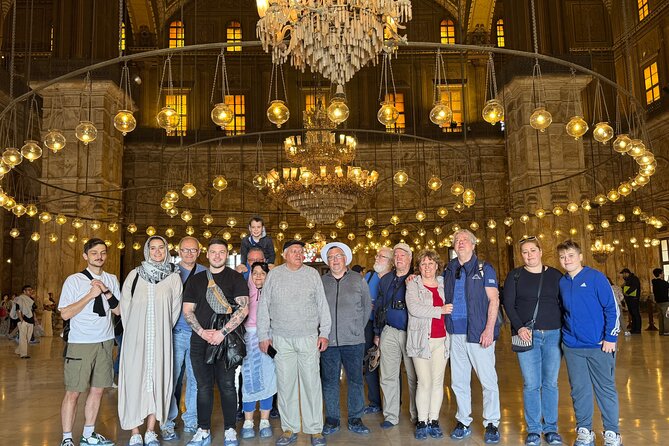
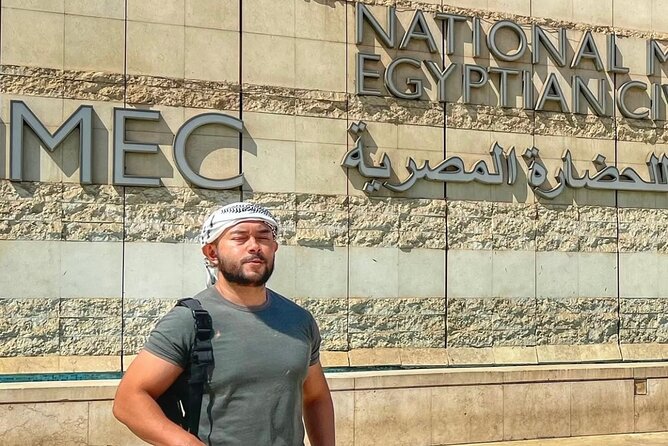
The National Museum of Egyptian Civilization (NMEC) is where the day kicks into a “wow” register. This museum is built to handle major themes, and the numbers are impressive: over 50,000 artifacts spanning ancient, medieval, and modern periods. That scope matters, because it helps you connect the dots across time instead of treating Egypt as one frozen snapshot.
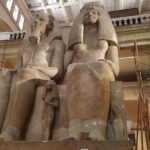
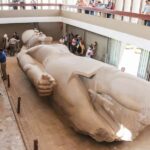
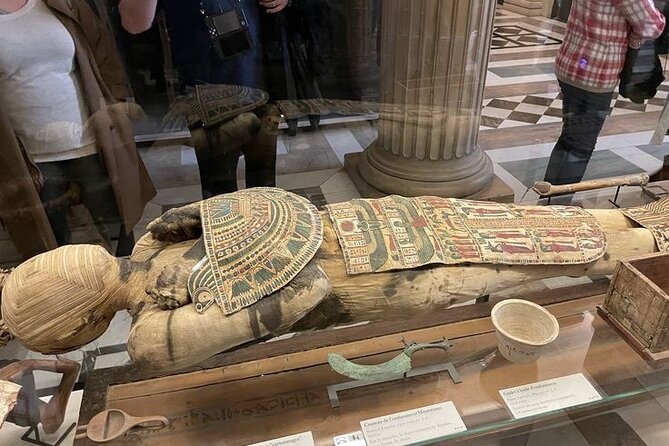
The star stop is the Royal Mummies Hall. You’re not just looking at objects; you’re seeing preserved remains of ancient Egyptian kings and queens, presented with enough context that your brain can actually organize what you’re seeing. If you’ve ever felt like museums are either too technical or too superficial, this one tends to land in the middle—clear narrative, strong visuals, and plenty to linger over.
You’ll also appreciate that the museum time is set at about 2 hours, which is a practical length. It’s long enough to get bearings, then focus on the areas that catch your attention, without feeling like you’re being rushed at the door. The tour lists admission as free for this stop, which is a big part of the overall value.
Practical tip: NMEC is a museum day, so you’ll get more out of it if you slow down for a few minutes at each section. Take one or two “anchor” moments—like a hall, a theme, or the mummies—then build out from there.
You can also read our reviews of more museum experiences in Cairo

Cairo Citadel and Muhammad Ali Mosque: the white-stone centerpiece and city views
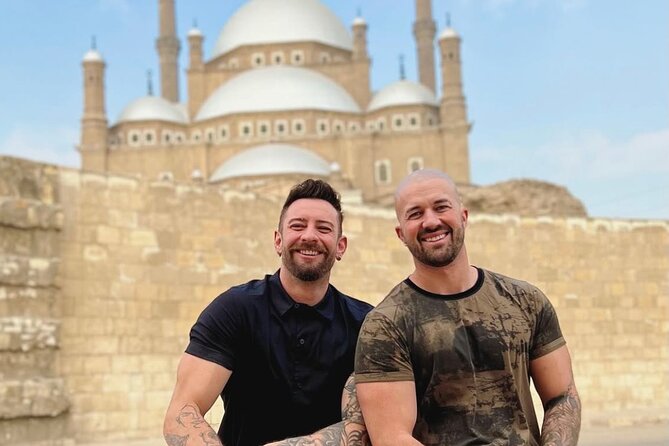
After NMEC, you head into the historic center and up toward the Cairo Citadel. This is a massive medieval fortress, and it still shapes the city’s identity. The tour makes a smart choice here: you’re going from museum time (indoors, controlled) to fortress time (outdoors, exposed). It’s a good rhythm shift.
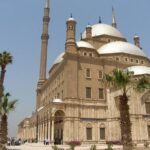
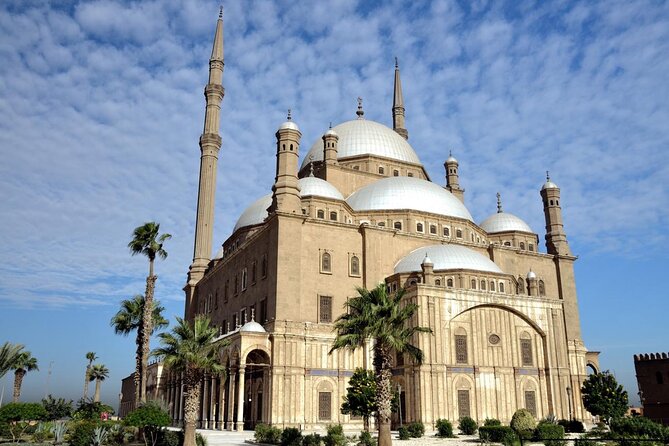
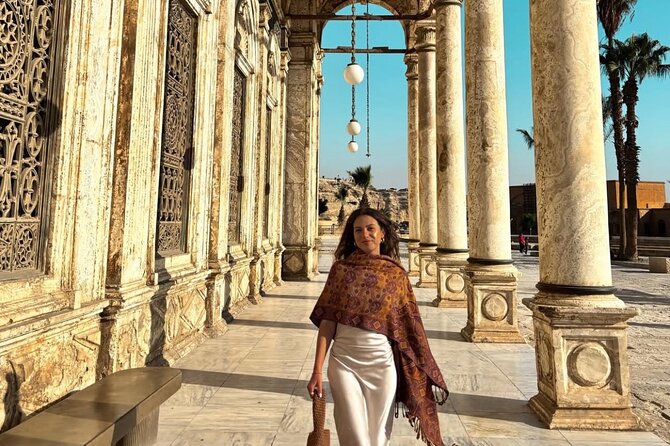
Inside, the spotlight is Muhammad Ali Mosque, often called the Alabaster Mosque because of its smooth white stone. Even if you’re not a mosque-specialist, you can recognize why people photograph it: the scale, the brightness against darker surroundings, and the way it visually anchors the citadel complex.
And here’s the value beyond the photo: once you’re up there, you get a real sense of Cairo’s size and layers. The tour also signals stunning views of the Cairo skyline, and in practice that means you’ll see why this elevated position mattered for control, defense, and influence.
The day’s context expands too. Your guide leads you through key historic-area connections that often get lumped together on maps: Khan Al-Khalili Market and the Egyptian Museum, where Tutankhamun’s tomb is listed as being found. Even if you don’t plan to go deep into every market stall or exhibit, having that guided threading helps Cairo feel coherent rather than scattered.
The stop for this section is about 1 hour, and that’s the main tradeoff. It’s enough time to hit the must-see highlights and capture the big views, but not enough to wander slowly for an hour and still feel satisfied. If you hate feeling rushed, keep your expectations aligned: this is a sampler with sharp focus.
Sultan Hassan Mosque and Madrasa: Mamluk power you can see in the details

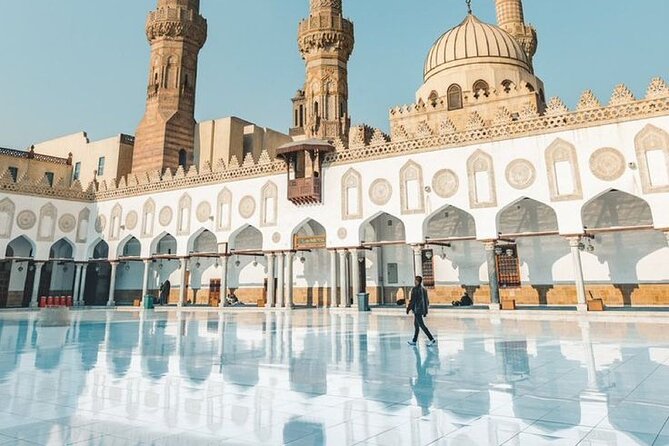
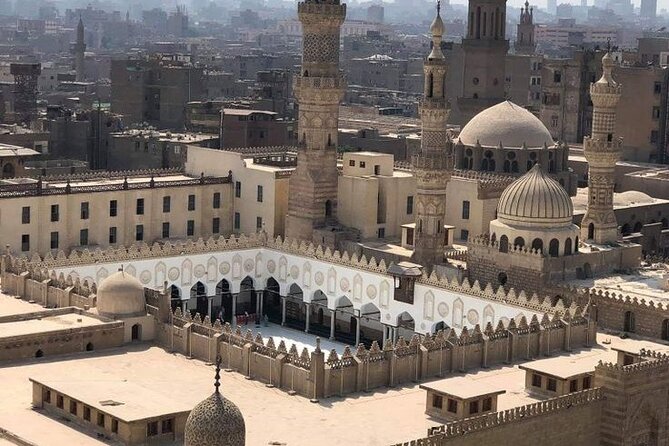
Next comes one of Cairo’s most imposing Islamic-era monuments: Mosque and Madrasa of Sultan Hassan. This is a 14th-century complex, and it carries the kind of confidence you notice immediately—the towering minarets, the grand courtyard, and the big prayer hall atmosphere.
What I like most here is that the design isn’t just decorative. The complex is known for intricate Mamluk design, including geometric patterns and Arabic calligraphy. Those details can be hard to appreciate when you’re watching from far away, which is why the guided pacing matters. With a guide who explains what you’re looking at, the patterns start to feel purposeful instead of random.
You get about 1 hour at this stop, and that works well if you like a structured “see it, understand it, then take photos” approach. The risk is that if you’re the kind of visitor who wants to sit in quiet contemplation for a long stretch, an hour can feel short. Still, for most people, it’s enough time to appreciate the courtyard, the scale, and the main interior features.
Practical note: mosques are working spaces. Dress matters. Bring something that covers appropriately and be ready for temperature shifts between sun and shade.
Al-Rifa’i Mosque: royal resting place and style mixing across centuries
Right near Sultan Hassan is Al-Rifa’i Mosque, built in the 19th century. This stop has a different energy than Sultan Hassan. Instead of strict medieval austerity, you see a more layered blend of influences—Ottoman, Mamluk, and Persian styles—all showing up in the feel of the architecture.
The tour highlights it as a resting place for Egypt’s kings and prominent figures, and it also notes Iran’s last Shah. If you like monuments with human stories behind them, this is a strong emotional change from museum glass and labeled artifacts. It’s still history on display, but it’s history tied to a sacred space.
Inside, you’ll have the chance to look up at the soaring ceilings, notice the marble pillars, and track the details that show the style mixing. The “why it matters” here is simple: Cairo’s Islamic architecture isn’t one era. It’s a long conversation where later rulers borrow from earlier styles—and this mosque makes that visible.
You’re allocated about 1 hour again. That keeps the day balanced, but it’s also why you should pick your priorities: interiors and design details, or slower photo-taking. Try not to do both equally, or you’ll end up feeling behind.
Lunch in downtown Cairo: a break that keeps the day human
Some tours toss you out in a market and call it lunch. This one actually builds in a 30-minute stop at a downtown shop. It’s described as an Egyptian lunch break—so it gives you a chance to reset between big monuments.
This kind of break matters more than people think. By this point you’ve switched environments a couple times: museum air to citadel sun to mosque shade. If you skip food, you’ll move slower for the rest of the day. If you get a quick, real meal, you’ll stay engaged during the final monument leg.
If you’re picky about spice levels, eat something mild first and save the bolder choices for later in your trip. And if you’re traveling with kids or anyone sensitive to heat, use lunch as the moment to cool down and plan your next walk.

How the $5 price makes sense (and what you’re funding)
At $5 per person, this is one of those Cairo deals that only feels “too cheap” until you look at what’s included. The tour is listed at about 9 hours, includes pickup, and uses a mobile ticket approach. Most importantly, the stops at NMEC, the citadel area, and the two mosque sites are marked as admission ticket free.
So what are you really paying for? In practice, you’re paying for:
- A guide who connects the story across stops
- A driver and car time so you’re not stuck navigating between major sites
- The structured schedule so you don’t waste half the day figuring out entrances and timing
That’s also why the small group cap (max 20 travelers) matters. It helps keep the day organized, and it makes it more likely you’ll get attention when you have questions or want a photo angle explained.
One more value note: confirmation is described as coming at booking time, which reduces uncertainty and lets you plan around the rest of your Cairo itinerary.
Guides, pacing, and why the day feels smooth
A big theme in the experiences people describe with this kind of route is not just knowledge, but organization. The guide role here is practical: they point out what matters, give historical details without turning it into a lecture, and keep you moving in a logical order.
The names that show up repeatedly—Sayed, Mina, Karim, Hannah, Mohammed, Zainab, Tamer, and others—follow a similar pattern: friendly approach, clear explanations, and an ability to make the day feel safe and controlled. Some guides also take an active role with photo help, and a few are noted for working well even with kids—like when the day included family members aged 9 and 14.
If you care about language, there’s at least one mention that languages can be handled in a way that feels comfortable. In other words, you’re not just handed a script and left to figure it out.
What to expect from the pacing:
- Each major monument gets about 1 hour (with the museum longer)
- The group stays together, with the car waiting among stops
- You get time for key city markers like Khan Al-Khalili Market during the citadel stretch
This is not the type of tour where you spend three hours alone wandering. It’s a “guided hits” style day—very efficient.
Who this tour fits best
This day works best if you want a strong mix of:
- Museum + monuments (indoors and outdoors)
- Islamic-era architecture in central Cairo
- A guided framework that ties everything together
You’ll also enjoy it if you like the idea of a guided day that doesn’t feel chaotic. The group size limit helps, and the pickup plus car between stops makes it easier than DIY if you’re short on time.
If you want deep, slow exploration of one single site—like spending an afternoon inside NMEC only, or doing a very long architectural walk—then this route may feel packed. But if your goal is to cover the big names without burning the whole week on logistics, it’s a smart choice.
Should you book this Cairo Islamic Cairo and NMEC combo?
If you like value and structure, I’d lean yes. Five dollars for a guided day that hits NMEC with Royal Mummies Hall, the Citadel and Muhammad Ali Mosque, plus Sultan Hassan and Al-Rifa’i, is hard to beat—especially since admissions are listed as free for those key stops.
I’d hold off only if you hate tight time windows. You’ll be on the move for about 9 hours, and the schedule keeps each site within a manageable visit length. Also, the tour notes it needs good weather. If Cairo weather is turning unpredictable on your dates, keep a flexible plan.
FAQ
How long is the tour?
The duration is listed as about 9 hours.
How much does the tour cost?
It’s priced at $5.00 per person.
What are the main stops?
The day includes the National Museum of Egyptian Civilization (NMEC), the Cairo Citadel area with Muhammad Ali Mosque, Mosque and Madrasa of Sultan Hassan, Al-Rifa’i Mosque, and a lunch stop in downtown Cairo.
Is pickup included?
Pickup is offered from your meeting point in Cairo.
Do I need cash for museum or monument tickets?
Admission ticket is listed as free for the NMEC stop and the other major sightseeing stops included in the tour.
Is there a mobile ticket?
Yes, the tour includes a mobile ticket.
How many people are in the group?
The maximum group size is 20.
Is lunch included in the schedule?
There is a scheduled lunch stop in downtown Cairo, with about 30 minutes allocated.
What if the weather is bad?
The tour requires good weather. If it’s canceled due to poor weather, you’ll be offered a different date or a full refund.
What is the cancellation policy?
Free cancellation is available up to 24 hours in advance for a full refund; within 24 hours, refunds are not provided.
Is the tour suitable for most people?
The tour states that most travelers can participate, and service animals are allowed.