REVIEW · CAIRO
Guided trip to Giza pyramids Sphinx with lunch
Book on Viator →Operated by Egypt Tours Online · Bookable on Viator
Four hours at Giza can feel like a lifetime. You’ll hit the Great Pyramids, the Sphinx, and the Valley Temple with a guide who helps you make sense of what you’re seeing, plus a practical lunch option to keep energy up. It’s timed for people who want the big sights without getting stuck on logistics.
I like that the tour is built around hotel pickup and drop-off with a private A/C vehicle, so your day starts fast. I also like the pacing: the stops are short enough that you actually get to look, while admission tickets are handled for the main viewing areas.
The main trade-off is time and extras: you’re focusing on the basic site areas, while inside-pyramid entry and the optional camel ride cost extra, and lunch depends on your choice.
In This Review
- Key highlights you’ll care about
- Four-hour Giza loop: how the day actually flows
- Pickup and first views: the 8:00 am start at Giza Pyramids
- Giza Plateau stop: what the Plateau actually gives you
- Cheops (Khufu) in 30 minutes: focus on what you can connect to
- Khafre (Chephren) Pyramid complex: where the Sphinx story clicks
- Menkaure (Mykerinos) Pyramid: a quieter stop with context
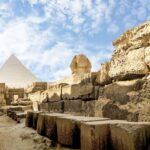
- Great Sphinx and Valley Temple: the photo finale you’ll remember
- Lunch at koshari level: what you can expect and how to plan for it
- Camel ride option: worth it only if you’re okay with extra cost
- Photo and comfort tactics that actually work at Giza
- Value math: what you’re really paying for at about $28
- Who should book this Giza guided tour
- Should you book this Giza guided tour?
- FAQ
- Can I visit the pyramids from inside on this tour?
- Is the camel ride included?
- Is lunch included?
- Are hotel pickup and drop-off included?
- What tickets do I need?
- What’s the cancellation window?
Key highlights you’ll care about
- Private, guided Giza route that’s designed for limited time
- Short, purposeful stops with admission tickets included for the main areas
- Sphinx + Valley Temple as a photo-focused finale, not just a quick pass-through
- Optional camel ride (extra charge) and lunch at a local restaurant (optional)
- Clear convenience: pickup, drop-off, and bottle water included
- Mobile ticket for easier entry on the day
Four-hour Giza loop: how the day actually flows
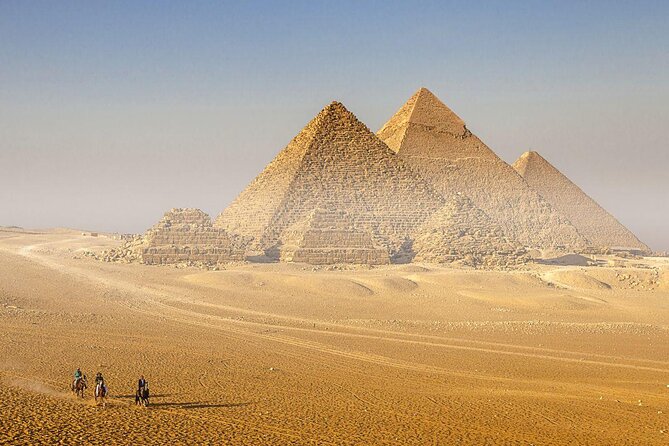
This is a half-day tour based around one simple idea: see the core monuments at Giza without spending your precious hours figuring out where to go next. You start around 8:00 am, typically with hotel pickup in Cairo or Giza, then you drive to the Plateau and begin structured viewing.
The timing matters here. Giza isn’t a slow museum walk—you’re outside, you’ll be walking and standing, and the light changes quickly. This itinerary spreads visits across the site so you can take photos and still get real context from your guide.
Also, because it’s a private tour, you’re not stuck waiting for other people to finish a conversation, bargain, or camera setup. Your guide can adjust the pace for families, solo travelers, or anyone with mobility needs inside what the tour format allows.
You can also read our reviews of more guided tours in Cairo



Pickup and first views: the 8:00 am start at Giza Pyramids
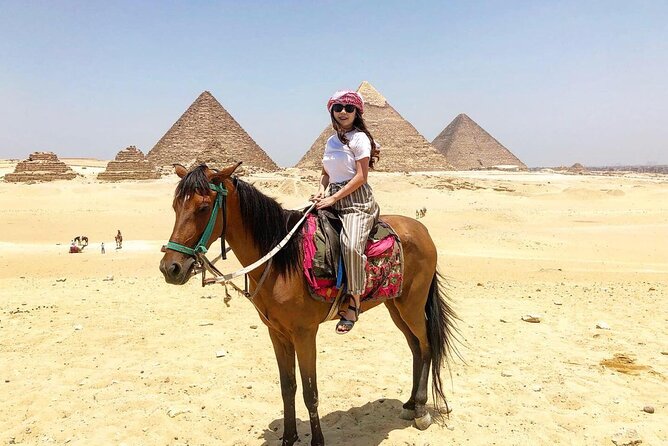
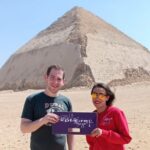
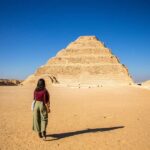
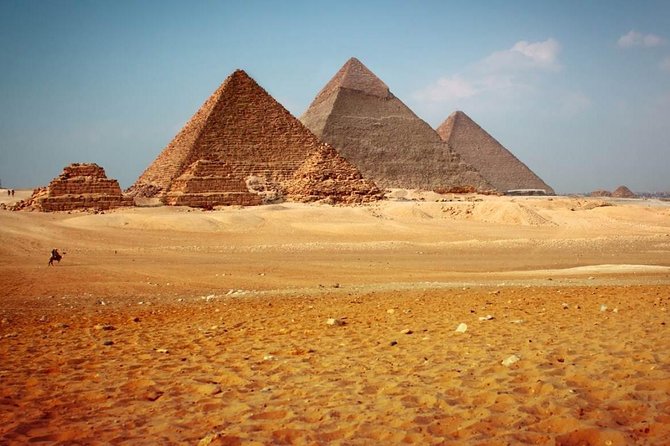
After pickup, you head straight toward the Giza Plateau area and begin with the Pyramids themselves. The first stop centers on the three main pyramids people come for: Cheops, Chephren (often called Khafre), and Mykerinos (Menkaure). Even if you’ve seen them in photos a hundred times, you’ll notice something instantly in person: scale that feels almost unreal when you’re standing near it.
You’re given about one hour at the first major area (with admission ticket included). This is your best chance to get the classic pyramid shots before you start moving between the complexes.
Two optional add-ons can change your first hour:
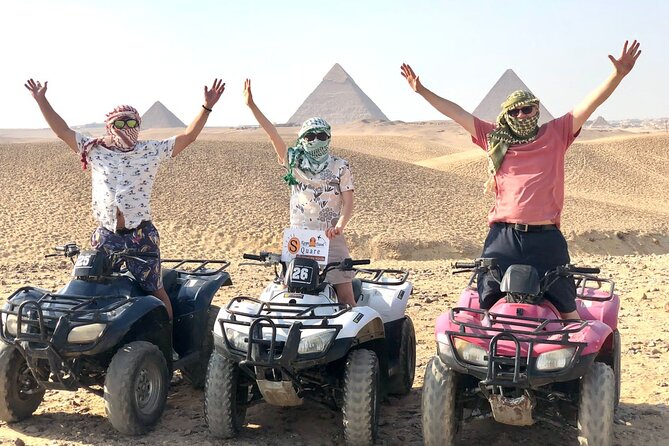
- You may have the chance to visit inside a pyramid or take a camel ride around the pyramids, but both are extra charge.
If those matter to you, ask before you commit on the day so you can plan your time. With only a half day, it’s easy for an extra activity to steal time from photos and guide explanations.
One practical bonus: the guide and driver setup is designed to keep you moving smoothly. Multiple reviews you’ll see for this style of tour mention punctual starts and guides who help with picture spots—this setup tends to work well when you care about getting the best angles.
Giza Plateau stop: what the Plateau actually gives you
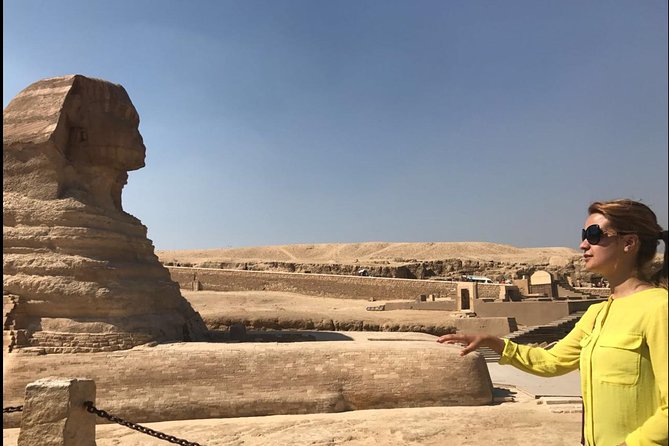
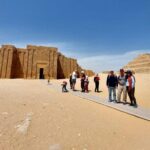
Next is a shorter 30-minute stop on the Plateau. This is where the “Giza Plateau” label stops being just a name and becomes the geography of the whole necropolis.
Your guide will point out that the Plateau is part of the Fourth Dynasty Giza Necropolis, and that the site includes more than the big pyramids and the Sphinx. It’s tied to cemeteries, ancient worker areas, and related structures that support how you should interpret the monuments as a complex, not a single landmark.
Why I like this stop: it gives you a mental map. When you understand that the pyramids sit within a wider funerary landscape, the individual pyramid complexes start to make more sense.
It’s also a “reset” moment. Thirty minutes is enough time to absorb the view, take wide photos, and then move on to the more specific pyramid complexes without feeling rushed through everything.
Cheops (Khufu) in 30 minutes: focus on what you can connect to
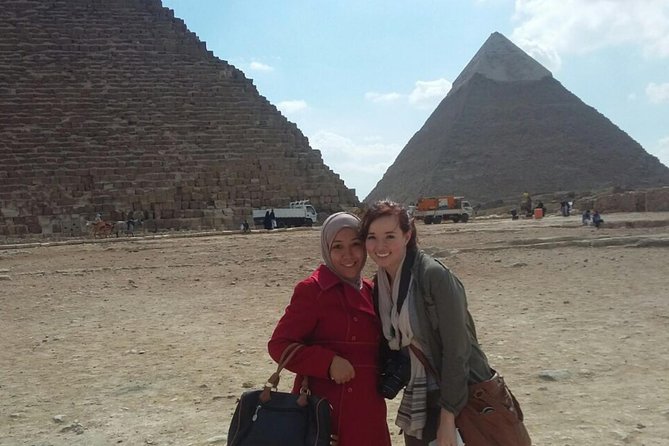
After the Plateau overview, you move into a 30-minute stop associated with the Great Pyramid of Cheops (Khufu). Even in a short slot, this is one of the easiest places to get hooked—because Cheops is so central to what most people think of as the Giza story.
Your guide may share historical context about how what we know about Khufu comes from inscriptions found in his necropolis at Giza and later documents, plus later texts that mention him. In other words, it’s not just “this is an old building.” It’s a story pieced together from written traces.
This stop also includes the admission ticket for the basic area, so you can focus on the monument itself rather than managing entrance steps on the fly.
Practical thought: if you’re serious about photography, this is often where you’ll want to slow down. The Great Pyramid can be photographed from multiple angles depending on where you’re standing, and that’s where a guide who knows good spots becomes more valuable than you’d expect.
Khafre (Chephren) Pyramid complex: where the Sphinx story clicks
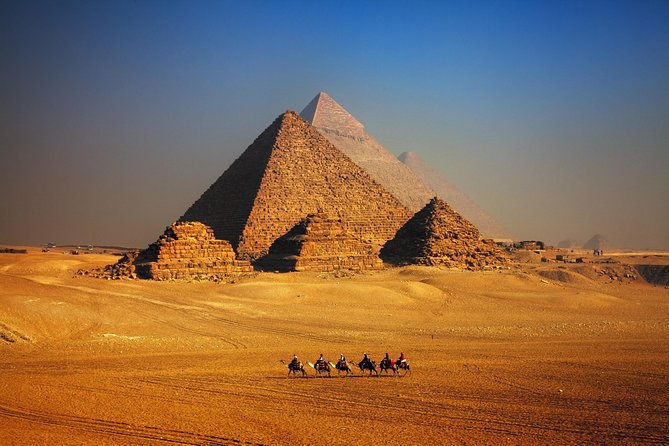
Your next 30-minute stop is Khafre’s Pyramid and its surrounding complex. Here’s where the tour begins to link the pieces together.
Your guide will likely describe the complex as more than just the pyramid. It includes a valley temple, a Sphinx temple, a causeway, a mortuary temple, and, of course, the king’s pyramid. Even the mention of statues found in temple areas helps you picture the original use of these spaces rather than treating them like ruins frozen in time.
It also sets up the next moment: the Sphinx. At this point, you’ll get why the Sphinx is not just a random statue. It’s part of the larger funerary setting and the broader complex design.
Time check: you only get about half an hour here, so if you’re the type who likes to read every sign and stare at details, plan to take fewer photos but longer looks. Otherwise, you’ll feel like you saw everything and remembered nothing.
A few more Cairo tours and experiences worth a look



Menkaure (Mykerinos) Pyramid: a quieter stop with context
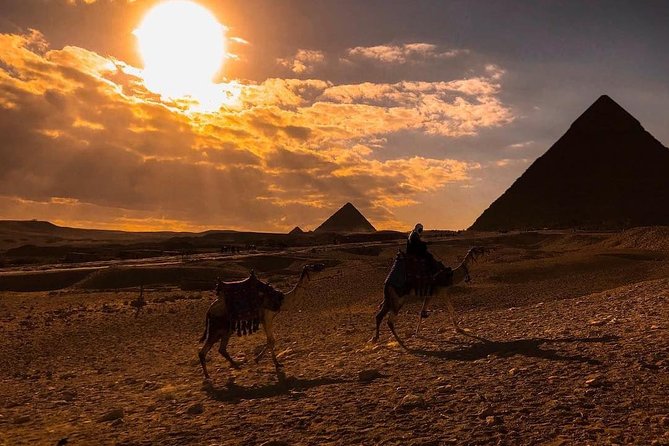
The 30-minute stop for Menkaure Pyramid rounds out the “three big pyramids” set with a similar complex structure. Menkaure’s area includes a valley temple, a causeway, a mortuary temple, and the king’s pyramid.
The guide may mention that during the 5th Dynasty, a smaller ante-temple was added to the valley temple, and that valley and mortuary temples once contained statues associated with Menkaure. Even if you can’t verify every detail on-site from where you stand, these facts help you keep the story coherent as you move.
I like this stop because it slows the tour just enough to reduce the “pyramid overload” effect. You’re still seeing something major, but it’s a chance to notice differences in scale, placement, and how each complex fits into the wider Giza plan.
Great Sphinx and Valley Temple: the photo finale you’ll remember
This is where the tour earns its biggest wow-factor.
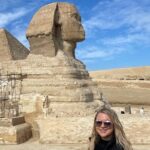
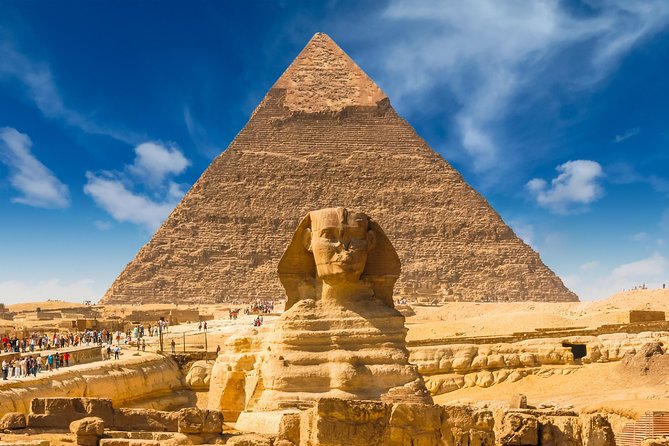
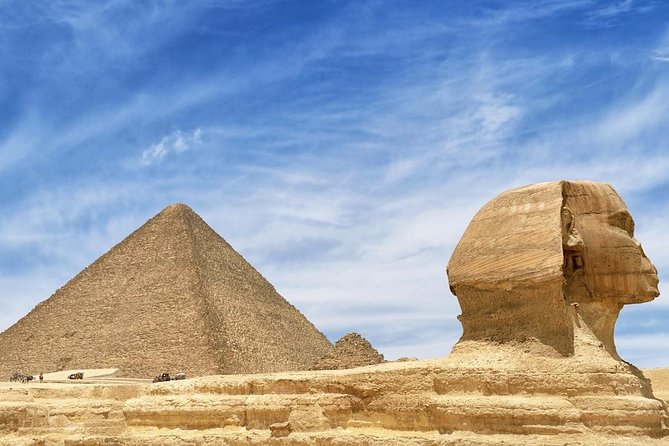
You end with a visit to the Valley Temple, described as the place where priests mummified the body of king Chephren. Then you get the close-up look at the Sphinx, the legendary guardian with a lion body and the head of Chephren.
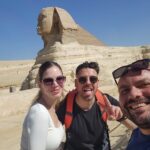
This part of the day is timed as a one-hour finale (with admission ticket included), and it’s intentionally structured to give you room for photos. The description of the experience notes that you can get amazing pictures of yourself with the Sphinx in many fun positions, with help from your guide.
That “help with pictures” detail is small, but it matters at Giza. If you’ve ever tried to photograph the Sphinx while other people crowd in front of your lens, you know it’s tough to get clean shots. A guide who can point you toward good angles and timing makes the difference between blurry, cramped photos and images you’ll actually keep.
Also, having the Valley Temple context before you fully focus on the Sphinx helps. The Sphinx becomes less of a face in the sand and more of a piece of a larger ceremonial setting.
Lunch at koshari level: what you can expect and how to plan for it
Lunch is listed as optional and described as happening at a local restaurant (often koshari). That’s a classic Egyptian comfort-food choice, and it’s practical after a morning of walking, standing, and heat.
If lunch is important to you, plan to confirm the timing with your guide. The tour is only about four hours, and the morning already includes several fixed stops. You’ll want lunch to feel like a recharge, not a rushed interruption.
If you’re not hungry yet, skip the lunch option and bring a backup snack. The tour includes bottle water, which is great, but you might still want something small just in case your energy drops later than expected.
Camel ride option: worth it only if you’re okay with extra cost
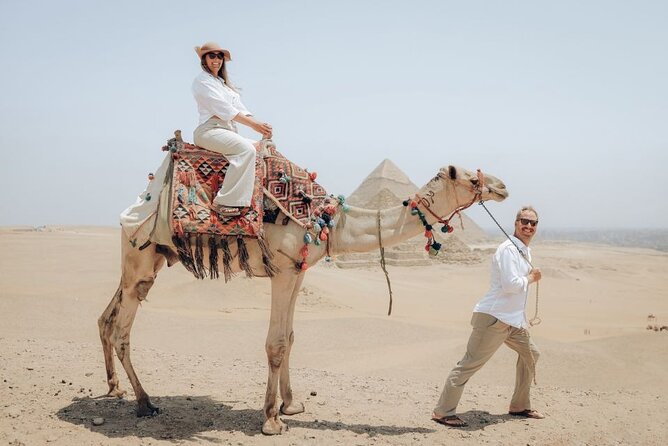
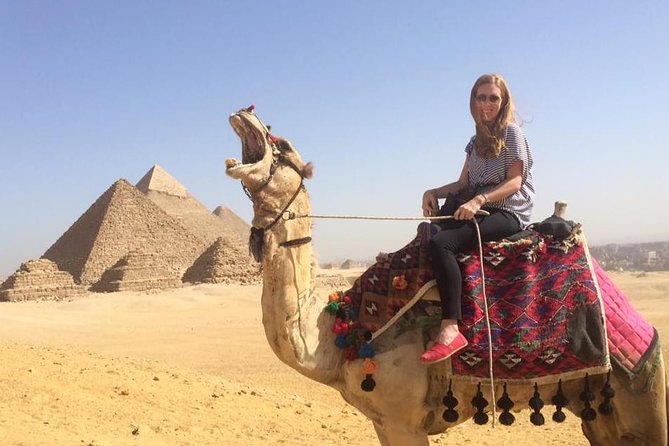
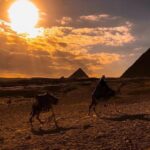
There’s an optional camel ride around the great pyramids mentioned as extra charge. Some tours build in camel rides as a core component; this one frames it as a bonus.
So think of it like this: the ride can add a fun memory and a different perspective, but it can also eat into time you might want for pyramid photos or Sphinx/Valley Temple viewing. If you want the camel ride, I’d treat it as a priority you protect, not an accidental add-on.
If you skip it, you still get the full guided monument route and a strong finale.
Photo and comfort tactics that actually work at Giza
You’ll likely spend your time doing two things at Giza: photographing and listening. This tour is designed to support both, especially at the Sphinx, where you get guide help for positioning.
To make your photos better fast:
- Wear shoes you can stand in and walk in for several stops. You’ll move between complexes.
- Bring sun protection, because the day starts early but the sun gets intense.
- If you care about wide shots, ask your guide where to stand before you take the first photo. The best spot is often a step away from the crowd line.
Also, the private A/C vehicle and bottle water are more than perks. They help you avoid the common half-day problem: feeling tired and dehydrated before you hit the best monuments.
The reviews for this type of tour often highlight guides who pick good photo angles and who help solo travelers get pictures. If that matters to you, this format is a solid fit.
Value math: what you’re really paying for at about $28
At $28 per person, the value depends on what you personally want to spend your money on.
Here’s what the price setup includes:
- Tour guide
- Private tour (your group only)
- All transfers by private A/C vehicle
- Bottle water
- Hotel/port pickup and drop-off
- Admission tickets for the main areas during the planned stops
- Mobile ticket
Then here’s what costs extra or is optional:
- Lunch is optional (local restaurant, like koshari)
- Camel ride (optional)
- Inside pyramid entry (not included; extra charge)
- Personal items
So the bargain isn’t just the headline cost. It’s the fact that the tour handles transport, guide time, water, and main admission steps. If you tried to do this solo, you’d spend real time (and often real money) figuring out routes, tickets, and timing while juggling photographers and crowds.
Is it the cheapest way to see Giza? Maybe. Is it a smart way to see the key monuments with less friction? In most cases, yes.
Who should book this Giza guided tour
This tour fits best if you want:
- A half-day plan that covers the core Giza sights
- A guide to connect monuments to stories and layout
- Convenience: pickup, A/C transport, and drop-off handled
- A photo-friendly finale at the Sphinx and Valley Temple
It’s also a good call for families and first-timers. Several review-style details in the provided information point to guides who work well with different group needs, including families with toddlers. The private format helps because you can move at a pace that keeps everyone steady.
If you’re the type who wants long, slow exploration or you specifically want inside-pyramid access, you might feel the time limits. In that case, you’d likely want a different plan—or you’ll need to treat interior visits as a carefully chosen trade-off.
Should you book this Giza guided tour?
If your goal is the classic Giza experience—Pyramids of Cheops/Khafre/Menkaure, the Sphinx, and the Valley Temple—this is a strong option because it’s structured and convenient. You get the main monument areas with admission handled, plus a guide who helps you make sense of what you’re seeing.
I’d book it if:
- You have only a half day in Cairo
- You want a smooth pickup/return setup
- You value good photo angles and guided pacing
- You’re fine with basic site areas and you’ll skip (or pay extra for) inside-pyramid entry
I’d think twice if:
- Inside-pyramid access is non-negotiable for you
- You want a lot of free wandering with no structure
- You hate additional add-ons like camel rides and souvenir shop stops (some shop stops are listed in tour notes, so you may encounter them depending on the day)
FAQ
Can I visit the pyramids from inside on this tour?
Inside-pyramid entry is not included. The chance to visit inside a pyramid is mentioned as an extra charge option, so you’d need to pay separately if you want that.
Is the camel ride included?
No. The camel ride is optional and listed as an extra charge.
Is lunch included?
Lunch is optional. If you choose it, it’s described as being at a local restaurant (like koshari).
Are hotel pickup and drop-off included?
Yes. The tour includes hotel (or port) pickup and drop-off, plus transfers by private A/C vehicle.
What tickets do I need?
The tour description indicates mobile ticket use, and admission is included for the main planned areas. Entry fees are described as covering basic area only, not inside pyramids.
What’s the cancellation window?
Free cancellation is available up to 24 hours in advance of the experience’s start time for a full refund.