REVIEW · CAIRO
Giza Pyramids ,Sphinx ,Sakkara & Dahshur.
Book on Viator →Operated by Twitter Egypt Travel · Bookable on Viator
Pyramids, in one smooth day. This door-to-door tour strings together Giza, Saqqara, and Dahshur with an Egyptologist driver-guide and air-conditioned comfort, so you spend less time juggling transport and more time seeing tomb architecture that predates Giza.
I especially like the format because you get a real guide working as you go—one reviewer highlighted Nader Francis as friendly, reputable, and full of relevant facts. I also like that the itinerary is built to hit the major highlights efficiently, starting with Giza’s Great Pyramids and Sphinx, then moving to earlier giants like Saqqara’s Step Pyramid and Dahshur’s pyramids.
One consideration: entry fees and lunch are excluded, so you’ll want to budget extra and plan your day around a mid-day break at Saqqara. Also, it’s an 8-hour day with walking at archaeological sites, so bring a moderate-fitness mindset.
In This Review
- Key highlights at a glance
- A practical way to see Giza, Saqqara, and Dahshur in one day
- Morning at Giza: Cheops, Chephren, Mycerinus, and the Great Sphinx
- After lunch at Saqqara: Djoser’s Step Pyramid and the Nobles’ tombs
- Dahshur pyramids: Red and Bent pyramids from Senefru’s reign
- Egyptologist guide value: why context changes everything
- Price and logistics: what $54 covers, and what it doesn’t
- Timing tips for a long day with big sights
- Best fit: who should book this pyramid day trip
- Should you book this tour?
- FAQ
- Is pickup included for this tour?
- How long is the tour?
- Are entrance fees included?
- Is lunch included?
- What’s included in the price besides the guide?
- Do you need a passport name and details when booking?
- What about kids and fitness level?
Key highlights at a glance
- Hotel pickup and drop-off from Cairo or Giza so you skip the hardest part of logistics
- Air-conditioned private transportation for a long day of sites
- Egyptologist driver-guide who helps connect what you’re seeing to what it meant
- Big-pyramid day, multiple eras across Giza, Saqqara, and Dahshur
- Bottled water included to keep you comfortable between stops
- Mobile ticket for easier day-of check-in
A practical way to see Giza, Saqqara, and Dahshur in one day
Cairo is an adventure in motion, and the “big pyramid day” is often the hardest part to organize on your own. The trick is spacing out the sites, budgeting time for travel between them, and still making sense of what you’re looking at when you arrive.
This tour is designed around the reality that most people want three things: comfort, context, and a sensible route. You start at 8:00 am with pickup (Cairo or Giza), ride in an air-conditioned vehicle, and get a guide who’s there for the why—not just the where.
It’s also a private setup, meaning only your group participates. That matters because you can generally move at a pace that fits your questions, rather than constantly waiting for everyone else.
You can also read our reviews of more tours and experiences in Cairo.

Morning at Giza: Cheops, Chephren, Mycerinus, and the Great Sphinx
The day begins at the Pyramids of Giza, a UNESCO World Heritage site—and you start with the headliners. Expect time at the Great Pyramids of King Cheops, Chephren, and Mycerinus, plus the surrounding monuments that help you understand the setting.
What I like about tackling Giza first is that it gives you a baseline. Once you’ve seen the iconic pyramid shapes here, Saqqara and Dahshur start to feel less like separate stops and more like an evolution of royal building ideas.
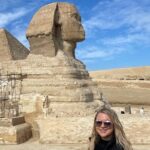
You’ll also visit the Valley Temple area and then see the Great Sphinx, famous for the way it combines a human head with a lion’s body. The Sphinx can feel myth-like from photos, but on site you’ll notice how it’s tied to the wider funerary landscape at Giza.
A small practical note: admission tickets are not included, so you’ll need to plan for that cost separately. Since the itinerary lists around 2 hours for this stop, it’s worth coming mentally ready to look closely and not try to do everything in a rush.
After lunch at Saqqara: Djoser’s Step Pyramid and the Nobles’ tombs
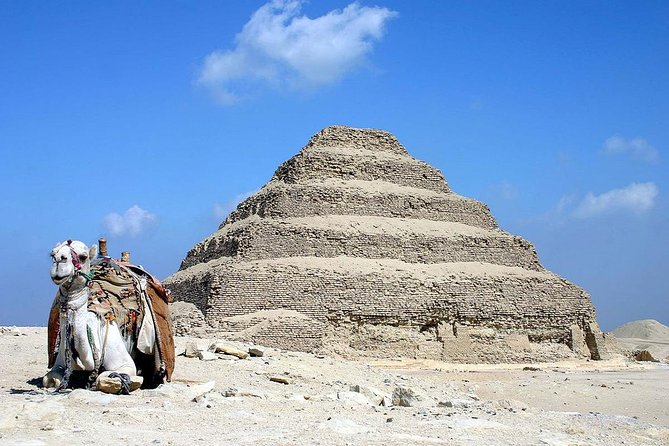
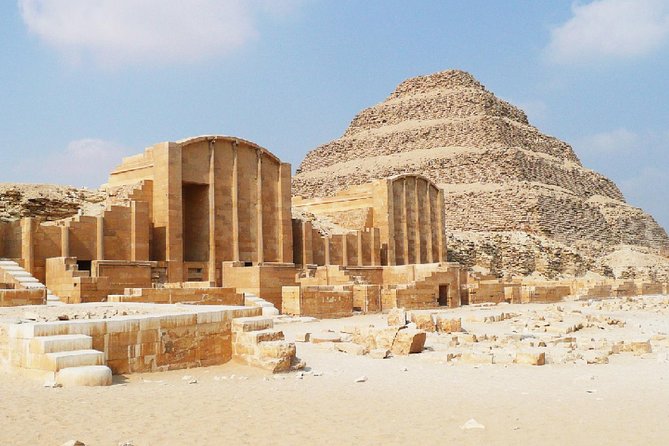
Then comes a different kind of pyramid story. After a lunch break, you head to the Step Pyramid of Djoser at Saqqara, the famous early innovation that comes before the full “true pyramid” look at Giza.
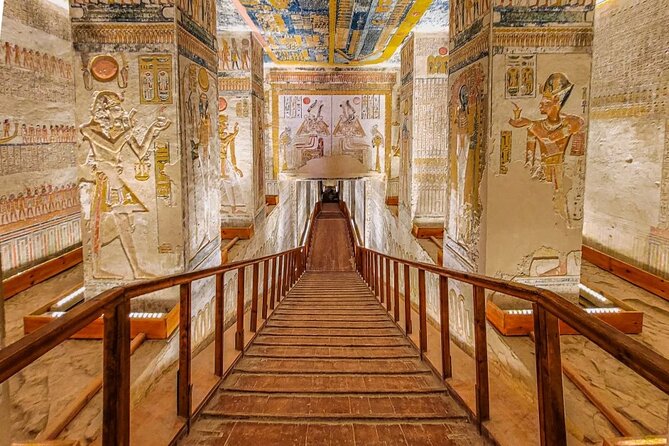
This stop is where you get the sense of how Egyptian royal architecture tried new approaches. The Step Pyramid is made of six mastaba structures stacked to reach about 60 meters, and it also connects to an underground network—tunnels and chambers that are part of the site’s design language, even when you’re not entering them.
You’ll also visit the Tombs of the Nobles in the same area. That combination helps, because it shifts the focus from one king’s monument to a broader world of officials and burial culture.
One consideration here: Saqqara is still a major site with active foot traffic and uneven surfaces. This tour calls for moderate physical fitness, so comfortable shoes are not optional if you want to enjoy the walking instead of just surviving it.
Dahshur pyramids: Red and Bent pyramids from Senefru’s reign

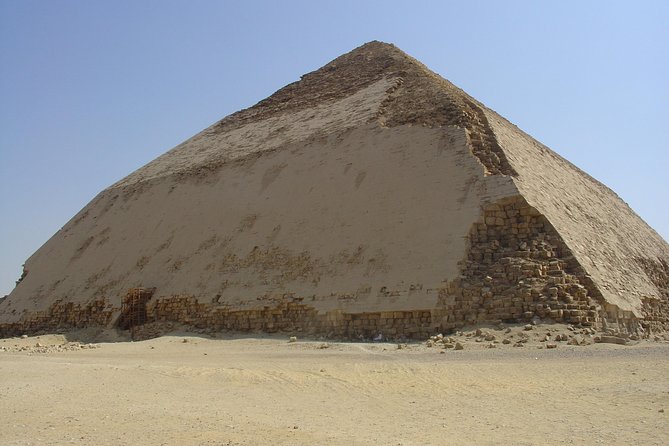
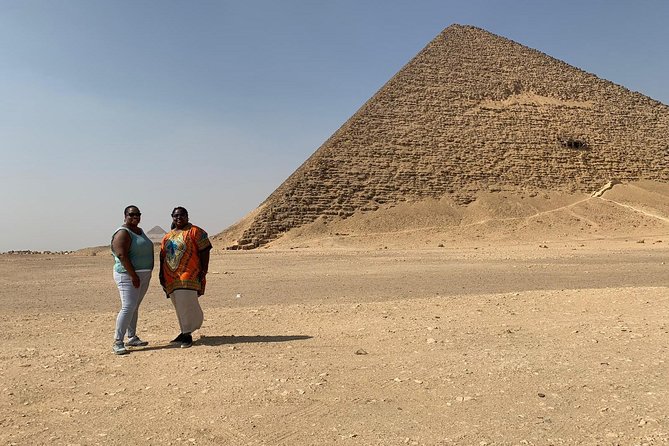
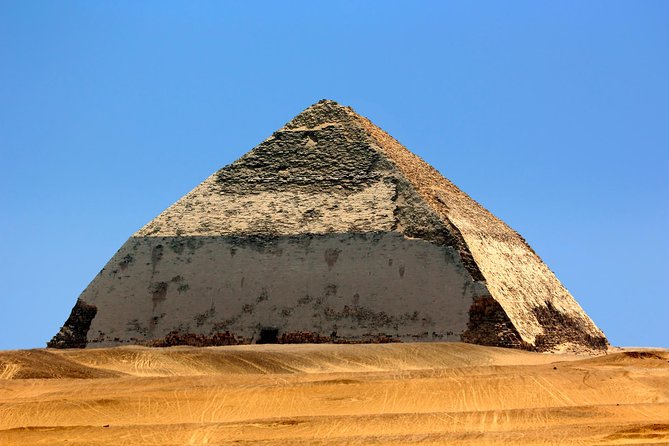
Dahshur is the “wait, why doesn’t everyone talk about this?” portion of the pyramid circuit. You’ll go to the Pyramid of Dahshur, specifically including the Red Pyramid and the Bent Pyramid at Dahshur, both tied to earlier royal building under King Senefru.
The Red Pyramid gets its name from the reddish color of the stone, and it’s described as one of the most important pyramids from Senefru’s reign. Even if you’ve seen pyramid images your whole life, the Red Pyramid can feel different in person—more solid, more grounded, and less like a single photograph you’ve already memorized.
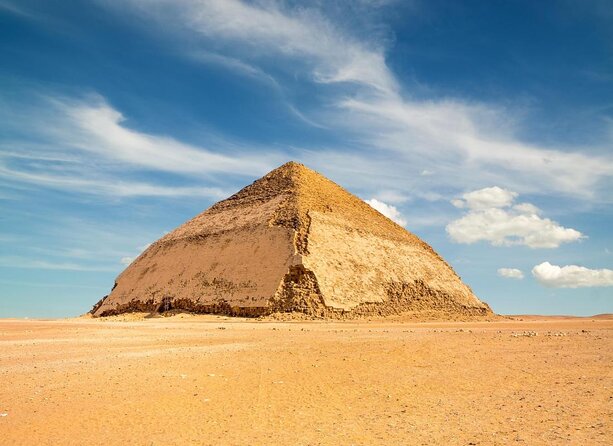
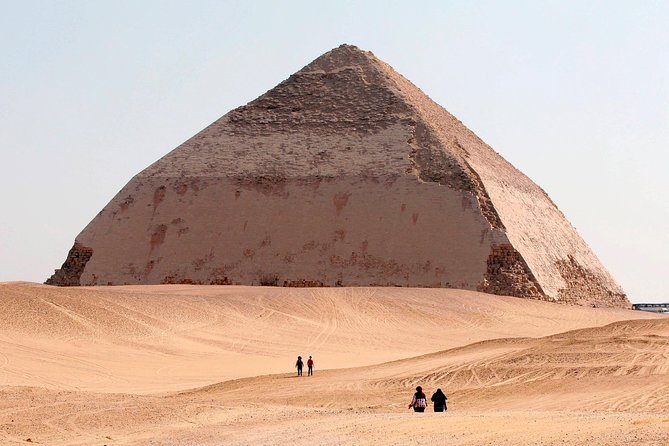
The “Bent” name is also the kind of thing that’s hard to appreciate fully from a screen. Seeing it as part of the same Dahshur complex helps you understand that early pyramid engineering wasn’t a straight line. It was a process—trial, learning, and adjustment.
This stop is listed for about 1 hour, so it’s not a slow museum day. The smart move is to use the guide’s explanations to pick what you want to focus on: the stone color, the angles, the way the pyramid fits into its setting, and how Dahshur relates back to the transition you saw at Saqqara.
Egyptologist guide value: why context changes everything
The biggest quality factor here is the Egyptologist driver-guide. Pyramids can become visual wallpaper if you only look at shapes. A good guide turns those shapes into ideas: power, belief, afterlife planning, and how rulers wanted their monuments to function for eternity.
One review specifically praised guide Nader Francis for being open, friendly, and knowledgeable, with a tone that made the sights feel real rather than scripted. Another key takeaway from feedback like this: people often leave feeling like Saqqara and Dahshur can be even more impressive than Giza, because they’re not just repeating the same pyramid image—they show earlier stages of the story.
You can treat the guide as your shortcut to meaning. Ask questions like:
- What’s different about these pyramids compared to Giza?
- How does the layout help explain the burial purpose?
- Why does the Sphinx matter in this setting?
Even if your time is limited at each stop, a guide can make the limited time count.

Price and logistics: what $54 covers, and what it doesn’t
At $54 per person, the value is mainly in three places: private door-to-door transportation, an Egyptologist guide, and a structured day that hits multiple sites without forcing you into complicated scheduling.
What’s not included is equally important:
- Entrance fees are excluded
- Lunch is excluded
So the true cost depends on how you handle tickets and food that day. Still, this pricing structure is common for Egypt day trips, and it can be a good deal when you compare it to the cost of hiring a vehicle and trying to manage sites yourself—especially when you add the stress factor.
Also, the tour includes bottled water, which sounds small until you’re in the middle of a hot day walking between ancient stone. It’s one less thing you have to think about.
If you’re traveling as a group, the experience notes group discounts, which can improve value even more, especially for families or friends splitting costs.
Timing tips for a long day with big sights
This is an 8-hour outing with three major stops. That means the best strategy is not to rush around like you’re chasing checkboxes. It’s to pick a handful of things to notice at each site, then let the guide fill in the gaps.
Here’s how I’d plan your energy:
- Start fresh in the morning at Giza, when you’ll be most mentally ready for the iconic monuments
- Expect the Saqqara stop to feel more thought-provoking, because it’s about an earlier architectural idea
- Use Dahshur time to focus on what’s visually different and structurally interesting, especially the Red and Bent pyramids
Bring smart-casual clothes as the tour requests. In practice, think comfortable layers, sun protection, and a way to keep sweat from turning into fatigue.
And because admissions and lunch aren’t included, it helps to carry a realistic budget and decide in advance whether you want a sit-down lunch or something quicker near the break.
Best fit: who should book this pyramid day trip
This tour is a strong match if you want:
- A private experience (only your group)
- A single-day route covering Giza, Saqqara, and Dahshur
- Hotel pickup and drop-off so you’re not spending your day negotiating transport
It’s also a good choice if you care about explanations. The guide adds a layer that turns monuments into a connected story across time.
If you’re the type who enjoys architectural details and want to compare different pyramid styles in one outing, this route is built for you. And if you’re traveling with kids, just note that children must be accompanied by an adult.
Should you book this tour?
Book it if you want a low-stress, high-coverage pyramid day with an Egyptologist guide and door-to-door comfort. The route makes it easy to see how the story moves from Giza to earlier innovation at Saqqara and Dahshur, and the overall structure helps you avoid the common pain of trying to coordinate multiple sites alone.
Skip it (or rethink it) if you already have a clear plan for handling entrance fees, food, and transit, and you’re comfortable self-guiding on tight archaeological schedules. Also, if you don’t want an 8-hour day of walking and heat management, you might prefer a slower, fewer-site itinerary.
FAQ
Is pickup included for this tour?
Yes. The experience includes hotel pickup and drop-off from Cairo or Giza, and it starts at 8:00 am.
How long is the tour?
It runs for about 8 hours (approx.), covering Giza, Saqqara, and Dahshur.
Are entrance fees included?
No. Entrance fees are excluded.
Is lunch included?
No. Lunch is excluded.
What’s included in the price besides the guide?
You get a qualified Egyptologist guide, an air-conditioned vehicle, private transportation, hotel pickup/drop-off, and bottled water.
Do you need a passport name and details when booking?
Yes. The tour requires passport name, number, expiry, and country for all participants at booking time.
What about kids and fitness level?
Children must be accompanied by an adult. The tour also asks for moderate physical fitness.
If you want, tell me your travel dates and whether you’re starting from Cairo or Giza, and I can help you think through extra time for tickets and lunch so the day feels smoother.