REVIEW · CAIRO
Giza Pyramids Sakkara and Dahshur
Book on Viator →Operated by Deluxe Travel · Bookable on Viator
Three pyramid eras, one smooth Cairo day. This small-group tour strings together the story of pyramid building, from Djoser’s first step pyramid attempt at Saqqara to the dramatic angle change of Dahshur’s Bent Pyramid, finishing at the Pyramids of Giza and the Sphinx. I love the max 15-person group size, because it keeps the guide close when questions start flying.
I also like that the day is guided by a real Egyptologist, not just someone reading signs. You’ll get the explanations that make the sites line up in your head, plus practical extras like hotel pickup/drop-off, air-conditioned transport, bottled water, and a included lunch at a local restaurant.
One thing to plan for: entrance fees are not included, and some pyramid interiors can feel tight and low-ceilinged. Add the sun and walking, and you’ll want to come ready for a long-but-worth-it day.
In This Review
- Key things you should notice before you go
- Why This Giza–Saqqara–Dahshur Route Makes Sense
- The Small-Group Setup: Pickup, Pace, and Why It Feels Easier
- Saqqara: Djoser’s Step Pyramid and the First Real Big Attempt
- Dahshur: Bent Pyramid vs. the Usual Tourist Script
- Giza and the Sphinx: The Famous Stop That Still Needs a Game Plan
- Tickets, Tips, and What’s Included (So You Don’t Get Surprised)
- Food, Comfort, and the Realities of a Long Pyramid Day
- Value at $46: Is This Tour a Good Deal?
- Should You Book This Giza, Saqqara, and Dahshur Day Tour?
- FAQ
- How long is the tour?
- Is hotel pickup and drop-off included?
- Are entrance fees included in the price?
- What group size is this tour?
- What’s included for meals and drinks?
- What if the tour is canceled due to weather?
Key things you should notice before you go
- A clear evolution of pyramid design from Saqqara to Dahshur to Giza
- Small-group attention with a maximum of 15 travelers
- Egyptologist-led storytelling with guides such as Zizou, Hosni, and Mahmoud (depending on your departure)
- Included lunch and bottled water, which helps you stay comfortable in the heat
- Entrance fees extra, plus tips are not included
- Pyramid interiors can be narrow, so choose your comfort level wisely
Why This Giza–Saqqara–Dahshur Route Makes Sense
Most pyramid days in Cairo feel like a checklist: see this, take a photo, move on. This one tries to do something smarter. You connect three chapters of the pyramid story instead of treating each site as a standalone monument.
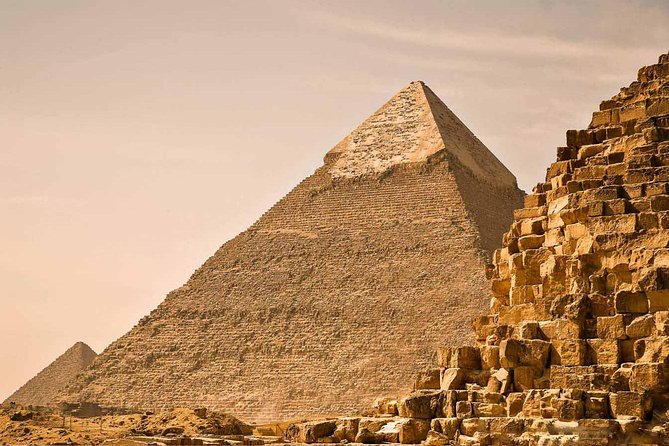
At Saqqara, you’re looking at the early idea of building a stepped tomb complex under Pharaoh Djoser. Then in Dahshur, you move to the reign of Snofru, when experiment gave way to designs that helped shape what we later call the classic pyramid form. Finally, you land at Giza, where the scale jumps into “world-famous” territory, with the three Great Pyramids of Khufu, Khafre, and Menkaure and the Sphinx watching over the plateau.
That sequence matters. When you see the Bent Pyramid right after the early step design, the “why” becomes clearer. You start to understand that Egypt’s builders weren’t just copying a template. They were solving engineering problems, reworking angles, and refining a look that could last for millennia.
You’ll also get a guide who can connect the dots while you’re walking, so you’re not stuck reading alone in the sun.
You can also read our reviews of more tours and experiences in Cairo.

The Small-Group Setup: Pickup, Pace, and Why It Feels Easier
This is a small-group tour with a maximum of 15 travelers. For Cairo, that’s a big deal. Larger groups can turn historic sites into a slow shuffle. Here, you’re more likely to get your guide’s full attention when you ask about a layout, a symbol, or why a pyramid looks the way it does.
You’ll also get hotel pickup and drop-off. That saves time and reduces stress, especially if you’re arriving in Cairo for the first time. The day runs by air-conditioned coach, and you’re not doing the “heat + traffic + stopping randomly” combo on your own.
Pace is a personal thing. Some people want extra time for photos and wandering. Others want tighter structure and quick answers. This tour tries to balance it, with site time that’s long enough to actually see things, not just touch the highlights.
A couple of the guide names show up often in the experience, like Zizou, Hosni, Mahmoud, Emad, and Shawky. If you’re lucky enough to get one of them, you’ll probably appreciate the way they explain legends and history in plain language, not in museum-speak.
Just remember: with multiple major sites in one day, you’re still signing up for a full outing. Comfortable shoes matter.
Saqqara: Djoser’s Step Pyramid and the First Real Big Attempt
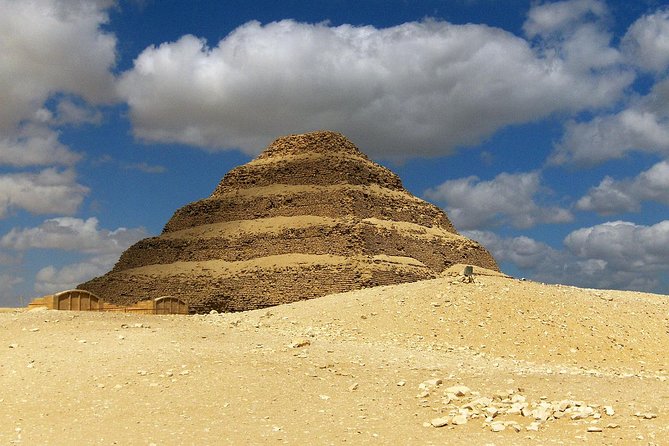
Saqqara (Sakkara) is where the story gets serious. The star here is Pharaoh Djoser’s step pyramid complex, often considered the first major step-pyramid effort in Egypt. Before this, the burial world focused more heavily on places like Abydos, and Saqqara represents a shift toward new building ambitions.
When you stand in this area, what hits you is how the design still looks like an idea in motion. It isn’t the smooth, “perfect” profile of later pyramids. It’s layered and stepped, like a concept that’s moving from draft to plan.
This stop is also valuable because it frames what you’ll see next. The stepped approach helps you connect Saqqara to Dahshur’s story of changing angles and refining a structure that could hold up over time. Without this context, Dahshur can feel like just another impressive pyramid. With it, you start seeing progress.
You should expect walking on uneven ground and a lot of time spent looking around. If you’re the type who likes to understand what you’re seeing before you take photos, Saqqara will reward you. If you prefer faster viewing, you still won’t feel lost—your guide’s job is to point out the important features and explain why they matter.
And if you’re thinking about interior access at any pyramid site, keep in mind the general warning: some passages are narrow and low-ceilinged. Even if this specific stop doesn’t involve the tightest interior route, the “Egypt pyramid reality” is consistent across the region.
Dahshur: Bent Pyramid vs. the Usual Tourist Script
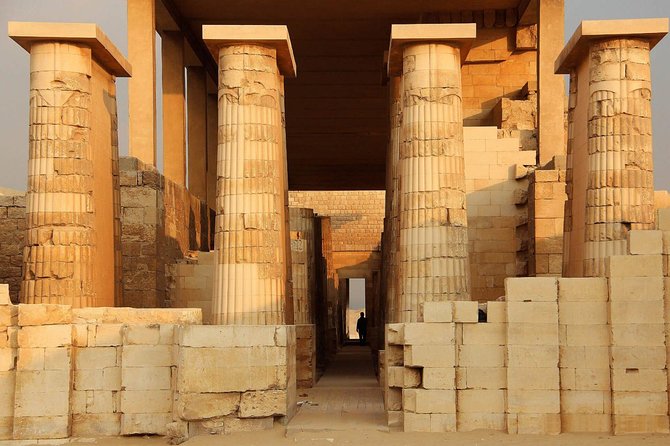
Dahshur doesn’t get the same postcard fame as Giza, which is exactly why it’s worth putting on your itinerary. This is where the pyramid “evolution” becomes concrete, not theoretical.
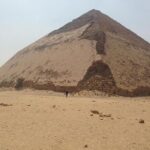
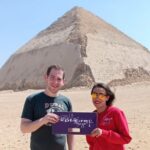
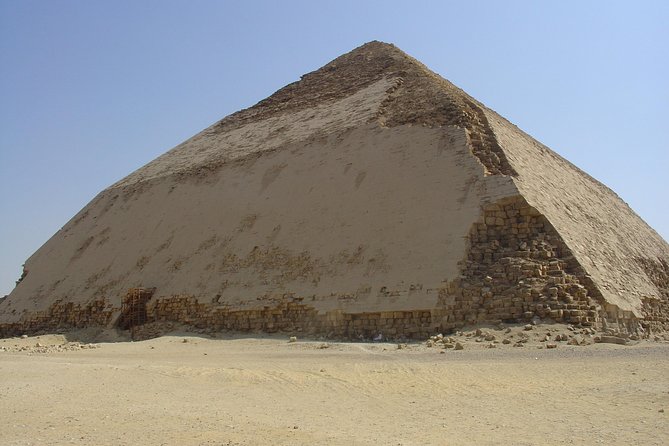
Dahshur is tied to Snofru, a key pharaoh associated with early pyramid development. The biggest landmark is the Bent Pyramid, named for its irregular shape. The angle changes on the structure, which makes it stand out immediately once you see it in person. It’s the kind of feature that invites questions, and that’s where a strong guide helps: you don’t want to just guess at what you’re looking at.
This stop can also feel less crowded than Giza, depending on your timing. That gives you a better chance to look carefully at how the structure transitions. Even if you’re not an architecture nerd, you’ll probably enjoy seeing how the engineering choices show up in stone.
One practical note: Dahshur is about 30 km from Cairo, so expect travel time in the mix. That’s part of why the tour includes an air-conditioned coach and bottled water. You’re not trying to “beat” Cairo traffic with your own plan.
Also, keep your expectations flexible. If entrance rules allow interior access at specific structures (and you’re comfortable with tight passages), your guide may steer you toward what’s possible that day. Some pyramid interiors can be narrow and stuffy, and a few paths feel more like crawling than strolling. If that’s not your idea of fun, you can still get plenty from exterior views.
Giza and the Sphinx: The Famous Stop That Still Needs a Game Plan
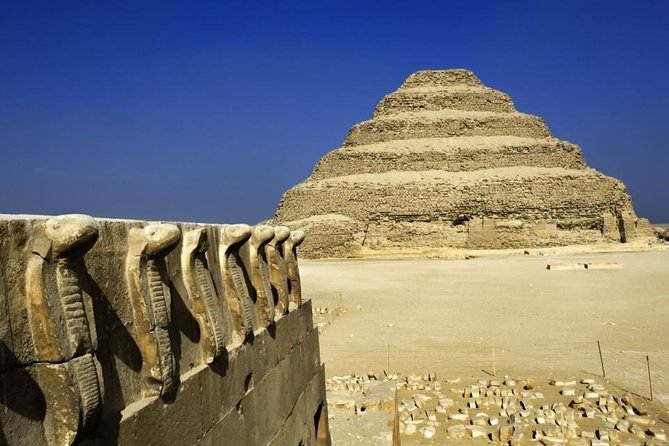
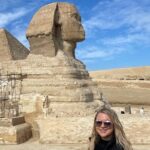
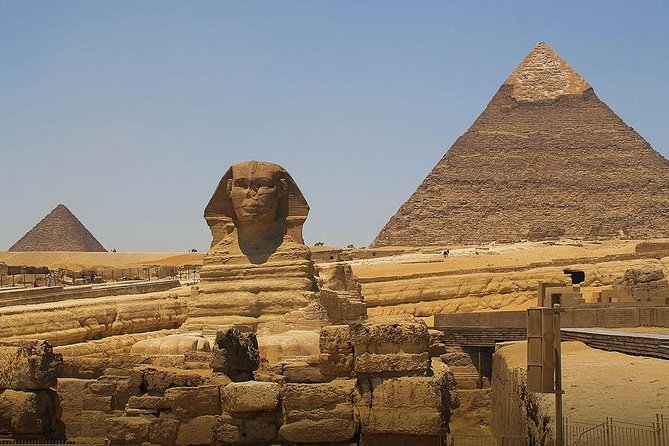
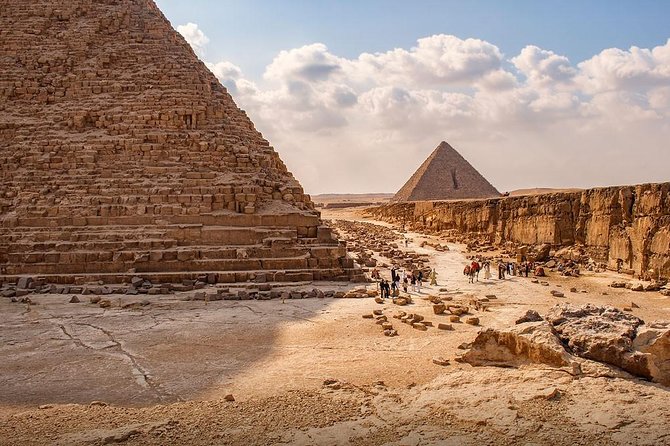
When people say Giza, they mean the headliners: the three Great Pyramids of Khufu (Cheops), Khafre (Chephren), and Menkaure (Mykerinos), plus the Sphinx.
Here’s the thing: even if you’ve seen photos, Giza can feel overwhelming. Everything is big, bright, and full of visual distractions. This is where the guide really earns their fee. Instead of letting your brain bounce from pyramid to pyramid randomly, you get a route for what to focus on and what to compare.
You’ll also likely spend time in the general area so you can absorb scale properly. The Sphinx adds a different kind of emotion. It’s not just a monument—it’s the image that links this whole complex together. You see it, then everything else clicks into place as part of a larger worldview.
If you choose to enter pyramid interiors when possible, plan for the downside. Some of those spaces can be narrow, with low ceilings and limited ventilation. That doesn’t mean you shouldn’t do it. It just means you should decide with clear eyes. If you’re claustrophobic or have mobility limits, you might prefer staying outside for that part.
Another tip: give yourself a moment before the main sights to orient yourself. Cairo sites can be busy, and you don’t want to waste your energy hunting for the best angles. A guide helps you set the order so you get your best views without frantic wandering.

Tickets, Tips, and What’s Included (So You Don’t Get Surprised)
The tour price is attractive, but the key detail is that entrance fees are not included. That’s common on Egypt tours, and it’s not a deal-breaker—just budget for it before you go.
So what is included?
- Hotel pickup and drop-off
- Bottled water during the tour
- Air-conditioned coach transfer
- Professional Egyptologist tour guide
- Lunch at a local restaurant
And what’s not included?
- Tips
- Entrance fees
- Any extras not mentioned
On the tip side, you’ll likely hear advice about being prepared to tip when appropriate, especially around guardians or staff at the site entrances. Tips aren’t mandatory everywhere the same way, but if someone helps you in a meaningful way or enables access, it’s reasonable to have a small amount of cash handy.
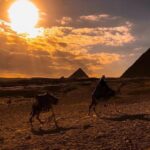
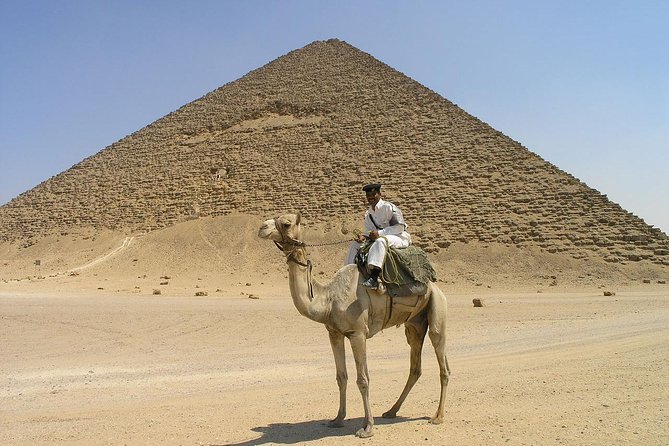
If you like to avoid surprises, I’d treat entrance fees and any optional add-ons (like a camel ride, which sometimes appears as an extra opportunity during Giza time) as your variable costs. The core experience is solid and guided either way.
Food, Comfort, and the Realities of a Long Pyramid Day
You get lunch included, and that’s one of my favorite “small perks.” In Cairo, eating can turn into a whole mission if you’re on your own. Having lunch planned helps you stay hydrated and keeps your energy steady.
Bring a little strategy for comfort:
- Wear shoes that handle dusty, uneven ground.
- Plan for sun and heat; your bottled water helps, but you’re outdoors a lot.
- If you’re doing any interior access, consider that the experience can be tight and warm.
The tour’s air-conditioned transport helps between sites. You’ll be grateful for it when you’re bouncing from Giza to Dahshur and then to Saqqara.
Also: moderate physical fitness is mentioned. That’s fair. You’ll be walking, waiting, and moving at a site-by-site rhythm. If you know you struggle with long outdoor days, this is still doable, but you should plan to take breaks and keep your pace realistic.
Value at $46: Is This Tour a Good Deal?
At $46 per person for a roughly 5-hour outing, this tour can be excellent value—mainly because so much is bundled. You’re paying for pickup/drop-off, air-conditioned coach, an Egyptologist guide, bottled water, and lunch. In a city like Cairo, that package is the difference between a “day that works” and a day that turns into logistics.
The two things that can affect value are entrance fees and optional extras. Entrance fees aren’t included, so your total cost will rise once you choose what to see. But the guide-led format helps you make those choices intelligently rather than randomly.
The small-group size also adds value. When the group cap is 15, you’re less likely to be stuck behind the crowd. That translates into better viewing time and more chances to get answers on the spot.
If you’re comparing against DIY options, the price advantage often comes from time saved and reduced hassle. This is a “let someone else handle the driving and explain the story” kind of tour. If that sounds like your speed, it’s a good match.
Should You Book This Giza, Saqqara, and Dahshur Day Tour?
Book it if you want the pyramid day to feel like a connected story. If you care about understanding how pyramid building evolved, this route does a better job than a random order of stops. The small group size and the Egyptologist guidance are the biggest reasons to pick it.
Skip it or rethink it if you know you strongly dislike long outdoor walks or closed-in interiors. Even though you’ll get plenty of time outside, some interior options can be narrow and low-ceilinged. Also, if you’d rather control every detail and you’re comfortable arranging transport and tickets yourself, this may feel a bit structured.
My practical rule: if you’re the kind of person who likes context—why the Bent Pyramid changes angle, why Saqqara matters before Giza—this is an easy yes. If you just want quick photos and don’t care about the “building journey,” you might prefer a simpler single-site outing.
Either way, you’ll come away with a clearer picture of the Old Kingdom’s ambition, not just a stack of monuments.
FAQ
How long is the tour?
The tour runs for about 5 hours (approx.), with the day broken into major stops across Giza, Dahshur, and Saqqara.
Is hotel pickup and drop-off included?
Yes. Hotel pickup and drop-off are included, along with transportation by an air-conditioned coach.
Are entrance fees included in the price?
No. Entrance fees are not included. The tour price covers the guided experience, transport, lunch, and included water.
What group size is this tour?
It’s a small-group tour with a maximum of 15 travelers.
What’s included for meals and drinks?
You get bottled water during the tour and lunch at a local restaurant.
What if the tour is canceled due to weather?
This experience requires good weather. If it’s canceled due to poor weather, you’ll be offered a different date or a full refund. You can also cancel for a full refund up to 24 hours in advance.