REVIEW · CAIRO
Full Day Tour Visiting Coptic and Islamic Cairo.
Book on Viator →Operated by Pharaoh Tours · Bookable on Viator
Coptic and Islamic Cairo in one long day works surprisingly well. You get a focused route through Old Cairo’s major faith sites with a professional Egyptologist guiding you through what you’re seeing and why it matters. Two standout parts are the chance to visit classic Coptic churches and the way the tour also threads in major Islamic and Jewish landmarks.
I also like that the pacing is built around short, manageable site visits, so you’re not stuck for hours staring at stone with no context. Each stop has a clear story attached, from the Hanging Church’s unusual construction to mosques that mark early Islamic history in Egypt. The downside to plan for is simple: this is a 12-hour day, and you’ll spend a lot of it on the road, especially with multiple neighborhoods and frequent transitions between sites.
In This Review
- Key Highlights to Notice on This Coptic and Islamic Cairo Day
- A Private 12-Hour Old Cairo Route That Actually Makes Sense
- Coptic Cairo: Starting Where the Holy Family Story Still Looms
- The Hanging Church (Al-Moallaqa): A Church Built Like a Puzzle
- Abu Serga (St. Sergius and Bacchus): Old Stones, Confusing Dates, Clear Meaning
- Fort of Babylon: When Pilgrimage Is the Point
- Al Rifai Mosque and Ben Ezra Synagogue: Faith Stories in Contrasting Styles
- Amr ibn al-As Mosque: Islam’s Early Footprint in Egypt
- Khan Al-Khalili: Shopping Break With Real Cairo Energy
- Cave Church at St. Simon Monastery: The Middle East’s Big Cave-Architecture Story
- Mosque and Madrasa of Sultan Hassan: The Final Major Landmark
- Price and Value: Why $52 Can Work Here
- Getting the Most Out of the Day (Without Fighting the City)
- Who Should Book This Coptic and Islamic Cairo Tour
- Should You Book This One?
- FAQ
- How long is the Coptic and Islamic Cairo full day tour?
- Is hotel pickup included?
- Are entry fees included?
- Is lunch included?
- Is this tour private?
- What if the weather is bad or I need to cancel?
Key Highlights to Notice on This Coptic and Islamic Cairo Day
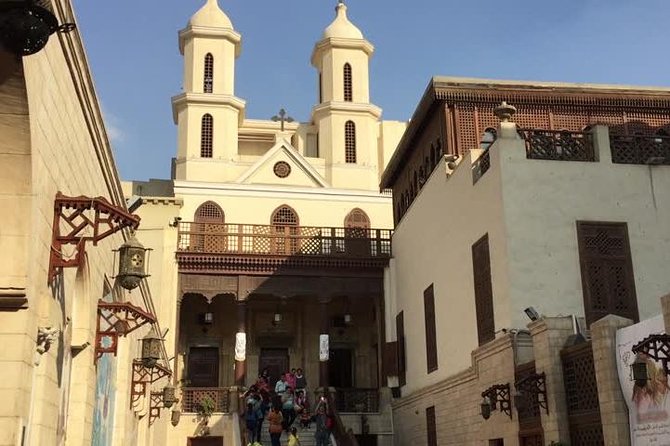
- Coptic Cairo first, with the Holy Family connection still felt in the neighborhood
- The Hanging Church (Al-Moallaqa), built over Roman fortress remains, with a wooden roof shaped like Noah’s ark
- St. Sergius and Bacchus + Fort of Babylon, two pilgrimage-linked stops that explain why this area keeps drawing faith
- Three faith landmarks close together: Al Rifai Mosque, Ben Ezra Synagogue, and Amr ibn al-As Mosque
- Khan Al-Khalili with practical breaks, including spice and perfume areas plus gold and antiques
- A left-turn experience at the Cave Church, tied to St. Simon Monastery and the Zabbaleen community
A Private 12-Hour Old Cairo Route That Actually Makes Sense
This tour is priced at $52 per person and runs about 12 hours. That long stretch sounds intimidating until you see the structure: you move from one landmark to the next, each with its own short stop, then you refuel with lunch if you want. It’s a good format for Old Cairo, where you can otherwise spend the day bouncing between sites and missing the meaning.
You’re also not doing this alone. You’ll travel in an air-conditioned vehicle with private transportation and a professional Egyptologist. That matters because Old Cairo’s buildings often look similar at first glance, but the stories behind them are not. The guide helps you connect architecture, faith, and power across centuries, without turning the day into a lecture.
One practical note: entries are listed as included for most stops, but the tour explicitly says Cairo Citadel Fees are not included. So if you’re planning to add Citadel time on your own, budget separately.
A few more Cairo tours and experiences worth a look
Coptic Cairo: Starting Where the Holy Family Story Still Looms
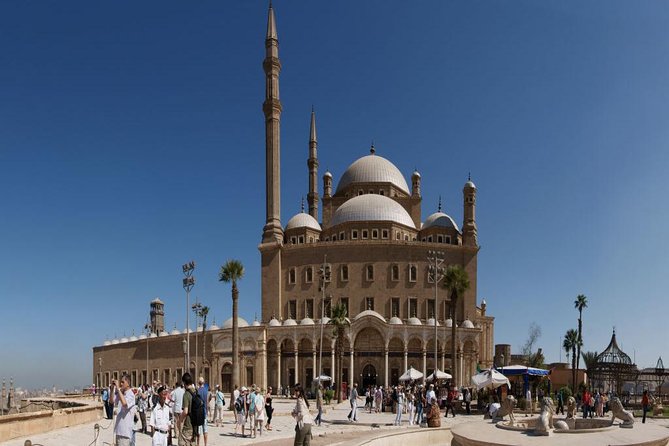
The day begins in Coptic Cairo, one of the places visited by the Holy Family where the spiritual impact of their presence is still felt. Even if you’re not religious, it helps to start here because the neighborhood sets the tone. You’re not just walking past monuments; you’re entering an area shaped by Christian history in Egypt.
Expect a focused visit of about 45 minutes with admission included. The time is long enough to see the key parts and get a sense of the streets and texture of the district, but short enough that you’re not trapped in one place while the rest of the route waits.
A nice benefit of having the Egyptologist from the beginning is that you’re less likely to treat each stop as a separate photo-op. Instead, you start thinking about continuity: how later faith leaders built on what came before.
The Hanging Church (Al-Moallaqa): A Church Built Like a Puzzle
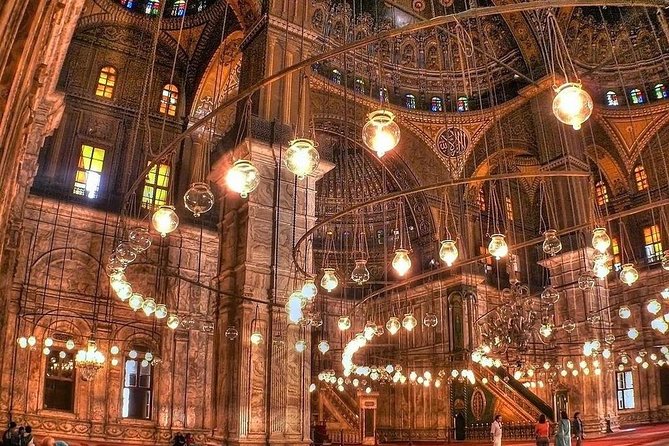
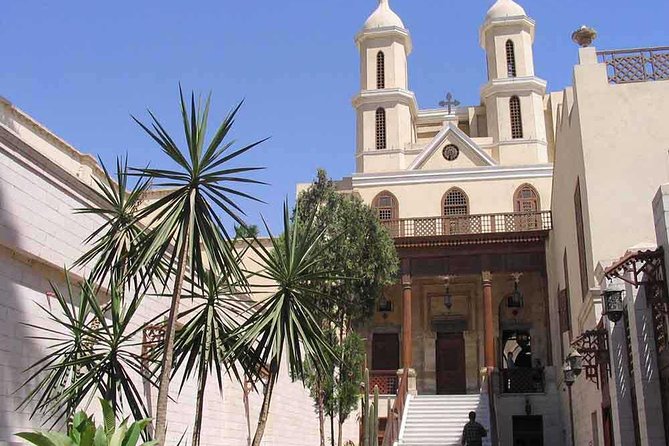
Next up is The Hanging Church, also known as Al-Moallaqa or the Suspended Church. The name isn’t poetry; it’s construction. It was built on the southern gate of the Roman Fortress, with palm logs and stacked stone acting as a foundation layer over Roman ruins.
The most memorable visual detail is the wooden roof in the shape of Noah’s ark. That’s the kind of thing you notice immediately, but the guide’s job is to help you place it in the church’s long timeline.
This site also served as the residence of the Coptic Patriarch from the 7th century to the 13th century, and it has witnessed important elections and religious ceremonies. That turns the building from a quiet stop into a center of decision-making and ritual leadership.
Plan on about 45 minutes here. It’s long enough for the architecture and key areas, and short enough that you won’t overheat or get tour-fatigued before the rest of Old Cairo.
Abu Serga (St. Sergius and Bacchus): Old Stones, Confusing Dates, Clear Meaning
Then you’ll visit Church of St. Sergius and Bacchus, known to many as Abu Serga. The tour info places it among the oldest churches in the city, often dated to the 5th century, though some historians put construction much earlier, to the 8th century BC.
That range sounds wild until you remember how long places like this evolve. Buildings get changed, rebuilt, renovated, and reinterpreted. Even without exact certainty, the architecture gives you clues. The structure’s style is described as recalling the Suspended Church, including the two rows of columns that separate aisles from the main space.
The guide’s role becomes even more important here. You’ll get the bigger picture: this isn’t just a pretty interior, it’s part of a cluster of Christian sites tied to worship and community life over time.
Give yourself about 45 minutes for this stop with admission included. If you like churches for more than photos, this one rewards attention.
Fort of Babylon: When Pilgrimage Is the Point
After the church stops, you’ll head to the Fort of Babylon, described as a destination of pilgrimage not only for Egyptians but also for Christians around the world. The key idea here is that you’re standing in a place that has continued to matter through centuries of faith movement.
You’ll spend around 45 minutes here with admission included. The value is less about discovering a single miracle detail and more about understanding why this area stayed important long after its original military purpose faded.
If you’re trying to understand Old Cairo as a religious map, this fort is a useful anchor.



Al Rifai Mosque and Ben Ezra Synagogue: Faith Stories in Contrasting Styles
The tour then turns toward Islamic and Jewish landmarks that sit inside the same Old Cairo world.
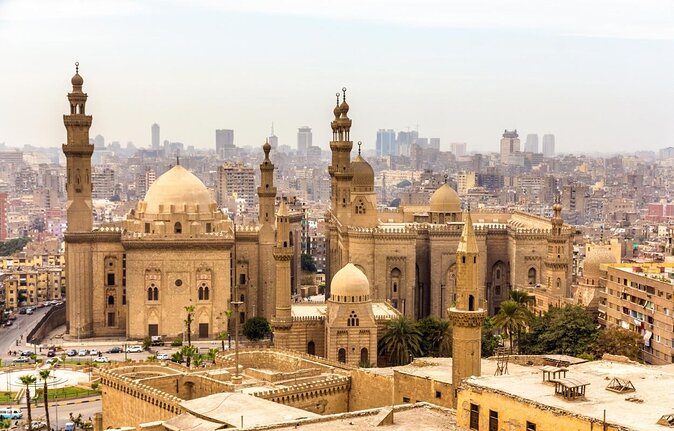
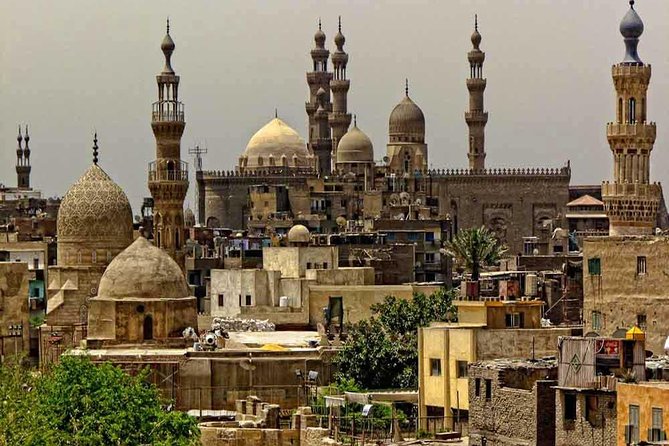
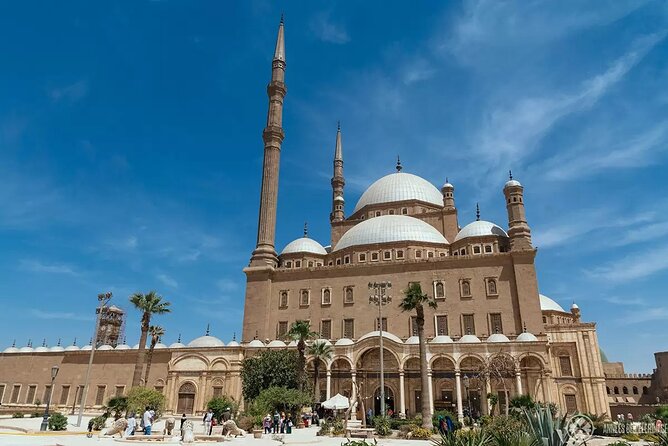
First is Al Rifai Mosque, noted as one of the oldest mosques opposite the Mosque-Madrassa of Sultan Hassan. It was built in 1361, so you’re looking at a structure with serious age in the city’s Islamic story. You’ll have about 1 hour here, with admission included.
From there, it’s to the Synagogue Ben Ezra. The tour info calls it the oldest Jewish temple in Cairo, dating from the 9th century AD. That’s a dramatic way to frame it: this isn’t a modern stop, it’s a long-running site.
Today it functions as a tourist attraction, largely because nearly all of Egypt’s significant Jewish community left during the 1950s after the founding of Israel and the Free Officers’ Revolution. Even if you’re not Jewish, the site’s contemporary importance is part of the lesson. You’re seeing history shaped by politics, migration, and memory.
Ben Ezra gets about 1 hour with admission included. This stop works best when you slow down and let the guide connect the architectural clues to the larger story.
Amr ibn al-As Mosque: Islam’s Early Footprint in Egypt
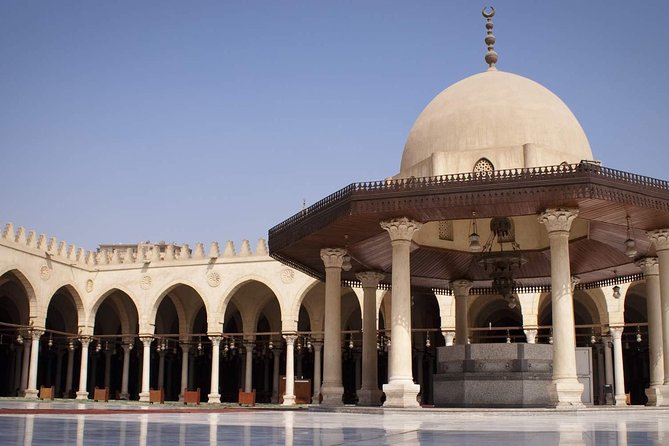
Next comes Amr ibn al-As Mosque, tied to one of the most important figures in early Egyptian history. The tour explains that Amr Ibn Al-Aaa introduced Islam to Egypt and founded a new city called Fustat just north of the Roman fort of Babylon. The mosque marks the site of that early settlement.
You’ll get a realistic reminder here: the original structure is not preserved. The building has been renovated several times, and none of the original structure remains. Still, it’s described as the site of the oldest mosque in Egypt and the entire continent of Africa.
You’ll spend about 1 hour here with admission included. For me, this is one of the most powerful stops because it mixes certainty and uncertainty in a healthy way: the role is clear; the exact original fabric is not.
Khan Al-Khalili: Shopping Break With Real Cairo Energy
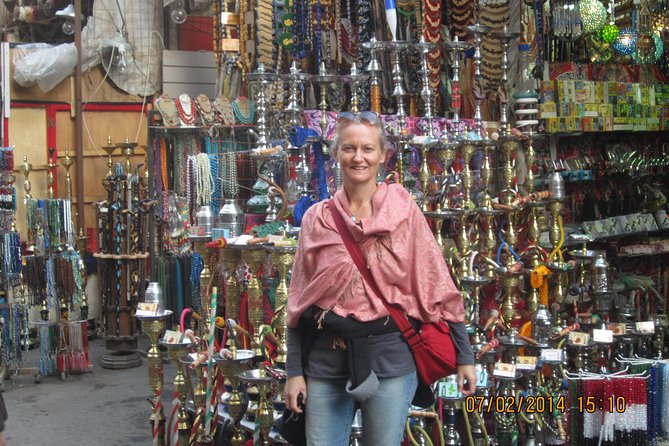
No Cairo day tour feels complete without Khan Al-Khalili. This is the bazaar that’s loud and crowded and colorful, packed with goods that range from tourist trinkets to items you might actually want.
The shopping tip here is to use Khan Al-Khalili as a sensory break, not a marathon purchase. The tour highlights three areas that make it more fun than generic browsing:
- a spice market for fresh spices
- a perfume market with essential oil mixing scents
- gold vendors and antique shops deeper in the bazaar
You’ll have about 1 hour, and admission is listed as included for this stop too.
If you go in hungry (or stressed), the bazaar’s energy can be a bit much. If you go in curious, it’s a great reset before you head back to the heavier religious sites.
Cave Church at St. Simon Monastery: The Middle East’s Big Cave-Architecture Story
This stop has a different mood. The Cave Church is at the heart of Mokattam Mountain in southeastern Cairo, inside St. Simon Monastery. The tour info calls it one of the largest churches not only in Egypt but also in the Middle East.
It’s also linked to a community reality you don’t usually see described in old-city tours. The cave church is located in an area known as Zabbaleen, literally meaning garbage city. This is where the tour points out Cairo’s largest population of garbage collectors and recyclers.
You’ll spend about 1 hour with admission included.
If you like places where religion intersects daily life, this is a strong finish to the cluster of classic “big monuments.” It also helps you see Cairo as a living city, not just a museum.
Mosque and Madrasa of Sultan Hassan: The Final Major Landmark
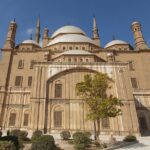
To close the day, you visit the Mosque and Madrasa of Sultan Hassan, described as one of the best places you’ll see on the route. The guide’s framing matters here because mosques like this are both religious spaces and education-linked institutions.
You’ll have about 1 hour with admission included.
If your feet are tired by this point, that’s normal. What keeps this stop worthwhile is how it connects back to earlier Islamic architecture in the day, like the older Al Rifai Mosque and the historical anchor of early Islam at Amr ibn al-As Mosque.
Price and Value: Why $52 Can Work Here
At $52 per person, this isn’t a budget when compared to doing a few sites on your own. But it can be good value because you’re paying for three big things:
- An Egyptologist guide who connects the “what” to the “why”
- Air-conditioned private transportation across multiple Old Cairo areas and beyond
- Most entries listed as included, plus bottled water
Also, the tour runs 12 hours, which usually means you’re buying time and coordination. Cairo can be tricky to stitch together efficiently on your own, especially if you want more than one or two major stops.
The one pricing note to keep in mind: Cairo Citadel Fees are not included. If you’re already planning to visit the Citadel anyway, you’ll need extra funds.
Getting the Most Out of the Day (Without Fighting the City)
Old Cairo rewards preparation. Here are practical ways to make this day feel smoother:
- Wear comfortable shoes. You’ll move between districts and into religious spaces where you’ll want stable footing.
- Plan to stay flexible with your pace. Each stop is about 45 minutes to 1 hour, and the day is built around transitions.
- Bring a neutral, respectful mindset. You’re walking through active faith spaces as well as historical sites.
- Use the included bottled water and consider having lunch if offered, so you don’t hit Khan Al-Khalili and Cave Church on an empty tank.
Also, the tour info says it requires good weather. If conditions are poor, you should expect a different date option or a full refund, so don’t gamble your entire trip schedule without a buffer.
Who Should Book This Coptic and Islamic Cairo Tour
This is a great pick if you want:
- a private day plan that covers multiple faith landmarks in Old Cairo
- an Egyptologist guide to explain architecture and religious/political meaning
- a route that mixes major churches, mosques, and the Ben Ezra Synagogue without feeling random
It’s especially suitable if you like “place-based learning,” where the building itself becomes your textbook. If you prefer fast museum-style stops with little talking, you might find the guided storytelling a bit heavy. But if you’re curious about why these sites sit together and how power and belief changed over time, you’ll get a lot out of the pacing.
Should You Book This One?
If your goal is to understand Coptic and Islamic Cairo in a single organized sweep, this tour is a strong choice. It’s thoughtfully structured around major landmarks tied to real stories: the Hanging Church’s Roman fortress engineering, the patriarch residence era, early Islamic footprints at Fustat, and the Jewish history connected to Ben Ezra. Add in the Cairo bazaar break and the Cave Church’s unusual setting, and you get variety without losing the thread.
I’d book it if you can handle a full 12-hour day and you’re traveling during good weather. Skip it (or ask for alternatives) if you want a short list of sites only, because this route is built for people who want depth through coverage.
FAQ
How long is the Coptic and Islamic Cairo full day tour?
The duration is about 12 hours.
Is hotel pickup included?
Yes. Pickup is offered, and you’ll travel in a private car/vehicle.
Are entry fees included?
Entry fees are included in the tour information as optional. Cairo Citadel fees are specifically not included.
Is lunch included?
Local lunch is listed as optional, not guaranteed.
Is this tour private?
Yes. It’s described as a private tour/activity, with only your group participating.
What if the weather is bad or I need to cancel?
The tour requires good weather. If it’s canceled due to poor weather, you’ll be offered a different date or a full refund. Cancellation is free up to 24 hours in advance for a full refund.