REVIEW · SWEDEN
Dendera and Abydos Temples Guided Tour From Luxor
Book on GetYourGuide →Operated by Emo Tours Sweden · Bookable on GetYourGuide
Two temples in one day feels like time travel. I love how Dendera’s Temple of Hathor still shows full color on its walls, and I really like that Abydos’ Temple of Seti I preserves Osiris/underworld scenes with clarity. One drawback to plan for: the day is long and the road into Abydos can be rough, so bring comfy shoes and expect some bumps.
You’re picked up at 7:00 am from your Luxor hotel or Nile cruise and returned around 17:00. That tight window is great if you want two major stops without extra hotel nights, but it also means you’ll do more sightseeing than wandering at your own pace.
In This Review
- Key Things I’d Watch for Before You Go
- How the Luxor to Abydos to Dendera Route Fits a Full Day
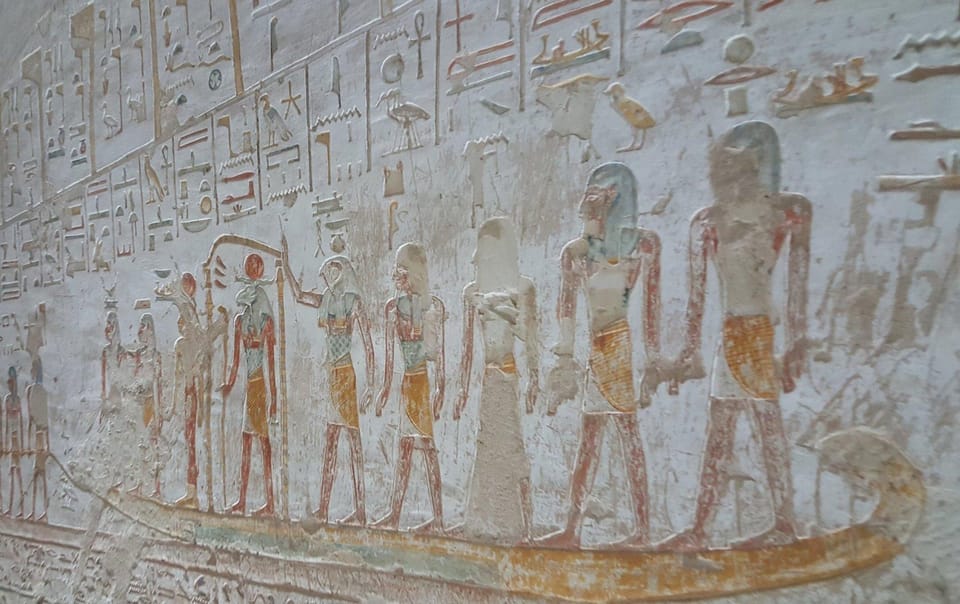
- Abydos Temple: Seti I, Osiris, and Why the Walls Feel So Alive
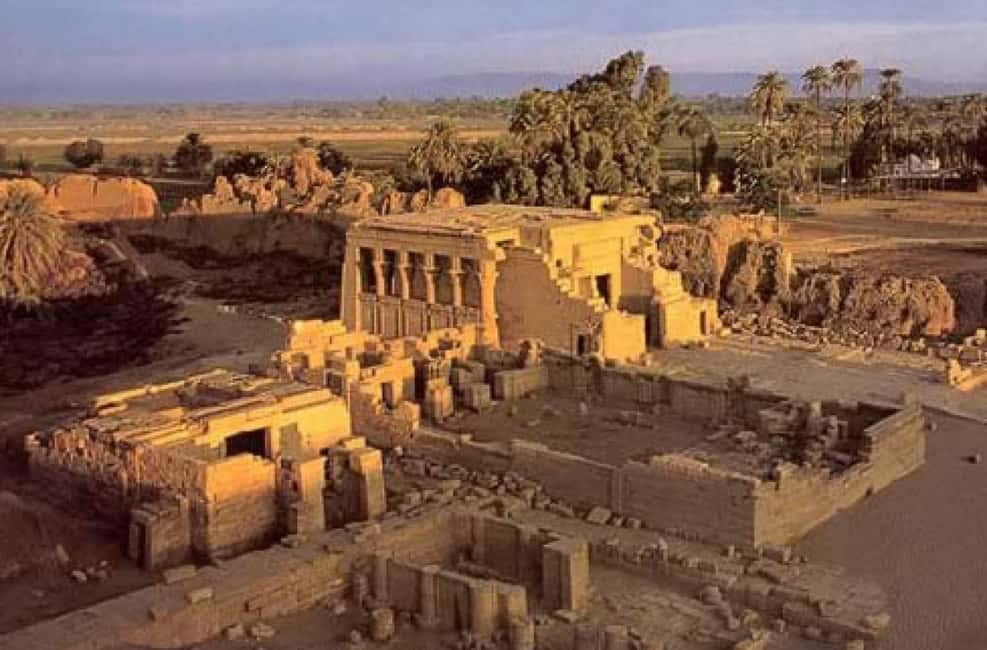
- Dendera Temple of Hathor: Full Color, Big Meaning
- Driver and Guide: The Difference Between a Good Day and a Great One
- Comfort on the Road: Private A/C Vehicle, Plus Bumpy Sections
- Price and Value: Is $86 a Fair Deal?
- Practical Tips to Get More Out of Abydos and Dendera
- Should You Book This Dendera and Abydos Tour?
- FAQ
- What time is pickup in Luxor?
- Where does the tour start and end?
- Which temples are included?
- How do we get to Abydos and Dendera?
- What is included in the price?
- Is lunch included?
- Do I need to pay entrance fees separately?
- What languages are available for the guide?
- How much does tipping cost?
- Can I pay later and cancel if my plans change?
Key Things I’d Watch for Before You Go
- Two “must-see” temple areas in one trip: Abydos first, then Dendera.
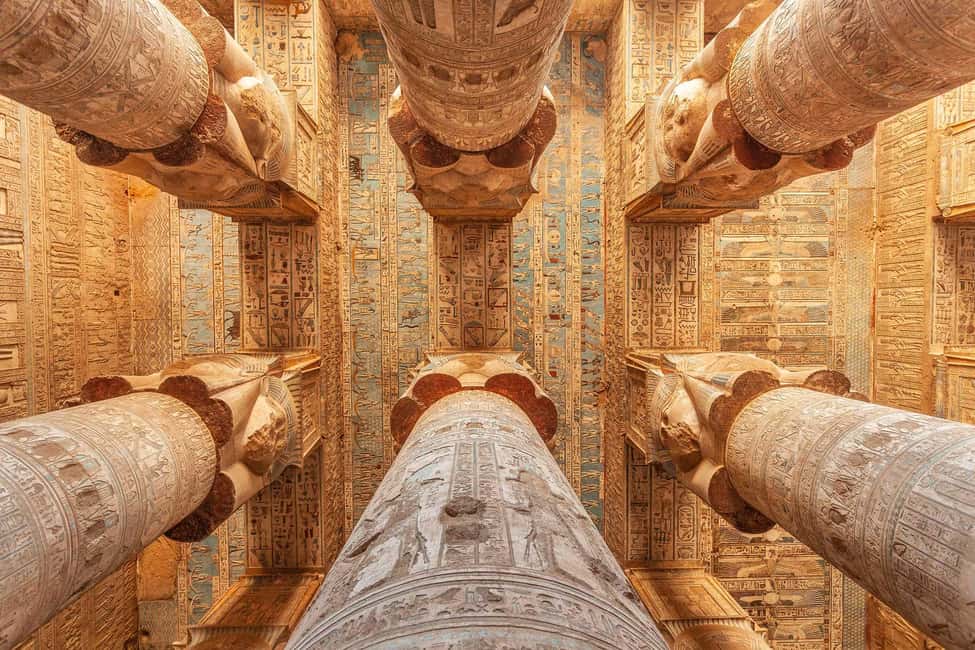
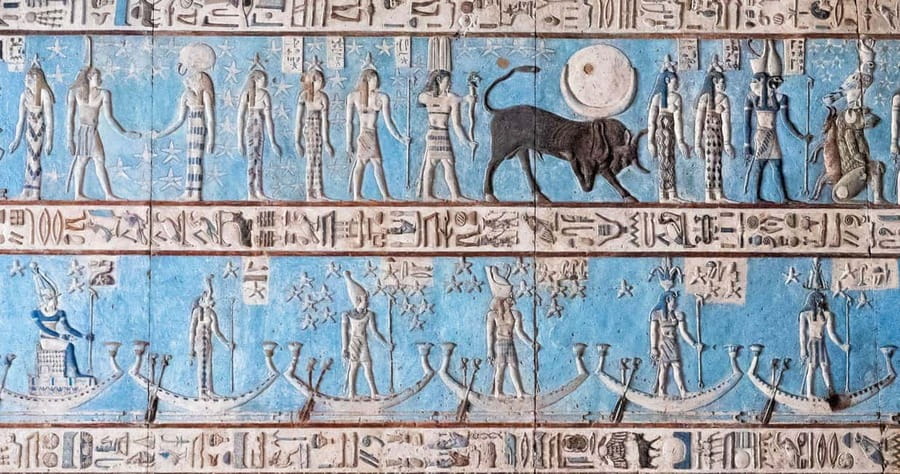
- Color still visible at Dendera: a huge reason this stop is worth the drive.
- Seti I and Ramses II temple history: Abydos is about origins of the underworld story.
- Driver matters on Egyptian roads: a great driver can make the bumpy parts tolerable.
- English (or German) quality depends on the guide: pick your language carefully.
How the Luxor to Abydos to Dendera Route Fits a Full Day
This tour is built for one thing: hitting Abydos and Dendera efficiently. You start with a 7:00 am pickup in Luxor, then ride north by private air-conditioned vehicle. Abydos comes first, and Dendera is your later-day stop, with return to Luxor around 17:00.
The big value here is not just the destinations—it’s the logistics. With hotel (or Nile cruise) pickup and drop-off, you don’t have to figure out transport, entrance timing, or who to trust for the history. Also, entry fees are handled, which keeps your day smoother.
The tradeoff is pace. You’ll spend a lot of hours in the car and at the temples, and there’s no lunch included. If you’re the type who likes slow museum-style breaks, you may want to plan a simple lunch stop on your own.
Abydos Temple: Seti I, Osiris, and Why the Walls Feel So Alive
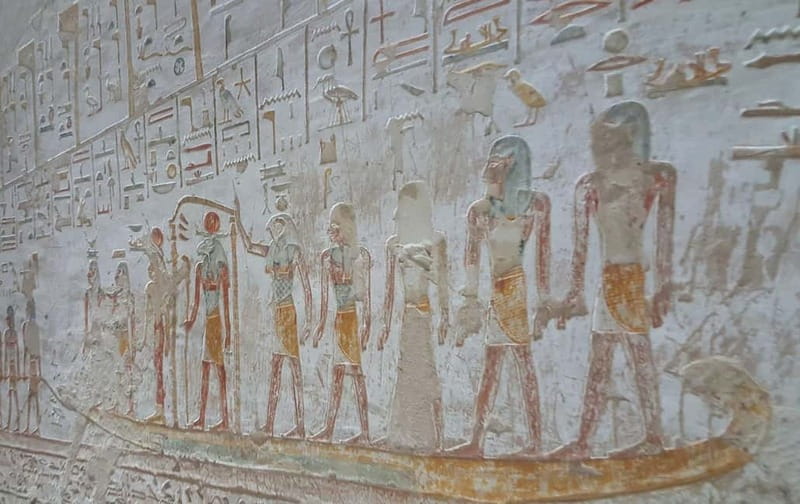
Abydos is the start of the day, and it’s also the emotional center of the whole route. The temple complex here is tied to the ancient Egyptian god associated with the underworld, often linked to Osiris as the Lord of the Underworld. That theme matters, because you’re not just looking at “old stones”—you’re reading a belief system.
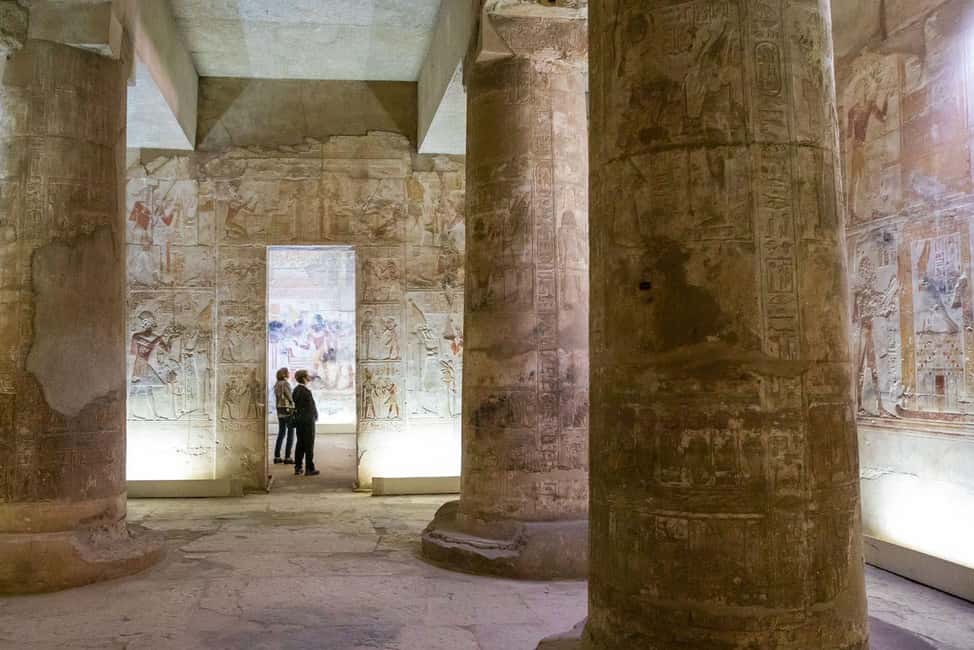
At Abydos, the main focus is the Temple of Seti I, which was built by King Seti I and completed by King Ramses II. Standing inside and around these spaces, you’ll see why this site is often singled out for preservation and meaning. The paintings of gods and pharaohs are described as among the most beautifully preserved in Egypt, which helps you connect the carvings to the story being told.
What I like about this stop for first-timers is how clear the purpose becomes as you go. You’re moving through spaces connected to burial, the afterlife, and royal legitimacy. Even if you don’t memorize names on day one, your guide should help you understand why these scenes mattered to people who believed the afterlife was real—and structured.
One practical consideration: Abydos can feel quieter at certain times of day. On at least one mid-afternoon slot, the complex had a near-empty feel, which makes it easier to take your time with details. If your goal is calmer photos and fewer distractions, ask your operator (or your guide on the day) how other time slots tend to feel.
Dendera Temple of Hathor: Full Color, Big Meaning
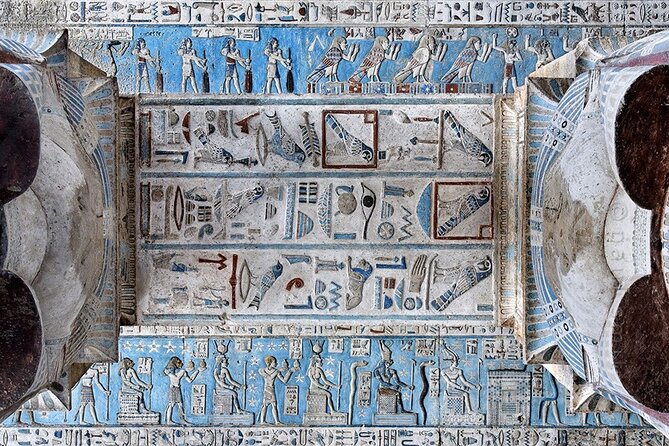
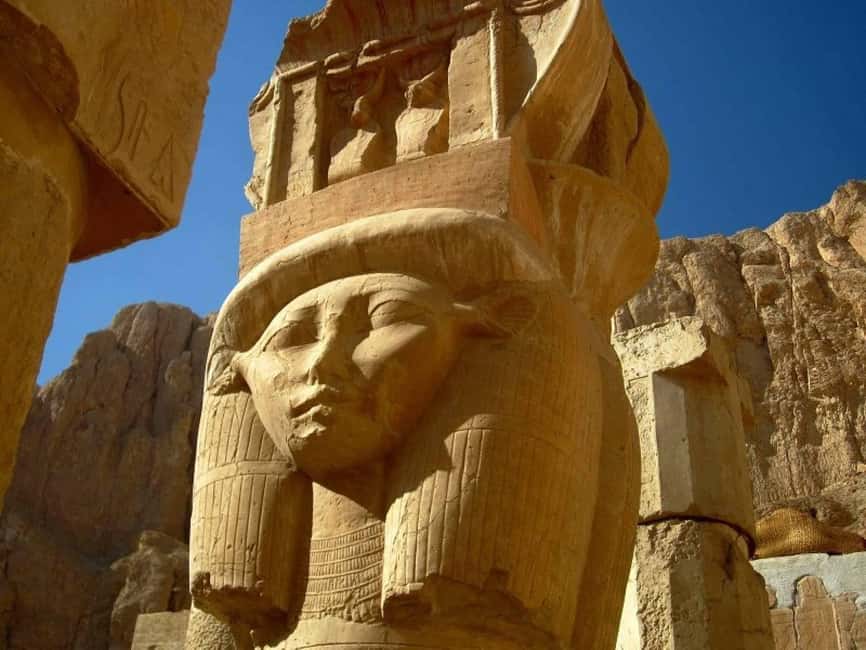
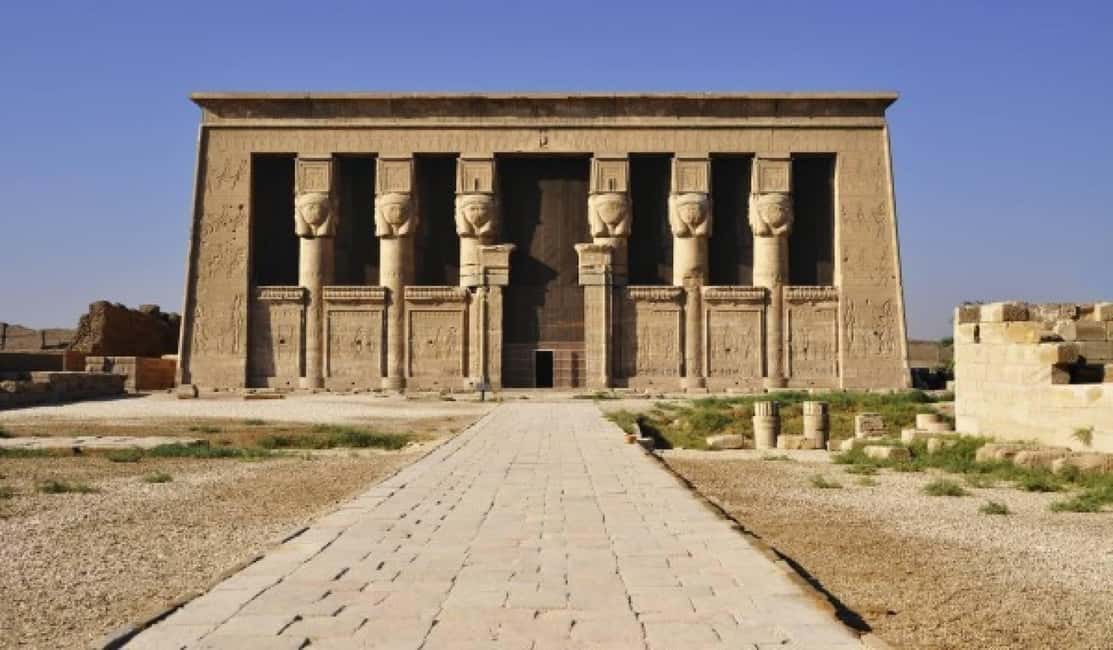
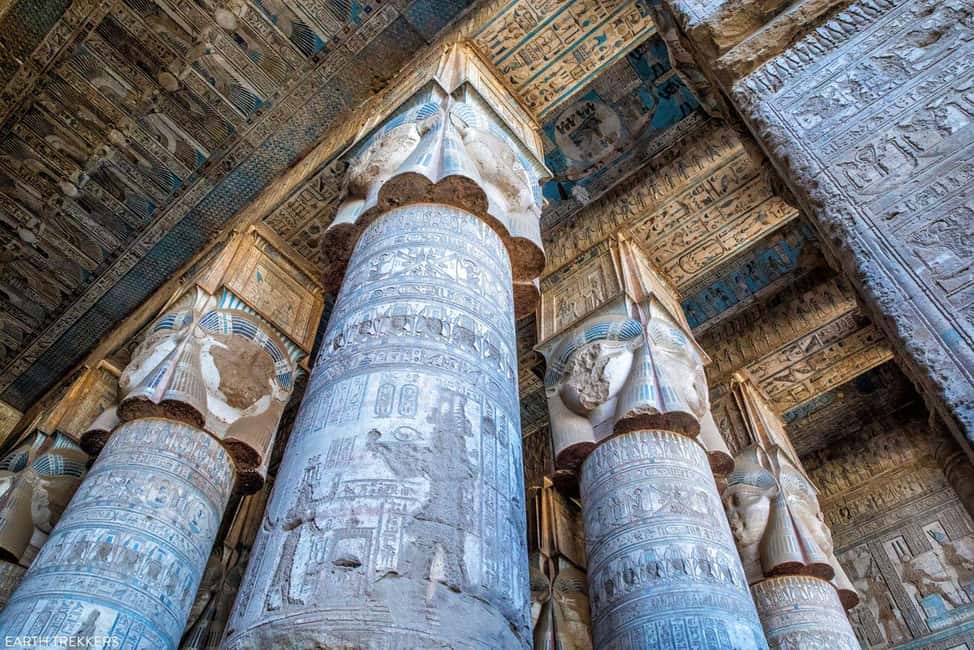
After Abydos, you drive on to Dendera for the next major temple experience. This is where the tour earns its reputation for visual impact. The Temple of Hathor is often described as the best-preserved in Egypt, and the standout detail is that full color is still visible on the walls.
Hathor is the goddess connected with love and joy, and that affects how the temple reads. In other words, this isn’t only about death and the underworld. Dendera brings a different side of Egyptian worship—one that feels more human, more celebratory, and more about daily life and divine presence.
Why this matters for you: color changes how you see reliefs. When pigment survives, faces, symbols, and scenes can look less abstract. It’s easier to follow what’s going on and why the artists repeated certain motifs across spaces.
This stop also gives you a good pacing shift. If Abydos leaves you thinking about solemn beliefs, Dendera helps reset your attention onto artistry and the way sacred places were designed to be experienced with all the senses. You’ll typically finish around the end of the tour window, then head back to Luxor.
Driver and Guide: The Difference Between a Good Day and a Great One
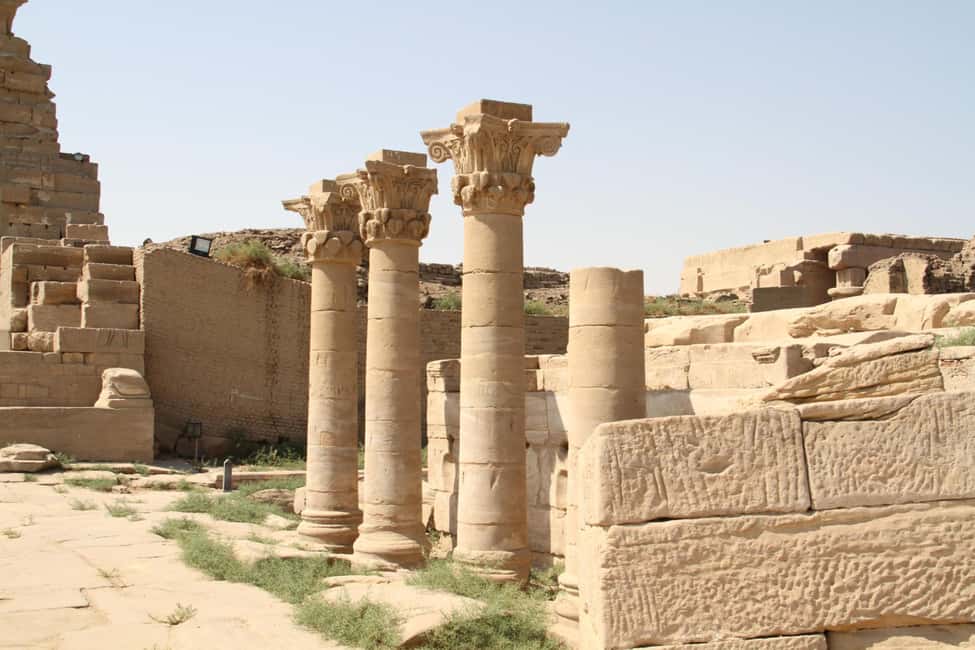
This tour includes a private tour guide, and that part can make or break your experience. The best days feel like you’re getting a guided lecture in real time—historical context, clear explanations, and time to ask questions.
From the guide names and feedback patterns you can expect, the language and teaching style vary. For example, German-speaking guides like Adel have been praised for Egyptology-level context and plenty of time to explain. Other guides have been described as very friendly and helpful, like Hegazy with Mohammed as the driver. Bahgat also gets strong mentions for being friendly and highly informed about what you’re seeing.
If you choose English, keep in mind that some days may come with brief commentary or English that’s harder to follow. If you need clear language support, the listed options are Arabic, English, and German—Spanish isn’t listed. So if Spanish is your main comfort language, you should plan for possible friction and consider whether English or German will work for you.
Also, pay attention to the “route confidence” of the team. One account mentioned the guide and driver being unsure about the best route near Abydos at arrival and departure. That doesn’t make the temples less amazing, but it can affect how smoothly your day flows. A confident, calm driver helps everything feel easier, especially when roads get uneven.
Comfort on the Road: Private A/C Vehicle, Plus Bumpy Sections
You’ll ride in a private air-conditioned vehicle the whole day. That’s a big plus in Egypt’s heat, and it also means you’re not stuck sharing space with strangers whose schedules don’t match yours.
Still, road conditions matter. One of the most repeated “heads up” themes is that there are unpaved, bumpy, rocky sections—especially in and out of Abydos for a short stretch. This is where you’ll feel the difference between an excellent driver and an average one. When the driver handles it well, the ride feels manageable. When you’re on rough ground, it becomes a patience test.
For your comfort, I’d suggest:
- Wear shoes you can walk in on uneven surfaces.
- Bring a bottle of water (you get one bottle included) and consider extra water if you’re the type who drinks a lot.
- Plan to use the temple breaks to reset your body and avoid rushing your viewing.
Price and Value: Is $86 a Fair Deal?
At $86 per person, the question isn’t whether you’re paying for transport—it’s what’s covered. This tour includes hotel pickup and return, private A/C transfers, a private guide, entrance fees to the mentioned sites, and bottled water. Lunch and tipping are not included.
So where’s the value? You’re paying for two major temple areas in one day with organized access. In practice, that saves time and confusion, especially if you’re not fluent in logistics or you don’t want to negotiate entry tickets and guidance on your own.
The main extra costs are simple:
- Lunch (not included)
- Tipping (not included)
If you arrive in Luxor without a clear plan for Abydos and Dendera, this price starts to look fair fast. The temples themselves are the big spend—entrance fees are included—while your day’s “hidden” cost is usually time. Here, that time is structured for you.
If you’re traveling solo and want the comfort of a private vehicle and guide, this is also one of the more predictable options. But if you’re extremely budget-driven and don’t mind arranging transport independently, you could possibly find cheaper ways to reach the sites. The tradeoff is you’ll spend more effort managing details.
Practical Tips to Get More Out of Abydos and Dendera
Here are a few things that will help you have an easier, more satisfying day without adding much hassle:
Wear for walking and waiting. Temple floors and doorways can be uneven, and the day starts early. You’ll be on your feet more than you might expect.
Use the guide to spot patterns. With Abydos and Dendera, the real payoff is understanding why certain scenes and symbols appear. Ask your guide what to notice first at each temple—then you can “read” the carvings instead of just watching them.
Aim for the calmer mood when you can. Timing can influence crowds. One described slot for Abydos offered a close-to-yourself feel at least part of the day. If quiet viewing is important to you, mention your preference when setting the schedule.
Be ready for a language reality check. If English is your choice, your enjoyment will depend on the guide’s clarity. If you want the smoothest experience, consider choosing a guide language you’re comfortable processing quickly.
Bring cash for small needs. Since lunch isn’t included and tipping isn’t included, you’ll want some flexibility for a simple meal during the day.
Should You Book This Dendera and Abydos Tour?
I’d book it if you want a structured day that hits two top temple stops from Luxor with private transport, a guide, and entrance fees handled. The biggest reasons are simple: Dendera’s Temple of Hathor is famous for surviving color, and Abydos gives you the underworld/Osiris storyline with Seti I and the connections completed by Ramses II.
I’d hesitate only if you strongly need very specific language support beyond Arabic/English/German, or if you’re sensitive to long travel and rougher road stretches. In that case, make sure you’re comfortable with the day’s pace and bring the right shoes and attitude.
If you’re set on seeing both sites and you want your time in Luxor to be efficient and informative, this is a solid pick—and the right guide can turn it from a sightseeing day into a day you remember for the stories behind the walls.
FAQ
What time is pickup in Luxor?
Pickup is at 7:00 am from your hotel or your Nile cruise.
Where does the tour start and end?
It starts with pickup in Luxor and ends with a drop-off back in Luxor around 17:00.
Which temples are included?
You visit Abydos Temple and the Temple of Hathor at Dendara.
How do we get to Abydos and Dendera?
You travel by private air-conditioned vehicle with transfers included.
What is included in the price?
The tour includes hotel pickup and return, all transfers by private air-conditioned vehicle, a private tour guide, entrance fees for the listed sites, and a bottle of water.
Is lunch included?
No, lunch is not included.
Do I need to pay entrance fees separately?
No. Entrance fees to the mentioned sites are included.
What languages are available for the guide?
The tour languages listed are Arabic, English, and German.
How much does tipping cost?
Tipping is not included, so you would need to budget for it separately.
Can I pay later and cancel if my plans change?
The tour offers Reserve & Pay Later (book your spot and pay nothing today). Cancellation is allowed up to 24 hours in advance for a full refund.