REVIEW · CAIRO
Best Two-Day Guided Tours to the Ancient Cairo ,Giza Pyramids , Sakkara and More
Book on Viator →Operated by Hola Egipto · Bookable on Viator
Cairo hits fast, and this tour helps you handle it. You’ll move through the big-ticket highlights like the Giza Plateau and Saqqara’s Step Pyramid of Djoser, with a guide tying each site to the story behind it. I especially like that the plan is built to reduce Cairo stress, so you spend less time figuring out routes and more time looking up at monuments.
I also like the hotel pickup and drop-off part—most days feel easier when the transfer is handled in an air-conditioned vehicle. One thing to consider: entrance fees are not included, so you’ll need to budget for tickets and possible site entry/optional access as you go.
In This Review
- Key points before you go
- Why this 2-day Cairo loop beats doing it piece by piece
- The value math: $50 per person and what’s really included
- Day 1: Giza Plateau, Saqqara’s Djoser, and Dahshur’s Red and Bent
- Pyramids of Giza (Cheops, Chephren, Mykerinus) plus the Great Sphinx and Valley Temple
- Saqqara (Sakkara) and the Step Pyramid of King Djoser
- Dahshur: Red Pyramid entry chance and Bent Pyramid views
- Day 2: Muhammad Ali Mosque, Citadel views, Coptic Cairo’s churches, then the Egyptian Museum
- Saladin Citadel and the Muhammad Ali Alabaster Mosque
- Coptic Cairo: Hanging Church, St. Sergio, and Ben Ezra Synagogue
- Egyptian Museum in downtown Cairo (and Tutankhamen tombs)
- Transportation and comfort: what the air-conditioned transfers really change
- What to budget for: entrance fees and extra pickup areas
- Guide quality and language options: the difference between seeing and understanding
- Where this tour fits best (and who might want a different approach)
- Should you book this 2-day guided Cairo tour?
- FAQ
- Do I need to buy entrance tickets separately?
- What’s included in the tour price?
- How big is the group?
- Does the tour include hotel pickup and drop-off?
- Which stops are covered over the two days?
- Is there a mobile ticket?
- How long is the tour?
- What should I know about weather?
- What are the cancellation terms?
Key points before you go
- Small-group cap (15 travelers max) keeps the pace human and questions easier to answer
- Two-day routing connects Giza, Saqqara, Dahshur, then Old Cairo and the downtown museum
- Hotel pickup/drop-off avoids Cairo’s traffic-and-transit headaches
- All entrance fees are extra so bring a plan for ticket costs in your budget
- Good weather matters since the itinerary depends on visiting outdoor sites
Why this 2-day Cairo loop beats doing it piece by piece
If you’ve never been to Cairo, the first lesson is simple: you don’t want to waste half a vacation negotiating transport. This tour gives you a guided route that links the major ancient sites around Giza and Saqqara with Old Cairo’s churches, synagogues, and mosques. The payoff is that each day feels like a coherent story, not a grab bag of stops.
Another reason I like this style is pacing. You get morning access at the sites that tend to feel most impressive earlier in the day. Then you move on while the heat is still manageable and before fatigue turns your museum time into a blur.
Finally, the small-group size matters here. Cairo can be noisy and busy, so having a group that’s limited in number makes it easier for your guide to keep everyone moving at a sensible speed.
You can also read our reviews of more guided tours in Cairo



The value math: $50 per person and what’s really included
The headline price is $50 per person for a roughly 2-day guided experience. That price can feel like a deal because it covers the parts that are hardest to DIY in Cairo: an expert guide, air-conditioned hotel transfers, and the practical service/taxes/parking/handling that keep the day from turning into an admin headache.
What you still pay for is equally important. Entrance fees are at your own expense, and site entry can vary depending on what you choose or what’s available during your visit. The itinerary also doesn’t include pickup/drop-off from Heliopolis and Nasr City, which costs an extra $10 per person per day if you’re staying there.
So here’s the honest tradeoff: you’re paying for convenience and guidance more than for a fully “all-in” ticket bundle. If you’d rather control every detail yourself, you might look at independent options. If you want the day planned and handled, this is built for you.
Day 1: Giza Plateau, Saqqara’s Djoser, and Dahshur’s Red and Bent
Your first day is the classic ancient sweep, but with enough stops to make the monuments feel connected rather than random.
Pyramids of Giza (Cheops, Chephren, Mykerinus) plus the Great Sphinx and Valley Temple
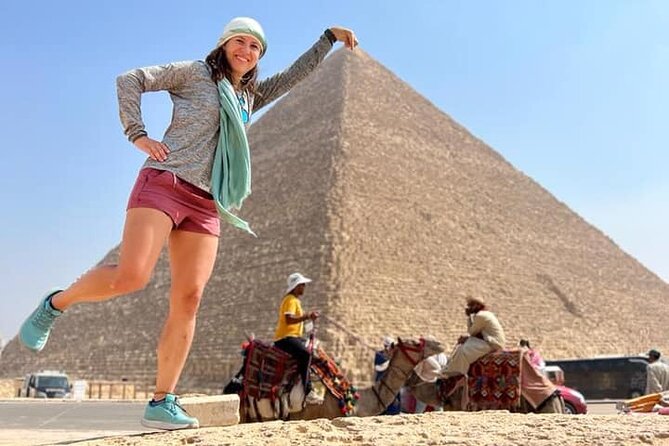
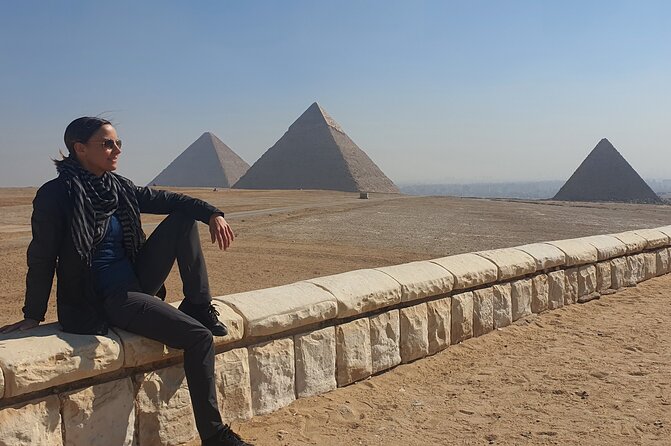
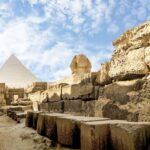
You start at the Giza Plateau with an Egyptology guide who introduces the three major pyramids: Cheops, Chephren, and Mykerinus. The guide also frames what you’re looking at in terms of the pharaohs’ burial rites, which is where the visit becomes more than postcard time.
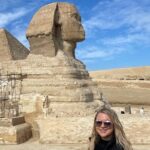
Then you visit the Great Sphinx and the Valley Temple, part of the same broader complex. One practical benefit here is that a guide can point out sightlines and details you might miss if you’re simply walking and guessing. Another benefit is timing: going early helps you get better light and a calmer first impression.
Possible consideration: this is still outdoor time. Even with guidance, you’ll want sunscreen, water, and something for walking stamina.
Saqqara (Sakkara) and the Step Pyramid of King Djoser
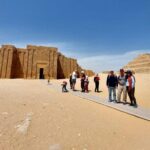
Next you head to Saqqara, home to the Step Pyramid of King Djoser. This is the “world’s oldest major stone structure” stop, built around 2630 BC, and the guide’s context helps you see the Step Pyramid as a milestone—not just another big pyramid.
You’re there for about 1 hour 30 minutes, which is a good length: enough to feel the significance, without turning it into a marathon.
Possible drawback: the weather and heat can affect how long you’ll want to linger. If you’re the type who takes tons of photos, you may need to plan for more frequent breaks.


Dahshur: Red Pyramid entry chance and Bent Pyramid views
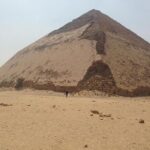
You finish Day 1 at Dahshur, where you’ll have a great chance to enter the Red Pyramid and get excellent views of the Bent Pyramid. Dahshur is often where the pyramids start feeling more “real” and less like distant icons—partly because it’s less crowded than Giza for many people, and partly because the structures and slopes look different up close.
You’ll spend about 1 hour here. That’s a smart amount of time for the goal: see the defining features, get inside where it’s possible, then move on.
At the end of the day, you’re transferred back to your hotel in Cairo or Giza.
Day 2: Muhammad Ali Mosque, Citadel views, Coptic Cairo’s churches, then the Egyptian Museum
Day 2 switches from ancient royal monuments to the religious layering of Cairo—Islamic and Coptic sites, then Jewish heritage, and finally the museum where artifacts collect the story in one place.
Saladin Citadel and the Muhammad Ali Alabaster Mosque
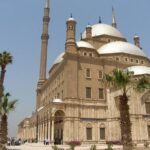
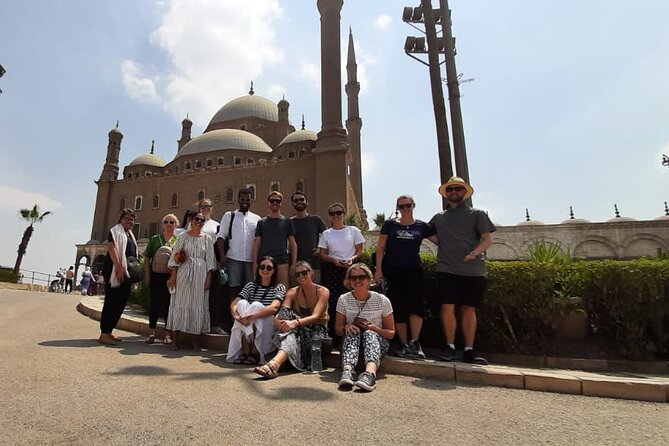
You start in the morning with a guided route from your hotel into the Islamic and Coptic side of Cairo. The first major stop is Saladin Citadel, including the Muhammad Ali Alabaster Mosque (also linked with views and history around the Al Gowhara palace area built by the Mamluks and Ottoman influence).
This stop is valuable because it gives you a sense of Cairo’s skyline and how later eras chose dramatic, visible places of worship and power. It also breaks up the day after the morning travel.
Practical note: you’ll want comfortable shoes and a light layer. Citadel areas can feel exposed, and you’ll likely do a fair amount of walking.
Coptic Cairo: Hanging Church, St. Sergio, and Ben Ezra Synagogue
Then you head to Old Cairo and visit key Coptic and Jewish landmarks in sequence. You’ll see the Hanging Church (also known as Al Mo’allaka church), plus St. Sergio, which sheltered the Holy Family. This pairing is a big part of why Coptic Cairo feels different: the sites carry both religious meaning and historical layers you can feel in the streets around them.
You’ll end with the Ben Ezra Synagogue. The order matters: moving from churches to synagogue helps you understand how Old Cairo functions as a patchwork of faith communities rather than one single narrative.
Possible consideration: Old Cairo can be crowded and busy. If you’re sensitive to tight spaces or sudden changes in pace, your guide’s job of shepherding the group becomes especially important.
Egyptian Museum in downtown Cairo (and Tutankhamen tombs)
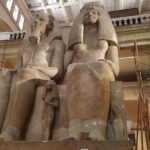
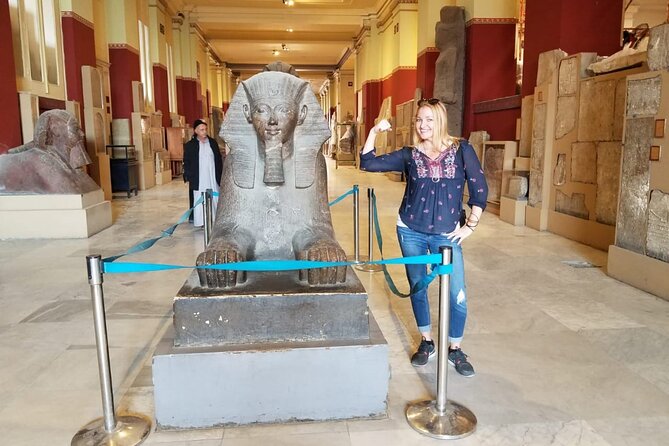
Finally, you travel into downtown for the Museum of Egyptian Antiquities—often called the Egyptian Museum—and spend about 3 hours there. You’ll see artifacts from the Pharaonic and Roman periods, with a note that the museum holds a rare collection of 5000 years of art and is considered a major Egyptian art collection.
The museum visit includes access to the Tutankhamen tombs area. This is a meaningful stop because it turns the day’s architecture into objects you can study without the same sun-and-walking constraints.
Practical note: museums move faster than outdoor sites. If you want photos plus reading time, consider pacing yourself and using your guide to pick what matters most to your interests.
Transportation and comfort: what the air-conditioned transfers really change

Cairo travel can feel like a constant negotiation between traffic, distance, and where you can safely stop. This tour handles that with pickup and drop-off via an air-conditioned vehicle, so you’re not stuck asking drivers where to go, or guessing whether a shortcut will cost you an hour.
Small-group comfort also helps. With a maximum of 15 travelers, you’re more likely to get attention when you have questions—especially about the “why” behind what you’re seeing at each pyramid and each historic church.
One more practical detail: the tour offers a mobile ticket and confirmation at booking time. That reduces the chance you’ll start the trip scrambling for paperwork.
What to budget for: entrance fees and extra pickup areas
Entrance fees aren’t included, so you should mentally separate your cost into two buckets: guidance and transport (handled in the price), and tickets (paid on-site). That’s also a reason to arrive with some cash or a payment plan ready—Egypt museum and site fees can be an extra cost that adds up fast if you don’t plan.
If you’re staying in Heliopolis or Nasr City, you’ll need to add $10 per person per day for pickup/drop-off. If your hotel is elsewhere in Cairo or Giza, the pickup/drop-off is included.
Also note that the tour itself is designed for good weather, especially for the outdoor sites like Giza, Saqqara, and Dahshur. If weather affects the schedule, you may be offered another date or a full refund.
Guide quality and language options: the difference between seeing and understanding
This tour is built around an expert guide, with the option to choose your preferred language. That matters in Cairo because the sites are powerful, but the meaning can be lost if you don’t get context. The guide is what makes the pyramids feel like more than shapes in the sand.
From the feedback I saw, clear explanations and a confident driver make the experience feel safe and smooth. Names that came up include Mohamed as a standout guide (especially in Spanish), with Islam credited for driver support, and Rafa noted for being an excellent companion for discovery around Giza and Cairo. Those details point to one theme: the day runs better when the guide and driver are in sync and know how to manage the flow of a busy city.
Where this tour fits best (and who might want a different approach)
This is ideal for you if:
- You want the top Giza, Saqqara, and Dahshur sites without figuring out Cairo transport
- You’d rather rely on a guide to explain burial rites and architectural milestones
- You like Old Cairo’s layered religious sites and want the itinerary to connect them
- You prefer a small group instead of a huge bus crowd
It might be less ideal if:
- You hate paying entrance fees and would rather assemble a cheaper plan yourself
- Your schedule is so tight that you don’t want a full two-day structure
- You’re staying in Heliopolis or Nasr City and don’t want the added pickup cost
Should you book this 2-day guided Cairo tour?
I’d book it if your priority is a smooth, guided route that hits the major ancient sites plus Old Cairo, with less stress from transit. The combination of expert context, hotel pickup, and small-group size is the real value—not just the big names on the itinerary.
If your goal is maximum independence and you’re comfortable planning transport and tickets day by day, you may want to compare alternatives. But if you’re visiting for the first time and want Cairo to feel manageable, this tour is built for that exact situation.
FAQ
Do I need to buy entrance tickets separately?
Yes. Entrance fees to the sightseeing are not included, so you’ll pay them at your own expense during the visits.
What’s included in the tour price?
Pickup and drop-off transfers by air-conditioned vehicle, an expert tour guide, the 2-day guided itinerary, plus service, taxes, landing, and parking fees.
How big is the group?
The tour has a maximum of 15 travelers, so it stays in a small-group format.
Does the tour include hotel pickup and drop-off?
Yes, pickup and drop-off are included for hotels in Cairo and Giza. Pickup/drop-off from Heliopolis and Nasr City costs an extra $10 per person per day.
Which stops are covered over the two days?
You’ll see the Pyramids of Giza, the Step Pyramid of Djoser in Saqqara, Dahshur (including the Red Pyramid and Bent Pyramid views), plus the Citadel area with the Muhammad Ali Alabaster Mosque, Coptic Cairo (including the Hanging Church and St. Sergio), the Ben Ezra Synagogue, and the Egyptian Museum.
Is there a mobile ticket?
Yes, a mobile ticket is included.
How long is the tour?
It’s approximately 2 days.
What should I know about weather?
The experience requires good weather. If it’s canceled due to poor weather, you’ll be offered a different date or a full refund.
What are the cancellation terms?
Free cancellation is available. You can cancel up to 24 hours in advance for a full refund, and cut-off times are based on local experience start time.