REVIEW · CAIRO
Full Day Tour to Giza Pyramids with Camel Ride and Egyptian Museum in Cairo
Book on Viator →Operated by EMO TOURS EGYPT · Bookable on Viator
Cairo throws you straight into the ancient world. This all-day plan pairs the Giza pyramids and Great Sphinx with a visit to the Museum of Egyptian Antiquities, so you’re not stuck choosing between monuments and artifacts. It starts with hotel pickup and uses an air-conditioned ride to keep the long day manageable.
I especially like how the route hits multiple pyramid complexes in one go, not just the one-photo-stop approach. You also get a real moment to switch gears with a 30-minute camel ride, plus snacks and water while you’re out on the plateau.
One thing to consider is that the guide experience can vary. In one account I saw, Mohammad was funny and charismatic, but the historical detail on Giza wasn’t as strong as the person wanted—so if you’re picky about deep, specific explanations at each monument, you may want to confirm how the guide handles that.
In This Review
- Key highlights to know before you go
- A simple value deal: pyramids plus the Museum of Egyptian Antiquities
- Getting started: 8:00 am pickup and the AC ride to Giza
- Giza Plateau orientation: why that first long stop helps
- Khufu’s Great Pyramid: the one stop most people remember
- Khafre’s pyramid and the Sphinx connection
- Menkaure’s pyramid: quick, but it rounds out the set
- The camel ride slot: short and practical
- Museum of Egyptian Antiquities: how to use your time wisely
- Price and tickets: the real budget math
- Timing stress tests: can you handle 8 to 10 hours?
- Guide quality check: charm helps, facts matter too
- Who should book this tour (and who should skip it)?
- Should you book Full Day Tour to Giza Pyramids with Camel Ride and Egyptian Museum?
- FAQ
- What time does the tour start?
- How long does the tour last?
- Is hotel pickup and drop-off included?
- Is a camel ride included, and how long is it?
- Do I get bottled water?
- Are admission tickets included for the pyramids and museum?
- What will I see at the Museum of Egyptian Antiquities?
- Is lunch included?
- Is tipping included?
- Is the cancellation refundable?
Key highlights to know before you go
- Hotel pickup and drop-off make the day easier, especially if you’re staying in Cairo or Giza
- 30 minutes camel ride is included at the pyramids
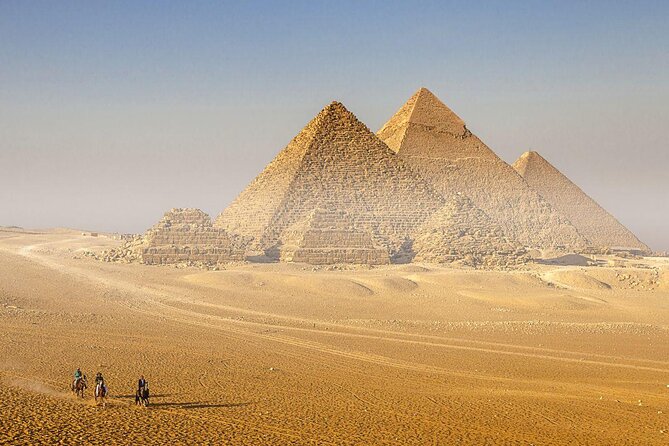
- Several pyramid stops: Cheops (Khufu), Khafre, Menkaure, plus the Sphinx
- Museum time included with a look at the King Tut exhibit and Rosetta Stone area
- Bottled water is part of the day, plus snacks mentioned in the tour outline
- Budget pricing, but you should double-check what entry levels are covered in your option
A simple value deal: pyramids plus the Museum of Egyptian Antiquities
At $8.00 per person, this tour is priced like a bargain ticket, which is exactly why people consider it for a first big day in Cairo. The value comes from stacking two major destinations that are usually booked separately: the Giza Plateau monuments in the morning/early afternoon, then the Museum of Egyptian Antiquities later.
If you like structure, this plan gives it to you. The day is divided into clear blocks—pyramid complex viewing time, a camel ride slot, and then several hours inside the museum. That kind of pacing matters in Egypt, where travel time and heat can turn an unplanned day into a tiring blur fast.
You can also read our reviews of more museum experiences in Cairo


Getting started: 8:00 am pickup and the AC ride to Giza
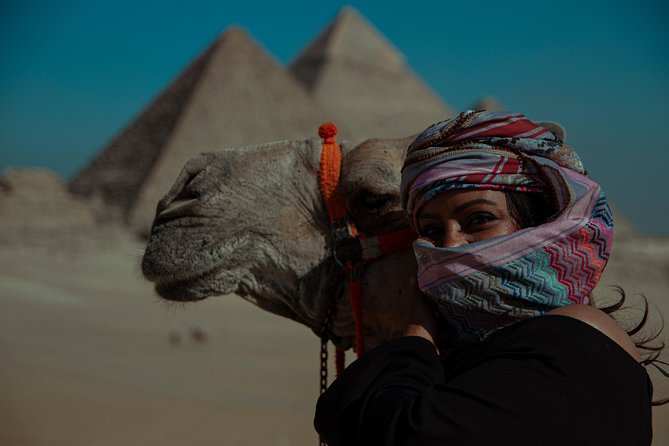
The tour starts at 8:00 am, which is one of the smartest choices for this route. Early starts often mean you get more comfortable viewing conditions and more energy left for the museum afterward.
You’re picked up from your hotel in Cairo or Giza, then transferred by private AC vehicle (described as a latest model). The “private” part matters because it reduces the random seat shuffling that can happen when you’re on a shared shuttle. It also makes it easier if your hotel is a bit tricky to reach with public transport.
One practical note: the tour overview mentions both snacks and water, and the included list specifically calls out bottled water. Either way, don’t plan on forgetting hydration. You’ll be outdoors for multiple pyramid stops, and then you’ll head indoors to keep the day moving.
Giza Plateau orientation: why that first long stop helps
The day begins at the Giza Plateau (the Giza Necropolis). You get about 3 hours here, which is longer than you’d expect if the tour were trying to rush you from one photo to the next.
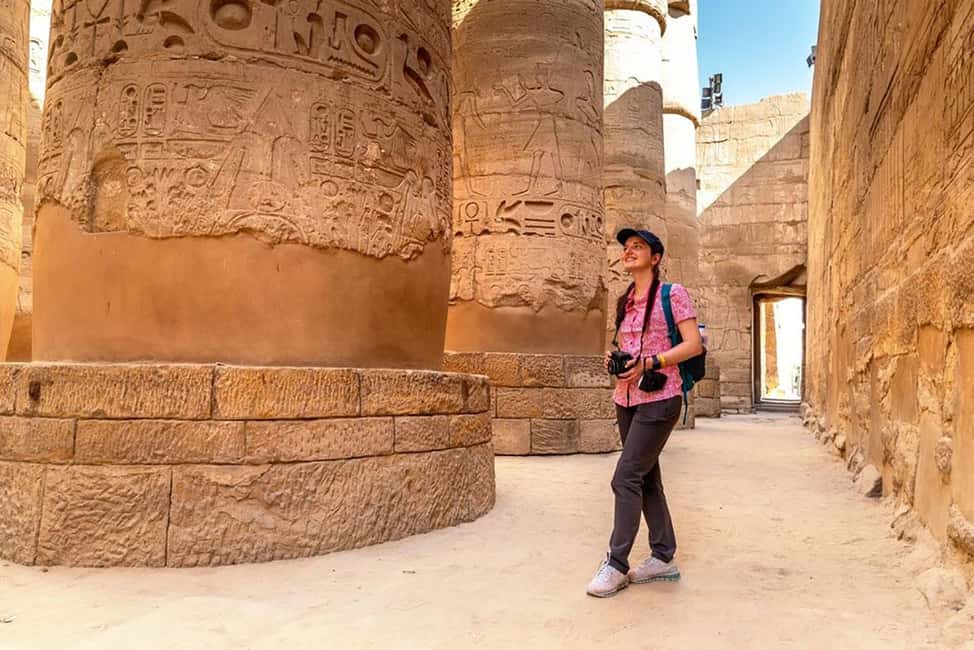
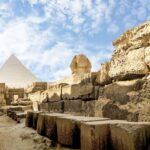
That extra time helps because the plateau isn’t just one landmark. It’s the setting for the Great Pyramid of Giza (Cheops/Khufu), plus the pyramid complexes of Khafre and Menkaure. It’s also where you’ll see the Great Sphinx of Giza and the surrounding features—cemeteries and even remains of a workers’ village.
You also get some important context as you look around. These major monuments were built during Egypt’s Fourth Dynasty in the Old Kingdom. And the plateau sits about 5 miles west of the Nile, with the site in the Western Desert edge—so even though it feels like a single “Giza experience,” it’s actually a broader archaeological area.
A drawback of this long first phase is that it can feel like waiting if you already know the pyramids well. But if you’re new, this is the part that helps you get your bearings fast.
Khufu’s Great Pyramid: the one stop most people remember
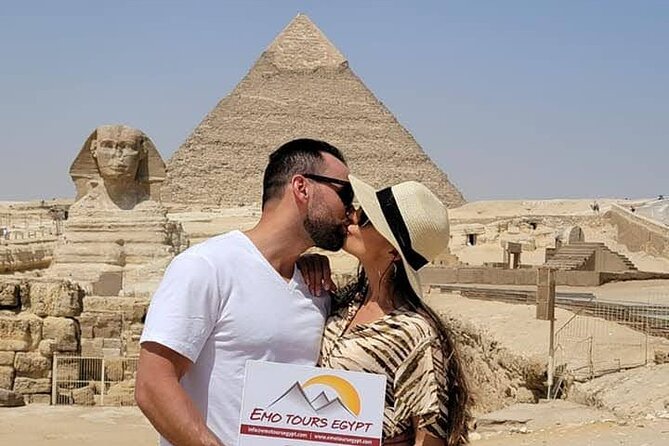
Next is the Great Pyramid of Cheops (Khufu), scheduled for about 1 hour with admission included. This is the main event for a lot of people, and for good reason: it’s the monument that anchors the entire Giza story.
The tour notes that Khufu’s pyramid complex includes a valley temple (now buried beneath the village of Nazlet el-Samman) and that some paving and wall materials have been found, even if the site hasn’t been fully excavated. That small detail matters because it explains why some areas feel like viewing a “surface layer” rather than a fully exposed excavation site.
For you, the value is simple: you get a focused hour at the pyramid most people want to see, without sacrificing the rest of the complex.
Khafre’s pyramid and the Sphinx connection
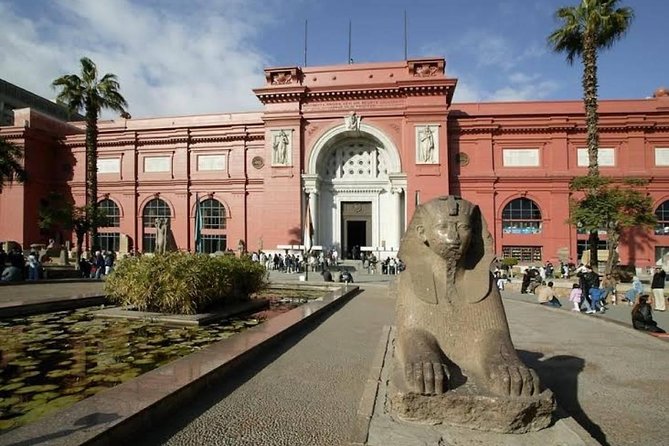
After Khufu, you move to Khafre’s pyramid complex, including the Sphinx temple and a causeway layout, with about 30 minutes on the stop. The time is shorter here, but the goal is still clear: you’re seeing how Khafre’s complex relates to the broader Giza system.
The notes for this stop mention that a number of Khafre statues were found from the valley temple. It also ties into the Sphinx area later, and that link is one of the best “aha” moments of the day.
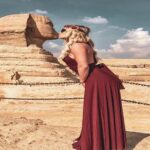
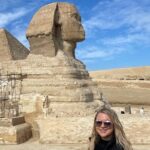
Then the tour heads to the Great Sphinx, scheduled for about 1 hour with admission included. The guide material provides a specific consensus: many Egyptologists believe the Sphinx’s head is that of Khafre. That’s a useful detail because the Sphinx can feel like a symbol with no clear story—this helps you attach it to the pyramid complex around it.
If you want your photos and your facts to match, this is a good stretch of the route.
A few more Cairo tours and experiences worth a look

Menkaure’s pyramid: quick, but it rounds out the set
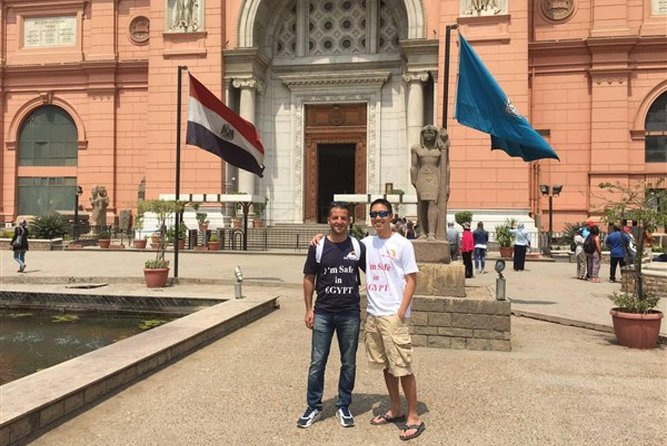
Menkaure’s pyramid stop is also listed as about 30 minutes, with admission included. The complex includes a valley temple, a causeway, and a mortuary temple. The notes also mention an ante-temple added during the Fifth Dynasty.
This is the kind of stop that works best when you treat it as a “complete the triangle” moment. If you’re only here for Khufu, it may feel less dramatic. But if you want the bigger picture of Giza’s main royal pyramid group, this stop helps connect the dots.
The camel ride slot: short and practical
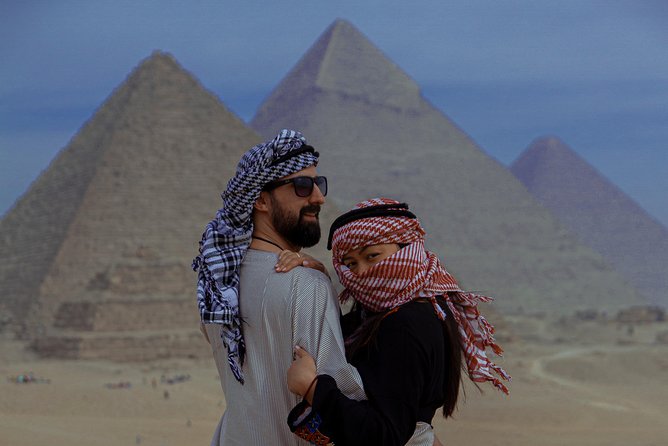
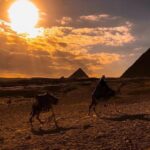
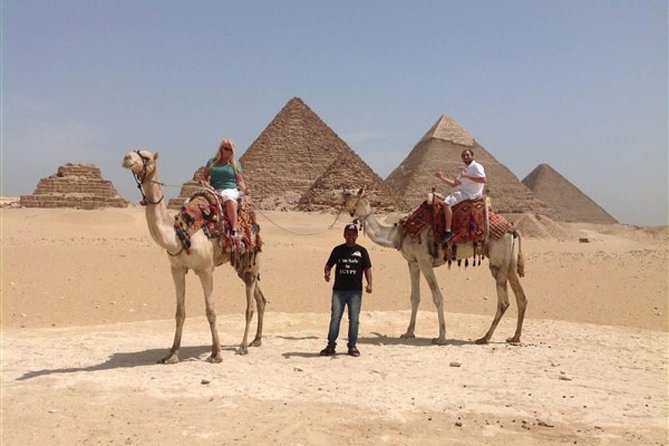
You’ll get a 30-minute camel ride at the pyramids area, and it’s specifically called out as always included. This is one of those experiences where planning matters more than dreaming.
Because the ride is time-limited, it tends to work well for people who want the iconic camel moment without committing to a long trek. It also fits into the day’s flow—you do it after the core pyramid viewing, when you’re ready for a shift in pace.
The tour includes snacks and water in the day outline, which is helpful. Still, I’d treat this as an outdoor activity: wear sun protection and keep an eye on how long you’ll be in the open.
Museum of Egyptian Antiquities: how to use your time wisely
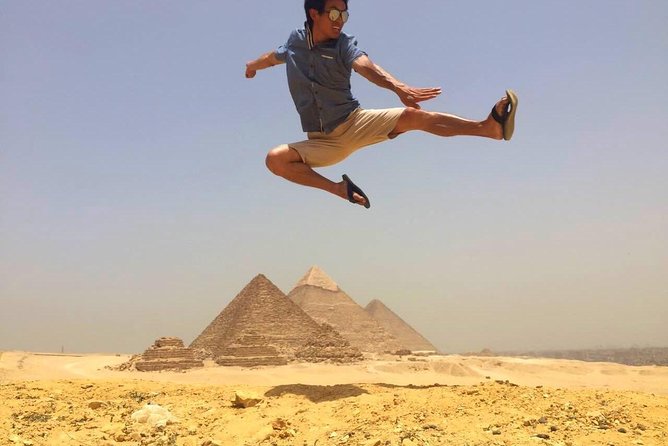
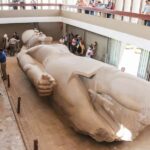
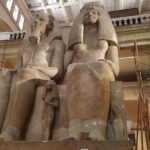
After Giza, you head to the Museum of Egyptian Antiquities for about 3 hours, with admission included. The museum is sometimes called the Egyptian Museum, and it’s home to a large collection—120,000 items—with only a representative set on display and the rest stored.
The building itself has history too. It was built in 1901 by an Italian construction company and designed by a French architect. That means even before you reach the galleries, you’re in a museum building with its own backstory.
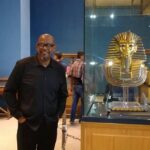
What you’re aiming for on this tour is exactly what you’d hope for in a time-limited day: the King Tut exhibit area and the Rosetta Stone among other key artifacts. This is where the museum option earns its place.
Why? Because seeing objects in a museum changes how the pyramids feel. On the plateau, you’re looking at huge stone structures. In the museum, you’re looking at the smaller things that show daily ritual, power, art style, and the way ancient Egyptians recorded meaning.
A practical consideration: the museum is large, and you only have 3 hours. So go with a simple plan: prioritize what’s listed for your tour and then skim the rest rather than trying to read every label.
Also, the tour notes that as of March 2019 the museum is open to the public, and there were plans that in 2020 it would be superseded by the new Grand Egyptian Museum at Giza. Even if that timeline has changed over the years, the takeaway for you is still useful: this museum visit is part of an older Egypt-museum era, with major artifacts still here.
Price and tickets: the real budget math
The sticker price here is $8.00 per person, which is unusually low for a day that includes hotel pickup, AC transfers, multiple major sites, a camel ride slot, and a museum visit. That’s what makes it attractive.
But for your budgeting, read it like a two-part equation:
1) What’s included in your option
- The schedule lists admission as included at several major stops (Great Pyramid of Cheops, Khafre’s pyramid, Menkaure’s pyramid, Great Sphinx, and the Museum of Egyptian Antiquities).
- Still, the tour info also says entry fees include basic area only and may depend on tour options.
2) What isn’t included
- Tipping is not included.
- Lunch at local restaurants (koshari) is optional.
- Tipping and additional entry fees are possible if you add extras.
So what should you do? If you’re working on a tight budget, you can probably make this work with the included parts. Just confirm what your exact option covers for admission levels, because “basic area only” can mean different things depending on how the operator packages tickets.
Timing stress tests: can you handle 8 to 10 hours?
The tour runs about 8 to 10 hours. That’s a long span, but it’s also what you need for Giza plus a museum without skipping the key monuments.
Your day will likely feel like:
- outdoor walking and viewing at the plateau
- multiple pyramid complexes with shorter segments later
- a camel ride time block
- a shift indoors to the museum
If you like to pack a day and feel productive, this works. If you’re someone who hates being on a schedule, the pacing may feel strict—especially with shorter stops at Khafre and Menkaure after the longer plateau orientation.
One more practical point: the meeting start time is 8:00 am, and the tour ends with drop-off at your hotel in Cairo or Giza.
Guide quality check: charm helps, facts matter too
In at least one account, the guide named Mohammad was described as funny and charismatic. That matters because you’ll be spending hours together. A guide who can keep the pace lively can turn a long day into something you remember.
The same account also raised a concern: the guide’s historical knowledge on Giza didn’t match what the person expected. That tells you something practical: the monuments are big, and they can be explained at different depths.
If you want more than broad context, do this before the tour starts: ask a clear question early, like what specific details you’ll cover at each pyramid complex. If the answers feel thin, at least you’ll know to focus on what you can read and observe yourself.
Who should book this tour (and who should skip it)?
This tour is a strong match if you:
- want one day that covers Giza pyramids and the Egyptian Museum
- like the idea of a short camel ride rather than a long excursion
- prefer hotel pickup and AC transfers to handle logistics for you
- care about budget value and want to see the top monuments without spending a fortune
It may be less ideal if you:
- want very deep, monument-by-monument historical explanation during the Giza walk
- hate shorter stop times and prefer more free roaming at each pyramid area
- are planning a long lunch break, because lunch is optional and the schedule runs full-day
Should you book Full Day Tour to Giza Pyramids with Camel Ride and Egyptian Museum?
If you’re choosing between a cheap Giza-only plan and a plan that also includes the museum, I’d lean toward booking this one—because the museum visit gives you meaning behind what you’re seeing. You’ll leave the pyramids with more context, not just photos.
If your top priority is maximum time at the monuments or very detailed explanations, I’d still book it, but go in prepared: focus on the specific sites listed, ask questions early, and don’t count on every moment being a deep lecture.
For most first-timers who want a structured day and good value, this is the kind of tour that makes Cairo easier—pyramids in the morning, artifacts in the afternoon, and back to your hotel by the end of it.
FAQ
What time does the tour start?
The start time is 8:00 am.
How long does the tour last?
It runs about 8 to 10 hours.
Is hotel pickup and drop-off included?
Yes. Hotel pickup and drop-off are included, either from Cairo or Giza.
Is a camel ride included, and how long is it?
Yes. A 30-minute camel ride at the Giza Pyramids is always included.
Do I get bottled water?
Bottled water is included, and snacks are mentioned in the tour description.
Are admission tickets included for the pyramids and museum?
Admission ticket inclusion is listed for key stops like the Great Pyramid of Cheops, Khafre’s pyramid, Menkaure’s pyramid, the Great Sphinx, and the Museum of Egyptian Antiquities. Entry fees are described as basic area only and may vary by tour options, so confirm your specific package.
What will I see at the Museum of Egyptian Antiquities?
The tour highlights the King Tut exhibit area, the Rosetta Stone, and other significant historical artifacts.
Is lunch included?
Lunch at local restaurants, including koshari, is optional and not included.
Is tipping included?
No. Tipping is not included.
Is the cancellation refundable?
Yes. Free cancellation is available up to 24 hours in advance for a full refund.