REVIEW · CAIRO
Full Day to Giza Pyramids, Sphinx, Saqqara & Dahshur.
Book on Viator →Operated by Egypt Tours Portal · Bookable on Viator
One day, four ancient powerhouses. This full-day Cairo circuit strings together the big hitters—Giza Pyramids, the Great Sphinx, Saqqara, and Dahshur—so you see more than the usual one-site rush. You’ll ride out from your hotel, get expert context from an Egyptologist, then work through the sites at a pace that actually leaves room for photos.
I especially like two things. First, the hotel pickup and air-conditioned driving take the stress out of Cairo traffic and logistics. Second, you’re not just looking at monuments—you’re hearing the stories and details as you go, with guides such as Ahmed Refaat, Ahmed El Gohary, Ismail, Mohamed Sobhy, and Reda highlighted in guest feedback for being helpful with history and photo moments.
One consideration: the tour mixes included ticket stops with at least one extra you may need to pay on your own—the Great Pyramid of Khufu admission is not included, and tipping is not included either.
In This Review
- Key highlights you’ll feel right away
- How this Giza–Sphinx–Saqqara–Dahshur day tour actually works
- Pickup, A/C comfort, and Cairo traffic reality
- Giza Pyramids Complex: ticket coverage and what to plan for
- The Great Sphinx: the quick stop that becomes the most memorable
- Saqqara’s step pyramid era: why it feels different from Giza
- Dahshur: the “beyond the postcard” hour you’ll thank yourself for
- Lunch and pacing: how to keep your day enjoyable
- Price and value: what $169.24 buys (and what it doesn’t)
- Guides, safety vibes, and how to get the best results
- Who this tour fits best (and who might want a different plan)
- Should you book this full-day pyramids run?
- FAQ
- How long is the full day tour?
- Do I get pickup and drop-off from my hotel?
- How big is the group?
- Is there a child rate?
- What’s included in the tour price?
- Is entry to the Great Pyramid of Cheops (Khufu) included?
- What is the cancellation and refund policy?
Key highlights you’ll feel right away

- Four sites in one day: Giza, Great Sphinx, Saqqara, and Dahshur, with guided context at each stop
- Hotel pickup and drop-off saves time and makes the day easier to manage in Cairo traffic
- Lunch included, so you can keep moving without hunting for food between monuments
- Entry ticket structure matters: some areas are covered, while the Great Pyramid of Khufu is not
- Small group size (maximum 15) helps you get questions answered and keep the pace sane
- Great guides on the ground: names like Ahmed Rafaat, Ahmed El Gohary, Ismail, and Mohamed Sobhy come up often
How this Giza–Sphinx–Saqqara–Dahshur day tour actually works
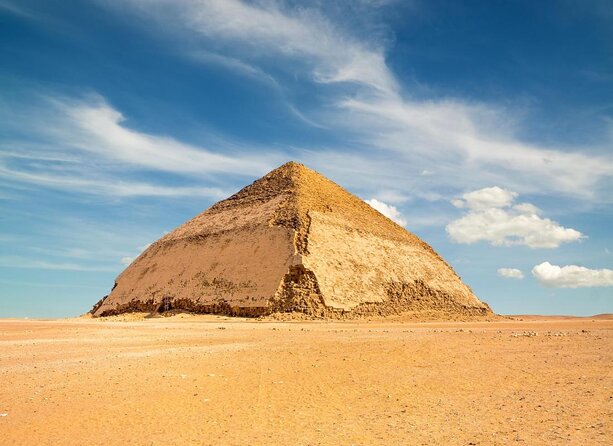
If you only have one day (or you just don’t want to spend it plotting transport), this type of tour is built for you. Instead of bouncing between stops on your own schedule, you get one organized route with a qualified Egyptologist guide and a plan for when you’ll be at each site.
The day runs about 8 hours, which is tight but not frantic—especially with pickup and drop-off handled for you. The tour also keeps group size small (up to 15), and that matters at crowded, hot places like the Giza plateau. It’s a better setup for asking questions and adjusting your pace than the big-bus model.
You’ll also get a useful “story arc” across the day. Giza gives you the iconic pyramid field and royal monuments. Saqqara shifts you into the earlier pyramid era, and Dahshur adds another chapter—so by the end, the pyramids don’t feel like one repeating postcard image. They start to feel like a timeline.
A few more Cairo tours and experiences worth a look

Pickup, A/C comfort, and Cairo traffic reality

Cairo traffic can be a sport. What you want on a day like this is reliable pickup, a driver who knows how to thread the needle, and a vehicle that helps you stay comfortable.
This tour includes hotel pickup and drop-off, and the vehicle is described as air-conditioned. In the real world, that kind of comfort makes a difference when your day starts in the morning and the sun keeps climbing. Some guests also mention things like staying hydrated during the drive, so it’s worth packing with the assumption you’ll be moving and sweating.
On the service side, guest feedback often praises drivers for safe, calm driving—names like Amir, Sameh, and Mohamed Amen appear in reviews. The point isn’t the celebrity driver. It’s that you’re not getting stuck waiting around or feeling thrown around by traffic chaos.
Practical tip: wear breathable clothes, bring sunglasses and sun protection, and plan to keep your phone camera battery warm. The cold A/C inside the car is great, but your screen can still drain fast once you’re outside.
Giza Pyramids Complex: ticket coverage and what to plan for
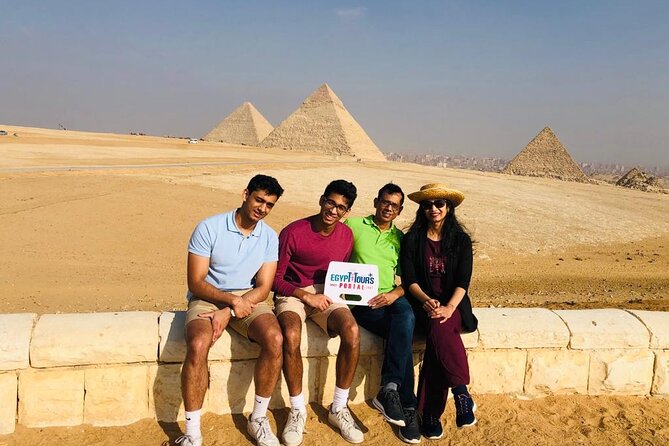
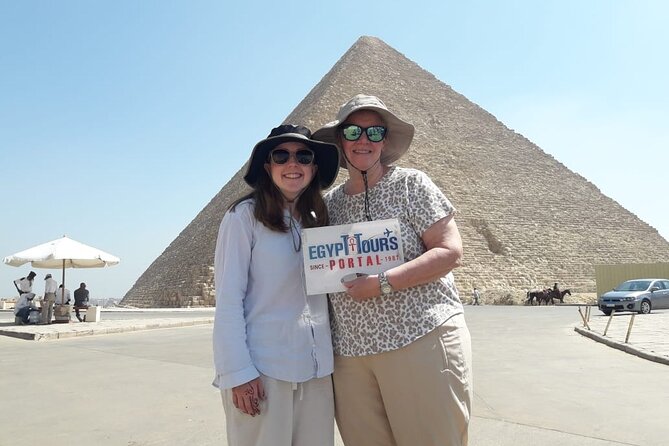
Your day begins at the Pyramids of Giza Complex, with an admission ticket included for the complex area. That’s a nice start because it prevents you from doing the annoying part—figuring out tickets—before you even see the first pyramid.
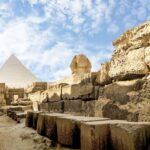
Then comes the first “major moment”: the Great Pyramid of Cheops (Khufu). Here’s the key detail: the time at the Great Pyramid is about 1 hour, but admission is not included. In other words, you can still visit the area and see it from where you’re allowed, but if you want to go inside (or purchase that specific entry), you’ll need to budget extra.
You also get a strong factual anchor for what you’re looking at. This pyramid is tied to King Khufu, and it’s listed as the largest pyramid in the Giza Plateau, built to a height of 147 meters. The construction detail—more than 2.3 million stones, with individual stones described as weighing about 2.5 to 9 tonnes—is the kind of information that turns the monument from a photo into a scale you can feel.
Practical tip for the Great Pyramid choice: if going inside is a must for you, plan for that extra cost and keep your expectations realistic. Interior areas usually mean crowds and tighter conditions than the open exterior viewpoints. If you’re more about photos and first impressions, you can still do a satisfying visit even without going inside.
The Great Sphinx: the quick stop that becomes the most memorable
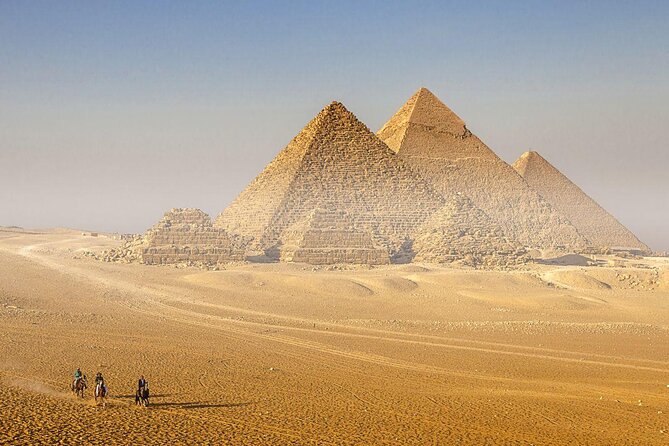
Next up is the Great Sphinx, and this part is timed for about 30 minutes. The Sphinx admission ticket is included, so you won’t hit another paywall right as the day peaks.
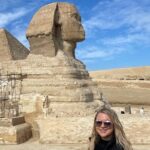
This stop comes with a great “why it’s special” framing. The Sphinx is described as a limestone statue carved from one piece, not built. It’s also linked to royal portraiture, with the face said to take the expressions of King Khafre. And yes, the measurements are part of the magic: it’s listed as 73 meters long, 19 meters wide, and 20 meters high.
The itinerary’s best hint is also the most useful: don’t just look at the Sphinx—ask your guide about how it missed its nose. The point isn’t the story itself (there are always multiple layers to famous damage). The real value is that your guide will connect the myth, the history, and the evidence you can actually see while standing there.
You’ll likely leave this stop with the classic photos—but try to do one more thing: pause and look at it from a distance and then again from closer. The proportions and wear patterns change how it feels, and your guide can point out what to notice.
Saqqara’s step pyramid era: why it feels different from Giza
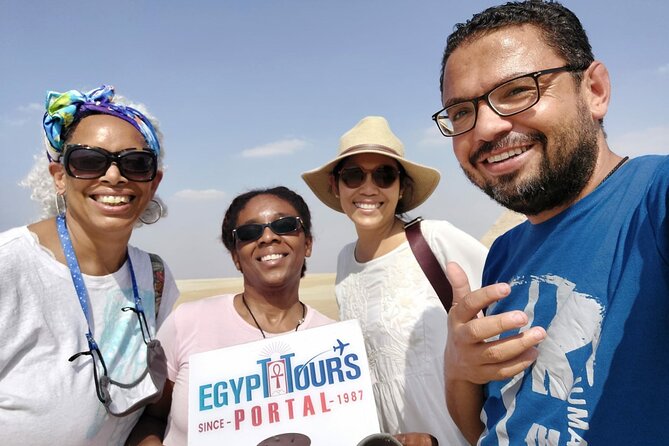
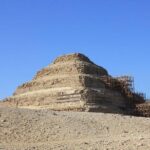
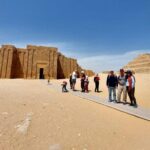
After the Sphinx, you move into Saqqara for about 1 hour. The standout here is the link to early monumental stone building. The tour information highlights the 27th century B.C. and King Djoser, describing the site as the earliest large-scale cut stone construction, with six unequal stages rising to a height of 62.5 meters.
Saqqara is also listed as having admission ticket free in this tour. That’s a small detail, but it matters for value. You’re not just adding another stop—you’re adding a key chapter of pyramid development without extra ticket budgeting for this specific segment.
What I like about placing Saqqara after Giza is that it changes the mental picture. Giza teaches you what the pyramids became in the grand, polished royal form. Saqqara helps you understand the earlier experimentation and the shift toward stone monuments that could last.
Practical tip: if you’re sensitive to sun, bring a scarf or lightweight layer you can use quickly. That 1-hour block is enough time to move slowly and absorb the architecture without feeling like you’re being marched.


Dahshur: the “beyond the postcard” hour you’ll thank yourself for

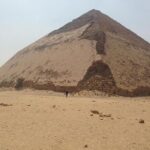
The final big stop is Dahshur. The tour description places it as one of Memphis’s most important cemeteries, and it notes that the area includes vast necropoleis tied to ancient Egyptian capitals. You’ll see pyramids from multiple dynasties, including references to pyramids associated with the IV and XII Dynasties, with specific mention of the Pyramid of Amenemhat II and the Pyramid of Amenemhat III.
You’ll spend about 1 hour here, and the admission ticket is included for this stop. That makes the Dahshur portion feel like a proper add-on rather than a rushed bonus. You’re getting a broader view of how pyramid building persisted and evolved beyond the Giza headline acts.
What you’ll likely feel is variety. Even if you’ve seen pyramid shapes before, Dahshur helps connect the dots across time. By the end of the day, the pyramids don’t feel like isolated monuments. They start to feel like parts of a bigger system: royal worship, burial planning, and dynastic identity.
Lunch and pacing: how to keep your day enjoyable
This tour includes lunch, and it’s built into the middle of the day plan. That matters more than it sounds. Pyramid days can turn into a snack scavenger hunt if food isn’t handled. Here, lunch gives you a reset point—especially if you’re traveling with someone who gets tired easily or you just don’t want to negotiate where to eat while the day is already hot.
Your pacing is also shaped by the group size and the fact that each stop has a defined time window. You do not get “hang out all day” freedom, but you also aren’t stuck for hours in the most intense spots. It’s a fair trade: enough time to see the monuments clearly, plus guide-led context so you’re not just staring at stone.
Packing checklist for comfort (basic but effective):
- Sun protection (hat, sunscreen, sunglasses)
- Comfortable shoes for uneven ground
- A light layer (cool car A/C then outside sun can feel like whiplash)
- Power bank if you’re photo-heavy
- Small cash for tips and any extras you decide to add
Price and value: what $169.24 buys (and what it doesn’t)
At $169.24 per person, the value comes from combining five expensive-to-organize items into one package: qualified Egyptologist guidance, hotel pickup/drop-off, lunch, and ticket coverage for key stops.
Here’s the ticket math in plain language:
- Complex entry is included at the start (Pyramids of Giza Complex)
- Great Pyramid of Khufu admission is not included
- Sphinx admission is included
- Saqqara ticket is free
- Dahshur admission is included
So you’ll likely pay extra only for what you choose at the Great Pyramid level (and of course any extras not stated). And tipping isn’t included, so you should plan for that.
Compared with DIY, you’re paying to outsource the hard parts: Cairo transport coordination, finding guides who can explain what you’re seeing, and fitting four major sites into one coherent day. If you’re short on time, that’s usually where tours earn their keep.
If you’re the type who wants to linger for hours at one pyramid or go deep into additional museums beyond this circuit, you might find a day tour a bit structured. But for first-timers or busy schedules, it’s a strong value shape.
Guides, safety vibes, and how to get the best results
One of the most consistently praised elements in feedback is the people part: guides who make the day feel smooth, informative, and safe. Names that come up often include Ahmed Refaat, Ahmed Rafaat, Ahmed El Gohary, Ismail, Mohamed Sobhy, and Reda. You’ll also see mentions of drivers such as Amir, Mohamed Amen, and Sameh.
A pattern shows up: guides aren’t just reciting facts. They’re also helping with practical on-the-ground needs—like patience with questions, keeping your group at a workable pace, and spotting good photo angles. One family-focused detail stands out too: feedback notes the tour felt comfortable for different ages, including an older traveler and a young child, which suggests the guides know how to manage pacing rather than rushing everyone.
How you can work with your guide during the day:
- Ask questions at each stop, not just at the end
- Take the itinerary hint and ask about the Sphinx nose story
- Tell your guide what kind of photos you want (wide pyramid views vs close details)
- If you need more time at one site, speak up early—don’t wait until you’re already rushed
Who this tour fits best (and who might want a different plan)
This is a great fit if you:
- Want a single-day overview of the biggest Ancient Egypt highlights near Cairo
- Appreciate an Egyptologist guide who explains what you’re looking at
- Prefer pickup and drop-off over managing transport yourself
- Like the idea of seeing both Giza and the wider pyramid timeline via Saqqara and Dahshur
It’s also a good option for most people since the tour indicates it’s broadly suitable. There are rules for families: children must be accompanied by an adult, and child rates apply only when sharing with two paying adults.
If you’re the kind of traveler who wants to spend a long, quiet half-day at just one site, this might feel like you’re moving too quickly. And if the Great Pyramid interior is non-negotiable, remember: Khufu admission isn’t included, so factor that extra decision into your budget.
Should you book this full-day pyramids run?
I’d book it if your goal is simple: see the core monuments, learn the story behind them, and avoid Cairo’s logistics headaches. The included lunch, the Egyptologist guide, and the mix of included/excluded tickets make the day feel organized without turning into a money maze.
Just go in with eyes open. You may need extra funds for the Great Pyramid of Khufu admission if you want the inside experience. And you should expect a hot, active day where comfort planning actually matters.
If you want a well-paced, guided sweep of Giza, the Sphinx, Saqqara, and Dahshur in one day, this is the kind of tour that fits.
FAQ
How long is the full day tour?
It runs for about 8 hours (approx.).
Do I get pickup and drop-off from my hotel?
Yes. Hotel pickup and drop-off are included.
How big is the group?
The group maximum is 15 travelers.
Is there a child rate?
Yes. A child rate applies only when sharing with 2 paying adults, and children must be accompanied by an adult.
What’s included in the tour price?
The price includes qualified Egyptologist guide, lunch, hotel pickup and drop-off, and all taxes, fees, and handling charges. Ticket coverage is mixed by site (some are included, one is not, and Saqqara is free).
Is entry to the Great Pyramid of Cheops (Khufu) included?
No. Admission to the Great Pyramid of Cheops is not included, while other site entries (like the Sphinx and Dahshur) are included.
What is the cancellation and refund policy?
This experience is non-refundable and cannot be changed for any reason.