REVIEW · CAIRO
Fatimid Islamic Cairo Day Tour
Book on Viator →Operated by Ali Voyage · Bookable on Viator
A day in Fatimid Cairo moves fast, but in the best way. You’ll see four major stops—Islamic Art Museum, Al-Azhar Mosque, and two Fatimid-era landmarks—without spending your time figuring out logistics. My favorite part was having a licensed guide who can connect the buildings to the story, and getting the smooth pickup/vehicle so you’re not wrestling Cairo traffic. The only catch: it’s a 7-hour day with several big sites, so if you hate crowds or long walks, plan to go slow and pace yourself.
You also get a very practical setup: entrance fees, bottled water, and a professional guide are included, plus a private air-conditioned vehicle. That makes it easier to focus on what matters—architecture, calligraphy, and the layered feel of old Cairo.
In This Review
- Key highlights before you go
- Fatimid Cairo in One Day: What You’ll Actually Experience
- Museum of Islamic Art: Cairo’s Big Islamic Collection in Real Time
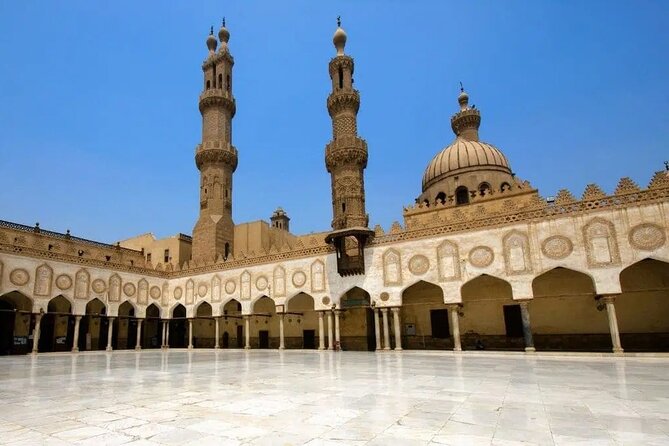
- Al-Azhar Mosque: A Living Landmark With Fatimid Roots
- Sharia Al Mu’izz Li-Din Allah: Walking Through 221 Islamic Monuments
- Mosque-Madrassa of al Ghouri: Qansuh Al-Ghouri and the Courtyard Layout
- Private Vehicle + Licensed Guide: Why This Day Feels Easier
- Price and Value: Is $130 a Fair Deal?
- Timing and Pace: How to Enjoy 7 Hours Without Getting Tired
- Who This Tour Is Best For
- Should You Book This Fatimid Cairo Day Tour?
- FAQ
- What is the duration of the Fatimid Islamic Cairo Day Tour?
- How much does the tour cost?
- Is pickup from my hotel included?
- Which sites are included in the day?
- Are entrance fees included?
- What’s included in the tour package?
- Are tips included in the price?
- Is there free cancellation?
Key highlights before you go
- Museum of Islamic Art (2 hours, ticket included): a large Islamic collection spanning regions from Egypt to Andalusia.
- Al-Azhar Mosque visit (2 hours, ticket included): an active center of learning with roots in the Fatimid era.
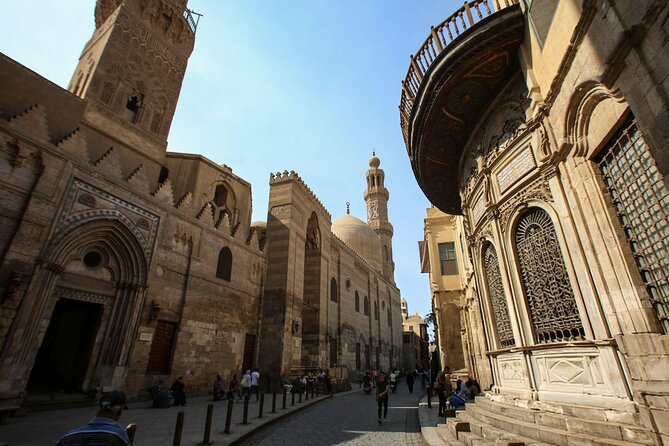
- Sharia Al Mu’izz Li-Din Allah walk (1 hour): a “main street” of old Cairo lined with 221 Islamic monuments.
- Al-Ghouri Mosque-Madrassa (2 hours, ticket included): the Qansuh Al-Ghouri complex dating to 909 AH / 1504 AD.
- Private group feel: only your group goes, with a licensed guide and included vehicle.
Fatimid Cairo in One Day: What You’ll Actually Experience
This tour is built for people who want real substance, not just a quick photo stop. You’ll be walking through old Cairo’s spiritual and artistic “center,” starting with one of the world’s biggest Islamic collections, then moving into a living religious landmark, then finishing with the Fatimid-era street and a major Mamluk-era complex (Qansuh Al-Ghouri).
What I like most is how the day has a natural rhythm. It begins indoors (so you can settle in), then shifts outdoors into the old-city artery of Sharia Al Mu’izz Li-Din Allah, then ends at a complex where the courtyard layout helps you understand how people moved through religious and civic life.
The other big win: the guide. In the best cases—like the style I saw from guides such as Ali and Sherif—you’re not just being told facts. You’re getting context that helps you notice details you’d otherwise miss, plus practical help that keeps your day comfortable.
You can also read our reviews of more tours and experiences in Cairo.


Museum of Islamic Art: Cairo’s Big Islamic Collection in Real Time
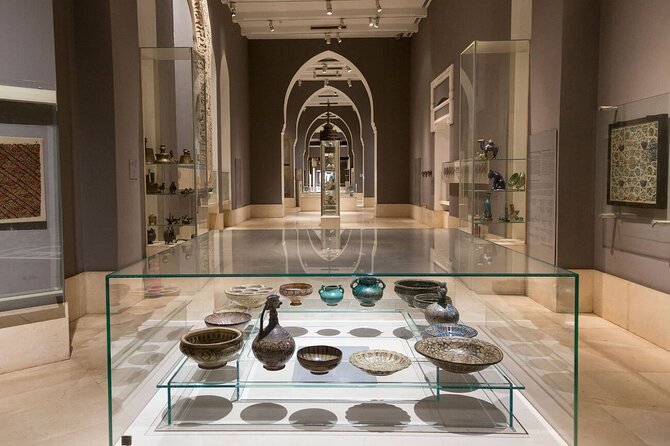
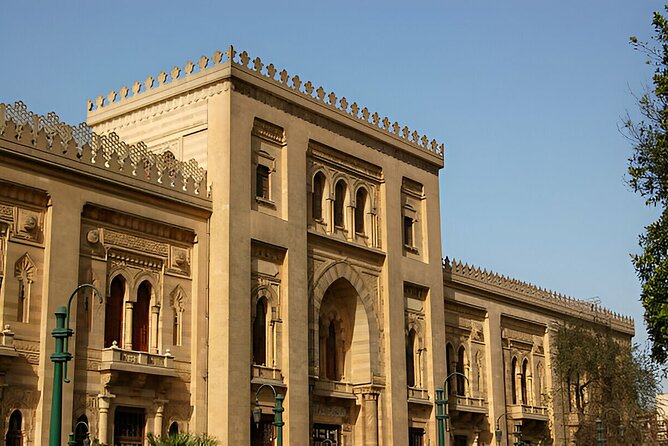
Your first major stop is the Museum of Islamic Art. This isn’t a small “one-room” museum. It’s described as the largest Islamic museum in the world, and the reason is simple: it brings together Islamic art across a huge geographic range—India, China, Iran, the Arabian Peninsula, the Levant, Egypt and North Africa, and also Andalusia.
In practice, that means you’ll be looking at objects and design styles that don’t all feel the same. You’ll notice how Islamic art traveled and changed while keeping shared visual logic—patterns, ornament, calligraphic influence, and craftsmanship. If you’ve ever wondered how Islamic art could look both consistent and surprisingly varied, this museum is the fastest way to understand it.
You get about 2 hours, and you’ll want to use that time strategically:
- Pick a few galleries to focus on instead of trying to speed-run everything.
- Keep an eye out for how motifs shift by region.
- Don’t underestimate how long it takes to read labels if you’re genuinely interested.
A practical note: museums can feel warm and busy, so even though you’ve got bottled water included, keep your pace steady in the first hour. Start relaxed. You’ll enjoy the later walking much more.
Al-Azhar Mosque: A Living Landmark With Fatimid Roots
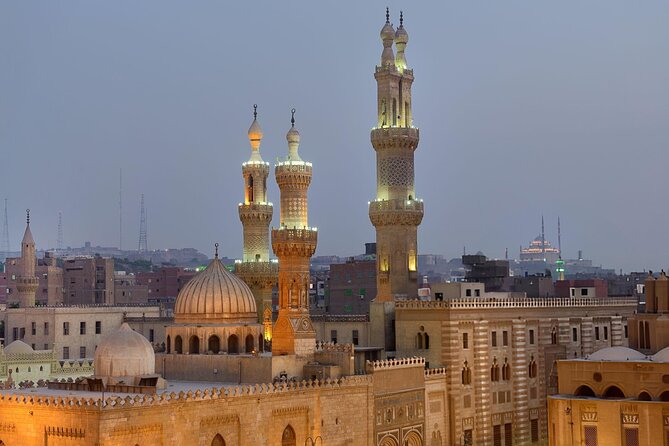
Next comes Al-Azhar Mosque, and it’s hard to overstate how central this place is. It’s described as the most important mosque in Egypt, and it’s also one of the historical strongholds for spreading and teaching Islam. Construction dates back to the beginning of the Fatimid era in Egypt, which gives your visit a deep timeline right from the start.
One of the most interesting details here is that Al-Azhar isn’t just a monument. It’s connected to learning—it’s noted as the second oldest continuously existing university in the world after Al-Qarawiyyin University. That matters, because it changes the feel of the visit. You’re not only looking at architecture; you’re stepping into a space tied to ongoing education.
Plan for about 2 hours here. That’s enough time to see the key areas without turning it into a blur. The drawback is obvious: religious sites in a major city can involve crowd control and moments where the flow slows down. If you’re sensitive to waiting, it helps to treat this stop like a slow read—move with the group, stay flexible, and let the atmosphere build.
Also, keep your expectations respectful and calm. Your guide can help you understand what you’re seeing, but the place itself sets the tone.
Sharia Al Mu’izz Li-Din Allah: Walking Through 221 Islamic Monuments
After the mosque, you shift into the old-city story by walking Sharia Al Mu’izz Li-Din Allah. This street is often described as the heart of old Cairo, and it’s famous here because it includes 221 Islamic monuments. That’s a lot for a single street, and it’s exactly why this stop works.
What makes it special is that you’re seeing architecture like it was meant to be experienced in motion. You don’t just look at one building and call it done. You scan facades, notice how entrances face the street, and begin to understand why old Cairo was developed as something close to an open-air museum.
You’ll have about 1 hour on this street. That might sound short, but it’s a smart time window. With a licensed guide, you can focus on the street’s highlights and the why behind them, rather than losing the thread by trying to cover everything.
Here’s my practical advice: don’t try to memorize every monument. Instead, use the hour to build a mental map:
- Identify the street as a spine from south to north (the tour description connects it to the idea of Bab Zuweila and Bab Al-Futuh).
- Notice the mix of architectural influences described for the area, including Egyptian, Ottoman, Andalusian, and Byzantine.
- Treat the street as the context that makes the next complex feel even more meaningful.
If you like architecture and city history, this is one of the most satisfying segments of the day.
Mosque-Madrassa of al Ghouri: Qansuh Al-Ghouri and the Courtyard Layout
The final major stop is the Mosque-Madrassa of al Ghouri, also tied to the Qansuh Al-Ghouri Agency complex. This is where the tour shifts from “street story” to a specific site’s design—and it’s a great design to end on.
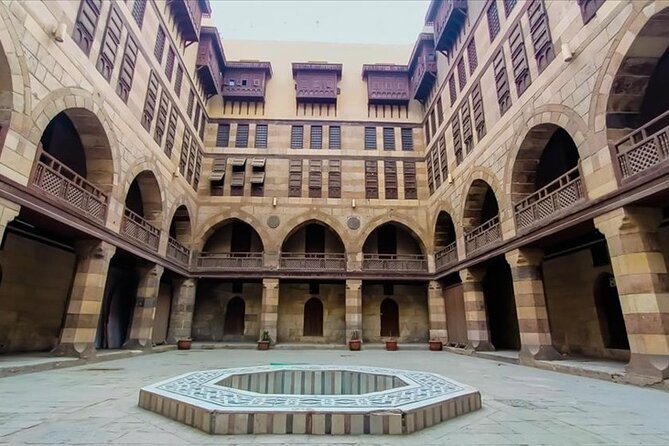
The complex is described as established during the reign of Qansuh Al-Ghouri in 909 AH / 1504 AD, and it sits on Muhammad Abdo Street off Al-Azhar Street. The layout is the star: a rectangular open courtyard surrounded by rooms on five floors, with the main facade on the south side and the main entrance to the agency there.
What I find useful here is how the architecture explains how people lived and traded. The first floor is accessed by a stone staircase, and descriptions note holders on the first level and houses on the upper floors. It’s also believed that ground and first floors were used as stores for merchants, and that many visitors were merchants too.
That means your visit becomes more than a religious stop. It’s a look at how religion, commerce, and community space overlapped. Even if you’re not a details-collector, the courtyard design makes it easier to grasp how the complex functioned.
You’ll spend about 2 hours here. If you like to take your time with photos, this is a good place to do it. If you’re less patient, stick to the courtyard first, then let your guide point out the elements that matter most.

Private Vehicle + Licensed Guide: Why This Day Feels Easier
This tour includes a private air-conditioned vehicle, bottled water, and a professional licensed tour guide. Those aren’t just “nice to have” perks. They change how the day feels.
In Cairo, time can disappear fast when you’re trying to coordinate transport on your own. With pickup and a private vehicle, you keep momentum. You also get less stress about how to get between stops, which matters a lot when you’re moving through older neighborhoods where streets can be confusing.
The guide part matters even more. Based on what I’d look for in a good Cairo guide—being prepared, explaining clearly, and staying close enough to help—you’ll get that kind of support here. In similar full-day Cairo experiences led by guides like Ali and Sherif, the helpful pattern was consistent: they walked with the group, gave strong historical context, and made sure people felt secure throughout the day.
You’ll also likely appreciate their practical instincts, like helping you avoid common tourist hassles and keeping things flowing when there’s pressure to rush. That can make a bigger difference than most people expect.
Price and Value: Is $130 a Fair Deal?
At $130 per person, the key question is what’s included. Here’s the value math that matters:
- Entrance fees are included.
- Bottled water is included.
- You get a professional licensed guide.
- You have a private air-conditioned vehicle.
- You’ll use a mobile ticket.
When you compare that to the real cost of tickets plus guide time plus transport in Cairo, the price lands in the “reasonable” category—especially because you’re covering multiple major sites in one day. What also helps is the structure: several long enough stops (2 hours, 2 hours, 1 hour, 2 hours) mean you’re not paying for a tour that simply passes by things.
Two money cautions:
- Tips are not included, so you’ll want to budget for that.
- Personal expenses are not included, so don’t count on the day being fully spend-free beyond the basics.
If you’re the kind of traveler who hates negotiating every step, this package format is where you get your value.
Timing and Pace: How to Enjoy 7 Hours Without Getting Tired
The tour runs about 7 hours. That’s a solid length for Cairo, but it’s also long enough to feel tiring if you charge forward.
To keep it enjoyable:
- Start mentally prepared for a full-day rhythm.
- Pace yourself early at the museum, then expect a slower feel around religious and heritage areas.
- Bring patience for crowd flow. Even with a guide, popular sites can have pauses.
Also, since it’s a private tour/activity with only your group, your pace can be more flexible than a mass tour—good news if you want photos or extra questions answered. Still, you’re following a set sequence, so the day is best for people who want a coherent overview of Fatimid Cairo and its immediate surrounding heritage.
Who This Tour Is Best For
This is a strong fit if:
- You care about Islamic art and want a place-based sense of history.
- You want the big landmarks without the stress of figuring out transport and tickets.
- You enjoy architecture and learning how buildings relate to learning and community life.
It may feel less ideal if:
- You want a very light, low-walking tour.
- You prefer highly interactive markets and shopping stops. This day is focused on cultural and religious landmarks rather than trading streets.
The tour also works well if you’re traveling with people who want a structured day. The private format makes it easier for friends or families to stay together.
Should You Book This Fatimid Cairo Day Tour?
Yes, if your goal is a focused, story-driven day across the biggest Fatimid-linked sites and major Islamic heritage. You’re getting real value from the combination of entrance fees included, a licensed guide, and transport that keeps you moving without stress. The best reason to book is the balance: museum time to understand the art, mosque time to understand the living tradition, street time to understand old Cairo as a whole, and a courtyard complex to connect architecture to social life.
If you’re coming to Cairo for the first time and want one day that doesn’t waste your attention, this is a solid choice.
FAQ
What is the duration of the Fatimid Islamic Cairo Day Tour?
The tour is approximately 7 hours.
How much does the tour cost?
The price is $130.00 per person.
Is pickup from my hotel included?
Yes, pickup is offered.
Which sites are included in the day?
You’ll visit the Museum of Islamic Art, Al-Azhar Mosque, Sharia Al Mu’izz Li-Din Allah, and the Mosque-Madrassa of al Ghouri (Qansuh Al-Ghouri Agency complex).
Are entrance fees included?
Yes, entrance fees are included.
What’s included in the tour package?
It includes bottled water, a private air-conditioned vehicle, a professional licensed tour guide, and entrance fees.
Are tips included in the price?
No, tips are not included.
Is there free cancellation?
Yes. You can cancel up to 24 hours in advance for a full refund.