REVIEW · CAIRO
Explore Cairo and Giza.
Book on Viator →Operated by Pharaohs Gate · Bookable on Viator
Cairo can feel like a sprint—this plan keeps it calm and orderly. You get private, A/C transport with a guide who explains what you’re seeing and how to deal with the fast-moving street scene, from greetings to shopping pressure. Two days is tight, but the route is built around the big ancient anchors: the Egyptian Museum, Saqqara’s Step Pyramid area, and Dahshur’s pyramid experiments.
What I like most is the way the day is paced: long enough at the sites to actually notice details, short enough to avoid turning it into a blur. The other big win is having Egyptologist-level context from the start, so the monuments don’t feel like random photos. If there’s a drawback to consider, it’s that you’ll want to confirm which site entry fees are included, because the package notes not all taxes/fees are covered, even though several stops list admission as free or included.
In This Review
- Key Things You’ll Love on This Two-Day Egypt Plan
- How Private Pickup Changes the Cairo Stress Level
- Day One at the Egyptian Museum and Salah El Din Citadel
- Egyptian Museum: 120,000 objects, start with the right anchor points
- Salah El Din Citadel and Alabaster Mosque: medieval power with a modern view
- Day Two: Saqqara Step Pyramid, Memphis, and the Story of Two Egypts
- Saqqara: the Step Pyramid and the idea of building history
- Memphis: the west bank setting and the boundary concept
- Dahshur: Bent and Red Pyramids with the Engineering Explanation You’ll Remember
- Bent Pyramid: an ambitious first attempt with structural trouble
- Red Pyramid: smoother success and an impressive scale
- What $140 Buys: Value, Comfort, and What to Double-Check
- Who Should Book This Two-Day Cairo and Giza Experience
- Should You Book It? My Honest Take
- FAQ
- Where does the tour start?
- What time does the tour begin?
- Is pickup available from hotels?
- How long is the experience?
- Is this tour private?
- What’s included in the price?
- What’s not included?
- Are the site admission tickets included?
- Who can participate?
- What’s the cancellation rule?
Key Things You’ll Love on This Two-Day Egypt Plan
- Hotel lobby pickup and A/C comfort: the goal is fewer logistical headaches when you arrive in Cairo or Giza.
- An Egyptologist who explains before you look: you’re not just walking; you’re learning the “why” behind each site.
- Egyptian Museum highlights made practical: focus time on major pieces like the Golden Mask of King Tut.
- Citadel viewpoints plus a mosque visit: Salah El Din’s fortress area adds a different side of Egypt, not just pharaohs.
- Saqqara and Memphis in the same story: you connect the Step Pyramid complex with the place where Upper and Lower Egypt met.
- Dahshur pyramids with real engineering lessons: Bent Pyramid problems vs Red Pyramid success makes the site click.
How Private Pickup Changes the Cairo Stress Level
Cairo and Giza are exciting, but they’re also intense. The streets move fast, sellers spot tourists quickly, and it’s easy to waste energy negotiating your way through “where do I go now?” moments. That’s why I like the setup here: you’re met in the hotel lobby in Cairo or Giza by a private modern A/C car, then you’re briefed on what’s next so you can get your bearings fast.
This matters because the difference between a tiring day and a memorable one is often the first 20 minutes. When your guide lays out the plan and answers questions early, you make better choices on the ground. From the experience notes, guides named Ahmed and Haitham are praised for being kind, professional, and good at keeping things smooth—especially for solo travelers who don’t want the added stress of handling everything alone.
One more practical point: having a guide and driver in place helps you deal with the street environment more calmly. You’ll still see the usual activity around major sites, but with a private guide acting as your translator and filter, you can focus on your own pace instead of getting pulled in ten directions.
You can also read our reviews of more tours and experiences in Cairo.


Day One at the Egyptian Museum and Salah El Din Citadel
Egyptian Museum: 120,000 objects, start with the right anchor points
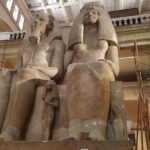
Your first major stop is the Egyptian Museum in Cairo, known as the Museum of Cairo, and it’s one of the fastest ways to build a foundation for ancient Egypt. The collection is huge—about 120,000 items—and the building dates to 1901. That size is a challenge for many people. You can spend hours circling without really connecting the dots.
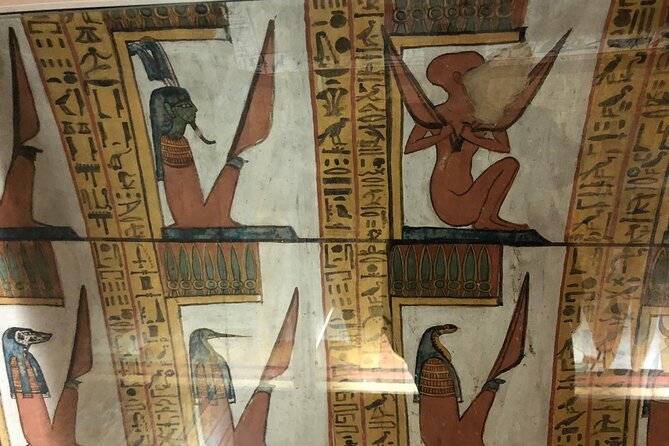
This is where an Egyptologist-style guide becomes more than a “nice-to-have.” Instead of wandering, you’re guided through a path that helps you link objects to the story of kings, gods, burial beliefs, and daily life. The schedule also gives you time to see major attractions, including the Golden Mask of King Tut Ankh Amun.
Practical expectation: plan on a slow-but-steady pace inside. Even if you love museums, Egyptian Museum energy is different from modern galleries. The rooms are dense, the details are small, and the walls can feel visually busy. A guided approach keeps you from missing the key objects that actually help everything else make sense.
Salah El Din Citadel and Alabaster Mosque: medieval power with a modern view
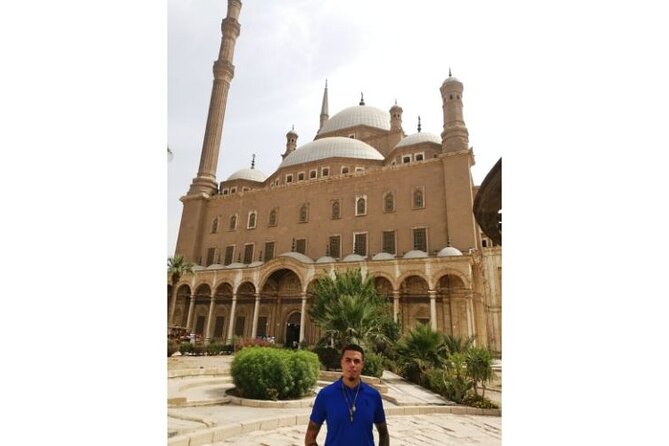
After the museum, you head to Salah El Din Citadel. It dates back to the 12th century A.D. and was built by Salah El Din (Saladin), a figure tied to major historical shifts in the region. The highlight here isn’t just the stones and arches; it’s the mix of architecture and perspective.
You’ll visit one of the mosques in the citadel area, called the Alabaster Mosque, and you’ll get a view over Cairo from up high. That change of scenery is smart after the museum. It gives your brain a break from indoor details and helps you understand the city’s geography—how Cairo spreads and why these fortress positions mattered.
Time-wise, it’s listed as about 1 hour. That’s enough for a mosque visit plus a useful viewpoint, but not so much that you end up tired and stuck. If you’re the kind of traveler who likes photos, this is also one of the easiest moments to grab them, since the citadel elevation does the work for you.
Day Two: Saqqara Step Pyramid, Memphis, and the Story of Two Egypts


Saqqara: the Step Pyramid and the idea of building history
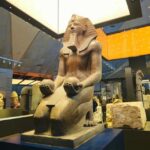
Day two starts at Saqqara (Sakkara), a necropolis area often described as the oldest complete stone building complex known in history. The main anchor is Djoser’s Step Pyramid, built during the Third Dynasty. That’s important because Step Pyramids aren’t “just earlier pyramids.” They’re evidence of experimentation, innovation, and evolving burial theology.
A guide’s job here is to make you see the place as a whole, not just as one pyramid. Saqqara also includes later additions by other kings and high officials who added private funeral monuments across the pharaonic period. In practice, that means you’ll notice that the site isn’t frozen in time. Layers of power left their mark, and the ground becomes a map of changing eras.
The time window is listed at about 2 hours, which is just right for your first visit. You’ll get enough time to walk the core areas and absorb what makes the Step Pyramid historically meaningful, without turning it into a long endurance test.
Memphis: the west bank setting and the boundary concept
Next comes Memphis, located about 20 km (12 miles) south of Cairo on the west bank of the Nile. You might not expect a “city” stop to feel so alive on a tour schedule, but Memphis is worth including because it explains how Egypt thought about order.
Memphis is also described as the place marking the boundary between Upper and Lower Egypt. The notes even include the idea of name numbering: Upper Egypt as the 22nd name and Lower Egypt as the 1st. That kind of detail helps you understand why Egyptians would treat geography like something sacred and political.
This stop is shorter—listed at around 45 minutes—so I’d treat it as a setting-and-meaning moment. You’re not trying to read every stone; you’re learning the big concept so your photos and site memories connect to an actual system.
Dahshur: Bent and Red Pyramids with the Engineering Explanation You’ll Remember
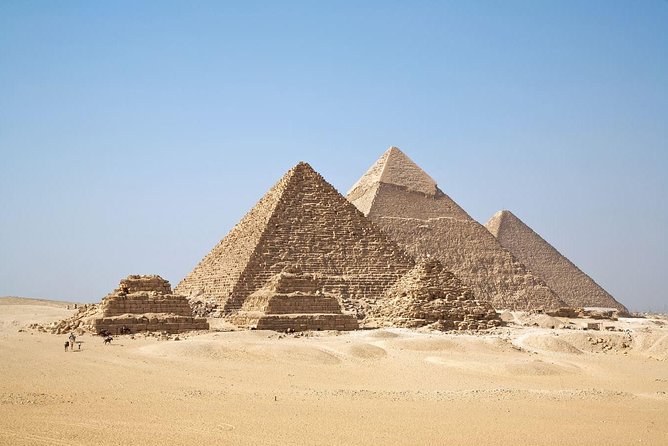
Dahshur is where the tour becomes extra satisfying for anyone who likes “how did they do that?” questions. You’ll see two major pyramid sites: the Bent Pyramid and the Red Pyramid.
Bent Pyramid: an ambitious first attempt with structural trouble
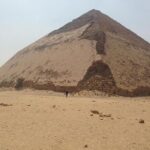
The Bent Pyramid is tied to King Senefru and dates roughly to 2613–2589 BC. The key story is that it was the first attempt at building a smooth-sided pyramid, but it ran into problems. The tour explanation notes miscalculations related to structural weight and soft ground conditions like sand, gravel, and clay. The result is visible in the pyramid’s shape.
What I like about visiting Dahshur with this context is that the pyramid doesn’t look like a mystery object anymore. You understand it as a process—good intentions meeting the reality of engineering limits. Even if you’re not a construction nerd, the story gives you a framework to look closely.
Red Pyramid: smoother success and an impressive scale
Then you move to the Red Pyramid, also associated with Senefru, and it’s described as a successful completion. Unlike the Bent Pyramid, it’s described as smooth-sided and freestanding. The notes list a height of about 341 feet (104 meters) and an angle of 43 degrees.
This is the “see the lesson pay off” moment. If your day at Saqqara gives you the origin story of stone monumental building, Dahshur shows you the next chapter: learning, correcting, and applying what worked. The scheduled time is about 2 hours, which usually feels balanced—long enough to see both pyramids well, short enough that you’re not drained for the journey back.
What $140 Buys: Value, Comfort, and What to Double-Check
At $140 per person for about two days, the best value here is the combo: qualified Egyptologist guide, private transportation, and two lunches. For Cairo and Giza, private transport is a big deal. The city distances add up fast, and a single long day can turn into a traffic-and-waiting tax. Splitting the experience into two focused days also helps you absorb what you see rather than rush.
A couple items worth understanding clearly:
- Beverages are not included, so plan to buy water or drinks yourself during breaks.
- Tipping isn’t included, so you should budget a little for that.
- The notes say all fees and taxes are not included, but the schedule also lists admission as free or included for several stops. That can happen when operators mix “included entry” with other local costs. Before you go, I’d confirm the exact entry coverage for each site when you book.
Bottom line: if you want a structured route with an expert guide and minimal hassle, this price can feel fair. If you’re hoping to self-drive or self-coordinate, then the value shrinks fast—because you’re paying mainly for time saved, transport handled, and interpretation provided.
Who Should Book This Two-Day Cairo and Giza Experience
This tour is a strong fit if you want:
- Solo travel confidence: private pickup and a guide help you feel safe and reduce the constant attention from strangers near major sights.
- A teacher-like walkthrough: the Egyptologist angle means you can ask questions, not just hear facts.
- A route that connects Saqqara → Memphis → Dahshur so the pyramid story makes sense in sequence.
It’s also a good match for travelers who love photos but still want meaning behind them. The schedule is built around iconic objects and places, but the guide attention helps you notice more than the obvious angles.
If you’re the type who hates early mornings, note the day starts at 7:30 am from the Giza Pyramids ticket office area (X4GR+589, Al Haram, Giza Governorate). Starting early helps you beat crowds and heat, and it leaves more daylight for each site.
Should You Book It? My Honest Take
I’d book this if you want a stress-free private plan that handles Cairo logistics for you and gives you real context at the big monuments. The guides’ names—Ahmed and Haitham—come up in the experience notes as professional, kind, and effective at making the day run smoothly. And that matters, because Egypt history is impressive, but only if you can actually enjoy the time you spend there.
I’d think twice if you’re extremely budget-focused and plan to skip tours and guides. This is paying for interpretation and private movement, not just tickets. Also, since fee inclusion can be a bit mixed in the details, confirm what’s covered for each stop so there are no surprises.
FAQ
Where does the tour start?
The tour starts at the Giza Pyramids ticket office (X4GR+589, Al Haram, Giza Governorate 3512201, Egypt).
What time does the tour begin?
The start time is 7:30 am.
Is pickup available from hotels?
Yes. Pickup is offered from the lobby of hotels in Cairo or Giza city.
How long is the experience?
It’s listed as approximately 2 days.
Is this tour private?
Yes. It’s a private tour/activity, so only your group participates.
What’s included in the price?
Included items are a qualified Egyptologist, private transportation, and lunch (2).
What’s not included?
Beverages, tipping, accommodation, and all fees and taxes are listed as not included.
Are the site admission tickets included?
The schedule notes admission ticket status per stop (for example, the Egyptian Museum is listed as free, and several other stops are listed as included). Still, the package also notes that not all fees and taxes are included, so it’s smart to confirm details at booking.
Who can participate?
Most travelers can participate.
What’s the cancellation rule?
Cancellation is free if you cancel up to 24 hours in advance for a full refund.