REVIEW · CAIRO
Day Trip to Luxor from Cairo by Plane including traditional Lunch
Book on Viator →Operated by Hesham Egypt tour guide · Bookable on Viator
Luxor in one day, without the long drive. This flight-based trip stacks the biggest hits—Valley of the Kings, Hatshepsut’s Temple, and Karnak—into about 10 hours, with hotel pickup and an air-conditioned car doing the in-between work. I especially like the pace: you get to spend your limited daylight at the monuments, not stuck on a road.
Two things I really like here are the guided walk-through approach at the sites and the fact that you’re not left to figure out the Luxor airport logistics alone. The potential drawback: the Valley of the Kings tombs you can enter are chosen by Egyptian authorities (and King Tut’s tomb costs extra), so you can’t lock in which tombs you’ll see ahead of time.
You’ll also appreciate the practical add-ons that remove friction—round domestic flights, guide, and hotel-to-hotel transfers—plus lunch. Budget note: entry tickets are not included, so you should set aside time and money for admissions once you arrive.
In This Review
- Key Points to Know Before You Go
- Flying from Cairo to Luxor: how this 10-hour schedule works
- Cairo pickup to Luxor airport meet-and-greet
- Valley of the Kings: tomb rotation, timing, and the King Tut ticket choice
- King Tut’s mummy and the extra ticket reality
- Hatshepsut’s Temple at Deir el Bahari: terraces, cliff backdrop, and a female Pharaoh’s statement
- What to watch for during the short time
- Colossi of Memnon: Amenophis III statues and a classic Nile-facing pause
- Karnak Temple: from the Avenue of Sphinxes to the Hypostyle Hall
- The realistic Karnak time window
- Koshry lunch: a simple Egyptian fuel break
- Price and logistics: what $125 gives you, and what to budget for
- Who this Luxor day trip fits best
- Should you book this Cairo to Luxor flight day trip?
- FAQ
- What is the total duration of the Luxor day trip from Cairo?
- How do transfers work?
- Is round domestic flight included?
- What about the site entry fees?
- Can I choose which Valley of the Kings tombs are visited?
- Is lunch included, and what is it?
- Is the King Tutankhamun tomb included?
Key Points to Know Before You Go
- Flight saves the day: Round domestic flight means you’re not spending your whole trip on the road.
- Hotel pickup and drop-off included: You start and end from Cairo or Giza with an air-conditioned vehicle.
- Tomb access is timed by Egypt: Three tombs are selected by Egyptian authorities, and they rotate through the year.
- King Tut’s tomb is optional: If you want it, you’ll need an extra ticket.
- Karnak is the main event: Hypostyle Hall, Avenue of Sphinxes, and specific obelisks are part of the plan.
- Lunch is built in: A koshry lunch is included, helping you avoid hunting for food between monuments.
Flying from Cairo to Luxor: how this 10-hour schedule works
This is the kind of day trip that only makes sense because it uses a flight. The total time is about 10 hours, and the itinerary is structured so the heavy walking and sight time happen in Luxor, not during hours of transit.
In practical terms, that means you should expect a packed-feeling day even with smooth logistics. You’re doing three major “anchor” sites—Valley of the Kings, Deir el Bahari (Hatshepsut), and Karnak—plus quick stops along the way. If you like your sightseeing calm and slow, you may feel the schedule is tight. If you like hitting the highlights with a guide and moving efficiently, this format is a good fit.
Also, remember that this tour is listed as a private tour/activity with only your group participating. That matters because it usually means the guide can keep your timing consistent and not be dragged by other groups’ pace.
A few more Cairo tours and experiences worth a look

Cairo pickup to Luxor airport meet-and-greet
The day starts with pickup from your hotel in Cairo or Giza in an air-conditioned car. You’ll transfer to Cairo airport, fly to Luxor, and then meet your guide on arrival with a sign showing your name.
That meet point sounds small, but it’s a huge stress reducer. When you arrive in a new city by flight, finding the right person at the right time can turn into a scramble. Here, that friction is removed: you land, you locate your guide, and you’re immediately in “sightseeing mode.”
One more detail I like: you’re paired with a guide for the whole experience. That continuity tends to make the history connections easier to follow, especially when you’re bouncing between royal tombs, a mortuary temple, and a sprawling god-centered complex.
Valley of the Kings: tomb rotation, timing, and the King Tut ticket choice
The Valley of the Kings is where this day trip earns its reputation. It’s the original burial area linked to Tutankhamun, and the whole valley feels like it’s built out of desert rock and afterlife symbolism—tombs carved deep into stone, with decoration created to support the next world.
Your visit includes an opportunity to enter three tombs, and here’s the key detail: the specific tombs are determined by Egyptian authorities to help manage visitor flow, and they rotate throughout the year. That means you can’t guarantee which tombs you’ll see when you book. It’s not a deal-breaker, but it is a real planning point.
You’ll spend about 2 hours at the Valley. That’s enough time to get oriented, appreciate the tomb interiors, and see multiple chambers without feeling like you’re only doing photo stops. It’s also the part of the day where you’re most likely to feel how much there is to understand in a short time.
King Tut’s mummy and the extra ticket reality
King Tutankhamun’s tomb is available, but it requires an extra ticket. If seeing Tut’s tomb is your top priority, don’t treat it as automatic. Factor in that additional cost and the fact you’ll need the right admission to enter.
There’s a reason this is the one ticket choice people care about: Tutankhamun is connected to one of the most famous finds in Egypt, and the tomb experience has a gravity that’s hard to replicate elsewhere. Even if you’re not fixated on the mummy angle, the tomb is a major anchor for the whole valley story.
Hatshepsut’s Temple at Deir el Bahari: terraces, cliff backdrop, and a female Pharaoh’s statement
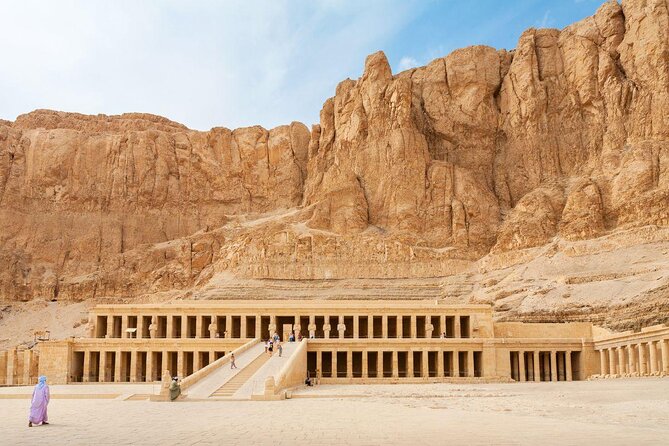
After the Valley, you head to Deir el Bahari for the Temple of Hatshepsut. This stop is about 1 hour, and that timing is realistic. It’s not a museum marathon; it’s a “see the architecture, understand the purpose” kind of visit.
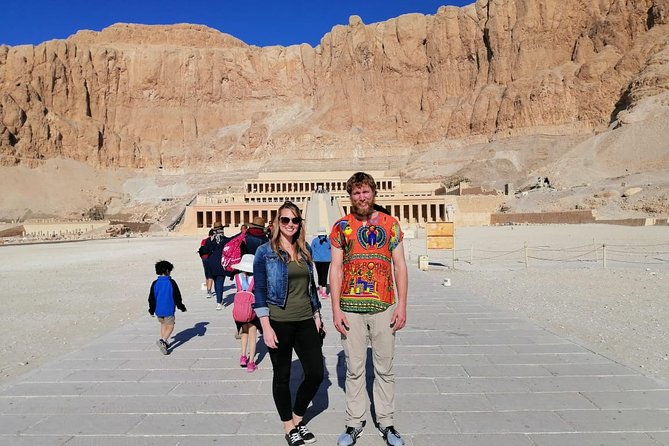
Hatshepsut is Egypt’s best-known female pharaoh, and the temple is dedicated to her. What you’ll notice fast is the way the structure rises in terraces out of the desert plain and visually merges with the limestone cliffs behind it. That setting matters because it makes the temple feel like part of the landscape rather than something dropped into it.
The guide’s job at this stop is especially important. You’ll get the temple’s logic—why it looks the way it does, and how the symbolism ties back to power, legitimacy, and the afterlife rituals surrounding royal rule.
A few more Cairo tours and experiences worth a look




What to watch for during the short time
With only about an hour, don’t expect to “wander” as much as you might on your own. Use the guide’s explanation to get meaning from what you see. If you want extra time for photos or slower reading of details, you may want to pick your priorities before the hour runs out.
Colossi of Memnon: Amenophis III statues and a classic Nile-facing pause
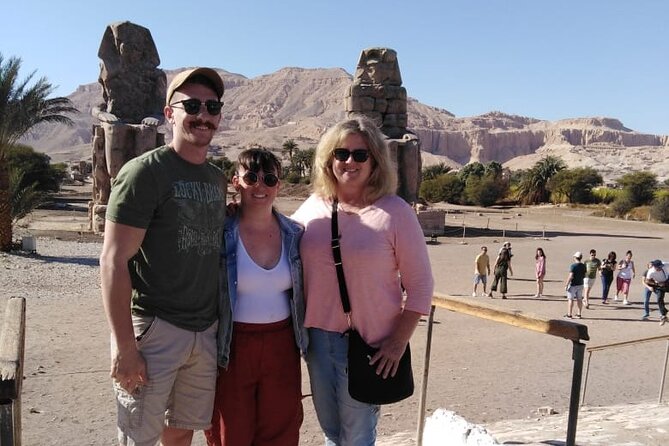
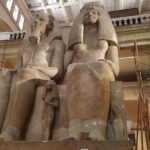
On the return journey, there’s a stop at the Colossi of Memnon—two gigantic statues representing Amenophis III facing the Nile.
This is a brief moment in the schedule, but it’s a good reset point. You step away from enclosed tomb corridors and temple terraces and get the iconic “big sculpture against ancient Egypt’s vastness” feel. Even if you don’t go deep into the story of each statue, you’ll leave with a strong visual memory.
Think of it as the day’s breather: you’ll have a couple of minutes to absorb the scale, snap a few photos, and then get back into the temple-focused rhythm.
Karnak Temple: from the Avenue of Sphinxes to the Hypostyle Hall
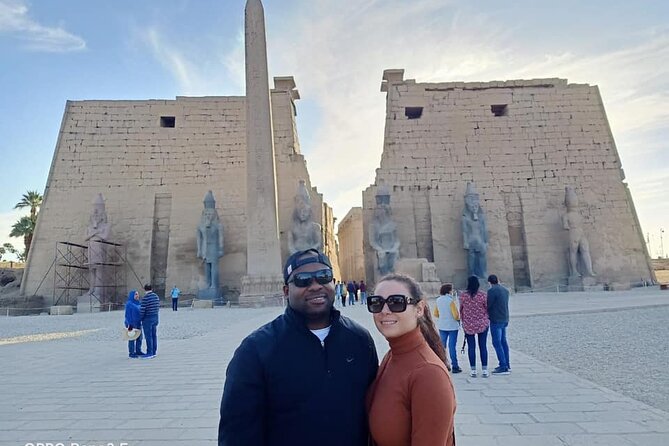
Karnak is where the day can really feel like it expands. It’s the largest temple complex ever built, and your route runs through several of the most famous parts.
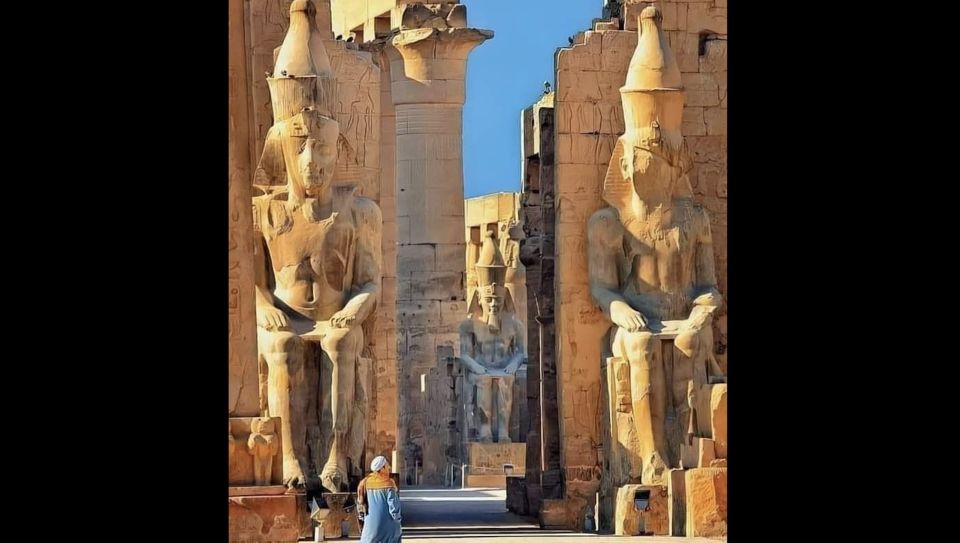
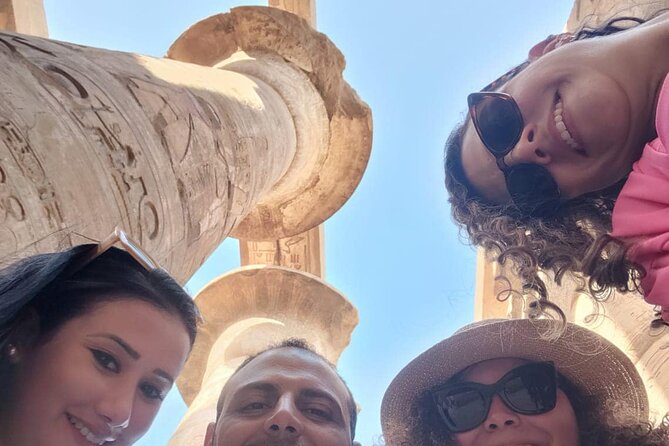
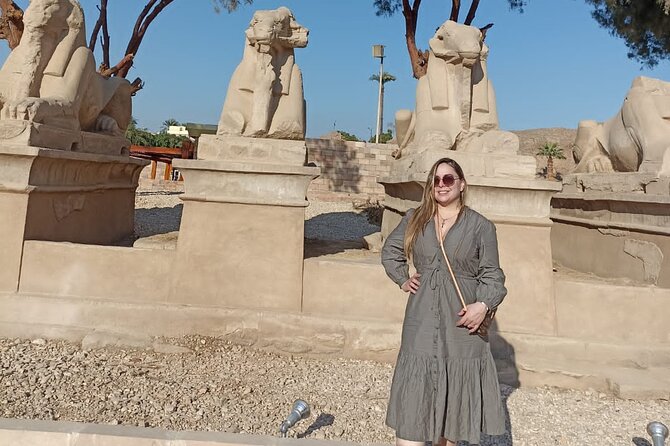
You’ll walk the Avenue of Sphinxes, then see the Hypostyle Hall, famous for its 134 columns. This is the kind of space where the scale does a lot of the teaching for you. The columns create a forest effect, and that impact helps you understand why Karnak became so important across generations.
You’ll also see notable features tied to royal builders, including the Obelisks of Queen Hatshepsut and Thutmosis III. Seeing those side-by-side connections helps you recognize how rulers used monumental building to link themselves to divine authority.
Finally, your tour includes the Temple of Amon, with decorative designs featuring lotus and papyrus motifs. Those plant symbols are more than decoration; they’re a visual language connected to Egyptian beliefs and the natural world.
The realistic Karnak time window
Karnak time is listed at about 1 hour. That’s short for a site of this size. The tradeoff is that your day stays controlled and you keep the flight schedule in place. So treat this stop as a curated highlights walk rather than a full exploration.
If you’re the type who wants to linger in corners and read everything, you might wish for more time here. But if you want a guided “must-see” path that gets you oriented quickly, 1 hour can work well—especially with a guide explaining what you’re looking at.
Koshry lunch: a simple Egyptian fuel break
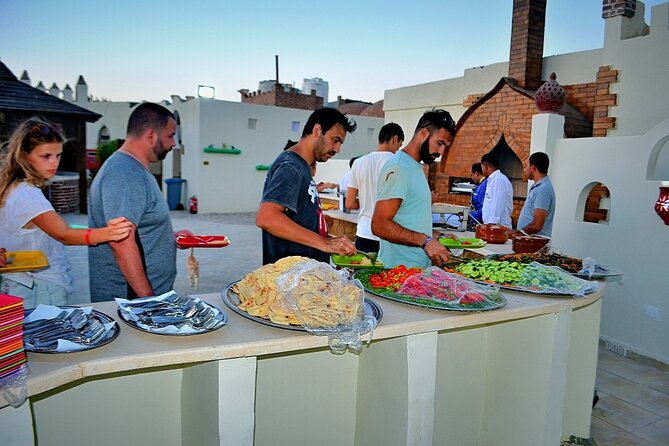
Lunch is included, and it’s koshry. This is a practical choice for a day trip because koshry is filling and easy to eat without slowing your group too much.
With a schedule like this, having lunch handled for you is more valuable than it sounds. It saves time, keeps you from spending your only free minutes looking for a reliable place to eat, and helps you stay energized through the afternoon temple circuit.
If you’re picky about spice levels, it’s smart to mention it if you can, so your meal matches your comfort.
Price and logistics: what $125 gives you, and what to budget for

At $125 per person, this is a lot of travel wrapped into one day: hotel pickup/drop-off, a guide, a private-car ride in Cairo and within the area, round domestic flight, and lunch.
Where people can get surprised is the fine print: entry fees are not included. That means you should budget separately for admissions at Valley of the Kings, Hatshepsut’s Temple, and Karnak. King Tut’s tomb is also an extra ticket on top of that.
So, is the price good value? For the right traveler, yes—especially if you’re short on time in Cairo. Flying turns Luxor from an all-day drive into a day plan you can actually fit between airport hours and monument stops.
If you’re traveling with a bigger tolerance for DIY and you have your own comfort managing tickets and transfers, the package may feel pricey. But the real value here is the reduced hassle: you get transportation, guide narration, and a scheduled run through the top sites.
One caution based on a difficult customer note: there was confusion in one case about flight charges and communication. I can’t verify any specific numbers from that dispute, but I can tell you the lesson to protect yourself. Confirm your flight details clearly after booking, keep your e-ticket accessible, and make sure you understand what is covered versus what is an additional charge.
Who this Luxor day trip fits best
This tour tends to suit travelers who:
- Want the big Luxor highlights without spending a full day on the road.
- Enjoy guided storytelling, especially when the sites are linked by themes like pharaoh power and afterlife beliefs.
- Prefer a structured day over open-ended wandering in a very large complex like Karnak.
- Appreciate having lunch included so the itinerary stays on track.
It may be less ideal if you:
- Need long time blocks at each monument to read and explore slowly.
- Want to guarantee specific Valley of the Kings tombs. The government rotation means you’ll see three, but not the ones you might hope for in advance.
- Are traveling on a schedule where you absolutely need flexibility. The trip is built around flight timing, and the plan is designed to run as a unit.
If you’re hoping for a highly flexible, choose-your-own-adventure day, you may find the fixed itinerary frustrating. If you want a well-managed classic hits tour with real context, it’s a solid choice.
Should you book this Cairo to Luxor flight day trip?
I’d book it if your goal is clear: see Valley of the Kings, Hatshepsut’s temple at Deir el Bahari, and Karnak in one efficient day, with guide support and a proper lunch. The structure is built for time-saving, and the guided approach helps the monuments connect into one story.
I would think twice if your top priority is specific tomb planning at the Valley of the Kings, or if you hate the idea that entry fees and King Tut’s tomb extra ticket will be added after you arrive. Also, because your day runs on flights, double-check your flight details and keep your documents easy to find.
If you’re deciding, choose based on how you like to travel: guided highlights with tight timing, or slow independent exploration.
FAQ
What is the total duration of the Luxor day trip from Cairo?
The tour is about 10 hours total.
How do transfers work?
You get hotel pickup and drop-off in Cairo or Giza, travel by air-conditioned car to the airport, then return to your hotel after the flight back from Luxor.
Is round domestic flight included?
Yes, round domestic flight between Cairo and Luxor is included.
What about the site entry fees?
Entry fees are not included. You’ll need to pay admission tickets separately at the sites.
Can I choose which Valley of the Kings tombs are visited?
No. Three tombs are selected based on Egyptian government rotations to manage visitor flow, and the specific tombs can’t be confirmed in advance.
Is lunch included, and what is it?
Yes. Lunch is included and it’s koshry.
Is the King Tutankhamun tomb included?
King Tut’s tomb requires an extra ticket.
If you want, tell me your travel dates and whether King Tut’s tomb is a must for you, and I’ll help you think through what to budget for besides the tour price.