REVIEW · HURGHADA
Day Tour To Luxor from Hurghada by Bus
Book on Viator →Operated by Charming Egypt Tours · Bookable on Viator
One long day, five UNESCO hits. This bus tour is built for people who want Luxor’s East and West Bank highlights without sleeping in town, starting early enough to beat some of the worst crowds. I like the hotel pickup and drop-off that keeps you moving, and I also like that you get a qualified Egyptologist guide for the big context behind the sites.
Still, it’s a 15 to 18 hour day, and the tour price does not include entrance fees to the main temples and tombs. You should also be ready for moments where shopping stops or optional paid add-ons appear during the day.
In This Review
- Key takeaways before you go
- How the early-morning bus ride works (and why it matters)
- Karnak Temple: the first jaw-drop moment
- Lunch plus the papyrus/perfume stops (where your time and money meet)
- Valley of the Kings: tombs you can’t fake with photos
- Hatshepsut at Deir el-Bahari: the feminine-power vibe, in stone
- Colossi of Memnon: quick stop, unforgettable scale
- Guide quality, language expectations, and seller pressure
- Price and value: $52 is the start, not the finish
- Practical tips to make this long day feel worth it
- Should you book the Hurghada-to-Luxor bus tour?
- FAQ
- How long is the Luxor day tour from Hurghada by bus?
- What does the tour price include?
- Are entrance fees included for Karnak and the Valley of the Kings?
- Which sites will I visit during the day?
- Will I be picked up from my hotel?
- Is there an English-speaking guide?
- How many people are in the tour group?
- Is it cheaper to start from Hurghada than nearby areas?
- What is the cancellation window?
- Are children allowed?
Key takeaways before you go
- Early departure, big payoff: You’ll ride to Luxor in the early morning and hit multiple UNESCO sites before returning to Hurghada.
- East Bank first, West Bank after: The route keeps the day logical: Karnak first, then Valley of the Kings, Hatshepsut, and Memnon.
- Lunch is included, but tickets aren’t: Budget for entry fees to Karnak, Valley of the Kings, and Hatshepsut Temple.
- A guide matters here: Many guides you might meet—like Mohammed, Mustafa, Hazem Hassan, or Ahmed—are praised for clear explanations.
- Be firm with optional stops: Some people report extra-cost shopping and side trips, so decide quickly what’s worth your money.
How the early-morning bus ride works (and why it matters)
This is not a relaxed day trip. You’re picked up from your Hurghada hotel early in the morning by air-conditioned bus, with driving time around 4 hours toward Luxor. The ride runs through mountain roads and along the Nile corridor in Upper Egypt, and you should expect a stop for bathroom needs or a quick breather if you need it.
Most of the practical value here is time management. Leaving early gives you enough daylight hours to see temples and tombs, plus the West Bank sights, and still get back to Hurghada the same day. One review even highlights that the bus can be comfortable and may have a toilet—nice if you’re doing the full 15–18 hours.
Your main “gotcha” is that you’re committing to a long schedule. If you dislike early mornings or hate being on a timeline, this might feel like hard work even though the destination is extraordinary.
You can also read our reviews of more tours and experiences in Hurghada.


Karnak Temple: the first jaw-drop moment
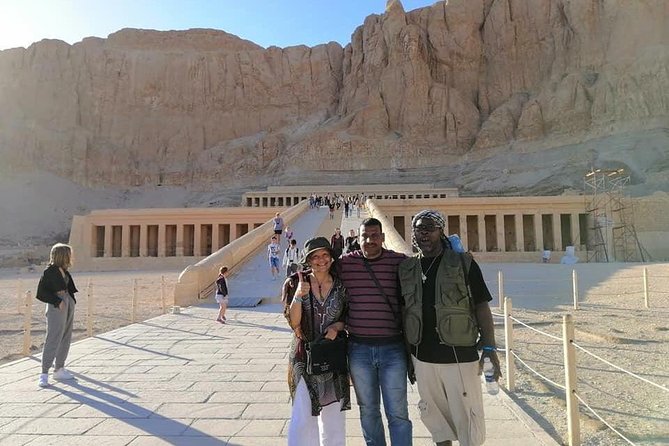
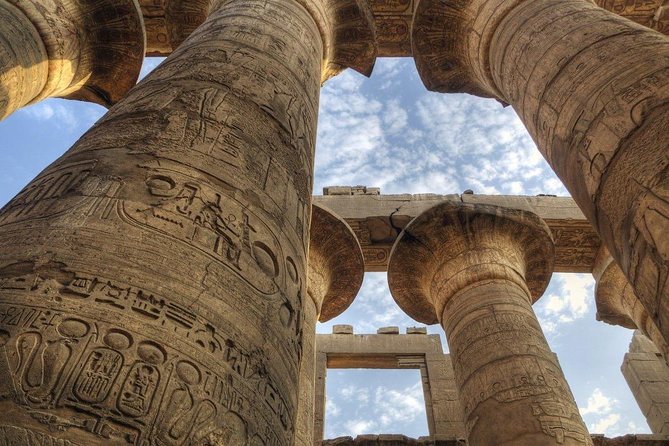
Karnak is the kind of place that makes you stop saying “temple” and start saying “how did they build this?” Your day starts with Karnak Temple, where you’ll get the benefit of an Egyptologist guide to connect symbols, rulers, and centuries of Egyptian history to what you’re seeing.
Karnak is also a practical start point. Because it’s typically earlier in the day, you can usually get a better feel for the scale before the crowds fully pile in. It’s a lot to take in—columns, courtyards, processional ways—so plan on moving slowly inside the complex and letting the guide’s explanations do their job.
One smart approach: focus on a few key areas rather than trying to photograph everything. Karnak can make your brain feel like it’s being overloaded, so pick the spots that you keep returning to—then use the guide’s context to understand what you’re standing in front of.
Lunch plus the papyrus/perfume stops (where your time and money meet)
After Karnak, you’ll have lunch at a local restaurant, which is included. Expect Egyptian food—this is one of those “tour lunch” moments that’s actually worth using as a break from monuments. Some days, the schedule may include crossing the Nile by motor boat to reach the lunch spot, which can be a fun change of pace when you’re tired from walking.
Then comes the part you’ll want to manage: free time in Luxor for shopping at places described as a papyrus institute and a perfumes center. That’s not automatically bad. Papyrus products and perfume shops are part of Luxor’s modern economy, and if you’re curious, it’s an easy way to pick up small souvenirs without losing the whole afternoon.
Where people sometimes get frustrated is when the day turns into extra-cost shopping. Some tours are described as including an alabaster factory stop or additional paid experiences. If you care more about tombs and temples than shopping, decide in advance to keep these stops short and avoid signing up on impulse.
Valley of the Kings: tombs you can’t fake with photos
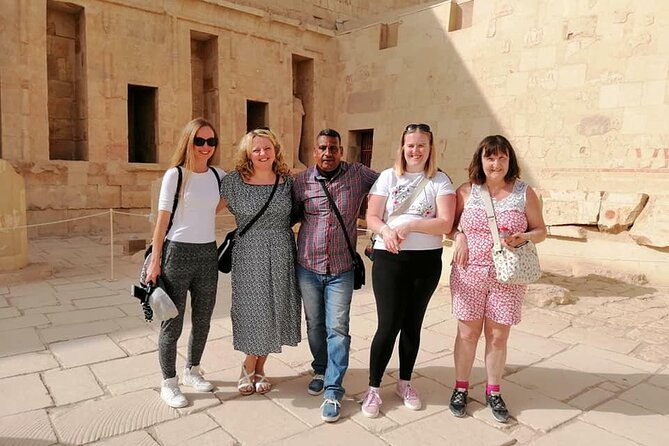
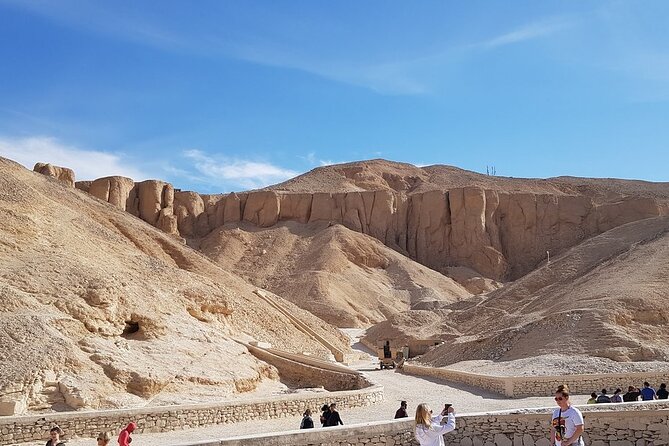
Next you’ll head to the Valley of the Kings, one of the most famous West Bank areas in Egypt. This is where the tour shifts from massive architectural storytelling to human-scale history: royal tombs, carved corridors, and the quiet feeling that you’re entering a purpose-built world designed for eternity.
Because entrance fees to the Valley of the Kings are not included in the base price, you should treat this as a “budget line item,” not a surprise. Also, tombs can be dim and hot. Bring a sensible attitude about comfort: light layers, water if allowed, and phone settings that won’t drain your battery while you’re moving between shaded entrances.
The guide’s role matters here too. With an Egyptologist, you’ll understand why certain tombs matter and what to look for in the carvings. Without that context, it can still be impressive, but it’s the explanations that make your visit feel like more than a checklist.
Hatshepsut at Deir el-Bahari: the feminine-power vibe, in stone

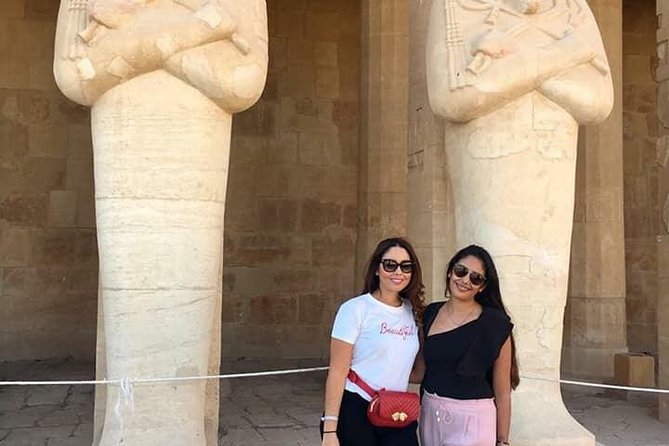
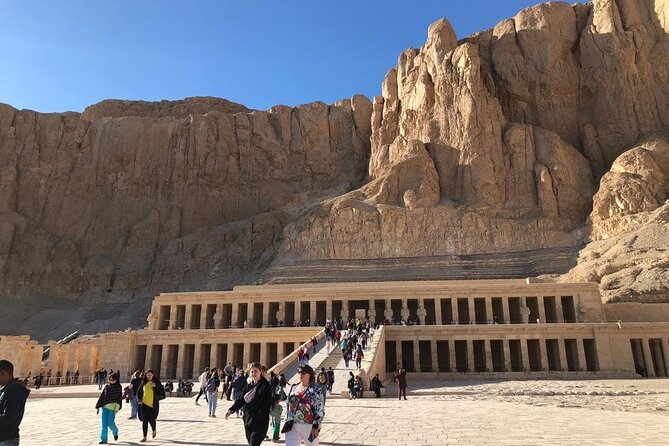
Then you’ll visit the Temple of Queen Hatshepsut at Deir el-Bahari. This stop is a big reason people love Luxor day trips: Hatshepsut’s temple is not just another ruin—it’s a statement in architecture, placed dramatically on the edge of the desert cliffs.
Entrance fees for Hatshepsut’s temple are also not included in the base price, so again: plan for that extra cost. The benefit of visiting with a guide is that you’re less likely to miss the bigger story—why Hatshepsut built, what her temple communicates, and how this site fits into the larger Luxor narrative.
There’s also a practical pacing issue to understand. This day is packed, so if you’re the type who likes to linger and sketch or read slowly, you may find the schedule pushes you. Still, even a shorter, focused visit can be unforgettable because the temple’s setting does half the work for you.





Colossi of Memnon: quick stop, unforgettable scale
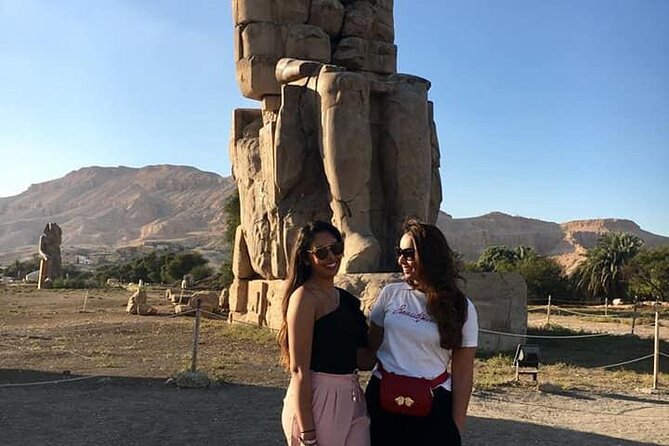
At the end of the main monument run, you’ll make a brief stop at the Colossi of Memnon. These are the gigantic statues of Pharaoh Amenhotep III, and even when the time is limited, they hit hard. Standing near these figures, you feel the scale instantly, and you start understanding why ancient Egypt’s “monument building” was never subtle.
Because this is listed as a short visit, think of it as a visual punctuation mark. You’re closing the day’s theme: power, permanence, and monumental propaganda—first through temples and tombs, then through two enormous figures that refuse to be ignored.
If you’re getting tired by this point, that’s normal. The trick is to arrive with a simple goal: take in the statue relationship to the landscape, then move on before you lose your energy. This stop works best when you stay sharp for the few minutes you have.
Guide quality, language expectations, and seller pressure
The tour includes a qualified Egyptologist guide, and the experience can really hinge on that person. In the details you provided, guides are specifically named in positive accounts: Mohammed, Mustafa, Hazem Hassan, and Ahmed. The common thread is that an expert guide can keep the day from feeling like a rushed sightseeing bus loop.
Language can be a variable. One account describes situations where English-speaking visitors were mixed with other-language groups, and another describes an English guide being available in Luxor. Your best move is to confirm your language request when booking and assume you might share the bus with a mixed group.
One more reality check: Luxor is a sales-heavy environment around monuments. Some people describe persistent and aggressive seller pressure when approaching sites. You don’t need to fight it. Keep moving with purpose, keep your answers short, and don’t negotiate with your willpower drained. If a purchase matters, decide calmly. If it doesn’t, politely keep walking.
Price and value: $52 is the start, not the finish
At $52 per person, this tour can be great value if your goal is maximum UNESCO coverage in one day. The reason is simple: you’re getting a full circuit—Karnak on the East Bank, plus Valley of the Kings and Hatshepsut on the West Bank, then returning to Hurghada without an overnight stay.
But you should treat the price as a baseline. The biggest add-on category is entrance fees, which are not included for Karnak, Valley of the Kings, and Hatshepsut. Another potential add-on category is optional experiences tied to the schedule, such as extra paid river activity or extra shopping stops. In at least a couple accounts, people describe feeling like costs ballooned with extra charges and upsells.
So here’s the practical way to protect your budget: ask what’s included versus what’s paid at the sites and keep a short list in your phone before you start the day. If you see something that sounds important to the experience, confirm the total price before you say yes.
Also note: entrance fees are not a scam, they’re just part of how these sites work. The issue tends to be when extras are presented as necessary. Decide what you care about—tombs and temples versus side attractions—and stick to that plan.
Practical tips to make this long day feel worth it
- Start early and dress for heat: It’s a long day with early pickup and outdoor walking between sites.
- Plan your money for entrance fees: Karnak, Valley of the Kings, and Hatshepsut are extra.
- Keep shopping stops short: Papyrus/perfume time can be fun; factories and add-ons may cost more than you expect.
- Use the guide for the important parts: Ask questions at Karnak and the Valley of the Kings—these are where the explanations multiply your enjoyment.
- Expect mixed-language groups: If English is critical, confirm before you go.
- Stay calm with sellers: Move purposefully, don’t get pulled into long conversations.
If you like your travel days structured and you want the highlights without committing to an overnight in Luxor, this format can work very well. If you want a slow, flexible experience, you may feel rushed.
Should you book the Hurghada-to-Luxor bus tour?
Yes, if your priority is major Luxor sites in one day and you’re okay with a long 15–18 hour schedule plus extra entrance fees. It’s a smart choice for first-timers who want Karnak, Valley of the Kings, Hatshepsut, and Memnon without the logistics of staying in Luxor.
I would not book if you strongly dislike early mornings, hate group dynamics, or you know you’ll resent paying multiple layers of costs (entrances plus optional add-ons). In that case, a different format—like staying in Luxor longer or choosing a tighter ticket-included package—might fit you better.
If you do book, go in with a clear plan: entrance fees and your personal “yes/no” list for any shopping or optional activities. That mindset is what turns a packed day into a memorable one.
FAQ
How long is the Luxor day tour from Hurghada by bus?
The trip runs about 15 to 18 hours.
What does the tour price include?
It includes hotel pickup and drop-off in Hurghada, lunch at a local restaurant, taxes/fees handling charges, and a qualified Egyptologist guide.
Are entrance fees included for Karnak and the Valley of the Kings?
No. Entrance fees for Karnak Temple, the Valley of the Kings, and the Temple of Queen Hatshepsut are not included.
Which sites will I visit during the day?
You’ll visit Karnak Temple, then Valley of the Kings, Temple of Queen Hatshepsut (Deir el-Bahari), and a brief stop at the Colossi of Memnon. You’ll also have lunch and some free time in Luxor.
Will I be picked up from my hotel?
Yes. Pickup and drop-off inside Hurghada is included.
Is there an English-speaking guide?
The tour includes an Egyptologist guide, and English-speaking guides have been mentioned in the provided info. Language can vary by group, so confirm language expectations when booking.
How many people are in the tour group?
The tour has a maximum of 30 travelers.
Is it cheaper to start from Hurghada than nearby areas?
The information says there is an extra payment for transfers from Makadi, Safaga, Soma Bay, El Gouna, or Shal Haseesh.
What is the cancellation window?
You can cancel for a full refund if you cancel at least 24 hours in advance of the experience start time.
Are children allowed?
Most travelers can participate. A child rate applies only when sharing with 2 paying adults, and children must be accompanied by an adult.