REVIEW · CAIRO
Day Tour To Giza Pyramids, Great Sphinx, Saqqara Pyramids & Memphis Capital
Book on Viator →Operated by Wonders of Egypt Tours · Bookable on Viator
Cairo’s pyramid day hits hard and stays organized. This guided tour strings together Giza and Saqqara plus Memphis, with hotel pickup, a qualified Egyptologist guide, and admission tickets built in for the main sights. I like that the pacing gives you time for the big photo moments (including a panoramic view), not just a quick stop-and-run-by. I also like that the route is packed with the story of Egyptian power from the Old Kingdom era through later dynasties, and your guide (often Ali, including Ali Ahmed in past tours) can tie it together in plain language. One possible drawback: it is a long day (about 7 to 8 hours), so you’ll want comfy shoes and patience for crowds at Giza.
A small group setup, plus door-to-door pickup, makes it feel easier. With up to 15 travelers and a private tour style experience, you get more room to ask questions and adjust around what you care about, especially at the busiest sites. The tour is also good value on paper: bottled water and lunch are included, and admission tickets are included for each stop. The main consideration is that extras are not included, so if you want souvenirs, drinks beyond lunch, or additional activities, you’ll pay separately.
In This Review
- Key things to watch for on this Giza + Saqqara day
- A Cairo day that connects Giza, Saqqara, and Memphis
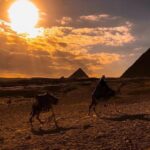
- Giza Pyramids stop: more than a postcard loop
- What you’ll likely take away
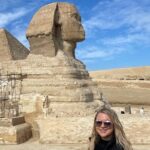
- Great Sphinx: a short stop with real orientation value
- Saqqara Step Pyramid of Djoser: the Old Kingdom feels tangible
- Inscriptions and atmosphere: what to watch for
- Memphis and its capital-era remnants
- Egyptologist-led value: how the guide changes the day
- Price and what you actually get for $105
- Timing, walking, and how to make the day feel easier
- Who should book this day tour?
- Should you book this Giza, Saqqara, and Memphis tour?
- FAQ
- How long is the tour?
- What does the tour cost?
- Are hotel pickup and drop-off included?
- Is lunch included?
- Are admission tickets included for the major sites?
- What group size is the tour capped at?
- Is this a private tour?
- What is not included in the price?
- Is there free cancellation?
Key things to watch for on this Giza + Saqqara day
- Panoramic viewpoint time at Giza so photos aren’t limited to the first crowded angle.
- Great Sphinx stops from the West-to-East alignment for context and better viewing orientation.
- Step Pyramid of Djoser focus at Saqqara, with time to appreciate inscriptions and the necropolis feel.
- Memphis ruins + Ramses monument highlights tying Egypt’s capital story to what you see on the ground.
- Egyptologist-led pacing that helps you understand what a site was built for (tombs, burials, capital functions).
- Long-day logistics: 7 to 8 hours means you’ll feel the walking and sun.
A Cairo day that connects Giza, Saqqara, and Memphis
This is the kind of day tour you do when you want the headline sights of ancient Egypt in one go, without having to plan four separate outings. You’re covering the Giza Plateau on one side of Cairo’s ancient story, then jumping to Saqqara and Memphis on the other side of the timeline.
I like how the itinerary is built around meaning, not just geography. Giza is about royal burials and monument building at its most famous, Saqqara is about one of the earliest monumental stone structures, and Memphis shifts you from pyramid-land into the ancient capital’s story.
The tour also sticks to a practical rhythm: each major stop has a clear time block (around two hours at Giza, around 30 minutes for the Sphinx, around two hours at Saqqara, and about one hour at Memphis). That structure is useful when you’re trying to keep expectations realistic in a place where everything looks amazing the moment you step outside.
You can also read our reviews of more tours and experiences in Cairo.


Giza Pyramids stop: more than a postcard loop
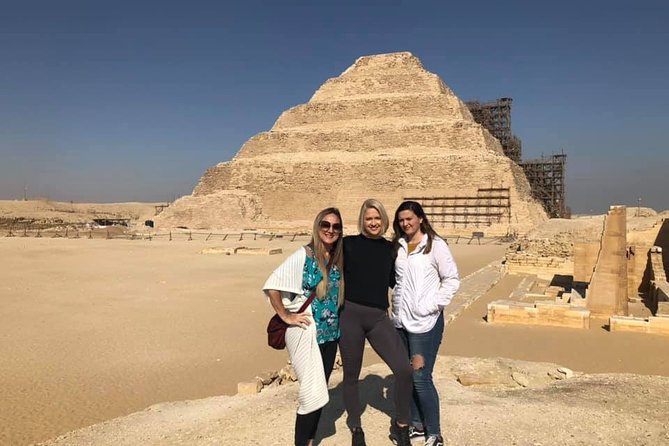
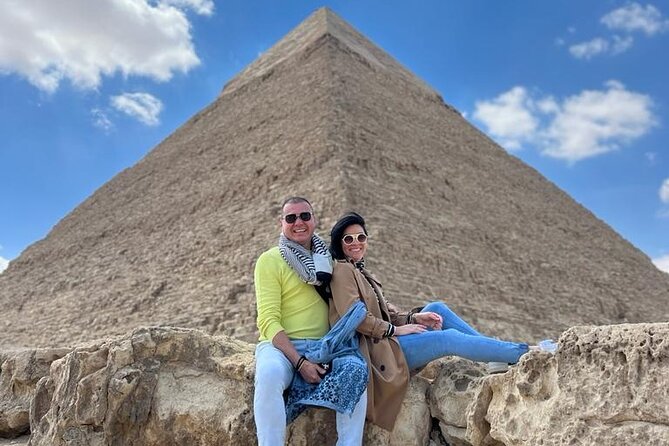
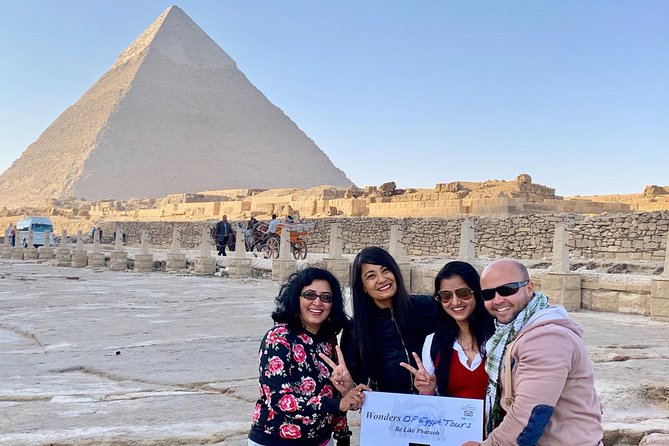
The Giza stop centers on the Giza Pyramid complex on the plateau west of the Nile, including the three major pyramids traditionally linked to Khufu (Cheops), Khafre (Chephren), and Menkaure (Mykerinos). The site description also points out what people often miss: cemeteries, a workers’ village, and even an industrial complex. That matters because it frames Giza as a functioning landscape, not just three isolated monuments.
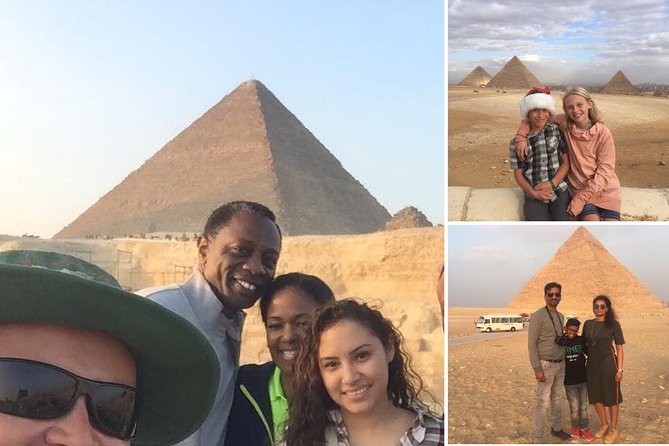
I especially like that the tour plans time for the classic pyramid viewing and then adds a panoramic view for photography. In real life, the best angles usually aren’t the first angle you reach; having planned viewpoint time saves you from constantly adjusting your position while the group moves.
Now, a quick heads-up: Giza has a lot of movement around it, and you’ll be outside for much of the visit. If you’re sensitive to heat or glare, plan on sunglasses and water. The tour includes bottled water, which helps you stay comfortable longer before you start rationing drinks.
What you’ll likely take away
You’ll get the basic through-line: why the pyramids were built, and how their scale shaped how people understood power. You may also hear the guide’s discussion about the pyramids historically being the surviving wonder, and claims that the internal chambers influence how the monument works, plus the idea that older versions had a gleaming top. Treat that as the tour story and context, not as a substitute for your own reading.
Great Sphinx: a short stop with real orientation value
The Great Sphinx portion is timed at about 30 minutes and focuses on the reclining lion body with the human head, carved from the plateau bedrock and facing West to East. Even in a half-hour, that orientation detail is worth it because it changes how you look at the monument.
I like that the stop is direct and focused. At the Sphinx, it’s easy to drift into a pure sightseeing mode. With a guide pointing out the body-and-head shape, the bedrock carving, and the directional stance, you can actually connect what you’re seeing to why it fits into the Giza complex.
A realistic consideration: 30 minutes is enough for understanding and photos, but not enough to linger in deep “wander mode” if you want to walk slowly and explore every corner. If you are a slow photographer, arrive with a plan: pick your angles quickly, then spend the rest of the time watching for the light and crowd flow.
Saqqara Step Pyramid of Djoser: the Old Kingdom feels tangible
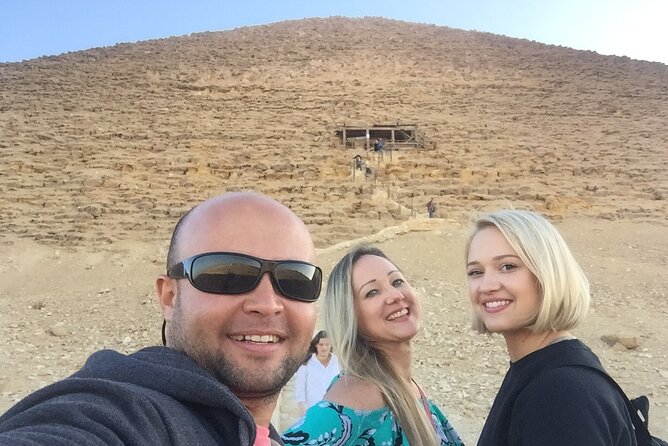
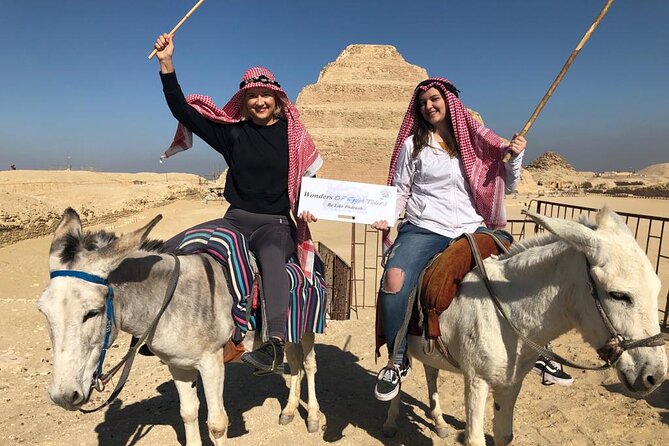
Your Saqqara stop focuses on the Pyramid of Djoser, the Step Pyramid, located in the Saqqara necropolis near Memphis. This is described as the earliest colossal stone building in Egypt, built in the 27th century BC during the Third Dynasty for the burial of Pharaoh Djoser, with Imhotep named as the vizier and architect.
What I like about this stop is that it shifts the experience from famous pyramids to foundational engineering. You’re not just seeing a big tomb shape. You’re looking at the kind of monumental transition that made later pyramid-building possible.
The itinerary also frames Saqqara as a much bigger necropolis system: a large cemetery area with pyramids, nobles’ tombs, and crypts. Even if you’re not touring every section, the time block (about two hours) is long enough to get the feel of the site as a world, not a single monument.

Inscriptions and atmosphere: what to watch for
The description says the Step Pyramid visit includes amazing inscriptions. That’s exactly the kind of thing that needs a guide. Standing still and reading stone marks is hard without context, so your Egyptologist guide can help you notice what’s there and why it mattered.
Also, Saqqara can feel more open than Giza, but it’s still outdoors. Keep your pace steady, bring sun protection, and remember that stone sites can be bright and reflective in the afternoon.
Memphis and its capital-era remnants
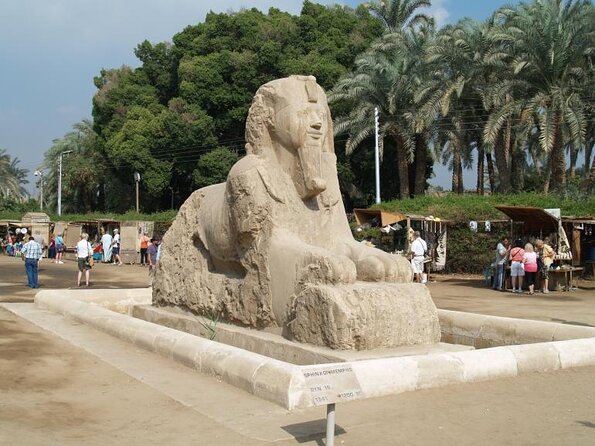
After Saqqara, you head to Memphis, described as the ancient capital of Aneb-Hetch, the first nome of Lower Egypt. The ruins are near Mit Rahina, about 20 km south of Giza, and the tour includes the legend about Mena uniting Upper and Lower Egypt.
This is a good pairing because it changes the tone. At Giza and Saqqara, you’re steeped in monument building and burials. Memphis brings you back to administration and the feel of a capital city that supported long-distance power.
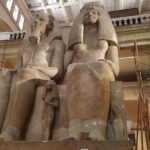
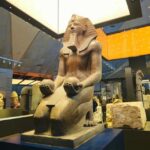
The time at Memphis is about one hour, which is a sensible length because you’re not trying to do a city tour. Instead, you get the key anchors: the second largest Sphinx of alabaster for Ramses the Great and mention of one of his gigantic statues.
I like that the tour explicitly ties the capital story to monuments you can still identify on the ground. Even with limited time, that helps you understand why certain places mattered beyond the cemetery function.
Egyptologist-led value: how the guide changes the day
This tour lists a qualified Egyptologist guide, and the pattern in the feedback you can expect from this kind of guided day is consistent: a guide makes the monuments stop being just shapes.
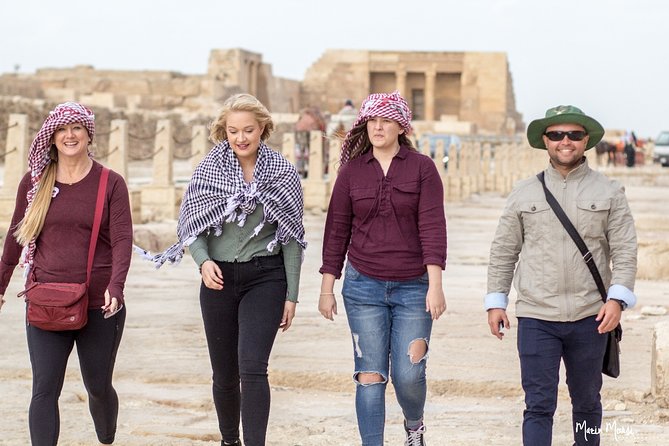
Past tours associated with guides like Ali and Ali Ahmed highlight how much clarity they bring. One of the best practical outcomes: you get help with understanding what you’re looking at, and you also get guidance that can reduce stress—like knowing where to stand for photos and how to handle the common tourist-pressure moments around major landmarks.
If you’re traveling solo or you’re new to Egypt, that matters. You can spend the day reading signage and second-guessing what matters, or you can use a guide to sort it into a simple story: Who built what, when, and why.
A fair caution: “private tour” and “small group” can feel different depending on the day and how bookings come in. Since the max is 15 travelers, you’ll still want to communicate your photo and pacing preferences early so the guide can work with your style.
Price and what you actually get for $105
At $105 per person, this is priced like a solid day-trip value for Cairo. The biggest reason is what’s included:
- Hotel pickup and drop-off
- Lunch
- Bottled water
- Qualified Egyptologist guide
- Admission tickets included for the main listed stops
- A private tour style experience (with a max group size of 15)
This matters because admission and transport costs can quietly add up when you assemble a day on your own. Here, the “all-in” approach helps you budget and reduces decision fatigue.
What is not included is also important: food and drinks beyond lunch, and any extras. So if you plan to buy snacks, juices, or drinks during the day, budget separately. If you expect to pay nothing beyond the tour, you’ll probably be surprised.
Timing, walking, and how to make the day feel easier
This is scheduled for about 7 to 8 hours. That’s a long enough stretch that you should treat it like an all-day outing: comfy shoes, a hat, sunscreen, and a small plan for breaks.
The stops help you manage energy: two hours at Giza, a short focused stop at the Sphinx, two hours at Saqqara, and an hour at Memphis. Still, the “between” time counts. Getting in and out of vehicles, dealing with crowds at Giza, and moving between viewpoints all take energy.
Lunch inclusion is a real plus. In places like this, lunch plans can be chaotic if you do them independently. Having lunch handled means you can focus on the sights instead of hunting down food while you’re tired and sun-drained.
Who should book this day tour?
This tour fits best if you want:
- The major monuments of Giza + Saqqara + Memphis in one day
- A guided explanation from someone who can connect the dots across Egypt’s ancient periods
- A day plan that includes practical support like pickup, water, and lunch
- A small group setting (max 15) that feels more personal than a massive bus group
It might be less ideal if you prefer slow, unstructured wandering, or if you want time-consuming add-ons at each site. Since the Sphinx stop is only about 30 minutes, you won’t get an all-afternoon Sphinx session.
Should you book this Giza, Saqqara, and Memphis tour?
Yes, I’d book it if you want maximum ancient-spot coverage with minimal planning stress. For the money, the included admission plus pickup and lunch is a strong package, and the guide-led story is exactly what turns these places into something you remember, not just something you photographed.
If you’re the type who needs to linger for long photo edits, or if you want to build your day around extra activities not listed here, then you might feel rushed. In that case, consider a longer stay in the area or a tour with more time at fewer sites.
Overall, for a first Cairo archaeology day, this route is a smart way to see the big three: pyramid power at Giza, monumental beginnings at Saqqara, and the capital-era context of Memphis.
FAQ
How long is the tour?
It runs about 7 to 8 hours.
What does the tour cost?
The price is $105.00 per person.
Are hotel pickup and drop-off included?
Yes, hotel pickup and drop-off are included.
Is lunch included?
Yes, lunch is included.
Are admission tickets included for the major sites?
Yes. Admission tickets are included for the Giza Pyramids, the Great Sphinx, and the Saqqara pyramids, as well as Memphis.
What group size is the tour capped at?
The tour has a maximum of 15 travelers.
Is this a private tour?
The tour includes a private tour format, and it is offered with group discounts as well.
What is not included in the price?
Food and drinks are not included unless specified, and any extras are not included.
Is there free cancellation?
Yes. You can cancel up to 24 hours in advance for a full refund.