REVIEW · CAIRO
Day Tour to Coptic and Islamic Cairo
Book on Viator →Operated by Emo Tours Egypt · Bookable on Viator
Old Cairo has a way of catching up to you fast. This 6-hour day tour strings together Coptic Cairo and Islamic Cairo with easy hotel pickup and an air-conditioned private ride, so you’re not guessing your route. I especially like how the plan includes the Hanging Church and St. Sergius links on the Christian side, then pivots to major mosques like Amr Ibn Al-As and Sultan Hassan for the Islamic side. One thing to consider: the stops are brief, with several around 30 minutes, so you’ll want to use your guide time wisely.
A highly praised part is the human one. In an earlier review, the guide Hosem was singled out as the best possible companion, with careful explanations of history and culture—exactly what helps Cairo’s layers make sense. The main drawback for some people is that the schedule is tight: you can see a lot, but you won’t have hours inside every site.
In This Review
- Key highlights to look for
- Why mix Coptic and Islamic Cairo in one 6-hour loop?
- Morning start: Coptic Cairo and the Holy Family connection
- The Hanging Church: 29 steps and a dramatic setting
- Abu-Sergah, St. Barbara, and Ben Ezra Synagogue: one area, multiple faith threads
- Church of St. Sergius and Bacchus: a stop that reinforces the theme
- Al-Rifai Mosque and Sultan Hassan: Mamluk-era power in the Citadel neighborhood
- Cairo Citadel and Mohamed Ali’s Alabaster Mosque
- Amr Ibn Al-As Mosque: early Islamic Cairo in the El Fustat area
- Khan Al-Khalili bazaar: ending with atmosphere, not just monuments
- Price and what the $8 per person really covers
- The guide factor: why Hosem’s careful explanations got praise
- Add-ons you might want to plan mid-tour
- Logistics that matter on a day like this
- Should you book this Day Tour to Coptic and Islamic Cairo?
- FAQ
- How long is the tour?
- What time does the tour start?
- Is hotel pickup and drop-off included?
- Is the tour private?
- What’s included in the price?
- Are entry fees included?
- Is there a tour guide included?
- Can I add museum visits or a Nile felucca ride?
- What is the cancellation policy?
Key highlights to look for
- Hotel pickup and drop-off with a private air-conditioned vehicle, keeping your day stress-free
- A Coptic-to-Islamic route that covers both quarters instead of treating Cairo like two separate trips
- The Hanging Church’s setting above the gatehouse of Babylon Fortress, approached by 29 steps
- Abu-Sergah and St. Barbara linkages with stops that connect churches and the Ben Ezra Synagogue area
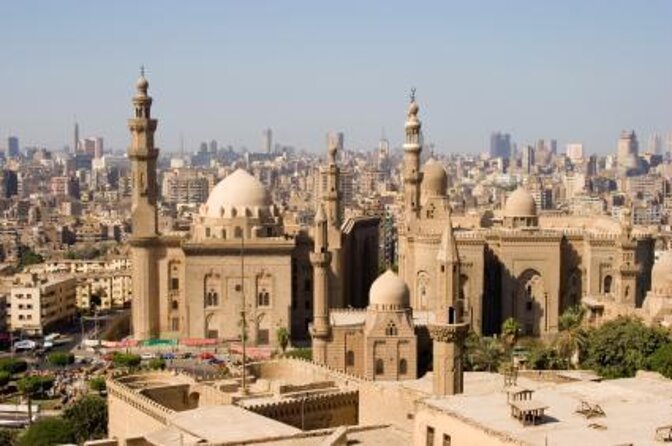
- Sultan Hassan and the Citadel complex for big Mamluk-era architecture and Mohamed Ali’s mosque
- Khan Al-Khalili to end the day so you can transition from monuments to street life
Why mix Coptic and Islamic Cairo in one 6-hour loop?
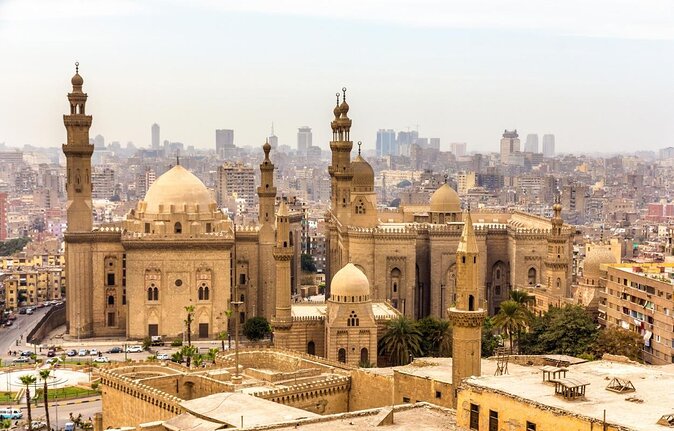
Cairo’s power is in its overlap. Christian and Muslim history don’t sit in neat boxes here; they rub shoulders in Old Cairo and around the early Islamic city areas. This tour is designed so you don’t just “see buildings,” you get a guided pathway through the city’s changing eras.
I like that it stays focused on the big names you’ll keep hearing about, but it also includes the connective tissue between sites. The plan moves from Coptic Cairo’s Holy Family associations into landmark churches and synagogues, then into major mosques and the Citadel. If your goal is understanding how Cairo got built over time, this single-day shape makes it easier than piecemeal visits.
You can also read our reviews of more tours and experiences in Cairo.
Morning start: Coptic Cairo and the Holy Family connection
Your day begins at 8:00 am with hotel pickup in Cairo, then you start in Coptic Cairo, also called Old Cairo. The tour frames this as a key location associated with the Holy Family, where that spiritual presence is still felt in the area’s religious sites.
You’ll spend about 1 hour 30 minutes in this opening zone. That extra time early matters because it’s your orientation. Cairo can feel like a maze when you’re moving between church compounds and smaller streets, so having a guide-led start helps you avoid the common problem of arriving at the right area, but not in the right sequence.
Practical note: the itinerary lists admission ticket as free for this stop, which is useful for managing your day’s costs. Even so, there’s usually a difference between “no ticket required” and “no time needed,” so keep your pace steady and let your guide set expectations.
The Hanging Church: 29 steps and a dramatic setting
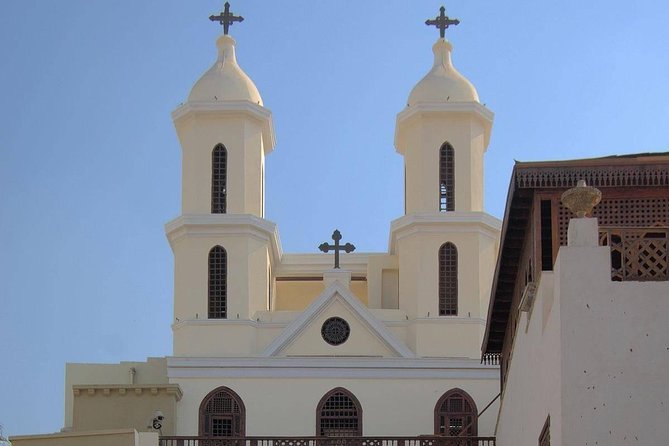
Next is the Hanging Church, named for its location above a gatehouse of Babylon Fortress, the Roman fortress in Coptic Cairo. The nave is suspended over a passage, so even before you start looking closely, the structure explains why the church is famous.
The route includes 29 steps to reach it, and early travelers reportedly called it the Staircase Church. It’s a short visit window—about 30 minutes—but it’s exactly the kind of stop where a guide can help you notice details quickly instead of rushing blindly.
Consider this drawback: if you’re sensitive to stairs or want long quiet time inside, 30 minutes can feel short. But if you’re okay with a focused visit, this stop is one of the strongest “you’re really in the place” experiences on the whole day because the building’s story is baked into its physical form.
Abu-Sergah, St. Barbara, and Ben Ezra Synagogue: one area, multiple faith threads
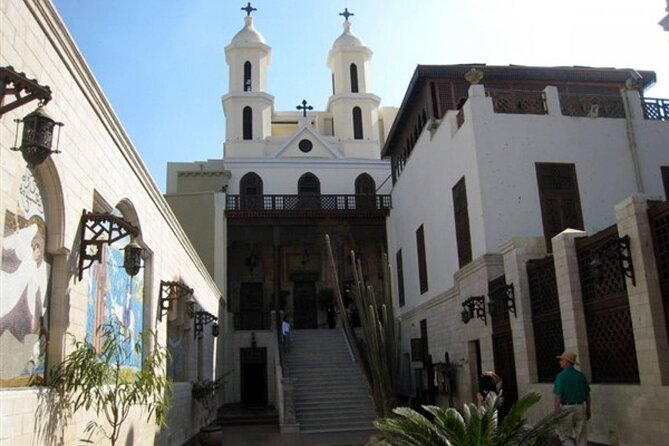
The itinerary then brings you into the area around Abu-Sergah Church and St. Barbara, often tied together with the Hanging Church complex. It also includes the old Jewish synagogue known as Ben Ezra Synagogue.
This is the part of Cairo that surprises people. In a compact area, you’re not just seeing one religion’s footprint; you’re seeing multiple communities leave marks in close proximity. With a guide, the connections become clearer: why the area matters, how different places relate to each other, and how the religious landscape evolved around shared geography.
You’ll spend about 30 minutes here, and the time split across churches and the synagogue setting can feel like a lot to absorb. For most people, the value is that your guide can prioritize what matters most visually and historically within your limited time.
Church of St. Sergius and Bacchus: a stop that reinforces the theme
After the Ben Ezra stop, the day returns to the Christian highlights with the Church of St. Sergius and Bacchus, also connected to Abu-Sergah and St. Barbara in the itinerary flow.
This visit is listed at about 30 minutes. The upside of coming back into the theme is that you start to recognize patterns: similar names you’ll hear in Cairo conversations, repeated locations, and the way religious sites interlock in Old Cairo. The downside is repetition risk—if you’re the type who hates moving between closely related sites, you may want to ask your guide to focus on what’s visually different rather than what’s just “nearby.”

Al-Rifai Mosque and Sultan Hassan: Mamluk-era power in the Citadel neighborhood
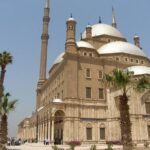
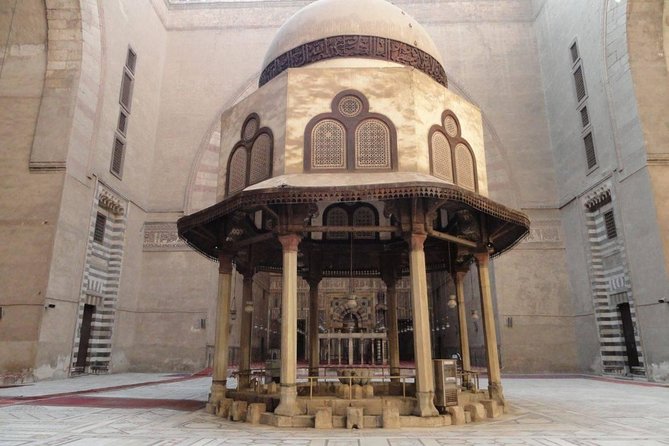
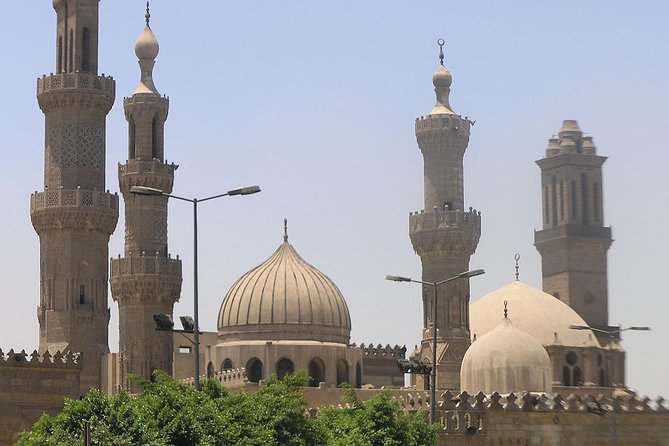
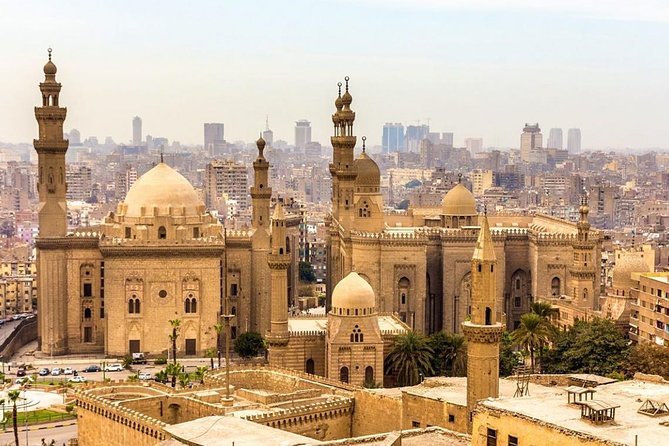
Once you shift into Islamic Cairo’s monumental zone, the tour becomes more about scale. You’ll head to Al-Rifa’i Mosque, described as being opposite the Mosque-Madrassa of Sultan Hassan. The plan frames Al-Rifa’i as a complement to the older structure, dating from around 1361.
Then it’s on to the Mosque and Madrasa of Sultan Hassan, one of the most massive Mamluk-era projects near the Citadel. The itinerary notes its founding by Sultan Hassan in 1356 A.D, which gives you a clear time anchor as you look at the architecture.
These stops are both around 30 minutes. That can be enough to understand the big picture—how the structures relate to each other and why this area feels like a centerpiece—but not enough to linger on every niche or inscription. If architecture is your thing, you’ll get more out of listening to your guide’s quick explanations during the brief window.
Cairo Citadel and Mohamed Ali’s Alabaster Mosque
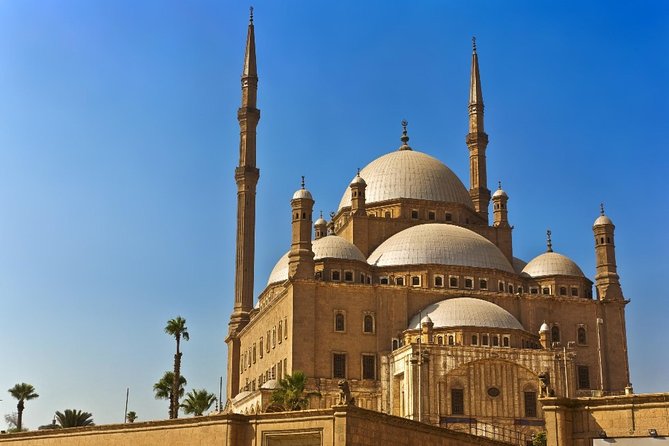
The next anchor point is the Cairo Citadel. The tour highlights Mohamed Ali’s mosque, also known as the Alabaster Mosque, and you’ll spend about 1 hour here.
This is the moment when the trip stops feeling like “a list of stops” and starts feeling like a real skyline story. The Citadel area changes your sense of distance inside Cairo—suddenly you’re in a major power zone, not just moving street-to-street between compounds.
The itinerary lists admission ticket as free for this stop. Still, keep your expectations realistic: one hour at the Citadel is enough for a guided overview, but not for a slow, obsessive museum-style day. If your priorities are specifically Ottoman or mosque architecture, you might want to plan extra time on a separate visit later.
Amr Ibn Al-As Mosque: early Islamic Cairo in the El Fustat area
After the Citadel zone, you head to the Mosque of Amr Ibn Al-As in the El Fustat area. The tour notes it was founded in 641 A.D by the first Muslim leader Amr Ibn Elas, and the itinerary points out that you can visit and enter the mosque.
This stop is about 30 minutes. It’s shorter than the Citadel, but it’s important because it takes you back to the early chapters of Islamic Cairo—less about the later monumental landscaping and more about the foundational layer.
For many people, this is where the day starts to click: you’re not just bouncing between impressive buildings; you’re watching time move forward from early Islamic beginnings to later Mamluk grandeur. If your guide does their job well, this transition is where it becomes more than sightseeing.
Khan Al-Khalili bazaar: ending with atmosphere, not just monuments
The tour closes at Khan Al-Khalili Bazaar. The itinerary keeps this as a 30-minute finish, then transfers you back to your hotel.
This is smart pacing. After churches, mosques, and the Citadel, you get a final handhold into daily life. You’ll have just enough time to orient yourself in the bazaar area and feel the atmosphere without the stress of trying to plan it from scratch.
Cost-wise, this part isn’t about admission tickets. It’s about time and energy: you’ll likely want to keep your sense of priorities simple—walk, look, and let your guide point out what’s worth your attention given the limited window.
Price and what the $8 per person really covers
The price is listed at $8.00 per person, with booking commonly made about 25 days in advance. That’s strikingly low for a full-day format with hotel pickup and private transport.
Here’s the practical way I’d think about value: you’re mainly paying for private air-conditioned transportation plus hotel pickup and drop-off, and the itinerary’s major stops are shown with free admission ticket notes. Optional costs can show up if you add extra activities that aren’t included—like museum entry or a Felucca boat ride—since those are described as add-ons with additional fees.
Also note what’s not included: lunch (like koshari) is optional, and tipping is optional but expected in most real-world tourism situations. A tour guide is also listed as optional, which matters because the itinerary clearly benefits from guide explanations—especially in a place with overlapping faith history like this.
If you want a guided, organized route and you’re trying to keep costs under control, this package format makes sense.
The guide factor: why Hosem’s careful explanations got praise
One of the standout signals from reviews is that a guide named Hosem was praised as the best possible company, with careful descriptions of historical and cultural details in Cairo. That lines up with what you need on this kind of day.
Cairo’s landmarks can look impressive, but the connections—Christian sites linked with later Islamic geography, or why certain mosques sit where they do—often only become clear with someone who can translate the story fast. With multiple faith landmarks in one run, you need more than “here is a building.” You need the map in your head.
So even if a guide is optional on paper, I’d strongly consider making sure you have that layer. If you’re going without a guide, you risk missing the context and spending more energy figuring out what you’re looking at.
Add-ons you might want to plan mid-tour
The tour mentions possible extra time for a few add-ons: entering either the Coptic Museum or the Islamic Museum, or adding a Felucca boat ride sailing on the Nile. The key detail is that these are not baked into the base plan; they can be added in the middle of booking and will require additional fees.
This is useful if you want more than just the monument tour. Museums can slow the day down in a good way, and a Nile felucca can be a nice contrast after mosque and church compounds. If you do add one, do it with discipline: your schedule is already built around tight time blocks, so you’ll be trading short visits for a deeper focus.
Logistics that matter on a day like this
The day runs about 6 hours, starting at 8:00 am. The itinerary uses a mix of longer and shorter visits: 1 hour 30 minutes early, 1 hour at the Citadel, and then several 30-minute stops for the remaining landmarks.
That timing pattern tells you what kind of traveler this tour suits. If you like organized routes and want to check major highlights without hunting for directions, you’ll likely feel good about the pace. If you hate time limits and prefer lingering, you might feel rushed during the 30-minute segments.
Also, this is listed as a private tour/activity, meaning only your group participates. There’s also mention of group discounts, so your final per-person cost may depend on how you book, but the private format should still feel more controlled than big group bus tours.
Should you book this Day Tour to Coptic and Islamic Cairo?
You should book it if you want a single-day path through both Coptic and Islamic Cairo, with hotel pickup, private air-conditioned transport, and a route that hits Hanging Church, the mosque area around Sultan Hassan and the Citadel, plus Amr Ibn Al-As and Khan Al-Khalili. It’s also a strong choice if you care about context and history, because the guide component is where the day becomes coherent—exactly what Hosem’s praised storytelling points to.
Skip it—or at least adjust expectations—if your priority is slow, deep time inside every site. The tour is built for coverage, not for long wandering. You’ll see a lot, but you’ll need to accept that some places only get a short introduction.
FAQ
How long is the tour?
The duration is about 6 hours.
What time does the tour start?
It starts at 8:00 am.
Is hotel pickup and drop-off included?
Yes. Hotel pickup and drop-off are included.
Is the tour private?
Yes. It’s described as a private tour/activity with only your group participating.
What’s included in the price?
Included items are bottled water, hotel pickup and drop-off, and transport by private air-conditioned vehicle or minibus.
Are entry fees included?
Entry fees are not included. The itinerary lists some stops with admission ticket free, but entry fees are still marked as optional/not included, especially if you add museums or other activities.
Is there a tour guide included?
A tour guide is listed as optional. The itinerary is described with a guide-led route, but you should confirm guide inclusion when booking.
Can I add museum visits or a Nile felucca ride?
Yes. You can add entry to the Coptic Museum or the Islamic Museum or a Felucca boat ride, but it requires additional fees.
What is the cancellation policy?
You can cancel for a full refund up to 24 hours in advance of the experience start time.
If you want, tell me your travel dates and whether you prefer a more relaxed pace or maximum highlights—I can suggest how to handle the short stop times so it feels right for you.