REVIEW · CAIRO
Cairo vip two or one day pyramids ,Museum,memfis ,saqra and7 places
Book on Viator →Operated by sarita said · Bookable on Viator
Two Cairo days, priced like one stop. This VIP-style plan strings together Giza’s biggest icons, plus Memphis and Saqqara, with pickup, an Egyptologist guide, and lunch included. I especially like how it goes beyond the usual pyramid photo stops, and I like that a guide like Ashmed is described as friendly and strong on the local story. One caution: if you want to go inside the Great Pyramid of Khufu, that specific entrance isn’t included.
What makes this feel practical is the pacing: it’s set up as two full days (about 8 hours each), and you can choose consecutive days or separate days. It’s also private, so you’re not stuck watching the clock while strangers set the pace. Just plan for long sightseeing days with plenty of walking.
In This Review
- Key highlights at a glance
- Two days that feel like one: the schedule and how it actually works
- Day 1 in Giza: pyramids, Sphinx, Valley Temple, Memphis, and Saqqara
- Pyramids of Giza and the Great Sphinx: the main event
- The Valley Temple: the quieter partner
- Memphis: when the city story starts to make sense
- Saqqara: the bonus site that upgrades your day
- Day 2 in Cairo: Egyptian Museum, Saladin Citadel, Mohammed Ali Mosque, Coptic Cairo and Khan el-Khalili
- Egyptian Museum: what you should use your time for
- Saladin Citadel: views plus context
- Mohammed Ali Mosque: a signature Cairo stop
- Coptic Quarter: churches and a different Cairo rhythm
- Khan el-Khalili bazaar: the human-scale finale
- Guide quality: officer-level Egyptology and why it changes the day
- Tickets, lunches, and the small costs to plan for
- What’s included
- The big exception to know early
- What isn’t included
- Price and value: what $6 per person really means (and how to sanity-check it)
- Practical logistics: pickup, private group pace, and walking reality
- Who this Cairo VIP double-day suits best (and who should rethink it)
- Should you book this tour?
- FAQ
- Is this tour a private experience?
- Do you offer pickup from Cairo Airport or hotels?
- What’s the total duration?
- What are the main stops on Day 1?
- What are the main stops on Day 2?
- Are tickets included?
- Is lunch included?
- What isn’t included in the price?
- What is the cancellation policy?
- Are there any minimum traveler requirements?
Key highlights at a glance
- Two full sightseeing days built to give you more than a typical one-day trip
- Egyptologist-led guidance (officer background) so you’re not just looking at monuments
- Giza plus Memphis and Saqqara for a deeper feel of ancient Egypt
- Lunch included both days, so you can focus on the sights instead of food logistics
- Entrance coverage with a clear exception: Great Pyramid of Khufu interior not included
- Pickup + mobile ticket, starting from Cairo Airport or your Cairo/Giza hotel
Two days that feel like one: the schedule and how it actually works
This is designed as a fast, focused Cairo itinerary: two days, each around 8 hours, each with major stops and a included lunch. Day 1 leans hard into Giza and the nearby necropolis sites. Day 2 shifts into central Cairo, with museums and religious landmarks plus Khan el-Khalili.
The flexibility is a big deal for real life. You can pick two separate days or take them consecutively—handy if your flight timing is tight, or if you prefer to spread out the crowds and heat. Either way, the flow is built so you’re not spending your day bouncing across the city with no plan.
Since it’s a private tour, you don’t have to adjust to a mixed-group rhythm. That matters on days like these, where a small timing change (getting out of the vehicle, navigating entry lines, finding the right viewpoint) can make the whole experience smoother.
A few more Cairo tours and experiences worth a look


Day 1 in Giza: pyramids, Sphinx, Valley Temple, Memphis, and Saqqara
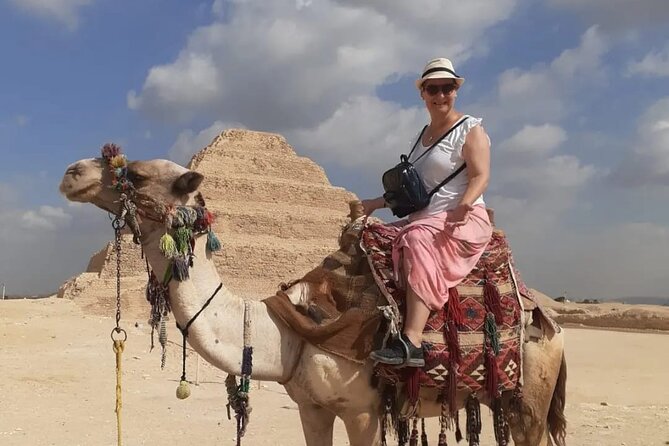
Day 1 starts with the classic Giza zone, but the route is structured to make it more than a single highlight list. You’ll see the three pyramids, the Great Sphinx, and the Valley Temple, then continue outward to Memphis and Saqqara—two places that help you understand why Giza isn’t the only big story in the area.
Pyramids of Giza and the Great Sphinx: the main event
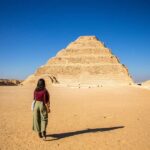
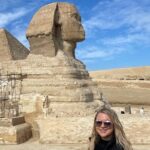
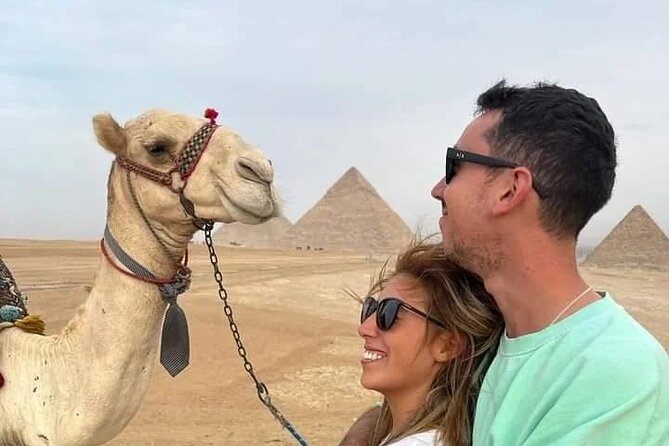
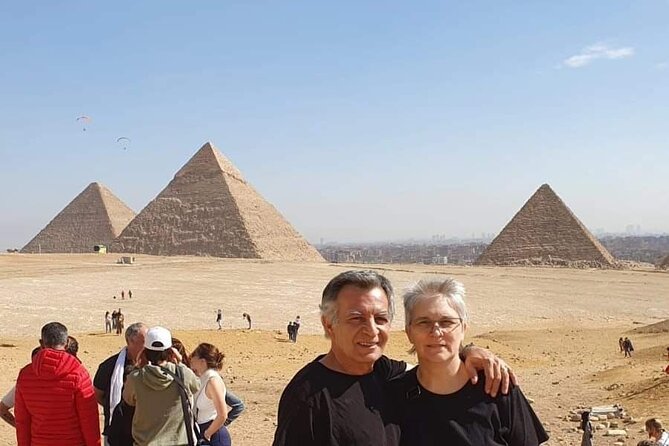
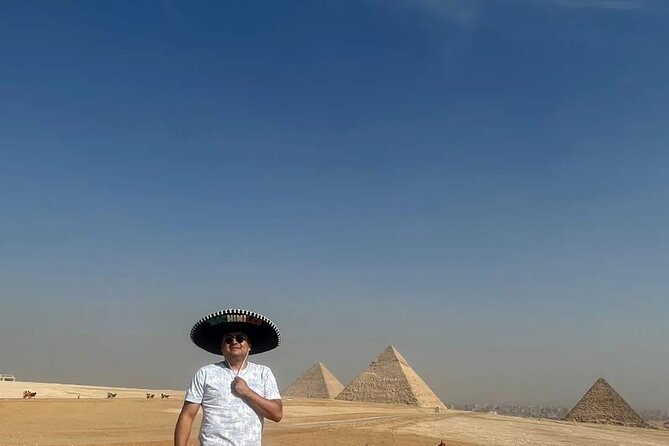
You’ll spend your morning at the core trio: the pyramids of Giza along with the Sphinx. This is where first-time Egypt moments land hardest—because these aren’t small ruins you can stroll past. They’re scale-first monuments, and the longer you look, the more you notice how the angles, shadow lines, and surrounding structures interact.
A practical note: the tour includes admission tickets, but it specifically notes that the large pyramid Khufu interior isn’t included. So if you’re set on seeing inside, you should plan on additional arrangements outside this package. If you’re mainly here to grasp the overall complex and take in the viewpoints, you can still have a great day.
The Valley Temple: the quieter partner
After the Sphinx area, the Valley Temple stop gives you a change of pace. It’s still part of the Giza story, but it doesn’t rely only on the biggest silhouette. You’ll get a stronger sense of how ceremonial routes connect, and that helps you connect what you’re seeing in the landscape rather than treating each monument like a standalone postcard.
Memphis: when the city story starts to make sense
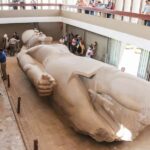
Then you move beyond Giza into Memphis. This is valuable because it shifts you from pyramid tourism into the broader idea of Egyptian civilization as a place, not just a monument. Memphis helps explain why the region mattered so much long before and long after individual pyramids were built.
Even if you don’t read every plaque, having an Egyptologist guide makes a difference. You’ll get context for what you’re looking at and what questions to ask, which turns a stop into a comprehension moment.
You can also read our reviews of more museum experiences in Cairo

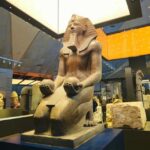



Saqqara: the bonus site that upgrades your day
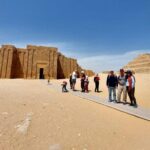
Finally, Saqqara rounds out Day 1. Saqqara gives you a chance to see another layer of funerary architecture and a different kind of ancient “wow.” The best payoff here is perspective: once you’ve seen Saqqara, Giza stops feeling like the only option and starts feeling like part of a wider system.
Day 1 ends with lunch at one of the best restaurants, then the transfer back to your hotel. That restaurant lunch matters because you’re already spending most of the day outside. A planned meal keeps you from losing time hunting for food you might not love.
Day 2 in Cairo: Egyptian Museum, Saladin Citadel, Mohammed Ali Mosque, Coptic Cairo and Khan el-Khalili
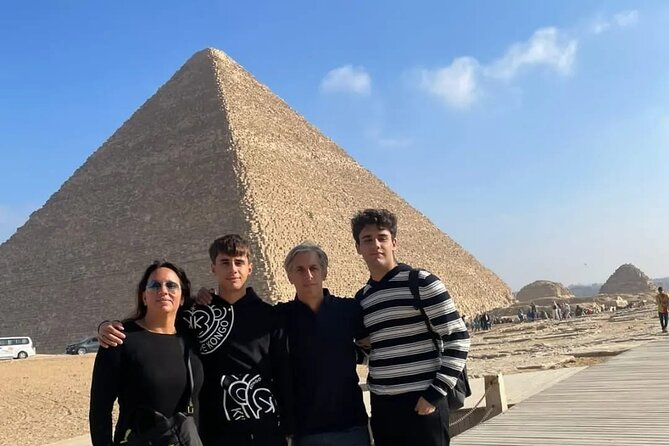
Day 2 is where the itinerary switches gears from ancient sites on the outskirts to central Cairo’s mix of museums, mosques, neighborhoods, and markets. You’ll start at the Egyptian Museum, then move through the Saladin citadel, the Mohammed Ali Mosque, and the Coptic Quarter, finishing at the Grand Bazaar of Khan el-Khalili.
Egyptian Museum: what you should use your time for
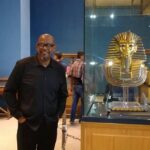
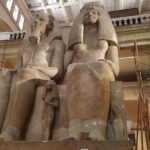
The Egyptian Museum stop is the backbone for understanding what you’re seeing. If you treat it as a quick glance, you’ll miss the payoff. Instead, I’d use the museum time to pick a few themes: royal regalia, funerary objects, and everyday life artifacts. When you do that, the later street scenes and historical landmarks start to feel connected.
You’ll have admission included for this day as part of the tour package, and lunch is built in. That combination is practical: it helps you avoid the common problem of museum fatigue plus hunger plus time pressure.
Saladin Citadel: views plus context
Next comes the Saladin citadel. A citadel is never just a building. It’s a vantage point and a power statement. Even if you don’t spend forever on each wall, you’ll get a clearer sense of where Cairo sits and why rulers needed strong defensive positions.
Mohammed Ali Mosque: a signature Cairo stop
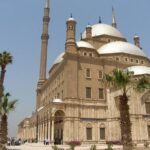
Then you’ll visit the Mohammed Ali Mosque. This is one of those Cairo moments that photographs well, but it’s also worth experiencing in person because of how it frames light and movement. It’s a landmark that helps anchor the day’s religious architecture themes before you shift to the Coptic Quarter.
Coptic Quarter: churches and a different Cairo rhythm
The stop in Coptic Quarter gives you an important contrast. This area adds a different layer to Cairo’s story—one that’s not just ancient Egypt, but also later Christian heritage in the city. A guide helps you connect what you see to why this quarter exists and what it symbolizes in Cairo’s timeline.
Khan el-Khalili bazaar: the human-scale finale
Finally, the day ends at the Grand Bazaar of Khan el-Khalili. This is where Cairo turns less monumental and more street-level. It’s noisy, it’s crowded, it’s full of texture—so I recommend you treat it as an atmosphere stop, not a shopping mission unless you already know what you want.
After Khan el-Khalili, you return to the hotel. Having the wrap-up handled is a relief at the end of a long day, especially if you’re navigating traffic and crowds.
Guide quality: officer-level Egyptology and why it changes the day
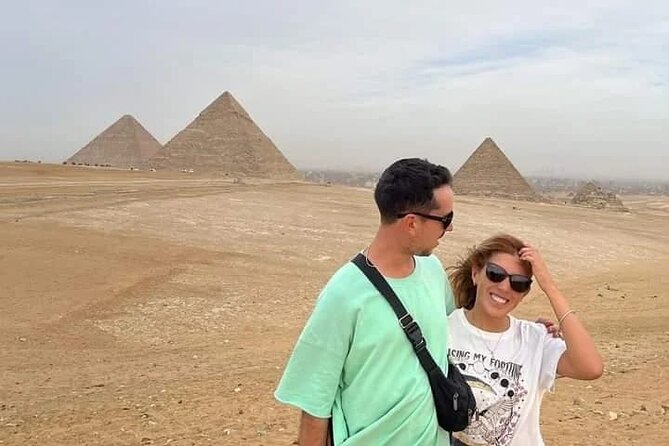
One of the strongest parts of this experience is the type of guide you’ll have. The program states the guides are officers and Egyptologists—not casual tour talk. That matters because pyramids and museum objects are easy to misunderstand if you don’t have someone guiding your attention.
Guide Ashmed is specifically mentioned as kind and well-versed in local history. Even if you don’t know the difference between a temple layout and a funerary complex at first, a guide who can explain it will help you start noticing patterns fast.
Here’s how to get the most from your guide without turning it into a lecture:
- Ask one question at each stop that connects the stop to the next stop.
- If something feels confusing, ask what to look for before you move on.
- Use the museum to build your vocabulary, then use the monuments to test what you learned.
When you do that, the two-day route stops being a checklist and starts feeling like one story.
Tickets, lunches, and the small costs to plan for
This is where you should pay close attention before you assume everything is covered.
What’s included
- Guide and entrances (with an exception)
- Lunch (2), meaning you get lunch on both days
- Admission tickets are marked as included for the day’s main activities
- Pickup and assistance from Cairo International Airport or from your Cairo/Giza hotel (depending on where you start)
- A mobile ticket
- Free cancellation rules are listed for the experience window
The big exception to know early
The package notes that entrances are included except the large pyramid Keops inside. So if you consider that interior visit a must, budget for extra ticket arrangements or choose a different option that includes it.
What isn’t included
- tips
- drinks
- There’s also a note that tickets are not included in the car + guide option. That wording matters because it suggests the exact bundle could vary by what you select. If you’re booking with a specific add-on, verify what ticket set you’re getting.
For me, the simplest way to judge cost is this: since lunch is included twice and the main entrances are mostly handled, your day-to-day spending should stay relatively controlled. Your main extra costs are likely to be tips, drinks, and anything related to the Great Pyramid interior if you want that.
Price and value: what $6 per person really means (and how to sanity-check it)
The listed price is $6.00 per person, which is so low that it’s worth taking seriously—but also worth confirming what you’re actually paying for. The best sign for value is that your plan includes a guide, pickup/assistance, lunch twice, and major entrance coverage.
If you’re a first-timer with limited time in Cairo, this can be a strong deal because it reduces the biggest cost sink: paying separately for guide time and entry coordination. It also reduces the stress of building a route yourself.
That said, the value only holds if you’re comfortable with the trade-offs:
- You’re doing two full days around major sights.
- The itinerary includes a set of stops, not a custom slow travel pace.
- The Keops interior is not included, and drinks/tips aren’t included.
If you like structure and hate spending your vacation time planning logistics, this can be a great match.
Practical logistics: pickup, private group pace, and walking reality
The tour offers pickup and reception. You can be met at Cairo International Airport and brought into the day’s plan. If you’re already in a Cairo or Giza hotel, the staff stops by you instead.
It’s also described as private with only your group participating. That’s helpful when you’re in crowded places like Khan el-Khalili, because your guide can manage timing and keep you moving instead of getting separated.
The tour is said to be near public transportation and allows service animals, and it notes that most people can participate. Still, the day is long—about 8 hours—so comfortable shoes are not optional. You’ll be moving through outdoor areas around monuments and then into busy city zones.
Who this Cairo VIP double-day suits best (and who should rethink it)
This works especially well if:
- You have a short stay and want major Cairo highlights in two organized days
- You like having an expert guide explain what you’re seeing, not just point and move on
- You want to see more than Giza by adding Memphis and Saqqara
- You value included lunches and pickup to reduce day-of stress
Consider rethinking if:
- You strongly want to enter the Great Pyramid of Khufu (Keops) interior as part of your plan
- You prefer slow museum time without a tight schedule
- You’re looking for a relaxed, low-walking style day
Should you book this tour?
If you want a structured Cairo sprint that still includes the deeper stops—Memphis and Saqqara—I’d lean yes. The combination of an Egyptology guide, pickup, and lunch twice makes it feel genuinely efficient for the time you have.
Just do two quick checks before you commit: confirm whether your exact ticket bundle includes everything you care about (especially the Great Pyramid interior), and clarify whether drinks and tips are on you (they are listed as not included). If you’re okay with that, this is a strong way to cover the big Cairo moments without turning your trip into a planning project.
FAQ
Is this tour a private experience?
Yes. It’s described as a private tour/activity with only your group participating.
Do you offer pickup from Cairo Airport or hotels?
Yes. The plan includes arrival at Cairo International Airport with assistance and reception, and pickup if you are staying in a hotel in Cairo or Giza.
What’s the total duration?
It’s listed as about 2 days, with roughly 8 hours per day.
What are the main stops on Day 1?
Day 1 focuses on Giza and nearby sites: the three pyramids, the Great Sphinx, the Valley Temple, plus Memphis and Saqqara. Lunch is included.
What are the main stops on Day 2?
Day 2 includes the Egyptian Museum, Saladin citadel, Mohammed Ali Mosque, the Coptic Quarter, and Khan el-Khalili. Lunch is included.
Are tickets included?
Admission tickets are listed as included, but the tour notes an exception: the large pyramid Keops inside is not included. There’s also a note that tickets are not included in the car + guide option, so it’s worth confirming your exact booking option.
Is lunch included?
Yes. Lunch is included for both days (Lunch (2)).
What isn’t included in the price?
Tips and drinks are not included.
What is the cancellation policy?
Free cancellation is offered. You can cancel up to 24 hours in advance for a full refund.
Are there any minimum traveler requirements?
Yes. The experience requires a minimum number of travelers. If it’s canceled because the minimum isn’t met, you’ll be offered a different date/experience or a full refund.