REVIEW · CAIRO
Cairo: Grand Egyptian Museum, Giza Pyramids and Sphinx Tour
Book on GetYourGuide →Operated by Ramses tours · Bookable on GetYourGuide
New museum, ancient giants, one tight day. I like this tour because it pairs the Grand Egyptian Museum with the Giza Plateau’s biggest icons, all in one smooth 7-hour run with a live guide. The day also includes specific “how it worked” stories, like what happened at the Valley Temple of Khafre, not just a stop-and-photo schedule.
Two things I really enjoy: first, you get a structured visit through the GEM’s main spaces (including its Grand Hall and 12 exhibition halls), plus limited-access areas before the museum’s full opening. Second, the Giza portion isn’t vague. You visit the pyramids of Cheops, Chephren, and Mykerinus, then the Sphinx, and you also see the Valley Temple tied to mummification.
One consideration: it’s a maximum of 10 travelers, and Giza can feel like a high-traffic world. If you’re sensitive to crowds and time pressure, plan to lean on your guide for navigation and photo timing.
In This Review
- Key takeaways before you go
- Grand Egyptian Museum: modern architecture with real context
- Hanging Obelisk and Ramses II: the photo stops with a point
- Inside the museum: what the 12 exhibition halls do for you
- Giza Plateau: Cheops, Chephren, Mykerinus and the Great Sphinx
- Valley Temple of Khafre: where the mummification story becomes real
- Timing, comfort, and group size: a 7-hour plan that works
- Guides, languages, and how to get the most from the day
- Price and value: does $80 make sense for what you get?
- Should you book the Cairo Grand Egyptian Museum, Giza Pyramids and Sphinx tour?
- FAQ
- What’s the duration of the Cairo Grand Egyptian Museum, Giza Pyramids and Sphinx tour?
- What does the tour include?
- Is transportation provided?
- Do I get a live guide and in what languages?
- Are entrance fees included and do I skip the ticket line?
- How big is the group?
Key takeaways before you go
- Limited-access GEM sections: you’re not only looking at art, you’re getting into select parts before the full opening.
- “Rare view” Hanging Obelisk: designed to be seen from below, which makes your photos and understanding better.
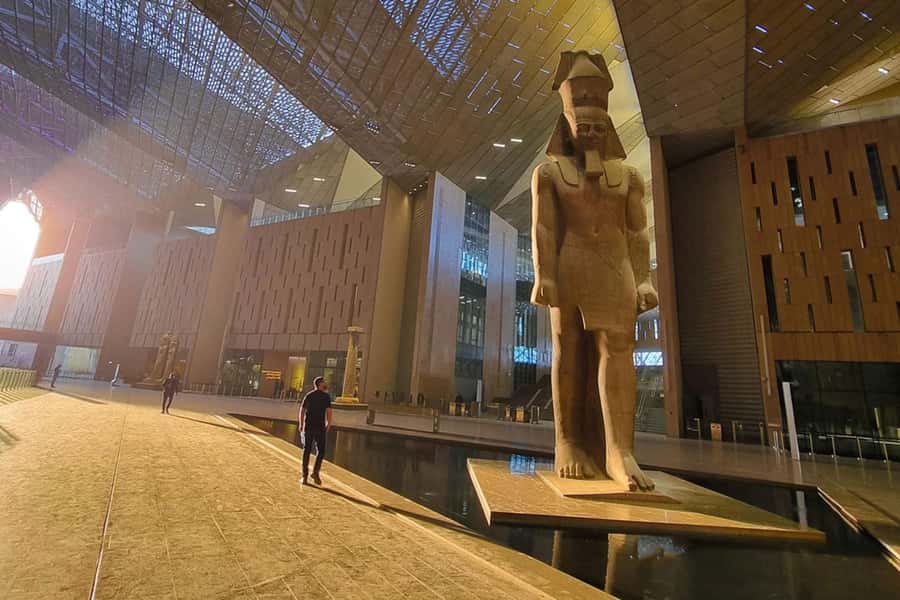
- Ramses II statue stop: a quick but powerful reminder of Egypt’s political muscle.
- Full Giza focus: Cheops, Chephren, Mykerinus, plus the Great Sphinx and Khafre’s Valley Temple.
- Real mummification context: the Valley Temple is explained as a purification and preparation space before burial.
Grand Egyptian Museum: modern architecture with real context
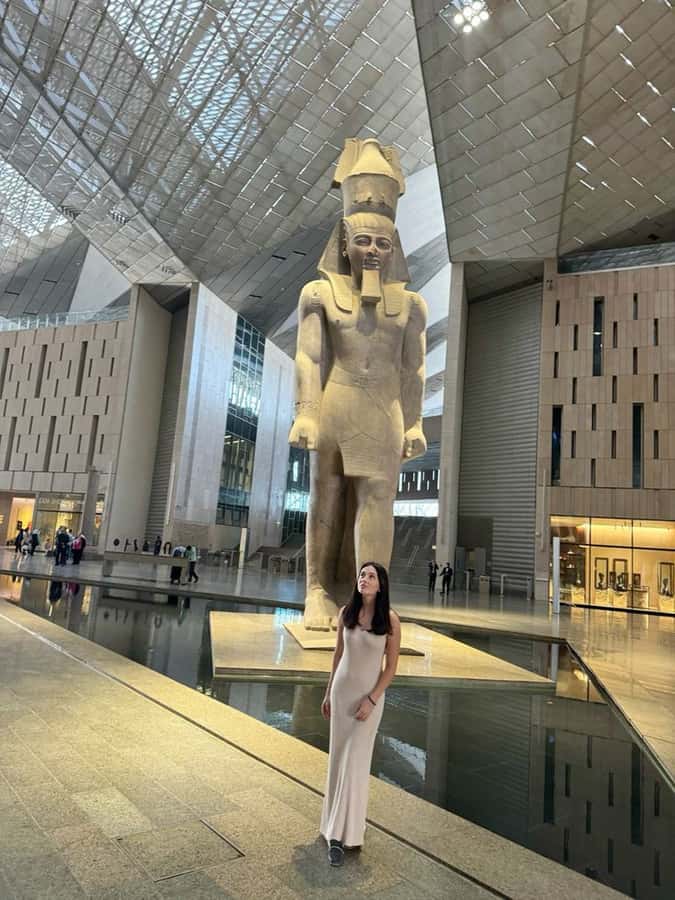
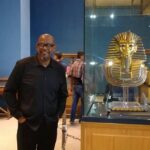
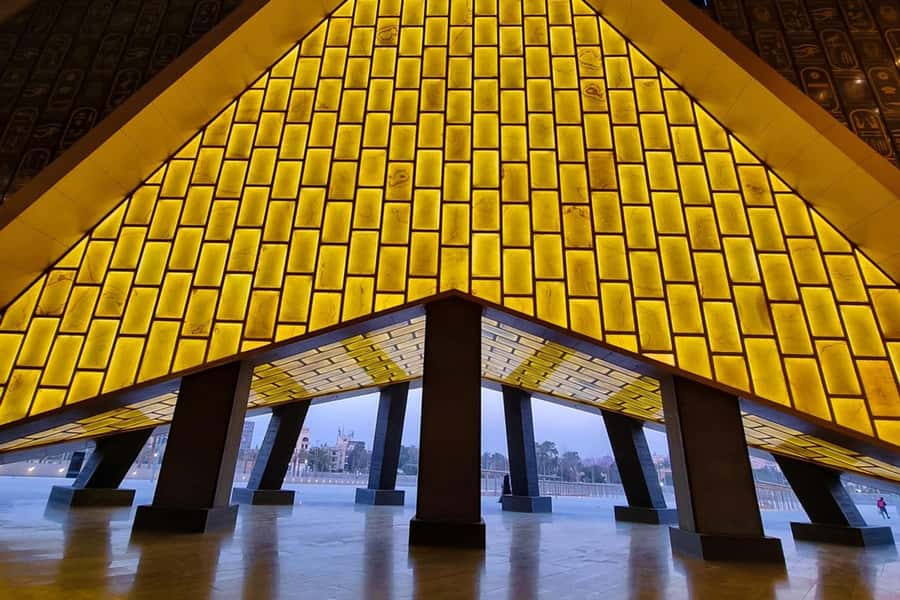
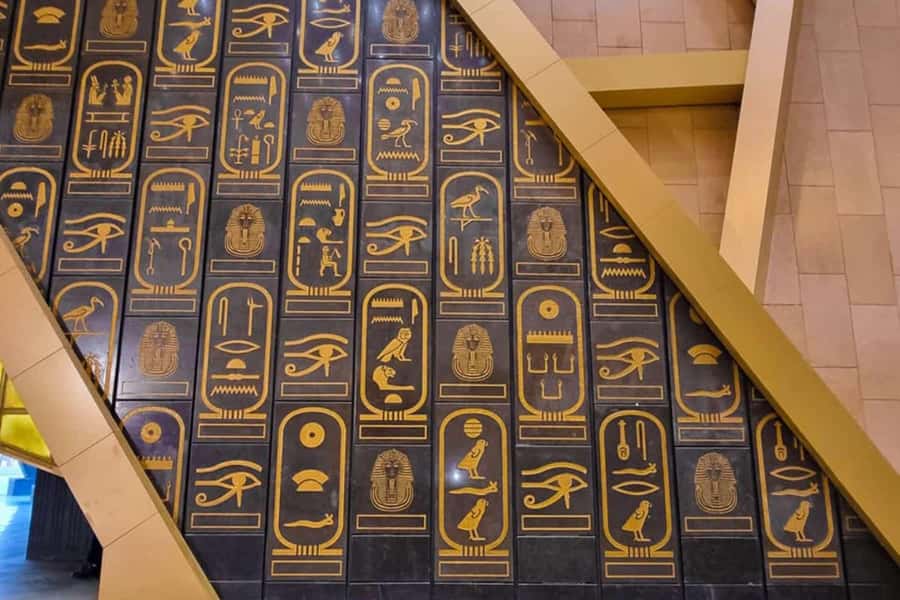
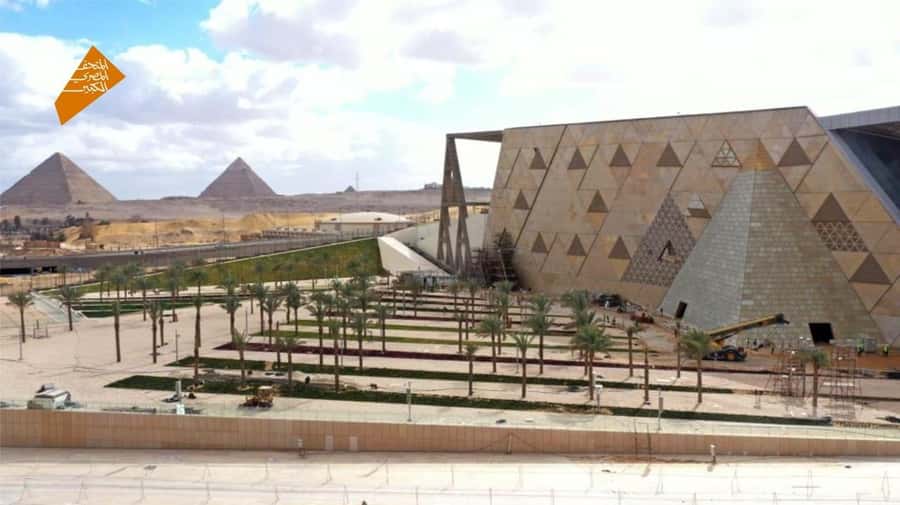
The Grand Egyptian Museum (GEM) is the star of the morning. Even before you step inside, you’ll get to take in the exterior gardens and the museum’s layout, which is designed to feel spacious and purposeful. It’s the kind of place where your guide can help you see more than just “Egyptian stuff,” because the exhibits are grouped across time and theme.
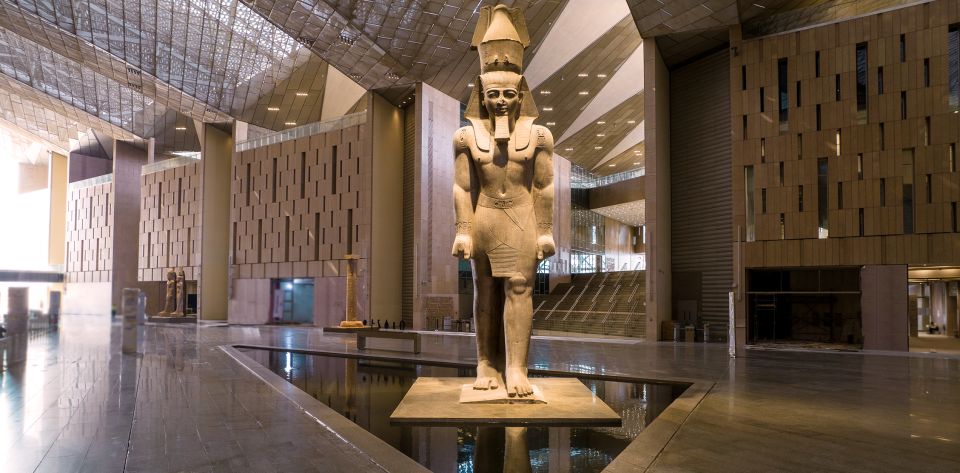
Inside, you start at the Grand Hall, the museum’s main entrance. This is a good move early on, because it sets the tone. Then you move into the museum’s exhibition spaces, including 12 halls covering a long sweep from Egypt’s prehistoric era through the Roman period. That range matters. It shows you that Egypt’s story didn’t end with pharaohs and pyramids; it kept evolving.
One small but meaningful detail: your museum time includes exclusive access to select sections prior to full opening. That doesn’t just make the day feel special. It also tends to make the visit less chaotic, because you’re spending time in planned areas rather than scrambling for whatever is open on a given day.
If you’re the kind of person who likes to understand what you’re seeing, this portion is built for you. It’s structured. It doesn’t assume you already know the map of Egyptian archaeology.
You can also read our reviews of more museum experiences in Cairo

Hanging Obelisk and Ramses II: the photo stops with a point
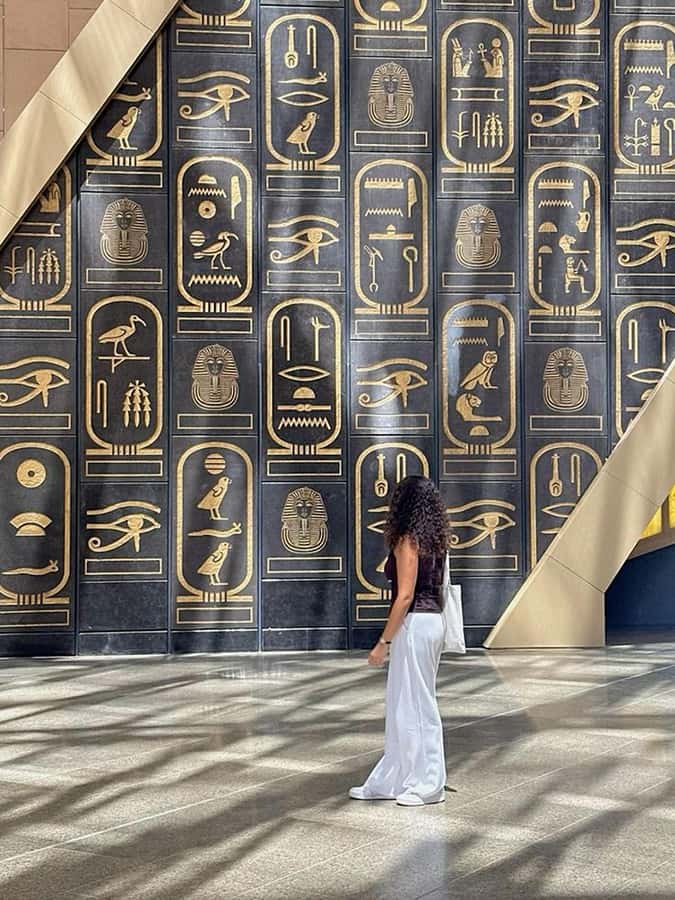
After the early GEM orientation, you’ll move through highlights that are both visually striking and easy to explain with the right guide. Two stops are especially memorable.
First is the Hanging Obelisk. It’s presented in a way that’s meant for a rare perspective, including a view from below. That perspective is the whole point: it helps you connect the object to the ancient Egyptian way of thinking about the sky and celestial order.
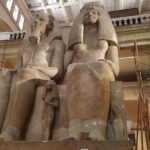
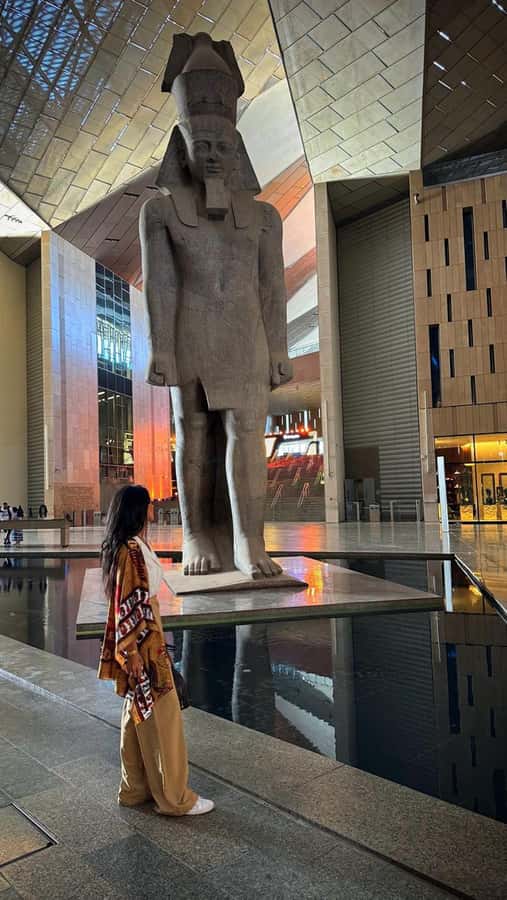
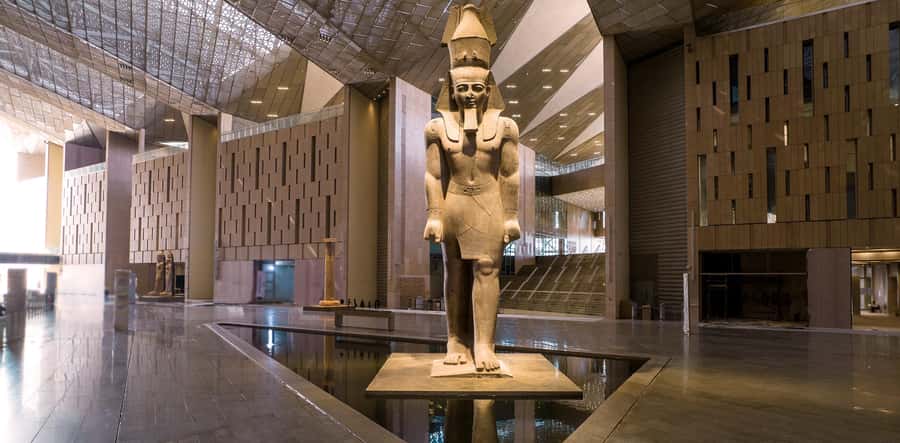
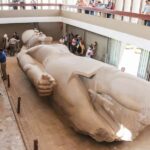
Second is the statue of Ramses II. This isn’t just “a big statue.” It’s a reminder of how long-lasting royal messaging could be. Ramses II shows up as power, legacy, and political branding, and your guide can help you read the statue beyond its size.
You’ll also have photo stops during the day, and the GEM’s gardens are specifically good for that. I like having controlled photo moments, because it keeps the day from turning into a frantic dash.
Inside the museum: what the 12 exhibition halls do for you
A museum visit can become a blur if there’s no structure. This one gives you a built-in path: you’ll ascend the Grand Staircase, then work through multiple exhibition halls. The staircase isn’t only dramatic. It acts like a “transition zone” that helps you slow down and get bearings fast.
The exhibition halls cover a wide timeline, from prehistoric contexts to Roman-era material. That matters for value. You’re not just standing in front of pyramids you already recognize. You’re seeing how objects and ideas fit together across different eras that shaped daily life, belief systems, and political change.
Also, because you have a live tour guide (when selected), you’re less likely to miss the “why” behind what you’re looking at. And if your guide language isn’t available, you still get an audio guide in a huge number of languages, which helps you keep moving without losing the thread.
Giza Plateau: Cheops, Chephren, Mykerinus and the Great Sphinx
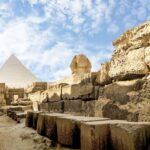
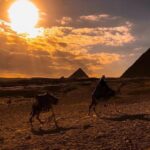
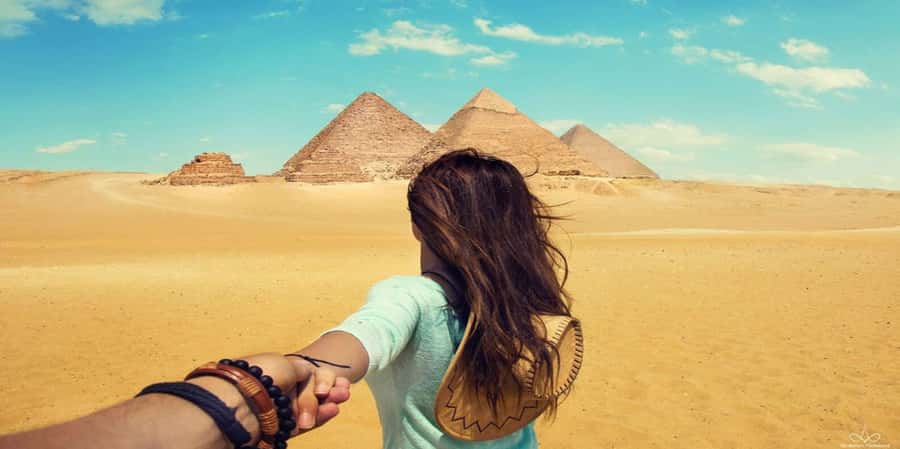
Then comes the “how did they do this” section of the day: the Giza Plateau. You’ll visit the pyramids of Cheops, Chephren, and Mykerinus, which is the set that gives you the full visual story of the plateau. Seeing all three helps, because they aren’t just identical blocks. Each one sits in a slightly different way and creates a different angle for viewing and understanding.
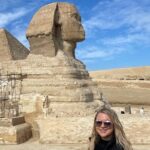
Your tour doesn’t stop there. You’ll also go to the Great Sphinx, one of the most instantly recognizable monuments in the world. The best part of doing Sphinx after the pyramids is the mental link. You start viewing the plateau like a planned complex rather than separate sightseeing spots.
Photo-wise, the tour includes opportunities to capture the big views and the key angles. I like that planning because it keeps you from spending your energy only chasing the perfect shot. Your guide can help you understand what you’re photographing, which makes the photos more satisfying later.
Valley Temple of Khafre: where the mummification story becomes real
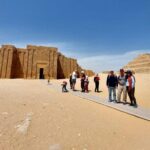
The Valley Temple of Khafre is the stop that can quietly turn into your favorite part, especially if you like a bit of culture with your monuments. This temple is part of the Chephren Pyramid complex, and it’s explained as playing a vital role in purification before burial.
That connection to mummification is the big reason to care. Instead of treating the pyramids as empty stone and the Sphinx as an icon, the Valley Temple gives you a sense of ritual and preparation. It answers a simple question: what happened behind the scenes, before the final resting place?
This is also where your guide’s narration really matters. The temple’s purpose is specific—purifying the king’s mummy before burial and facilitating the mummification process. When that’s explained clearly, the structure stops feeling like just another photo corner and starts feeling like a functional piece of ancient life.

Timing, comfort, and group size: a 7-hour plan that works
This tour is built for a 7-hour day, starting with pickup in Cairo and ending with return to Cairo. That time frame is often the sweet spot for first-timers: long enough to see the main sights, short enough that you don’t feel like you’ve been traveling all day.
Transportation is handled by a modern air-conditioned vehicle if that option is selected. That matters in Cairo because you want your day to feel smoother, not like a series of logistical problems.
Group size is another practical point. The tour has a maximum of 10 travelers, with a private group option available. A smaller group usually means better flow at entrances and fewer delays when your guide needs to adjust the plan.
One thing I’d keep in mind: the schedule is concentrated. You’re moving from the GEM to Giza, and then back. If you’re the type who likes to wander on your own for long stretches, you may find the pacing more structured than you expect. The trade-off is that you get the full hit of major sites without missing the crucial “why.”
Guides, languages, and how to get the most from the day
The quality of a monuments day often comes down to how the guide turns stone into story. This tour includes a live tour guide if you select it. You can get guides in Arabic, English, French, Spanish, or Italian. If your preferred language isn’t available, you’ll still have help via an English-speaking guide and an audio guide in your desired language.
That audio guide coverage is broad. It includes languages such as English, French, Spanish, Italian, German, Arabic, and many more. If you want to feel confident you won’t lose context, this dual system is a real advantage.
I also like that the tour structure supports real interaction. In the past, guides such as Paula, Doaa Sabry White, Menna, and Lamia have been praised for combining strong organization with engaging explanations. Some guides also help with navigating crowded places, which can make the difference between “we saw it” and “we actually understood it.”
And yes, drivers matter too. Names like Mohammed and Ahmed show up in positive experiences because they keep the day running smoothly while you’re bouncing between Cairo and Giza.
Price and value: does $80 make sense for what you get?
At $80 per person for a 7-hour private-or-small-group style sightseeing day, the value depends on what you care about: speed, guidance, and access.
Here’s what you’re paying for in practical terms:
- Major sights in one day: GEM plus the Giza icons and Valley Temple.
- Entrance fees are included if you select them.
- Skip the ticket line helps you spend more time on the ground and less time waiting.
- A live guide adds the biggest “multiplier” to value, because you’re not just reading plaques.
- Limited-access GEM areas before full opening can be a meaningful perk.
If you’re traveling with limited time and you want the top landmarks without building a DIY plan, this is priced in the range where the guidance and logistics are doing real work. If you already have a strong handle on the history and you hate structured schedules, you might feel like you’re paying mostly for transport and entry management. But for many visitors, that’s exactly what makes the day worthwhile.
Also, the “reserve now, pay later” and free cancellation up to 24 hours in advance (when offered) can lower the risk if your plans are still flexible. Just treat it as a convenience, not a reason to forget your timing.
Should you book the Cairo Grand Egyptian Museum, Giza Pyramids and Sphinx tour?
I’d book this tour if you want a clear, time-efficient route through Cairo’s biggest ancient hits, with a guide who can connect what you see to what it meant. The combination of GEM’s major halls and Giza’s pyramids plus the Sphinx is the obvious reason. The less-obvious reason is the Valley Temple stop, which gives you mummification context instead of only monuments.
This is also a smart choice for:
- First-time visitors who don’t want to guess their way through logistics
- People who enjoy photo stops but still want explanations
- Travelers who prefer small groups (up to 10) or a private option
I’d think twice if you’re hoping for long, independent wandering, or if you get anxious in busy environments. In that case, make sure you lean on the guide for pacing and navigation.
If your goal is to leave Cairo feeling like you understood the day—not just checked boxes—this is a solid value pick.
FAQ
What’s the duration of the Cairo Grand Egyptian Museum, Giza Pyramids and Sphinx tour?
The tour lasts 7 hours.
What does the tour include?
You’ll visit the Grand Egyptian Museum, including highlights such as the Hanging Obelisk and the Ramses II statue, then go to the Giza Plateau for the pyramids and the Great Sphinx, and also visit the Valley Temple of Khafre.
Is transportation provided?
Transportation is provided by a modern air-conditioned vehicle if you select that option.
Do I get a live guide and in what languages?
A live tour guide is included if selected. Live guide languages listed are Arabic, English, French, Spanish, and Italian. If your preferred language isn’t available, an English-speaking guide may be used along with an audio guide in your desired language.
Are entrance fees included and do I skip the ticket line?
Entrance fees are included if you select that option, and the tour offers skip the ticket line.
How big is the group?
The tour has a maximum of 10 travelers. A private group is also available.