REVIEW · CAIRO
Cairo, Giza Pyramids, Great Sphinx, Egyptian Museum and Bazaar Private Tour
Book on Viator →Operated by GEM Explore Egypt · Bookable on Viator
Four wonders in one Cairo day is tough. It works because this private trip strings together the big Giza icons plus the Egyptian Museum and Khan el-Khalili in one smooth route. I especially like how the guide plans the flow on the plateau and helps you handle the tricky parts, like special tickets for pyramid entry, and how people consistently mention guides such as Ali, Wael Saber, and Maged keeping things relaxed. One consideration: it’s a long 8–9 hours with lots of standing, so bring good shoes and expect warm conditions.
You’ll start with pickup (or airport meets) in an air-conditioned vehicle, and the start time is flexible. If you’re doing this as a layover, the guide meets you outside the arrival lounge (not inside), then you head straight to Giza. Drop-off is back to your hotel or wherever you request, which is a big deal in Cairo traffic.
The overall style is part history lesson, part “get the photos you want,” and it helps that the guide team averages 15+ years of experience. Lunch and a bottle of water are included (depending on the pickup option), and you’ll get real time at each main stop instead of a rapid-fire drive-by.
In This Review
- Key highlights
- Why This Cairo Highlights Tour Feels Efficient
- Price and Value: What $70 Per Person Actually Covers
- Giza Pyramids and Great Sphinx: The Day’s Main Event
- Khufu, Khafre, Menkaure: More Than Just Three Giant Shapes
- Pyramid Interior Tickets: The One Thing You Must Plan For
- Panoramic Viewpoint and Camel Ride Timing
- Great Sphinx: Getting Close Without Getting Stuck
- Egyptian Museum at Tahrir Square: Tutankhamun Time Without Stress
- Lunch and Breaks: The Pace Control You’ll Thank Yourself For
- Khan el-Khalili Bazaar and the Nearby Hussein Mosque Photo Stop
- Who This Tour Is For (and Who Might Want a Different Plan)
- Should You Book This Private Cairo Day Tour?
- FAQ
- How long is the tour?
- What does the tour cost?
- Is pickup and drop-off included?
- Is this a private tour?
- Are entry fees included?
- Is lunch included?
- Do I need a special ticket to enter the pyramids?
- Will I have time for photos at the pyramids and Sphinx?
- What will I see in the Egyptian Museum?
- What is Khan el-Khalili like?
- Cancellation policy (quick answer)
Key highlights
- Giza plateau time built around real landmarks, including valley temples and the Sphinx area
- Guide help with special pyramid-entry tickets, so you don’t get stuck figuring it out on-site
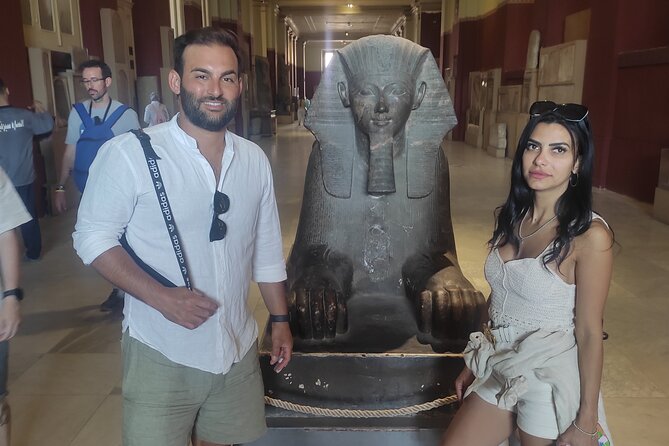
- Egyptian Museum visit with major highlights, including the Tutankhamun exhibit and a huge collection
- Khan el-Khalili browsing with practical guidance, plus a nearby historic mosque photo stop
- Multiple photo moments planned, including a panoramic viewpoint before the Sphinx close-up
- Private pace and anti-scam support, with guides noted for keeping you from overpaying
Why This Cairo Highlights Tour Feels Efficient
Cairo can burn time fast: traffic, lineups, and decision fatigue. This tour bundles the most in-demand sights into one day so you don’t have to “figure it out” between neighborhoods. You’ll get a guided path across Giza, then move to Tahrir Square, then end in the old market area.
I also like the private format here. When you’re not sharing the day with strangers, the guide can adjust the route, photo stops, and pacing to your comfort level. That matters at the pyramids, where heat, crowds, and constant sales pressure can make even an early start feel stressful.
The biggest practical win is that entry fees and taxes are included, along with a guide and basic day support like water and lunch. At $70 per person, you’re not just buying a ride—you’re buying a guided itinerary that reduces the cost and hassle of lining everything up yourself.
You can also read our reviews of more private tours in Cairo


Price and Value: What $70 Per Person Actually Covers
At face value, $70 for an 8–9 hour private day with Giza, the Egyptian Museum, and Khan el-Khalili might sound “too good.” The value makes sense because the tour includes several items that usually add up quickly in Cairo:
- Pickup and drop-off from your location (hotel or airport meet)
- Expert guide (15+ years of experience)
- Entry fees and taxes for the visited sites
- Lunch and a bottle of water (noted as included with the pickup option)
- A dedicated private vehicle for transfers
Also, private logistics matter. You’re not paying extra for multiple tickets, separate drivers, or back-and-forth coordination. And if you’re only in Cairo briefly, paying for an organized day often saves you money indirectly by preventing wasted time and last-minute add-ons.
Giza Pyramids and Great Sphinx: The Day’s Main Event
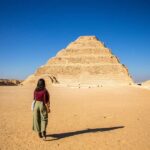
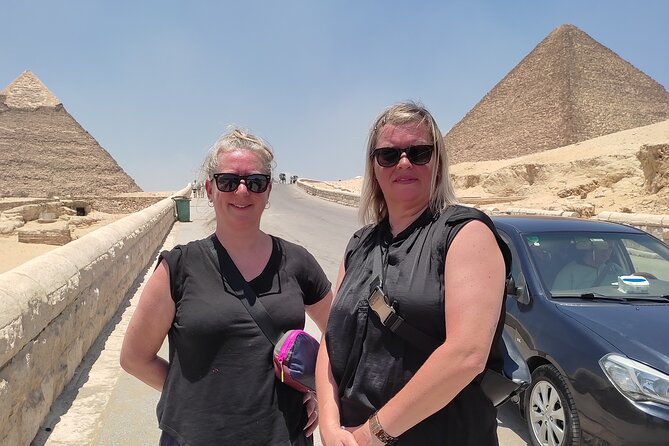
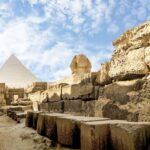
Your day starts at the Pyramids of Giza complex. The sequence matters because it shapes what you notice. You’ll be looking at the pyramids of Khufu (Cheops), Khafre (Chefren), and Menkaure (Mykerinos), plus the nearby valley-temple structures that people often skip when they rush the plateau.
From the start, the guide frames the “why” behind each stop. Khufu’s pyramid gets attention as the only standing wonder from the ancient Seven Wonders era, and the tour points out features that are easy to overlook when you’re just scanning for photos. Khafre’s area includes the valley temple, described as connected with the mummification process and the royal body. Then you’ll move toward the Sphinx area as the natural payoff.
The pacing is also designed for reality. These sites are spread out, and walking between them takes time. The tour builds in time for close-up views and photos instead of forcing you to keep moving every 3 minutes.
Khufu, Khafre, Menkaure: More Than Just Three Giant Shapes
Here’s what you can expect to learn and see at each pyramid stop:
Khufu’s pyramid (Great Pyramid of Cheops)
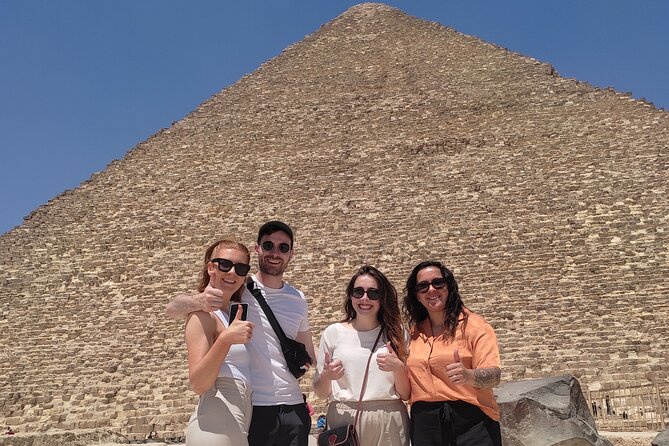
You’ll get time to explore the broader area around it, not just stand at the base. The tour highlights the complex setting, including valley-temple connections and the fact that some archaeological layers exist but may still be limited in excavation. Even if you don’t go inside, the site’s scale is the point—and your guide will help you notice the details that most people miss when they arrive with a checklist.
Khafre’s pyramid and the valley temple
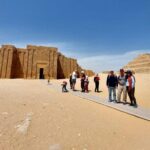
Khafre’s pyramid is presented as the second-highest in the Giza complex, and the visit includes the valley temple and causeway. The guide’s role here is huge: without context, it’s easy to think you’ve seen everything after a quick glance at stone blocks. With context, those structures start to explain how the ancient royal processions and burial rituals worked.
Menkaure’s pyramid (the smallest on the plateau)
This stop is a great reminder that “smaller” doesn’t mean “less interesting.” The tour calls out the surviving granite outer layer on the lower part of the pyramid and even notes the long supply chain idea—granite quarried from Aswan, roughly 1,000 kilometers away. That kind of detail turns the scene from awe-only into understanding too.
Pyramid Interior Tickets: The One Thing You Must Plan For
One key point the tour makes clearly: entering the pyramids from the inside requires a special ticket. Your guide will help you with the process, but it’s still your responsibility to confirm whether you want to pay for the interior access.
If you’re the type who gets excited by architecture and burial design, consider adding the interior ticket. If you’re more interested in viewpoints and photography, you may be perfectly happy sticking to the exterior areas, especially since the tour includes plenty of close proximity and scenic viewpoints.
In other words: interior access is not automatic, but the guide gives you the support to handle it.
You can also read our reviews of more museum experiences in Cairo



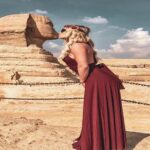

Panoramic Viewpoint and Camel Ride Timing
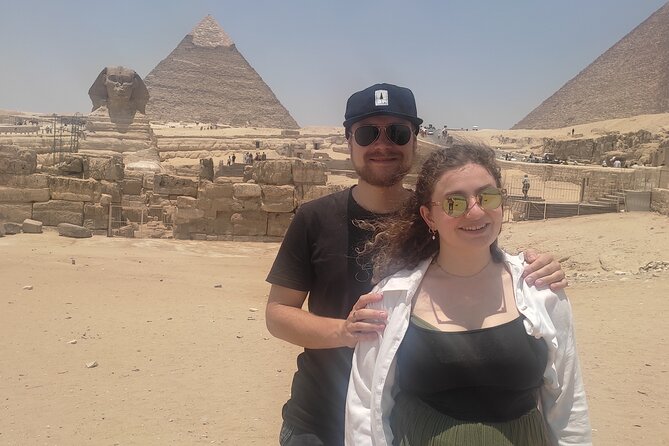
Between the pyramid area stops and the Sphinx close-up, there’s a panoramic viewpoint. This is not just for stretching your legs—it’s positioned as a practical photo spot where you can see multiple pyramids and the surrounding Giza cityscape.
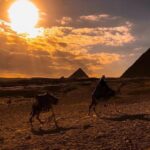
The tour also mentions that this viewpoint is a good place for a short camel ride. Whether you do it (and how long) will depend on what you feel like that day, but it’s scheduled where it makes sense: you’re already set up for photos and you’re not rushing right into the Sphinx crowd.
Quick reality check: camel rides in major tourist zones can involve extra haggling. The upside of having a guide is that you can avoid the most pushy sales moments and focus on a fair price and a safe-feeling experience.
Great Sphinx: Getting Close Without Getting Stuck
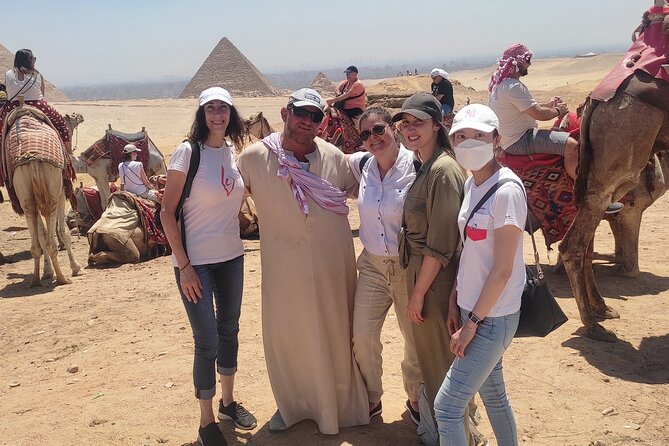
The Great Sphinx visit is scheduled after the panoramic stop, with time planned for close-up views and photos. You’ll be able to take pictures with assistance from the team on-site, and the guide helps keep things manageable in a place where people move constantly.
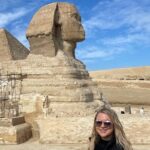
The Sphinx is described as the guardian of the pyramids with a lion’s body and a king’s head associated with Khafre. With that framing, it’s easier to understand why people keep returning to the same angle and why restoration and interpretation matter.
If you care about photos, this is where you’ll want to slow down. You’re not just snapping one wide shot—you’re trying different angles and distances. A good guide will help you decide where to stand so you get the best view without getting swallowed by the crowd.
Egyptian Museum at Tahrir Square: Tutankhamun Time Without Stress
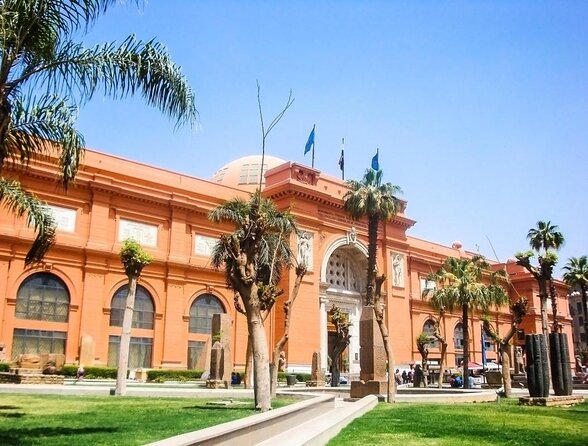
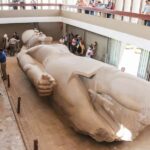
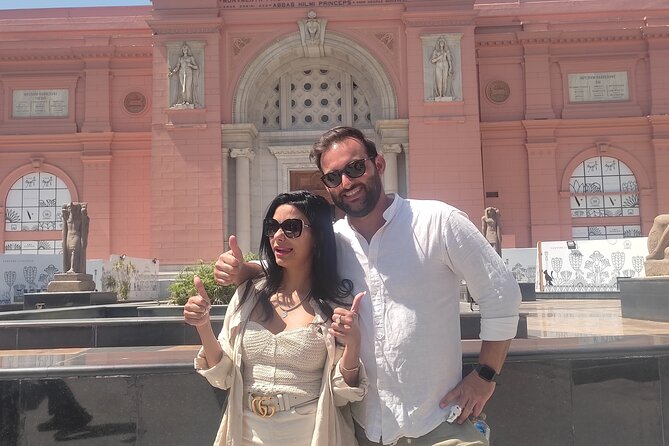
After a water and lunch break, you head toward Tahrir Square for the Museum of Egyptian Antiquities. You’ll have about 3 hours here, which is a solid amount for a first visit if you focus on key galleries instead of trying to see everything.
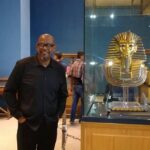
The tour highlights that the museum houses around 120,000 ancient Egyptian artifacts and that the collection spans up to 6000 years. It also calls out the Tutankhamun exhibit, which is usually the star attraction for many visitors.
Here’s the practical advantage: a guided museum visit helps you pick routes that avoid the “wandering spiral.” Even if you don’t have time to see every artifact, you’ll still come away with a clearer sense of what Egypt was like beyond the pyramids—tombs, daily life objects, burial items, and royal symbolism.
Lunch and Breaks: The Pace Control You’ll Thank Yourself For
This day is long enough that food and downtime are not “nice-to-have.” The tour includes lunch and water, and it builds a break between the pyramids and the museum.
In Cairo, energy crashes happen fast, especially after sun + walking. A real lunch break helps you stay sharp for the museum, where you’ll get more out of the tour if you’re not half-dreaming while sitting in the air-conditioned galleries.
Khan el-Khalili Bazaar and the Nearby Hussein Mosque Photo Stop
The day ends with Khan el-Khalili, Cairo’s famous bazaar area in the historic center. The tour frames it as a trade hub since the Mamluk era, and that historical note matters because it explains why the market feels layered rather than random.
You’ll browse shops selling items like silver, copper, brassware, gold, and leather goods. The guide’s role here is more than shopping support. People often want the market experience but don’t want to be pressured into buying. A good guide helps you move through the stalls with confidence and makes it easier to tell the difference between friendly conversation and aggressive upselling.
Nearby, there’s also a chance to view a sacred Islamic site: a mosque described as the reputed burial place of the head of Hussein, the grandson of Prophet Mohammed, and noted as recently renovated. Even if you’re not a mosque tour person, it’s a meaningful cultural counterpoint to the pyramid-and-museum focus. It’s also a good photo moment.
Who This Tour Is For (and Who Might Want a Different Plan)
This tour is ideal if:
- You want Cairo highlights in one day without juggling multiple bookings
- You’re new to Egypt and want a guide to translate the “what you’re seeing” into something meaningful
- You care about avoiding common tourist stress, like crowd chaos and price games
- You want a blend of major monuments + museum + market
You might want a different setup if:
- You prefer super slow travel with long downtime between major sites
- You want zero walking and minimal heat exposure (this includes a lot of outdoor time)
The private format helps a lot. Still, the day’s structure means you’ll be active.
Should You Book This Private Cairo Day Tour?
If your goal is to see the pyramids, Sphinx, the Egyptian Museum, and Khan el-Khalili in one organized day, I think this is a strong choice. At $70 per person, with entry fees and taxes, a real guide (15+ years), and lunch plus water, you’re paying for convenience and clarity as much as sightseeing.
Book it if you want a guided route that keeps you moving through the right places in the right order, with support on the big practical issues—especially the pyramid interior ticket question and the “don’t get played” parts of Cairo sightseeing.
Skip or rethink it only if you want a shorter day, less standing, or a deeper museum-focused day instead of monument-first. For a first trip to Cairo’s biggest hits, this one is built to work.
FAQ
How long is the tour?
The tour runs about 8 to 9 hours.
What does the tour cost?
The price is $70.00 per person.
Is pickup and drop-off included?
Yes. The tour offers pickup and drop-off from your requested hotel or location, and it also includes airport pickup/matching at the arrival lounge outside.
Is this a private tour?
Yes. It’s listed as private, with only your group participating.
Are entry fees included?
Yes. The tour includes entry fees and taxes for the sites covered.
Is lunch included?
Lunch is included as part of the day when you pick up that option, and the tour also includes a bottle of water.
Do I need a special ticket to enter the pyramids?
Yes. Entering the pyramids from the inside requires a special ticket, and the guide can assist you.
Will I have time for photos at the pyramids and Sphinx?
Yes. The schedule includes close-up viewing time for both the Sphinx and the pyramid area, plus a panoramic viewpoint for photos.
What will I see in the Egyptian Museum?
You’ll visit the Museum of Egyptian Antiquities at Tahrir Square with time there to see major collections, including the Tutankhamun exhibit.
What is Khan el-Khalili like?
It’s a historic market area established in the Mamluk era, with shops selling items such as silver, copper, brassware, gold, and leather goods. There’s also a nearby mosque photo stop.
Cancellation policy (quick answer)
You can cancel for a full refund up to 24 hours before the experience’s start time.